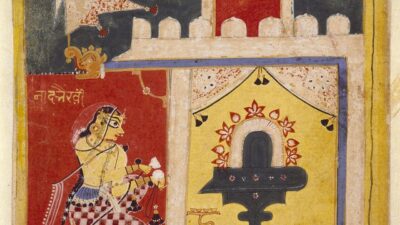
शास्त्र विंग · राग-पट्टिका · Raag Plate
भैरवी
Bhairavī
रागों की रानी · Queen of Raags
भावविषादपूर्ण · भक्तिपूर्ण · कोमल · रोमांटिक · शांतिपूर्ण
गतिvilambit_to_madhya ऊर्जाधीमी से मध्यम
अन्य नामSindhi Bhairavi · Morning Bhairavi · सिंधी भैरवी
स्वर-चित्र · The Swara Panel
आरोह — अवरोह · The Ascent and the Descent
कोमल स्वर — Re, Ga, Dha, Ni — तीव्रित हरे रंग में।
आरोह · Aroha चढ़ती हुई सीढ़ी
अवरोह · Avaroha उतरती हुई सीढ़ी
कोमल स्वर — नीचे की ओर झुका चिह्न (◌॒)सˊ = तार सप्तक का षड्ज
चारों कोमल (फ्लैट) स्वर का प्रयोग होता है — किसी भी सामान्य राग में कोमल स्वरों की अधिकतम संख्या। यह भैरवी को अपनी विशिष्ट विषादपूर्ण, गहरी भक्तिपूर्ण गुणवत्ता प्रदान करता है।
अंग्रेज़ी में पढ़ें · Read in English
All four komal (flat) swaras are used — the maximum number of flat notes in any common raag. This gives Bhairavi its distinctive melancholic, deeply devotional quality. The absence of tivra (sharp) notes ensures a consistently soft, tender character.
पकड़ · पहचान वाक्यांश
म ग॒ रे॒ स, ध॒ नि॒ स
Ma Ga♭ Re♭ Sa, Dha♭ Ni♭ Sa
राग भैरवी की पहचान वाली विशेषता। अक्सर रे॒ और म पर हल्के दोलन के साथ गाई जाती है।
अंग्रेज़ी में पढ़ें · Read in English
The characteristic phrase that instantly identifies Raag Bhairavi. Often performed with slight oscillations on Re♭ and Ma.
वादी–संवादी टिप्पणी · Vadi–Samvadi note
Vadi — The most important note — the 'king' of the raag. Receives maximum emphasis and ornamentation.
Samvadi — The second most important note — the 'minister' of the raag. Provides foundational stability.
चलन · स्वर-यात्रा
सा रे॒ म, म ग॒ रे॒ स, स ध॒. नि॒. स, म ग॒ रे॒ स, प म ग॒ म प, ध॒ म प ग॒ म रे॒ स
Sa Re♭ Ma, Ma Ga♭ Re♭ Sa, Sa Dha♭. Ni♭. Sa, Ma Ga♭ Re♭ Sa, Pa Ma Ga♭ Ma Pa, Dha♭ Ma Pa Ga♭ Ma Re♭ Sa
प्रदर्शन में राग भैरवी को कैसे गाया जाता है, इसकी पूर्ण मधुर प्रगति। दोलन करने वाली अवरोहण विशेषता है।
अंग्रेज़ी में पढ़ें · Read in English
The complete melodic progression showing how Raag Bhairavi is traversed in performance. The oscillating descent (down then up) is characteristic.
न्यास स्वर — Sa, Ma, Pa अनुवादी — Re♭, Ga♭, Pa, Dha♭, Ni♭
विशेष स्वर-वाक्य
Characteristic Phrasesसमय और भाव
Time Theory & Moodसमय-सिद्धांत · Time Theory
समापन राग — संगीत सभा के अंत में, दिन के किसी भी समय। भैरवी…
समापन राग — संगीत सभा के अंत में, दिन के किसी भी समय। भैरवी सभी समय-सिद्धांत प्रतिबंधों को ओवरराइड करता है क्योंकि यह सार्वभौमिक 'विदाई' राग है।
Concluding raag — traditionally performed at the end of a concert, any time of day. Bhairavi overrides all time-theory restrictions because it is the universal 'farewell' raag.
No seasonal restriction
भाव और गति · Mood & Tempo
करुण · Pathos / Compassion
विच्छेद, भक्ति और करुणामय प्रेम की कोमल पीड़ा। भैरवी हृदय की सबसे अंतर्निहित कमजोरी को व्यक्त करता है।
vilambit_to_madhya
ऊर्जा · Energyधीमी से मध्यम
स्तर · Levelbeginner_friendly — भैरवी शुरुआती को सिखाए जाने वाले पहले रागों में से एक है। लेकिन इसकी गहराई का अन्वेषण उस्ताद अपने पूरे करियर म…
लक्षण गीत · The Mnemonic Verse
लक्षण गीत
भैरवी रे गा मा कोमल, ध नी भी कोमल जान
मध्यम वादी संवादी सा, गावत विद्वान
अर्थभैरवी में रे ग कोमल हैं, ध नी भी कोमल हैं। मध्यम वादी, सा संवादी। ऐसे गाते हैं विद्वान।
अंग्रेज़ी में पढ़ें · Read in English
Bhairavi Re Ga Ma komal, Dha Ni bhi komal jaan
Madhyam vadi samvadi Sa, gaavat vidwaan
In Bhairavi, Re Ga are komal (flat), Dha Ni are also komal — know this. Madhyam is vadi, Sa is samvadi — thus sing the learned ones.
पट्टिका-लेख
The Monographपरिचय Introduction
राग भैरवी को अक्सर 'रागों की रानी' कहा जाता है — हिंदुस्तानी शास्त्रीय संगीत में सबसे बहुमुखी और भावनात्मक रूप से अभिव्यंजक राग। यह किसी भी संगीत सभा का पारंपरिक समापन राग है, दिन के किसी भी समय अंतिम प्रस्तुति के रूप में गाया जाता है। इसके चार कोमल (फ्लैट) स्वर कोमल विषाद, भक्तिपूर्ण समर्पण और रोमांटिक लालसा का एक विशिष्ट वातावरण बनाते हैं। भैरवी ठुमरी का राग है — प्रेम कविता की अर्ध-शास्त्रीय विधा जिसे गौहर जान और तवायफ़ परंपरा ने उच्च कला के स्तर तक पहुँचाया। बॉलीवुड में, भैरवी अनगिनत प्रतिष्ठित गीतों की नींव रही है। भैरवी को अद्वितीय बनाता है इसका लोकतांत्रिक सुलभता: शुरुआती इसके कोमल सुरीले वाक्यांशों में प्रवेश के बिंदु पा सकते हैं, फिर भी मास्टर्स अपना पूरा जीवन इसकी अनंत गहराई की खोज में लगाते हैं।
अंग्रेज़ी में पढ़ें · Read in English
Raag Bhairavi is often called the 'Queen of Raags' — the most versatile and emotionally expressive raag in Hindustani classical music. It is the traditional concluding raag of any concert, performed as the final offering regardless of the time of day or the raags that came before. Its four komal (flat) swaras create a distinctive atmosphere of tender melancholy, devotional surrender, and romantic longing. Bhairavi is the raag of thumri, the semi-classical genre of love poetry that Gauhar Jaan and the tawaif tradition elevated to high art. In Bollywood, Bhairavi has been the foundation of countless iconic songs — from devotional bhajans to romantic ghazals. What makes Bhairavi unique is its democratic accessibility: beginners can find entry points in its gentle melodic phrases, yet maestros spend lifetimes exploring its infinite depths. The raag respects no time-theory restrictions, overriding all rules because it serves as the universal farewell — every concert ends in Bhairavi, every emotional journey concludes here.
सांस्कृतिक महत्व Cultural Significance
भैरवी भारतीय संगीत में एक अनूठा स्थान रखती है — वह राग जो सभी शास्त्रीय नियमों से परे है। भैरवी अपने 'मिश्र' (मिश्रित) रूप में किसी भी समय किसी भी स्वर को शामिल कर सकती है, जिससे यह शास्त्रीय बाधाओं के भीतर संगीतात्मक स्वतंत्रता की अंतिम अभिव्यक्ति बन जाती है। ठुमरी परंपरा, विशेषकर लखनऊ और बनारस के स्कूल, ने भैरवी को नायिका-भाव को व्यक्त करने का प्राथमिक वाहन बनाया। गौहर जान के हाथों में, भैरवी केवल एक राग नहीं बल्कि नायिका के आंतरिक जीवन का एक द्वार बन गया।
अंग्रेज़ी में पढ़ें · Read in English
Bhairavi holds a unique position in Indian music as the raag that transcends all classical rules. While other raags have strict time prescriptions and note restrictions, Bhairavi in its 'Mishra' (mixed) form can incorporate any note at any time, making it the ultimate expression of musical freedom within classical constraints. The thumri tradition, especially the Lucknow and Banaras schools, made Bhairavi their primary vehicle for expressing nayika-bhav (the heroine's emotional states) — longing, anger, jealousy, surrender, ecstasy. In the hands of Gauhar Jaan, the pioneer of recorded Indian music, Bhairavi became not just a raag but a portal into the inner emotional life of the nayika, democratizing classical music for audiences beyond the courtesan houses and royal courts. Today, Bhairavi remains the bridge between classical purity and popular accessibility — simultaneously honored in concert halls and woven into Bollywood narratives.
ऐतिहासिक महत्व Historical Significance
भैरवी हिंदुस्तानी परंपरा के सबसे प्राचीन रागों में से एक है। नाम भैरव — भगवान शिव के उग्र, सुरक्षात्मक रूप — से आता है। इस पुरुषोचित, भयानक मूल के बावजूद, राग स्वयं स्त्रैण भावनात्मक अभिव्यक्ति से गहराई से जुड़ा हुआ बन गया। 16वीं-17वीं सदी तक, भैरवी सूफी कव्वालों और भजन गायकों की पसंद का राग था। 18वीं-19वीं सदी में, लखनऊ, बनारस और आगरा के ठुमरी गायकों ने भैरवी को रोमांटिक-भक्तिपूर्ण अभिव्यक्ति का सर्वोच्च वाहन बनाया।
अंग्रेज़ी में पढ़ें · Read in English
Bhairavi is one of the oldest raags in the Hindustani tradition, with roots in the ancient Bhairava family of raags documented in the Natyashatra and later music treatises. The name derives from Bhairava, a fierce, protective form of Lord Shiva. Despite this masculine, fearful origin, the raag itself became profoundly associated with feminine emotional expression — the tenderness of separation (viraha), the ache of devotion (bhakti), the vulnerability of love. By the 16th-17th century, Bhairavi had become the raag of choice for Sufi qawwals and bhajan singers. In the 18th-19th century, the thumri singers of Lucknow, Banaras, and Agra made Bhairavi the supreme vehicle for romantic-devotional expression, reaching its apex with artists like Malka Jaan and Gauhar Jaan in the early 20th century. When Gauhar Jaan recorded her first performances in 1902, Bhairavi was already the raag most associated with emotional depth and artistic innovation. The raag's evolution from temple devotion to courtly refinement to recorded art and cinema demonstrates its unique capacity for emotional resonance across all contexts and eras.
शिक्षा
Teaching & Learning| बंदिश | ताल · लय | बोल |
|---|---|---|
| Jamuna Ke Teer Traditional |
Dadra | |
| Bahut Din Beete Traditional Khayal bandish |
Teentaal | |
| Ras Ke Bhare Tore Nain Traditional, Gauhar Jaan's famous rendition (1902) |
Dadra |
पकड़ (म ग॒ रे॒ स) से शुरू करें — यह भैरवी की आत्मा है। इसे धीमे-धीमे अभ्यास करें जब तक कोमल स्वर पूरी तरह प्राकृतिक न लगें।
अंग्रेज़ी में पढ़ें · Read in English
Start with the pakad (Ma Ga♭ Re♭ Sa) — this is the soul of Bhairavi. Practice it slowly until the komal swaras feel completely natural. The key is treating Re♭ and Ga♭ as living, breathing notes with their own character.
ध्यान दें कि भैरवी सीधे ऊपर नहीं जाती — यह दोलन करती है (म ग॒ रे॒, फिर रे॒ म प)। यह दोलन विशेषता है।
अंग्रेज़ी में पढ़ें · Read in English
Notice how Bhairavi rarely goes straight up (Sa Re♭ Ga♭ Ma) — it tends to oscillate and dip (Ma Ga♭ Re♭, then Re♭ Ma Pa). This 'oscillating descent' is key to its character. Practice the chalan slowly, feeling the weight of each note.
शुद्ध भैरवी (केवल कोमल स्वर) और मिश्र भैरवी (सभी 12 स्वर) के बीच संक्रमण में महारत हासिल करें।
अंग्रेज़ी में पढ़ें · Read in English
Master the transition between Shuddha Bhairavi (strict komal notes only) and Mishra Bhairavi (all 12 notes allowed). The art lies in introducing shuddha notes as 'sparks' or 'color notes' without losing the raag's tender, melancholic identity. These shuddha notes should feel like departures from the raag's core, not permanent residents.
प्रत्येक बंदिश के भावनात्मक परिदृश्य का अन्वेषण करें। ठुमरी में, हर वाक्यांश नायिका की भावनात्मक अवस्था व्यक्त करे।
अंग्रेज़ी में पढ़ें · Read in English
Explore the emotional landscape of each bandish. In thumri, every phrase should convey the nayika's emotional state. In khayal, use the pakad as an anchor point, then spiral outward into exploration. Always return with purpose and grace.
शुद्ध भैरवी में बहुत जल्दी शुद्ध रे या ग का प्रयोग करना, जो राग की पहचान को धुंधला करता है
अंग्रेज़ी में पढ़ें · Read in English
Using shuddha (natural) Re or Ga too early in a Shuddha Bhairavi rendition, which muddles the raag's identity
सुधार: Keep strictly to komal swaras in the initial alaap and first few compositions. Introduce shuddha notes only after the raag's identity is firmly established, and then sparingly.
कठोर, चमकदार टोन में भैरवी गाना, जबकि इसे नरम, आत्मचिंतक गुणवत्ता चाहिए
अंग्रेज़ी में पढ़ें · Read in English
Singing Bhairavi with a sharp, bright tone instead of the soft, introspective quality it requires
सुधार: Cultivate a warm, rounded tone that sits gently on the komal notes. Avoid harsh attacks; instead, let notes bloom gradually like flowers opening.
संगीत को जल्दबाजी में गाना। भैरवी को समय और स्थान चाहिए।
अंग्रेज़ी में पढ़ें · Read in English
Rushing through the composition. Bhairavi demands time and space to breathe.
सुधार: Practice in slow tempo (vilambit). Let each phrase settle. Silence is as important as sound in Bhairavi.
तुलना
A Specimen Comparisonनाम की समानता के बावजूद, भैरव एक भव्य सुबह का राग है जबकि भैरवी एक कोमल समापन राग है।
| तुलनाSpecimen | भैरवी | भैरव |
|---|---|---|
| स्वर-अंतर | Bhairav uses komal Re and Dha only (both descending sharply from natural notes). Bhairavi uses all four komal swaras (Re, Ga, Dha, Ni), creating maximum flatness. | |
| भाव-अंतर | Bhairav = Awe, Grandeur, Divine Majesty (often compared to a warrior or deity). Bhairavi = Tenderness, Pathos, Emotional vulnerability (often compared to a lover or devotee in prayer) | |
| समय-अंतर | Bhairav = Strict morning raag (dawn hours only). Bhairavi = Anytime (traditionally concluding, but exceptions allowed) | |
दोनों भैरवी थाट राग हैं, लेकिन मल्कौंस बहुत विरल है।
| तुलनाSpecimen | भैरवी | मल्कौंस |
|---|---|---|
| स्वर-अंतर | Bhairavi uses all 7 swaras (Sa Re♭ Ga♭ Ma Pa Dha♭ Ni♭). Malkauns uses only 4 notes (Sa Ga♭ Ma Dha♭), creating extreme simplicity. | |
| भाव-अंतर | Bhairavi = Tender longing, romantic devotion, accessible emotion. Malkauns = Transcendent peace, spiritual meditation, introspective silence | |
रोचक तथ्य
Margin Notesभैरवी हिंदुस्तानी शास्त्रीय संगीत का एकमात्र राग है जो दिन के किसी भी समय गाया जा सकता है — यह सभी समय-सिद्धांत प्रतिबंधों को ओवरराइड करता है।
अंग्रेज़ी में पढ़ें · Read in English
Bhairavi is the only raag in Hindustani classical music that can be performed at any time of day — it overrides all time-theory restrictions because it is always the 'farewell' or 'closing' raag of a concert. This privilege is granted to no other raag.
'भैरवी में कॉन्सर्ट खत्म करो' भारतीय शास्त्रीय संगीतकारों के बीच एक पारंपरिक कहावत है, जो छात्रों को राग शिष्टाचार के एक आवश्यक सिद्धांत के रूप में सिखाई जाती है।
अंग्रेज़ी में पढ़ें · Read in English
The phrase 'Bhairavi mein concert khatam karo' (close the concert in Bhairavi) is a traditional saying among Indian classical musicians, taught to students as an essential principle of raag etiquette and respect.
गौहर जान की 1902 की 'रस के भरे तोरे नैन' राग भैरवी में रिकॉर्डिंग इस राग के पहले रिकॉर्ड किए गए प्रदर्शनों में से एक है।
अंग्रेज़ी में पढ़ें · Read in English
Gauhar Jaan's 1902 recording of 'Ras Ke Bhare Tore Nain' in Raag Bhairavi is among the first-ever recorded performances of this raag and one of the oldest surviving recordings of Indian classical music, capturing the artistic standards of the early 20th century.
ठुमरी परंपरा में, भैरवी राग सबसे आमतौर पर नायिका की भावनात्मक अवस्थाओं को व्यक्त करने के लिए प्रयुक्त होता है।
अंग्रेज़ी में पढ़ें · Read in English
In the thumri tradition, Bhairavi is the raag most commonly used for expressing the nayika's emotional states — especially 'viraha' (separation) and 'anurag' (longing). The raag's four komal swaras create the characteristic 'ache' that defines this genre.
कई बॉलीवुड पार्श्व गायकों, विशेषकर लता मंगेशकर, का भैरवी के प्रति विशेष आत्मीयता है।
अंग्रेज़ी में पढ़ें · Read in English
Many Bollywood playback singers, especially Lata Mangeshkar, have a special affinity for Bhairavi — it appears in some of Hindi cinema's most iconic romantic and devotional songs spanning from the 1960s to the 1990s.
प्रस्तुति
Performance- Description
- समापन राग — संगीत सभा के अंत में, दिन के किसी भी समय। भैरवी सभी समय-सिद्धांत प्रतिबंधों को ओवरराइड करता है क्योंकि यह सार्वभौमिक 'विदाई' राग है। Concluding raag — traditionally performed at the end of a concert, any time of day. Bhairavi overrides all time-theory restrictions because it is the universal 'farewell' raag.
- Time Flexibility
- universal
- Time Notes
- Bhairavi is unique in overriding all time-theory restrictions. It can be performed at any hour.
Time
और जानें
More to Know- raag-bhairav — Bhairav — भैरव — Despite sharing the name root, Bhairav is a majestic MORNING raag (performed at dawn) while Bhairavi is a tender CONCLUDING raag (performed at the end of concerts, any time). Both are important but serve opposite functions. — नाम की समानता के बावजूद, भैरव एक भव्य सुबह का राग है जबकि भैरवी एक कोमल समापन राग है। — Bhairav uses komal Re and Dha only (both descending sharply from natural notes). Bhairavi uses all four komal swaras (Re, Ga, Dha, Ni), creating maximum flatness. — Bhairav = Awe, Grandeur, Divine Majesty (often compared to a warrior or deity). Bhairavi = Tenderness, Pathos, Emotional vulnerability (often compared to a lover or devotee in prayer) — Bhairav = Strict morning raag (dawn hours only). Bhairavi = Anytime (traditionally concluding, but exceptions allowed)
- raag-malkauns — Malkauns — मल्कौंस — Both are Bhairavi thaat raags, but Malkauns is far sparser (uses only 4 notes vs Bhairavi's 7). Malkauns is extremely meditative and rare; Bhairavi is common and emotionally accessible. — दोनों भैरवी थाट राग हैं, लेकिन मल्कौंस बहुत विरल है। — Bhairavi uses all 7 swaras (Sa Re♭ Ga♭ Ma Pa Dha♭ Ni♭). Malkauns uses only 4 notes (Sa Ga♭ Ma Dha♭), creating extreme simplicity. — Bhairavi = Tender longing, romantic devotion, accessible emotion. Malkauns = Transcendent peace, spiritual meditation, introspective silence — Bhairavi = Flexible, can be performed in many forms. Malkauns = Specialized, typically performed in slow Khayal with extensive Alap
Comparisons
सीखने के लिए
For Learners- Difficulty Level
- beginner_friendly
नमूना-पट्टी
The Specimen Table| नाम | भैरवी · Bhairavi |
|---|---|
| थाट | भैरवी |
| आरोह | सा रे॒ ग॒ म प ध॒ नि॒ सˊ |
| अवरोह | सˊ नि॒ ध॒ प म ग॒ रे॒ स |
| पकड़ | म ग॒ रे॒ स, ध॒ नि॒ स |
| जाति | संपूर्ण-संपूर्ण · Sampurna-Sampurna |
| कोमल स्वर | Re, Ga, Dha, Ni |
| समय | समापन राग — संगीत सभा के अंत में, दिन के किसी भी समय। भैरवी सभी समय-सिद्धांत प्रतिबंधों को ओवरराइड करता है क्योंकि यह सार्वभौमिक 'विदाई' राग… |
| ऋतु | No seasonal restriction |
| गति | vilambit_to_madhya |
| ऊर्जा | धीमी से मध्यम |
| प्रकृति | Shuddha |
| परिवार | भैरवी परिवार |
| स्तर | beginner_friendly |
| लोकप्रियता | Very popular |
| कर्नाटक समतुल्य | Todi · Melakarta 8 |
| पाश्चात्य समतुल्य | Phrygian |
| अन्य नाम | Sindhi Bhairavi · Morning Bhairavi · सिंधी भैरवी |
जुड़े हुए पन्ने
Connected Plates · The Graph Made Visibleअटलस में कोई पन्ना अकेला नहीं — इस राग से गीत, प्रस्तुतियाँ, कलाकार, ताल, घराने और मिलते-जुलते राग, सब यहाँ से खुलते हैं।
इस राग के गीत · Songs in this Raag


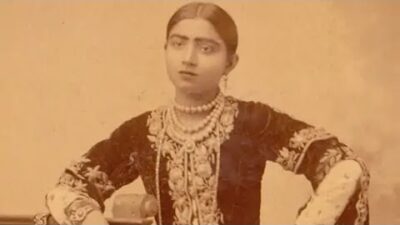
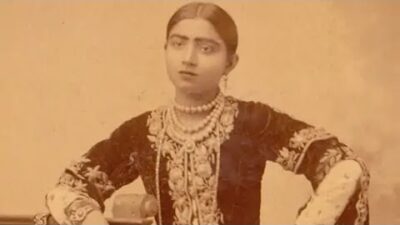



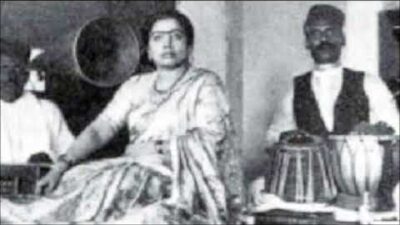


प्रसिद्ध प्रस्तुतियाँ · Legendary Renditions
फ़िल्मी गीत इस राग में · Famous Film Songs
इस राग के कलाकार · Notable Artists
ताल-साथी · Taal Pairings
घराने · Gharanas
मिलते-जुलते राग · Similar Raags
शास्त्र-सूत्र · Shastra Threads
श्रवण-कक्ष · The Listening Room
सुनिए — भैरवी · Hear the Raag
Raga Bhairavi | Pt. Hariprasad Chaurasia | Flute
प्रश्नोत्तर
Questions & Answersराग भैरवी का आरोहन-अवरोहन क्या है?
राग भैरवी का आरोहन: सा रे॒ ग॒ म प ध॒ नि॒ सˊ | अवरोहन: सˊ नि॒ ध॒ प म ग॒ रे॒ स
अंग्रेज़ी में पढ़ें · Read in English
What is the arohana and avarohana of Raag Bhairavi? — Raag Bhairavi arohana: Sa Re♭ Ga♭ Ma Pa Dha♭ Ni♭ Sa' | Avarohana: Sa' Ni♭ Dha♭ Pa Ma Ga♭ Re♭ Sa
राग भैरवी किस समय गाया जाता है?
राग भैरवी समापन राग है। इसे दिन के किसी भी समय गाया जा सकता है, पारंपरिक रूप से संगीत सभा के अंत में। यह अन्य किसी भी राग के समय प्रतिबंध को ओवरराइड करता है क्योंकि यह 'विदाई' राग है।
अंग्रेज़ी में पढ़ें · Read in English
When is Raag Bhairavi performed? — Raag Bhairavi is a concluding raag. It can be performed at any time of day, traditionally presented at the end of a concert. It overrides time restrictions of any other raag because it is the 'farewell' raag.
भैरवी की पकड़ क्या है?
राग भैरवी की पकड़: म ग॒ रे॒ स | यह राग को तुरंत पहचानने योग्य बनाता है। अक्सर ध॒ नि॒ स के साथ गाई जाती है।
अंग्रेज़ी में पढ़ें · Read in English
What is the pakad (catch phrase) of Raag Bhairavi? — Raag Bhairavi pakad: Ma Ga♭ Re♭ Sa | This phrase instantly identifies the raag. Often combined with Dha♭ Ni♭ Sa.
बॉलीवुड में राग भैरवी के प्रसिद्ध गीत कौन से हैं?
लग जा गले (1964), रैना बीती जाये (1972), तुझे देखा तो ये जाना सनम (1995), बड़ी मुश्किल है (1994)
अंग्रेज़ी में पढ़ें · Read in English
What are famous Bollywood songs in Raag Bhairavi? — Lag Ja Gale (1964), Raina Beeti Jaye (1972), Tujhe Dekha To Ye Jaana Sanam (1995), Badi Mushkil Hai (1994)
राग भैरवी का चलन क्या है?
सा रे॒ म, म ग॒ रे॒ स, स ध॒. नि॒. स, म ग॒ रे॒ स, प म ग॒ म प, ध॒ म प ग॒ म रे॒ स
अंग्रेज़ी में पढ़ें · Read in English
What is the chalan of Raag Bhairavi? — Sa Re♭ Ma, Ma Ga♭ Re♭ Sa, Sa Dha♭. Ni♭. Sa, Ma Ga♭ Re♭ Sa, Pa Ma Ga♭ Ma Pa, Dha♭ Ma Pa Ga♭ Ma Re♭ Sa
भैरवी और भैरव में क्या अंतर है?
भैरव सुबह का राग है (कोमल रे, ध), भैरवी समापन राग है (चार कोमल स्वर: रे, ग, ध, नि)। दोनों का मूड अलग है।
अंग्रेज़ी में पढ़ें · Read in English
What is the difference between Bhairavi and Bhairav? — Bhairav is a morning raag (komal Re, Dha); Bhairavi is a concluding raag (four komal swaras). Different moods and time-of-day rules entirely.
ठुमरी क्या है और भैरवी का इससे क्या संबंध है?
ठुमरी एक अर्ध-शास्त्रीय संगीत शैली है जो प्रेम, विरह (विच्छेद), और भक्ति की भावनाओं को व्यक्त करती है। भैरवी ठुमरी के लिए सबसे पसंदीदा राग है क्योंकि इसके कोमल स्वर इन भावनाओं को परिपूर्ण तरीके से व्यक्त करते हैं।
अंग्रेज़ी में पढ़ें · Read in English
What is Thumri and how is it connected to Bhairavi? — Thumri is a semi-classical musical form expressing love, separation, and devotion. Bhairavi is the preferred raag for Thumri because its komal swaras perfectly capture these emotions.
साझा कीजिए · Share this Plate
यह पन्ना आगे बढ़ाइए
जुड़ी हुई दुनिया
Explore ConnectionsSongs in this Raag · इस राग के गीत (94)




Similar Raags · मिलते-जुलते राग (25)

Stories · कहानियाँ (16)
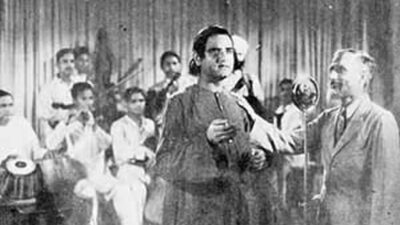 कहानी · Storyग़ुलाम हैदर का वो जुमला जिसने इतिहास बनाया
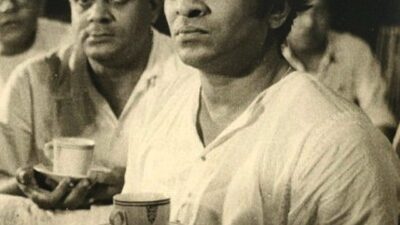 कहानी · Storyनूर जहाँ का आख़िरी गीत: एक आवाज़ की विदाई
 कहानी · Storyतिहाई: संगीत का सबसे सुंदर समापन
 कहानी · Storyमिर्ज़ा ग़ालिब परदे पर: सुरैया की आवाज़ में जब शायर का दर्द ज़िंदा हो उठाकहानी · Storyलता की भैरवी: जब गौरी का दर्द गीत बन गया
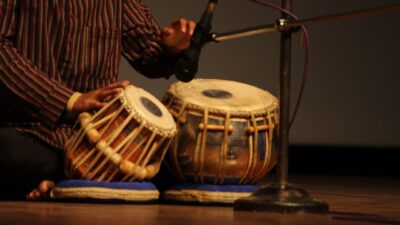 कहानी · Storyविदाई की रानी: जब हर स्वर झुक जाता है
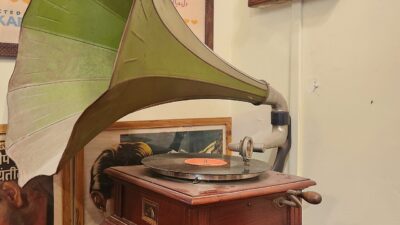 कहानी · Storyगमक और आंदोलन: शक्ति और शांति का रहस्यकहानी · Storyगीता रॉय और जोगन: जब सिनेमाघर मंदिर बन गया