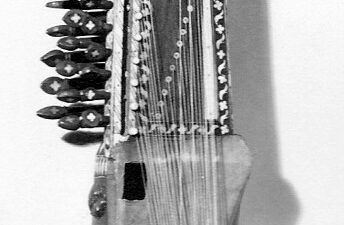
शास्त्र विंग · वाद्य-पट्टिका · Instrument Plate
सारंगी
Sarangi
अन्य नामसारंगा · सारंगी (regional variants) · Sarangi (also: Sāraṅgī)
वर्गीकरण
ClassificationNatya Shastra Category
तत (Tata - stringed instruments)
तत वर्ग में सारंगी एक धनुष-आधारित वाद्य यंत्र है जो मुख्य रूप से धनुष के घर्षण से ध्वनि उत्पन्न करता है।
In the Tata (stringed) category of Natya Shastra, sarangi is a bow-based instrument that produces sound primarily through friction of the bow against strings.
Western Category
Bowed string instrument
Western Family
Fiddle family (similar to cello, viola in construction but uniquely Indian in tuning and technique)
Sub Classification
बनावट
PhysicalDescription Hindi
सारंगी एक पारंपरिक भारतीय धनुष-वाद्य यंत्र है जिसमें एक लकड़ी का शरीर, लंबी गर्दन और अलग-अलग तारें होती हैं। यह संरचना में सेलो जैसा दिखता है किंतु भारतीय संगीत परंपरा के लिए विशेषीकृत है।
Description English
The sarangi is a traditional Indian bowed string instrument featuring a wooden body, extended neck, and multiple strings of varying thicknesses. In structure, it resembles a cello but is specialized for Indian classical music traditions.
Body
Trapezoid or boat-shaped
समलंब या नाव के आकार का
Solid wood (traditionally sheesham/Indian rosewood, sometimes teak)
ठोस लकड़ी (परंपरागत रूप से शीशम या भारतीय महोगनी, कभी-कभी सागवान)
75-90
Single enclosed wooden chamber with f-holes for acoustic projection
Strings
Primary playing strings (melody strings)
Fine resonating strings (नर्तकी तार / nartaki tar or आड़ी तार / aadi tar) that vibrate in resonance with main strings
Bass drone strings tuned to lower octave (traditionally sympathetic only, non-playing)
Bow
गज
Gaj
Bamboo stick with horsehair
60-70
Held perpendicular to strings (unlike violin bow), pulled and pushed vertically
Tuning Pegs
खूंटी
Khooti
Wooden tuning pegs that adjust main string pitch via direct rotation
Bridge
पुल
Pul
Wooden bridge that transmits string vibration to body resonance chamber
Wood (often hardwood)
Frets
सारंगी में फ्रेट नहीं होते — कलाकार अपनी उंगलियों से सीधे तारों को दबाते हैं जिससे 'मीड' (ग्लिसांडो) और ग्राकुल परिवर्तन संभव होते हैं।
The sarangi has no frets — the player directly presses the strings with fingers, enabling microtonal 'meend' (glissando) and fine pitch nuance.
ध्वनि-चरित्र
SoundTonal Character Hindi
सारंगी की ध्वनि गहरी, पूर्ण और मानवीय आवाज़ के सबसे निकट है। यह भावनात्मक और अभिव्यंजक है, रोने जैसी सूक्ष्मता से लेकर तीव्र संवेदनशीलता तक।
Tonal Character English
The sarangi's tone is deep, full, and closest to the human voice. It is deeply emotional and expressive, ranging from weeping tenderness to piercing intensity.
Timbre
Rich, warm, slightly nasal resonance (from sympathetic string shimmer)
Range
Low Sa (two octaves below middle C)
High Dha (up to four octaves above low Sa with skilled playing)
2.5 to 3 octaves depending on player skill
Dynamic Range
Very wide — capable of the softest whisper to full projection without electronic amplification
Techniques
श्रवण-कक्ष · The Listening Room
देखें-सुनें
Indian Classical Music (Sarangi): Discover the Sarangi's Magic with Pandit Dhruba Ghosh! · 34:03
Meditative Ragas on Sarangi | Pt. Ram Narayan | Hindustani Classical · 1:33:19
रोचक तथ्य
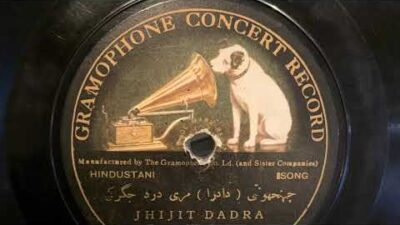
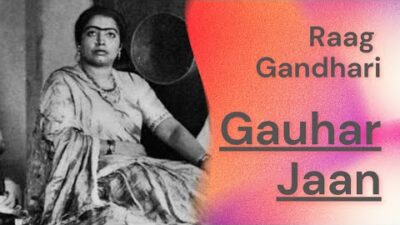
Margin Notesगौहर जान की सारंगी वार्षिकी — प्रसिद्ध गायिका गौहर जान (1873-1930) ने अपने पहले ग्रामोफोन रिकॉर्डिंग में सारंगी के साथ गाया। उनकी 1902 की रिकॉर्डिंग 'ठुमरी' 'रस के भरे तोरे नयन' (गज़ल संगीत) सारंगी के साथ है, जो 1902 की HindiGeet.in सूची में है।
The legendary vocalist Gauhar Jaan (1873-1930) sang with sarangi in her earliest gramophone recordings. Her 1902 recording 'Thumri: Ras ke Bhare Tore Nain' (gazal melody) features sarangi and is included in HindiGeet.in's 1902 catalog.
सारंगी का विलोप एवं पुनरुद्धार — 1960 के दशक में, सारंगी भारत में लगभग लुप्त हो गया था। केवल 3-4 मास्टर प्लेयर बचे थे। संगीत इतिहासकार फाथेमा साइद (Fathema Said) और रामकुमार (Ramakumar) ने पुरानी ग्रामोफोन रिकॉर्डिंग को संरक्षित और पुनः जारी किया, जिससे पुनरुजागरण की शुरुआत हुई।
By the 1960s, sarangi was nearly extinct in India. Only 3-4 master players remained. Musicologists Fathema Said and Ramakumar preserved and reissued old gramophone recordings, sparking a revival.
तारों की संख्या और राग — सारंगी के सहानुभूतिशील तारों (20-40) की संख्या एकल रागा के लिए ट्यून की जा सकती है। यदि कोई राग की किसी विशेष आवश्यकता के लिए तार जोड़ना चाहता है, तो उसे नई खूंटी और मोती अंकों को ड्रिल करना होगा। यह सारंगी को 'रागात्मक' बनाता है — यह एक राग के लिए पूरी तरह से अनुकूलित हो सकता है।
The sarangi's sympathetic strings (20-40) can be tuned to a single raga. If a musician wants to add strings for a particular raga's requirement, they must drill new peg holes and bridge notches. This makes sarangi 'raga-specific' — it can be fully optimized for one raga.
सारंगी और मीड की कला — भारतीय संगीत सिद्धांत में, 'मीड' (स्लाइडिंग) सारंगी पर सबसे स्वाभाविक और परिष्कृत है। अन्य साथी वाद्य यंत्र (तनपुरा, हारमोनियम) मीड को समर्थन नहीं कर सकते, केवल पृष्ठभूमि ताल प्रदान कर सकते हैं। सारंगी की फ्रेटलेस डिज़ाइन और धनुष नियंत्रण इसे गायक के साथ सीधे 'बात करने' की अनुमति देता है।
In Indian music theory, 'meend' (sliding) is most natural and sophisticated on sarangi. Other accompanying instruments (tanpura, harmonium) cannot support meend, only provide rhythmic background. Sarangi's fretless design and bow control allow it to 'speak' directly with the vocalist.
सवाल-जवाब
Questions & Answersसारंगी क्या है?
सारंगी एक परंपरागत भारतीय धनुष-आधारित तारवाली वाद्य यंत्र है जिसकी ध्वनि मानवीय आवाज़ के सबसे निकट है। इसका उपयोग हिंदुस्तानी शास्त्रीय संगीत, ठुमरी, और हल्के शास्त्रीय संगीत में साथ वाद्य यंत्र के रूप में होता है।
सारंगी के कितने तार होते हैं?
सारंगी में आमतौर पर 3-4 मुख्य तार (वादन तार) और 20-40 सहानुभूतिशील तार होते हैं। सहानुभूतिशील तार वाद्य यंत्र को एक समृद्ध, झनझनाती ध्वनि देते हैं।
सारंगी ग्रामोफोन युग में महत्वपूर्ण क्यों था?
1902-1930 के दौरान, रिकॉर्डिंग तकनीक अल्पविकसित थी। सारंगी की गर्म, पूर्ण ध्वनि और गायक की आवाज़ के साथ इसके निकट संबंध इसे एक आदर्श साथी वाद्य यंत्र बनाता था। हजारों रिकॉर्डिंग में यह मुख्य साथी था।
क्या सारंगी आज भी प्रासंगिक है?
हाँ, लेकिन सारंगी एक लुप्तप्राय वाद्य यंत्र है। 1980 के दशक में एक पुनरुजागरण शुरू हुआ जब संगीतविदों ने इसकी सांस्कृतिक सार्थकता को पुनः स्वीकार किया। आज, युवा संगीतकार और विद्वान ठुमरी, दादरा और शास्त्रीय संगीत में सारंगी को जीवंत रखे हुए हैं।
गौहर जान ने सारंगी के साथ कौन सी पहली रिकॉर्डिंग की?
'रस के भरे तोरे नयन' (1902) गौहर जान की सबसे प्रसिद्ध ग्रामोफोन रिकॉर्डिंग है। यह एक ठुमरी है जिसमें सारंगी मुख्य साथी है। यह गीत HindiGeet.in के 1902 संग्रह में है।
नमूना-पट्टी
The Specimen Table| नाम | सारंगी · Sarangi |
|---|---|
| अन्य नाम | सारंगा · सारंगी (regional variants) · Sarangi (also: Sāraṅgī) |
| उद्गम | 1700 |
| प्रकार | वाद्य · Instruments |
जुड़े हुए पन्ने
Connected Plates · The Graph Made Visibleअटलस में कोई पन्ना अकेला नहीं — इस वाद्य से जुड़े गीत, कलाकार, शास्त्र और कहानियाँ, सब यहाँ से खुलते हैं।
इस वाद्य के गीत
Songs of this Instruments











साझा कीजिए · Share this Plate