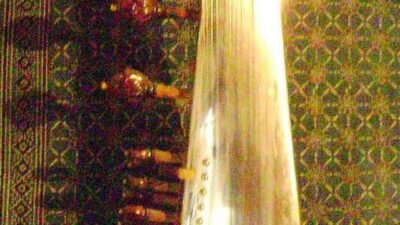
शास्त्र विंग · वाद्य-पट्टिका · Instrument Plate
सरोद
Sarod
गहरी, मधुर ध्वनि वाला तारदार वाद्य यंत्र जो ध्रुपद संगीत की आत्मा है
अन्य नामसरोद वीणा · Afghan rebab
एक पंक्तिसरोद एक फ़्रेटलेस तारदार वाद्य है जिसमें धातु का फ़िंगरबोर्ड और 25+ सहानुभूतिशील तार हैं
परिचय
Overviewसरोद भारतीय शास्त्रीय संगीत का एक अभिन्न अंग है, विशेषकर उत्तर भारतीय संगीत परंपरा में। यह एक गहरी, मधुर और भावपूर्ण ध्वनि वाला तारदार वाद्य यंत्र है जो मानव आवाज़ की भावनात्मक गहराई को प्रकट करने में सक्षम है। सरोद का इतिहास दिलचस्प है - यह अफ़गानिस्तान के रेबाब से विकसित हुआ और 18वीं-19वीं शताब्दी में भारत में अपना आधुनिक रूप ले गया। सरोद को अपनी अद्भुत बहुमुखी प्रतिभा के लिए जाना जाता है - यह एक साथ ध्रुपद (प्राचीन और गंभीर वादन शैली), ख़याल (मध्यकालीन शैली), और आधुनिक संगीत प्रदर्शन प्रस्तुत कर सकता है। सरोद की वास्तविक सुंदरता इसकी 'मीड' (bending or gliding) करने की क्षमता में निहित है - जहाँ संगीतकार एक स्वर से दूसरे स्वर तक बिना किसी छलांग के सरकता है। यह क्षमता सरोद को अन्य भारतीय वाद्य यंत्रों से अलग करती है। इसके अलावा, सरोद के 25-30 तार (जिनमें से 18-22 सहानुभूतिशील तार हैं) एक समृद्ध, व्यापक ध्वनि आभामंडल (resonance) बनाते हैं जो श्रोताओं को मुग्ध कर देता है। 20वीं शताब्दी के महान सरोद वादक अलाऊद्दीन खान ने सरोद को एक नई ऊँचाई प्रदान की। उनके शिष्य अमजद अली खान ने न केवल इस परंपरा को आगे बढ़ाया, बल्कि सरोद को एक विश्वव्यापी दर्शकों तक पहुँचाया। आज, सरोद भारतीय शास्त्रीय संगीत का सबसे महत्वपूर्ण और सुसंस्कृत यंत्र है।
अंग्रेज़ी में पढ़ें · Read in English
The sarod is an integral part of Indian classical music, particularly in the North Indian musical tradition. It is a stringed instrument with a deep, mellow, and emotionally expressive tone capable of conveying the emotional depth of the human voice. The sarod's history is fascinating—it evolved from the Afghan rebab and took its modern form in India during the 18th-19th centuries. The sarod is renowned for its remarkable versatility—it can simultaneously present dhrupad (ancient and serious performance style), khyal (medieval style), and modern musical expressions.
The true beauty of the sarod lies in its ability to perform 'meend' (bending or gliding)—where the musician slides smoothly from one note to another without any break. This capability distinguishes the sarod from other Indian instruments. Additionally, the sarod's 25-30 strings (of which 18-22 are sympathetic strings) create a rich, spacious sonic resonance that captivates listeners.
Alauddin Khan, the great 20th-century sarod maestro, elevated the instrument to new heights. His student Amjad Ali Khan not only carried forward this tradition but also brought the sarod to a global audience. Today, the sarod is one of Indian classical music's most important and refined instruments.
काव्य-पंक्ति · The Verse
काव्य-पंक्ति
सरोद की ध्वनि में बसती है अनंत गहराई, हर नोट बनता है एक भूली हुई कहानी की कड़ी।
— परंपरागत भारतीय संगीत ज्ञान In the sarod's sound dwells infinite depth, Each note becomes a link in a forgotten tale.
वर्गीकरण
ClassificationNatya Shastra
तत् वाद्य (Tat Vadya)
Stringed Instrument
नाट्यशास्त्र में तत् वाद्य वर्ग में आता है जहाँ तार को चँवर कर ध्वनि निकाली जाती है
Classified as Tat Vadya in Natya Shastra, where strings are plucked to produce sound
Western
String
Plucked - Fretless
पश्चिमी संगीत वर्गीकरण में यह प्लक्ड स्ट्रिंग इंस्ट्रूमेंट है जो लूट परिवार का सदस्य है
In Western classification, it is a plucked string instrument of the lute family
Hornbostel Sachs
321.312
साधारण सिर, फ्रेटलेस नेक के साथ लूट-प्रकार का वाद्य
सिनेमा में
In Cinemaसरोद ने भारतीय फ़िल्मों में एक महत्वपूर्ण भूमिका निभाई है, विशेषकर क्लासिकल और गंभीर विषयों वाली फ़िल्मों में। 1950s और 1960s में, कई प्रसिद्ध संगीतकारों ने अपनी रचनाओं में सरोद का उपयोग किया। अमजद अली खान, जो 20वीं शताब्दी के सबसे महान सरोद वादक थे, ने कई फ़िल्मों के लिए संगीत प्रदान किया। आजकल, सरोद आमतौर पर ऐतिहासिक फ़िल्मों, जीवनी फ़िल्मों, और भारतीय शास्त्रीय संगीत पर आधारित फ़िल्मों में सुना जाता है। यह यंत्र भारतीय संस्कृति की गहराई और परिष्कार को व्यक्त करने के लिए एक आदर्श माध्यम बन गया है।
अंग्रेज़ी में पढ़ें · Read in English
The sarod has played a significant role in Indian cinema, particularly in classical and serious-themed films. During the 1950s and 1960s, many renowned music directors incorporated the sarod into their compositions. Amjad Ali Khan, who was one of the 20th century's greatest sarod players, provided music for several films. Today, the sarod is commonly heard in historical films, biographical films, and films based on Indian classical music. It has become an ideal medium for expressing the depth and sophistication of Indian culture.
वर्तमान स्थिति
Modern Statusविवरण
आजकल सरोद की स्थिति मिश्रित है। एक ओर, विश्वव्यापी स्तर पर सरोद को बहुत सम्मान दिया जाता है और कई प्रतिभाशाली युवा इसे सीख रहे हैं। अमजद अली खान जैसे महान कलाकारों ने संगीत को एक वैश्विक दर्शकों तक पहुँचाया है। दूसरी ओर, भारत में एक गहरे पारंपरिक ज्ञान वाले शिक्षकों की कमी बढ़ रही है। सरोद निर्माण की शिल्प भी संकट में है क्योंकि कम लोग इस कारीगरी को सीखना चाहते हैं।
अंग्रेज़ी में पढ़ें · Read in English
The modern status of the sarod is mixed. On one hand, the sarod is highly respected globally and many talented youth are learning it. Great artists like Amjad Ali Khan have brought the music to a global audience. On the other hand, there is a growing shortage of deeply knowledgeable traditional teachers in India. The sarod-making craft is also in crisis as fewer people wish to learn this artisanal skill.
Estimated Players
500-1000 globally
Revival Efforts
अमजद अली खान फाउंडेशन और अन्य संगीत संगठन सरोद परंपरा को संरक्षित और प्रचारित कर रहे हैं। विश्वविद्यालयों में सरोद के पाठ्यक्रम भी चल रहे हैं।
अंग्रेज़ी में पढ़ें · Read in English
The Amjad Ali Khan Foundation and other music organizations are working to preserve and promote the sarod tradition. University programs teaching sarod are also operating.
बनावट
Physicalविवरण
सरोद की मूल संरचना अत्यंत जटिल और परिष्कृत है। इसका शरीर आमतौर पर महोगनी, शीशम या अन्य मजबूत लकड़ी से बना होता है, जो एक गोलाकार कटोरी जैसा दिखता है। ऊपर की ओर एक लंबी, पतली गर्दन होती है जिस पर धातु का फ़िंगरबोर्ड लगा होता है। यह फ़िंगरबोर्ड ही सरोद को अन्य सितार जैसे यंत्रों से अलग करता है क्योंकि इसमें कोई दृश्य झलियाँ (frets) नहीं होती। इसके बजाय, बारीक धातु की पट्टियाँ अंदर से लगी होती हैं जो संगीतकार को सटीक स्वर प्राप्त करने में मदद करती हैं। सामने का हिस्सा चमड़े से ढका होता है, जो प्रायः बकरी की खाल होती है। इस चमड़े पर कई छेद होते हैं जो ध्वनि को बाहर निकालने में मदद करते हैं।
अंग्रेज़ी में पढ़ें · Read in English
The sarod's basic structure is extremely intricate and refined. Its body is usually made from mahogany, rosewood, or other sturdy wood, appearing like a rounded bowl. A long, thin neck extends upward with a metal fingerboard attached. This metal fingerboard distinguishes the sarod from other sitar-like instruments as it has no visible frets. Instead, fine metal strips are embedded inside to help musicians achieve precise pitch. The front is covered with skin, typically goat leather, which has several holes to allow sound to project outward.
Dimensions
76-84 cm
20-25 cm
15-18 cm
2.5-3.5 kg
Strings Or Keys
सरोद में कुल तार की संख्या 25-30 होती है। इनमें मुख्य वादन तार (main playing strings) 4-5 होते हैं, सहायक तार (chikari strings) 3-4 होते हैं, और बाकी सभी सहानुभूतिशील तार (sympathetic strings) होते हैं जो कँपन के द्वारा ध्वनि को समृद्ध करते हैं।
The sarod has 25-30 total strings. Of these, 4-5 are main playing strings, 3-4 are chikari (high-pitched) strings, and the rest are sympathetic strings that resonate to enrich the sound.
25-30 strings: 4-5 main + 3-4 chikari + 18-22 sympathetic
स्टील (वादन तार) और पीतल (सहानुभूतिशील तार)
Steel (playing strings) and brass (sympathetic strings)
Tuning
हिंदुस्तानी संगीत प्रणाली जहाँ 'सा' को आधार माना जाता है।
Hindustani music system with Sa (tonic) as the reference note
मुख्य तार: सा-सा-पा (Sa-Sa-Pa) [4 तार]। सहायक: पा-सा (Pa-Sa) [2 तार]। सहानुभूतिशील तार राग के अनुसार ट्यून किए जाते हैं।
साढे तीन अक्टेव (3.5 octaves)
Construction
सरोद का मुख्य शरीर जो गोलाकार कटोरी के आकार का होता है। यह संरणी या अन्य कठोर लकड़ी से बना होता है।
The main resonating chamber shaped like a rounded bowl, typically carved from a single piece of resonant wood.
लंबी, पतली और सीधी गर्दन जो पेट से जुड़ी होती है। इसी पर धातु का फ़िंगरबोर्ड लगा होता है।
A long, slender straight neck that extends from the body with a metal fingerboard attached along its length.
धातु का एक चिकना, मजबूत फ़िंगरबोर्ड जिस पर कोई दृश्य झलियाँ नहीं होती। संगीतकार अपनी अनुभूति से सही स्वर निकालते हैं। इसे 'समतल' भी कहा जाता है।
A smooth, sturdy metal fingerboard with no visible frets, requiring the musician to rely on touch and ear for correct pitch.
पेट के सामने लगा हुआ चमड़ा जो आमतौर पर बकरी की खाल होता है। इसमें कई छेद (रोएँ) होते हैं जो ध्वनि को प्रवर्धित करते हैं।
Skin covering the front of the body, typically goat leather with multiple holes to amplify sound projection.
गर्दन के ऊपरी सिरे पर लगे हुए घूमने वाले पेग जो तारों को ट्यून करने के लिए उपयोग होते हैं।
Rotating pegs at the top of the neck used to tune the main playing strings.
ध्वनि-चरित्र
SoundTonal Character
सरोद की ध्वनि गहरी, मधुर और व्यापक गतिशीलता वाली होती है। इसमें एक अद्वितीय 'मोटापन' (warmth) है जो भावुकता और गहराई को व्यक्त करता है। जब मेहँदी लगे हाथों से बजाया जाता है, तो यह ध्वनि रेशमी, संवेदनशील और अत्यंत अभिव्यंजक हो जाती है। नरम नोट्स से लेकर तीव्र गतिशील अलंकार तक, सरोद की सीमा व्यापक होती है। इसकी सहानुभूतिशील तारें एक समृद्ध, व्यापक आभामंडल (resonance) बनाती हैं।
अंग्रेज़ी में पढ़ें · Read in English
The sarod produces a deep, mellow, and highly dynamic tone. It has a unique 'warmth' that conveys profound emotion and depth. When played with henna-adorned hands, the sound becomes silken, sensitive, and intensely expressive. From soft passages to rapid, elaborate ornamentations, the sarod's range is extensive. Its sympathetic strings create a rich, spacious resonance.
Timbre
मोटा, गर्मजोशी भरा, सांत्वनादायक - जैसे किसी गहरे, पुरानी कहानी को सुनना
अंग्रेज़ी में पढ़ें · Read in English
Rich, warm, comforting — like listening to a deep, ancient tale
Dynamic Range
अत्यंत व्यापक। pianissimo (बहुत नरम) से fortissimo (बहुत तेज) तक।
अंग्रेज़ी में पढ़ें · Read in English
Extremely wide, from delicate pianissimo to powerful fortissimo
Comparison
भारतीय शास्त्रीय संगीत में आमतौर पर सरोद की तुलना मानव आवाज़ (विशेषकर गहरी बारिटोन या गायिका की आवाज़) से की जाती है। इसमें मानव स्वर जैसी भावुकता और सूक्ष्मता होती है।
अंग्रेज़ी में पढ़ें · Read in English
In Indian classical music, the sarod is often compared to the human voice, particularly a deep baritone or a female vocalist's nuanced expressions. It carries the emotional subtlety of vocal music.
वादन-तकनीक
Playing Techniqueविवरण
सरोद बजाना एक अत्यंत कुशल और संवेदनशील कला है जिसके लिए बरसों की तैयारी आवश्यक है। संगीतकार सरोद को एक झुकी हुई स्थिति में रखता है, अपनी बाईं ओर रखते हुए, और दाहिने हाथ से एक त्रिकोणीय प्लेक्ट्रम (मेहँदी) का उपयोग करता है। मुख्य वादन तारें दाहिने हाथ से बजाई जाती हैं, जबकि बाईं ओर की उँगलियाँ धातु के फ़िंगरबोर्ड पर दबाव डालकर विभिन्न स्वर और सूक्ष्म भावपूर्ण अभिव्यक्तियाँ (meend) निकालती हैं। सबसे महत्वपूर्ण बात यह है कि सरोद में कोई दृश्य झलियाँ नहीं होती, इसलिए संगीतकार को अपने कानों और स्पर्श से ही सही पिच प्राप्त करनी पड़ती है। यह उँगलियों और धातु फ़िंगरबोर्ड के बीच का बारीक संवाद ही सरोद वादन की आत्मा है।
अंग्रेज़ी में पढ़ें · Read in English
Playing the sarod is a highly skilled and sensitive art requiring years of practice. The musician holds the sarod in an inclined position on the left side, plucking the strings with a triangular pick (called a mezrab) held in the right hand. The main playing strings are plucked with the right hand, while fingers of the left hand press on the metal fingerboard to produce various pitches and subtle emotional expressions (meend). Crucially, the sarod has no visible frets, so the musician must rely on ear and touch to achieve accurate pitch. This delicate dialogue between fingers and metal fingerboard is the essence of sarod playing.
Posture
संगीतकार बैठी हुई स्थिति में, पैरों को सामने की ओर फैलाए, सरोद को अपनी बाईं जाँघ पर रखता है। कंधे आरामदायक और आराम से होते हैं। सिर हल्का सा आगे की ओर झुका होता है ताकि हाथ और उँगलियाँ आसानी से काम कर सकें।
अंग्रेज़ी में पढ़ें · Read in English
The musician sits with legs extended, resting the sarod on the left thigh. Shoulders remain relaxed and comfortable. The head tilts slightly forward to allow hands and fingers to work with ease.
Techniques
सरोद पर विभिन्न प्रकार के सजावटी आरोहण और अवरोहण (scales) बजाने की तकनीक। इनमें द्रुत गति से स्वर-समूह (phrases) निकाले जाते हैं। यह तकनीक संगीतकार की तकनीकी कौशल को दर्शाती है।
The technique of executing rapid runs of notes with ornamental embellishments. This involves quick ascending and descending scale passages that showcase the musician's technical mastery.
एक स्वर से दूसरे स्वर तक बिना किसी छलांग के सरकते हुए जाना। यह सरोद की सबसे महत्वपूर्ण और मार्मिक तकनीक है। बाईं ओर की उँगलियाँ धीरे-धीरे दबाव बढ़ाती हैं या घटाती हैं ताकि पिच में सुचारु परिवर्तन हो।
Sliding smoothly from one note to another without any break. This is the sarod's most characteristic and emotionally expressive technique. The left hand fingers gradually increase or decrease pressure to create smooth pitch transitions.
तेज़ गति से बार-बार एक ही स्वर या कुछ चुने हुए स्वरों को बजाना। यह आमतौर पर राग के निष्कर्ष में बजाया जाता है और बहुत ऊर्जावान और उत्तेजनापूर्ण होता है।
Rapidly repeating a single note or a few selected notes in quick succession. Usually played near the conclusion of a raga, it is energetic and exciting.
तेज़ गति से विभिन्न स्वरों का एक सुसंगत क्रम बजाना। यह ख़याल गायन की परंपरा से आया है और सरोद पर भी बहुत प्रभावशाली है।
Playing a rapid sequence of different notes in a coherent melodic phrase. This technique comes from vocal khyal tradition and is equally impressive on the sarod.
निर्माण-प्रक्रिया
Making Processविवरण
सरोद का निर्माण एक अत्यंत जटिल और समय-साध्य प्रक्रिया है जिसमें कई महीने लग जाते हैं। पहली चरण में एक उपयुक्त लकड़ी का चुनाव किया जाता है, आमतौर पर शीशम जो घनी और मजबूत होती है। कारीगर इस लकड़ी को सावधानीपूर्वक तराशते हैं ताकि सही आकार और गहनता प्राप्त हो। पेट (body) को गोलाकार कटोरी के आकार में उकेरा जाता है, जिसमें सूक्ष्म अनुपात बहुत महत्वपूर्ण होते हैं। गर्दन को अलग से तराशा जाता है और फिर पेट के साथ जोड़ा जाता है। धातु का फ़िंगरबोर्ड सावधानीपूर्वक तैयार किया जाता है और चिपकाया जाता है। फिर चमड़े को सामने की ओर लगाया जाता है, जिसे विशेष चिपकने वाली सामग्री से जोड़ा जाता है। अंत में, तारों को सावधानीपूर्वक स्थापित किया जाता है और प्रत्येक तार को अलग-अलग ट्यून किया जाता है।
अंग्रेज़ी में पढ़ें · Read in English
Manufacturing a sarod is an extremely complex and time-consuming process taking several months. The first step involves selecting appropriate wood, typically rosewood, which is dense and durable. Craftsmen carefully carve this wood to achieve proper shape and depth. The body is carved into a rounded bowl shape where proportions are critical. The neck is carved separately and then joined to the body. The metal fingerboard is carefully prepared and attached with special adhesive. The skin covering is then applied to the front, joined with specialized glue. Finally, strings are carefully installed and individually tuned.
Materials
पेट, गर्दन और अन्य संरचनात्मक भाग बनाने के लिए। यह घनी, मजबूत और अच्छी ध्वनि प्रवर्धन वाली लकड़ी होती है।
Used for the body, neck, and structural components. It is dense, durable, and provides excellent acoustic properties.
फ़िंगरबोर्ड, तार, और अन्य धातु के भागों के लिए।
For the fingerboard, strings, and other metal components.
पेट के सामने की ओर लगाई जाने वाली खाल जो ध्वनि को प्रवर्धित करती है।
Applied to the front of the body to amplify sound projection.
विशेष चिपकने वाली सामग्री जिससे विभिन्न भागों को जोड़ा जाता है।
Special adhesive materials used to join various components.
Artisan Centers
भारत का सबसे प्रसिद्ध सरोद निर्माण केंद्र। यहाँ कई पीढ़ियों से सरोद बनाए जा रहे हैं।
India's most famous sarod-making center with a tradition spanning many generations.
भारतीय राजधानी में भी कुछ प्रसिद्ध सरोद कारीगर हैं जो उच्च गुणवत्ता के उपकरण बनाते हैं।
The capital also has several renowned craftsmen producing high-quality sarod instruments.
ध्रुपद परंपरा का महत्वपूर्ण केंद्र जहाँ उच्चकोटि के सरोद निर्मित होते हैं।
An important center of dhrupad tradition where high-quality sarod instruments are crafted.
Time To Craft
6-8 months (कुछ दुर्लभ उदाहरणों में 12 महीने तक)
Price Range
₹50,000-5,00,000+ (पेशेवर-गुणवत्ता वाले सरोद के लिए)
संगीत-समूह में भूमिका
Role In EnsemblePrimary Role
सरोद प्राथमिकता से एक एकल वाद्य यंत्र है जो ध्रुपद संगीत में मुख्य भूमिका निभाता है। यह गीतकार की आवाज़ की नकल करता है और विस्तृत राग व्याख्या प्रदान करता है।
अंग्रेज़ी में पढ़ें · Read in English
The sarod is primarily a solo instrument that plays a leading role in dhrupad music. It mimics the vocalist's voice and provides elaborate raga exposition.
Solo Capability
अत्यंत उच्च। सरोद अपने आप में एक पूरा संगीत प्रदर्शन प्रस्तुत कर सकता है, जिसमें विस्तृत राग अन्वेषण (alap), संरचित खंड (jor-jhala), और ताबद्ध रचनाएँ (bandishes) शामिल हैं।
अंग्रेज़ी में पढ़ें · Read in English
Exceptionally high. The sarod can present a complete musical performance on its own, including elaborate raga exposition, rhythmic development, and composition-based sections.
Accompaniment For
सरोद ध्रुपद गायक को साथ देता है, गायक की आवाज़ की गहराई को प्रतिध्वनित करता है।
The sarod accompanies the dhrupad vocalist, echoing and reinforcing the depth of the voice.
आधुनिक समय में, सरोद खयाल गायकों के साथ भी बजाया जाता है।
In modern times, the sarod also accompanies khyal vocalists.
कत्थक नृत्य में सरोद एक महत्वपूर्ण वाद्य है।
In kathak dance, the sarod is an important instrumental accompaniment.
लोक संगीत में
In Folk Musicसरोद मुख्य रूप से शास्त्रीय संगीत का यंत्र है, लेकिन यह कुछ लोक परंपराओं में भी पाया जाता है, विशेषकर उत्तर भारत में। कुछ क्षेत्रों में, सरोद की पूर्वज रेबाब को लोक संगीत में बजाया जाता है। यहाँ यह एक अधिक सरल संस्करण में होता है, लेकिन उसी कलात्मक परंपरा को कायम रखता है। कुछ सूफ़ी संगीत परंपराओं में भी सरोद या इसके पूर्वज को सुना जा सकता है, जहाँ यह आध्यात्मिक अभिव्यक्ति का एक माध्यम है।
अंग्रेज़ी में पढ़ें · Read in English
The sarod is primarily a classical music instrument, but it is also found in some folk traditions, particularly in North India. In some regions, the sarod's predecessor, the rebab, is played in folk music contexts. Here it exists in a simpler form but maintains the same artistic tradition. In some Sufi music traditions, the sarod or its ancestors can also be heard, where it serves as a medium for spiritual expression.
क्षेत्रीय रूप
Regional Variantsमैहर घराने में सरोद की परंपरा अलाऊद्दीन खान और उनके शिष्य अमजद अली खान के द्वारा प्रतिष्ठित हुई। इस घराने में सरोद में ख़याल और ध्रुपद दोनों शैलियों का मिश्रण है।
The Maihar gharana tradition was established by Alauddin Khan and his student Amjad Ali Khan. This tradition blends both khyal and dhrupad styles on the sarod.
अलाऊद्दीन खान के दूसरे पुत्र अली अकबर खान ने सरोद वादन में एक अलग शैली विकसित की जो अधिक गीतात्मक और मृदु है।
Alauddin Khan's other son developed a distinct style of sarod playing that is more lyrical and gentle.
प्रसिद्ध वादक
Famous Playersअमजद अली खान को 20वीं शताब्दी का सबसे महान सरोद वादक माना जाता है। वे अलाऊद्दीन खान के प्रपोते हैं और मैहर घराने की परंपरा को आगे बढ़ाते हैं। उनकी ध्वनि गहरी, भावपूर्ण और तकनीकी रूप से विस्मयकारी है। उन्होंने संगीत को एक विश्वव्यापी दर्शकों तक पहुँचाया है।
Amjad Ali Khan is considered the greatest sarod player of the 20th century. He is the grandson of Alauddin Khan and continues the Maihar gharana tradition. His tone is deep, emotionally profound, and technically masterful. He has brought Indian classical music to a global audience.
अलाऊद्दीन खान के पुत्र, अली अकबर खान ने सारंगी वादन में विशेषज्ञता हासिल की, लेकिन उन्होंने सरोद पर भी उत्कृष्ट कार्य किया। उनकी शैली अधिक गीतात्मक और सूक्ष्म थी।
The son of Alauddin Khan, Ali Akbar Khan specialized in sarangi but also excelled on the sarod. His style was more lyrical and nuanced.
बहादुर खान अलाऊद्दीन खान के भाई थे और एक विख्यात सरोद वादक थे। उन्होंने ध्रुपद परंपरा में विशेष कार्य किया।
Bahadur Khan was the brother of Alauddin Khan and a renowned sarod maestro. He made special contributions to the dhrupad tradition.
एक प्रमुख समकालीन सरोद वादक जो अमजद अली खान की परंपरा को आगे बढ़ा रहे हैं।
A prominent contemporary sarod player who continues the Amjad Ali Khan legacy.
राग-उपयुक्तता
Raag Suitabilityसरोद पर यमन बहुत सुंदर लगता है क्योंकि इसकी प्राकृतिक माधुर्य सरोद की गहरी ध्वनि के साथ मेल खाती है।
Yaman sounds beautiful on the sarod because its natural sweetness complements the instrument's deep tone.
इस राग की गंभीरता सरोद की शक्तिशाली ध्वनि के साथ परफेक्ट मेल खाती है।
The gravity of this raga pairs perfectly with the sarod's powerful resonance.
यह राग सरोद पर अत्यंत प्रभावशाली है, विशेषकर रात के संगीत के लिए।
This raga is extremely impressive on the sarod, particularly for night concerts.
घराना-संबंध
Gharana Connectionsमैहर घराना सरोद की सबसे प्रसिद्ध परंपरा है। यह घराना अलाऊद्दीन खान द्वारा स्थापित किया गया था।
The Maihar gharana is the most renowned tradition of sarod. Founded by Alauddin Khan.
सेनिया घराने की परंपरा में भी सरोद एक महत्वपूर्ण यंत्र है।
The sarod is also significant in the Senia gharana tradition.
सीखने का मार्ग
Learning Pathविवरण
सरोद सीखना एक दीर्घकालीन और गहन यात्रा है जिसमें बरसों का नियमित अभ्यास आवश्यक है। शुरुआत में, एक छात्र बुनियादी बैठने की मुद्रा, उँगलियों की स्थिति, और प्लेक्ट्रम पकड़ने का तरीका सीखता है। फिर, वे सरल स्वरों (notes) और उनके संयोजनों को सीखना शुरू करते हैं। इसके बाद, वे बुनियादी अलंकार (scales) और तान सीखते हैं। प्रारंभिक चरणों में, छात्र को अपनी श्रवण क्षमता विकसित करने पर ध्यान देना चाहिए क्योंकि सरोद पर सटीक पिच को अपने कानों के आधार पर ही निर्धारित करना पड़ता है।
अंग्रेज़ी में पढ़ें · Read in English
Learning the sarod is a long-term and intensive journey requiring years of regular practice. Initially, a student learns basic sitting posture, finger positioning, and how to hold the pick. They then begin learning simple notes and their combinations. Subsequently, students learn basic scales and improvisational phrases. In early stages, students should focus on developing listening skills since pitch accuracy on the sarod depends entirely on ear training.
Beginner Steps
एक अच्छे सरोद का चुनाव करना, सही बैठने की मुद्रा सीखना, और उँगलियों को व्यायाम करना।
Selecting a good sarod, learning proper sitting posture, and conditioning the fingers.
सरोद के मुख्य स्वरों (Sa, Re, Ga, Ma, Pa, Dha, Ni) को सीखना और उन्हें सही पिच में बजाना।
Learning the main notes and playing them with correct pitch.
एक या दो सरल राग चुनकर उनकी बारीकियों को समझना।
Selecting one or two simple raags and understanding their characteristics.
मीड, अलंकार, और तान जैसी तकनीकों को धीरे-धीरे विकसित करना।
Gradually developing techniques like meend, alankaar, and taan.
सामान्य अवधि
10-15 years for basic proficiency, 20+ years for mastery
संस्थान
मैहर, मध्य प्रदेश में स्थित, यह विद्यालय अमजद अली खान द्वारा संचालित किया जाता है।
Located in Maihar, Madhya Pradesh, run by Amjad Ali Khan.
भारत के विभिन्न संगीत महाविद्यालयों में सरोद शिक्षा उपलब्ध है।
Sarod instruction is available at various music colleges across India.
सांस्कृतिक महत्व
Cultural Significanceसरोद का सांस्कृतिक महत्व भारतीय सभ्यता के बहुस्तरीय विकास में निहित है। यह यंत्र न केवल संगीत का एक माध्यम है, बल्कि भारतीय दर्शन, भावना और सौंदर्यबोध की अभिव्यक्ति भी है। सरोद की प्रत्येक ध्वनि एक गहरे आध्यात्मिक अनुभव को जन्म दे सकती है। ध्रुपद परंपरा, जिसमें सरोद की मुख्य भूमिका है, मनुष्य के आंतरिक संसार को खोजने का एक मार्ग है। यह संगीत-दर्शन सिखाता है कि कैसे ध्वनि, लय, और भावना को एक साथ बुना जाए ताकि एक ऐसा अनुभव बने जो आत्मा को स्पर्श करे।
अंग्रेज़ी में पढ़ें · Read in English
The sarod's cultural significance lies in its multilayered role in Indian civilization's development. It is not merely a medium of music but an expression of Indian philosophy, emotion, and aesthetics. Each note of the sarod can evoke a deep spiritual experience. The dhrupad tradition, in which the sarod plays a central role, is a pathway to exploring humanity's inner world. This musical philosophy teaches how sound, rhythm, and emotion can be woven together to create an experience that touches the soul.
सुनने का मार्गदर्शन
The Listening Guideसरोद को सुनना एक संवेदनशील और गहन अनुभव है। पहली बार सुनते समय, संगीत की जटिलता आपको अभिभूत कर सकती है। लेकिन धीरे-धीरे, जैसे आप अधिक सुनते हैं, आप राग की संरचना को समझने लगते हैं। सरोद के प्रदर्शन को आमतौर पर तीन भागों में बाँटा जाता है: (1) अलाप - जहाँ संगीतकार धीरे-धीरे राग को प्रस्तुत करता है; (2) जोर-झाला - तेज़ गति से अलंकार और रैपिड फेज़; (3) ताबद्ध रचनाएँ - संरचित संगीतात्मक रचनाएँ जो ताल (छंद) के साथ होती हैं। एक प्रदर्शन सुनते समय, धैर्य रखें और संगीतकार को अपनी कहानी कहने दें।
अंग्रेज़ी में पढ़ें · Read in English
Listening to the sarod is a sensitive and profound experience. When first listening, the music's complexity may overwhelm you. But gradually, as you listen more, you begin understanding the raga's structure. A sarod performance is typically divided into three parts: (1) Alap - where the musician gradually introduces the raga; (2) Jor-Jhala - rapid ornamentations and flowing passages; (3) Composition-based sections - structured musical pieces performed with rhythm. When listening to a performance, be patient and let the musician tell their story.
श्रवण-कक्ष · The Listening Room
देखें-सुनें
अमजद अली खान - राग देश · 55:34
उस्ताद अली अकबर खान - शांतिपूर्ण सरोद संगीत · 1:43:02
परिचय
Identity- Year Of Origin
- 1800
वर्गीकरण
Classification- Code
- 321.312
- Description
- साधारण सिर, फ्रेटलेस नेक के साथ लूट-प्रकार का वाद्य
- Category
- तत् वाद्य (Tat Vadya)
- Category En
- Stringed Instrument
- Description
- नाट्यशास्त्र में तत् वाद्य वर्ग में आता है जहाँ तार को चँवर कर ध्वनि निकाली जाती है
- Description En
- Classified as Tat Vadya in Natya Shastra, where strings are plucked to produce sound
Hornbostel Sachs
Natya Shastra
अन्य विवरण
More Details- पेट (Body) — सरोद का मुख्य शरीर जो गोलाकार कटोरी के आकार का होता है। यह संरणी या अन्य कठोर लकड़ी से बना होता है। · Body
- गर्दन (Neck) — लंबी, पतली और सीधी गर्दन जो पेट से जुड़ी होती है। इसी पर धातु का फ़िंगरबोर्ड लगा होता है। · Neck
- फ़िंगरबोर्ड (Fingerboard) — धातु का एक चिकना, मजबूत फ़िंगरबोर्ड जिस पर कोई दृश्य झलियाँ नहीं होती। संगीतकार अपनी अनुभूति से सही स्वर निकालते हैं। इसे 'समतल' भी कहा जाता है। · Fingerboard
- चमड़ा (Skin) — पेट के सामने लगा हुआ चमड़ा जो आमतौर पर बकरी की खाल होता है। इसमें कई छेद (रोएँ) होते हैं जो ध्वनि को प्रवर्धित करते हैं। · Skin covering
- पेग (Tuning Pegs) — गर्दन के ऊपरी सिरे पर लगे हुए घूमने वाले पेग जो तारों को ट्यून करने के लिए उपयोग होते हैं। · Tuning pegs
- System
- हिंदुस्तानी संगीत प्रणाली जहाँ 'सा' को आधार माना जाता है।
- System En
- Hindustani music system with Sa (tonic) as the reference note
- Standard Tuning
- मुख्य तार: सा-सा-पा (Sa-Sa-Pa) [4 तार]। सहायक: पा-सा (Pa-Sa) [2 तार]। सहानुभूतिशील तार राग के अनुसार ट्यून किए जाते हैं।
- Range
- साढे तीन अक्टेव (3.5 octaves)
Construction
Tuning
Timbre
मोटा, गर्मजोशी भरा, सांत्वनादायक - जैसे किसी गहरे, पुरानी कहानी को सुनना
रोचक तथ्य
Margin Notesसरोद का नाम 'सेहरा-रूद' से आया है, जिसका मतलब अफ़ारवी भाषा में 'सुंदर आवाज़' होता है। यह शब्द पारसी और अफ़गानी प्रभाव का एक सुंदर उदाहरण है।
The name 'sarod' comes from 'sehra-rud,' which means 'beautiful sound' in Persian. It exemplifies Persian and Afghan linguistic influence.
अलाऊद्दीन खान, जो 20वीं शताब्दी के सबसे प्रभावशाली संगीत शिक्षक थे, ने न केवल सरोद बल्कि सितार, बांसुरी और हारमोनियम भी सिखाया। उन्होंने अपने पाँच बेटों को संगीतकार बनाया।
Alauddin Khan, one of the 20th century's most influential music teachers, taught not only sarod but also sitar, flute, and harmonium. He trained all five of his sons as musicians.
अमजद अली खान को तीन बार ग्रैमी अवार्ड के लिए नामांकित किया गया है। वे हिंदुस्तानी संगीत को पश्चिमी श्रोताओं तक पहुँचाने वाले पहले भारतीय संगीतकारों में से एक हैं।
Amjad Ali Khan has been nominated for three Grammy Awards. He was among the first Indian musicians to bring Hindustani music to Western audiences.
सरोद के सहानुभूतिशील तार (sympathetic strings) की संख्या लगभग 18-22 होती है। ये तार मुख्य तारों के साथ कँपन करते हैं और एक समृद्ध, गूँजदार ध्वनि बनाते हैं। यह विशेषता सरोद को सितार से अलग करती है।
The sarod has approximately 18-22 sympathetic strings. These strings vibrate in resonance with the main strings, creating a rich, resonant tone. This feature distinguishes the sarod from the sitar.
पारंपरिक रूप से, सरोद वादकों के हाथ में मेहँदी लगाई जाती थी, विशेषकर प्रदर्शन से पहले। यह न केवल एक सौंदर्य प्रथा थी, बल्कि माना जाता था कि मेहँदी उँगलियों की संवेदनशीलता बढ़ाती है।
Traditionally, sarod players' hands were adorned with henna, especially before performances. This was not only a beauty practice but was believed to enhance finger sensitivity.
क्या आप जानते हैं?
Did You Knowसरोद के फ़िंगरबोर्ड में कोई दृश्य झलियाँ नहीं होती। इसलिए सरोद सीखना सितार सीखने से ज़्यादा कठिन माना जाता है क्योंकि संगीतकार को अपने कानों के आधार पर ही सही पिच खोजनी पड़ती है।
The sarod's fingerboard has no visible frets. Therefore, learning sarod is considered more difficult than learning sitar because the musician must rely entirely on ear training to find correct pitch.
एक अच्छे सरोद को बनाने में 6-8 महीने का समय लग सकता है। और सबसे महँगे सरोद की कीमत ₹5,00,000 या उससे भी अधिक हो सकती है।
A good sarod can take 6-8 months to manufacture. The finest sarods can cost ₹500,000 or more.
सरोद पर 'झाला' नामक तकनीक का उपयोग करते समय, संगीतकार एक ही स्वर को तेज़ गति से बार-बार बजाता है। यह दर्शकों में एक विशेष उत्साह और ऊर्जा जागृत करता है।
When using the 'jhala' technique on the sarod, the musician rapidly repeats a single note. This technique creates special excitement and energy among the audience.
सूक्तियाँ
Words of the Masters“संगीत केवल ध्वनि नहीं है, यह एक भाषा है। सरोद इस भाषा को सबसे सुंदर तरीके से बोलता है।”
— — अमजद अली खान“Music is not merely sound; it is a language. The sarod speaks this language most beautifully.”
“सरोद एक ऐसा यंत्र है जो मानव आत्मा को समझता है।”
“The sarod is an instrument that understands the human soul.”
— — परंपरागत विचार
“सरोद बजाना सिर्फ संगीत नहीं, यह एक आध्यात्मिक यात्रा है।”
“Playing the sarod is not merely music; it is a spiritual journey.”
— — अलाऊद्दीन खान
सवाल-जवाब
Questions & Answersसरोद क्या है?
सरोद एक तारदार वाद्य यंत्र है जिसमें 25-30 तार होते हैं। इसमें एक धातु का फ़िंगरबोर्ड होता है जिसमें कोई दृश्य झलियाँ नहीं होती। यह गहरी, मधुर ध्वनि के लिए प्रसिद्ध है।
सरोद सितार से कैसे अलग है?
सरोद का फ़िंगरबोर्ड पूरी तरह चिकना है और कोई दृश्य झलियाँ नहीं होती, जबकि सितार में स्पष्ट झलियाँ होती हैं। सरोद की ध्वनि गहरी और अधिक भावपूर्ण है। सरोद में अधिक सहानुभूतिशील तार होते हैं।
सरोद कहाँ बनाया जाता है?
सरोद मुख्य रूप से वाराणसी, दिल्ली, और लखनऊ में बनाए जाते हैं। वाराणसी भारत का सबसे प्रसिद्ध सरोद निर्माण केंद्र है जहाँ कई पीढ़ियों से यह शिल्प चल रहा है।
अमजद अली खान कौन हैं?
अमजद अली खान को 20वीं शताब्दी के सबसे महान सरोद वादक माना जाता है। वे अलाऊद्दीन खान के प्रपोते हैं और मैहर घराने की परंपरा को आगे बढ़ाते हैं। उन्होंने सरोद को विश्वव्यापी दर्शकों तक पहुँचाया है।
इतिहास
The Historyउत्पत्ति — 18वीं-19वीं शताब्दी Origin
सरोद का इतिहास अफ़गानिस्तान के रेबाब से शुरू होता है। रेबाब एक प्राचीन, फ़ारसी मूल का तारदार यंत्र है जो मध्य एशिया और दक्षिण एशिया में बजाया जाता है। जब अफ़गानी कारीगर और संगीतकार भारत आए, तो उन्होंने रेबाब को स्थानीय भारतीय संगीत परंपराओं के अनुसार संशोधित करना शुरू किया। 18वीं-19वीं शताब्दी के दौरान, रेबाब धीरे-धीरे सरोद में रूपांतरित हो गया। इसमें भारतीय तार प्रणाली (sympathetic strings) जोड़ी गईं, धातु का फ़िंगरबोर्ड विकसित किया गया, और समग्र आकार और ध्वनि को भारतीय शास्त्रीय संगीत की आवश्यकताओं के अनुसार परिष्कृत किया गया।
अंग्रेज़ी में पढ़ें · Read in English
The sarod's history begins with the Afghan rebab, an ancient Persian-origin stringed instrument played in Central and South Asia. When Afghan craftsmen and musicians came to India, they began modifying the rebab according to local Indian musical traditions. During the 18th-19th centuries, the rebab gradually transformed into the sarod. Indian sympathetic string systems were added, a metal fingerboard was developed, and the overall shape and sound were refined to meet the needs of Indian classical music.
विकास-यात्रा · Evolution
- 18वीं शताब्दी - अफ़गानी-भारतीय संधि इस अवधि में रेबाब को भारतीय संगीत प्रणाली में अनुकूलित किया गया। सहानुभूतिशील तार जोड़े गए और ध्वनि को गहरा बनाया गया। यह एक महत्वपूर्ण परिवर्तन था जो सरोद की पहचान बन गया।
- 19वीं शताब्दी - आधुनिकीकरण और परिष्करण सरोद को और भी परिष्कृत किया गया। धातु के फ़िंगरबोर्ड का विकास हुआ, तारों की प्रणाली को बेहतर बनाया गया, और समग्र निर्माण को अधिक सुव्यवस्थित किया गया।
- 20वीं शताब्दी - अलाऊद्दीन खान का क्रांति अलाऊद्दीन खान ने सरोद को एक नया आयाम दिया। उन्होंने ख़याल और ध्रुपद दोनों परंपराओं को सरोद पर समन्वित किया। उनके प्रभाव से सरोद एक व्यापक राष्ट्रीय और अंतर्राष्ट्रीय स्तर पर सम्मानित यंत्र बन गया।
प्रमुख पड़ाव · Key Milestones
- 1700 रेबाब का भारतीयकरण शुरू
- 1850 सरोद का आधुनिक रूप स्थापित होता है
- 1900 अलाऊद्दीन खान का जन्म
- 1920 अलाऊद्दीन खान मैहर में शिक्षण शुरू करते हैं
- 1945 अमजद अली खान का जन्म
नमूना-पट्टी
The Specimen Table| नाम | सरोद · Sarod |
|---|---|
| अन्य नाम | सरोद वीणा · Afghan rebab |
| उद्गम | 1800 |
| काल | 18वीं-19वीं शताब्दी |
| प्रकार | वाद्य · Instruments |
जुड़े हुए पन्ने
Connected Plates · The Graph Made Visibleअटलस में कोई पन्ना अकेला नहीं — इस वाद्य से जुड़े गीत, कलाकार, शास्त्र और कहानियाँ, सब यहाँ से खुलते हैं।
इस वाद्य के गीत
Songs of this Instruments






साझा कीजिए · Share this Plate