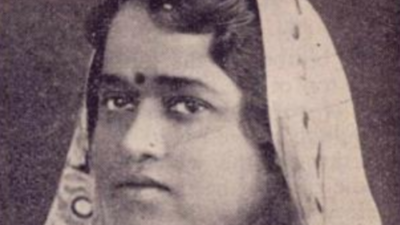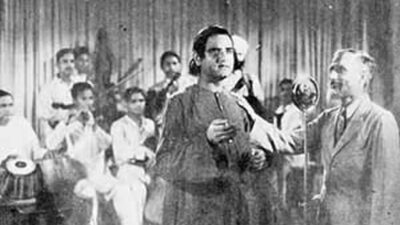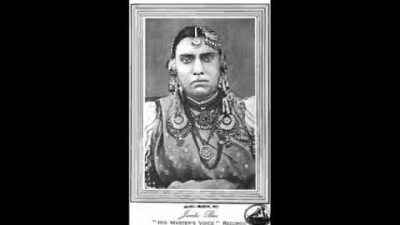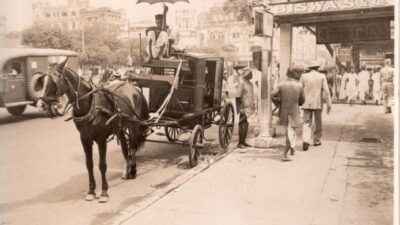
कलाकार विंग · कलाकार-पट्टिका · Artist Plate
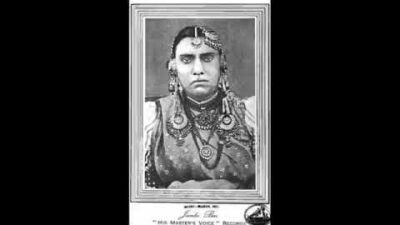
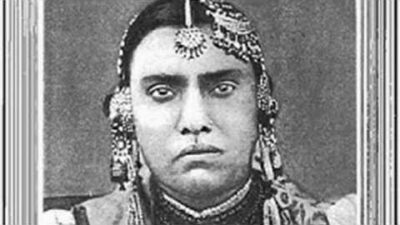
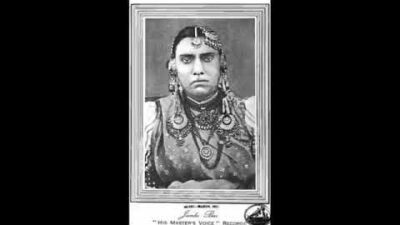
जानकी बाई इलाहाबाद
Janki Bai of Allahabad · Janki Bai
छप्पन छुरी
जन्म1 January 1880 — Allahabad, Uttar Pradesh, India
निधन18 May 1934 — Allahabad, Uttar Pradesh, India
जीवन-पट्टी
The Life Specimen| नाम | जानकी बाई इलाहाबाद · Janki Bai of Allahabad |
|---|---|
| जन्म नाम | जानकी बाई · Janki Bai |
| उपनाम | छप्पन छुरी · इलाहाबाद की गायिका रानी |
| जन्म | 1 January 1880 — Allahabad, Uttar Pradesh, India |
| निधन | 18 May 1934 — Allahabad, Uttar Pradesh, India |
| भूमिकाएँ | गायक · रचनाकार |
| राष्ट्रीयता | Indian |
| विधाएँ | ठुमरी · दादरा · ग़ज़ल · Kajri · Hori · Chaiti · Khayal · भजन |
| भाषाएँ | Hindustani · Hindi · Urdu · Bengali · Marathi |
| Birthplace_tradition | Courtesan tradition of Allahabad |
| Legacy | Charitable trust established in her name, still active in Allahabad/Prayagraj |
हस्ताक्षर-पंक्ति · The Signature
हस्ताक्षर-पंक्ति
छप्पन छुरी · इलाहाबाद की गायिका रानी
In EnglishAnnounced her name at the end of recordings (regional variant of Gauhar Jaan's practice)
पट्टिका-लेख
The Monographजीवनी Biography
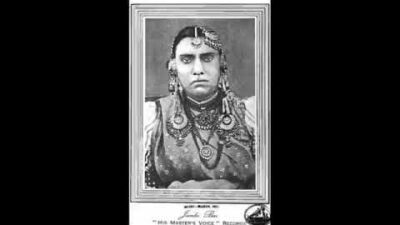
जानकी बाई इलाहाबाद (1880-1934) भारत की सबसे प्रारंभिक व्यावसायिक महिला गायिकाओं में से एक थीं और भारतीय शास्त्रीय संगीत के इतिहास में एक किंवदंती हैं। 1880 में इलाहाबाद में जन्मी, उन्होंने लखनऊ-बनारस परंपरा के महान उस्तादों के अंतर्गत तुमरी, दादरा और हल्के शास्त्रीय संगीत में प्रशिक्षण लिया। उनका सबसे प्रसिद्ध उपनाम 'छप्पन छुरी' उनकी जवानी में एक दर्दनाक घटना से उपजा था जब वे गंभीर रूप से हमला किया गया था। लेकिन जानकी बाई ने अपने इस दर्द को कला की शक्ति में रूपांतरित किया। गौहर जान के समकालीन, जानकी बाई व्यावसायिक रिकॉर्डिंग को अपनाने वाली पहली महिला कलाकारों में से थीं। 1902 से 1930 के बीच, उन्होंने द ग्रामोफोन एंड टाइपराइटर लिमिटेड और अन्य लेबलों के लिए 250 से अधिक गाने रिकॉर्ड किए, जिससे वे प्रारंभिक ग्रामोफोन युग की सबसे उत्पादक कलाकारों में से एक बन गईं। 1911 में, दिल्ली दरबार में सम्राट जॉर्ज V के लिए प्रदर्शन करने के लिए आमंत्रित होकर, जानकी बाई को देशव्यापी मान्यता मिली। जानकी बाई ने अपनी पर्याप्त संपत्ति को दान कार्यों के लिए समर्पित किया। उन्होंने इलाहाबाद में एक दान संस्थान की स्थापना की जो आज तक चल रहा है। 18 मई 1934 को इलाहाबाद में उनका निधन हुआ, लेकिन हाल के वर्षों में विद्वतापूर्ण शोध और डिजिटल संग्रहण परियोजनाओं के माध्यम से उनकी पुनः खोज हुई है।
अंग्रेज़ी में पढ़ें · Read in English
Janki Bai of Allahabad (1880-1934) was one of the earliest commercially recorded female singers in India and a legendary figure in the history of Indian classical music. Born in 1880 in Allahabad, she trained in the Lucknow-Banaras tradition of thumri, dadra, and light classical music under the great masters of that school. Her most famous epithet, 'Chappan Chhuri' (56 knives), originated from a traumatic incident in her youth when she was brutally attacked and left with severe facial scars. Rather than retreating into obscurity, Janki Bai performed behind a veil for much of her life and eventually transformed her traumatic past into a symbol of artistic strength and resilience.
A contemporary of Gauhar Jaan, Janki Bai was among the first female artists to embrace commercial recording. Between 1902 and 1930, she recorded over 250 songs for The Gramophone & Typewriter Ltd. and other labels, making her one of the most prolific artists of the early gramophone era. Her repertoire spanned thumri, dadra, kajri, hori, chaiti, khayal, bhajan, and ghazal — she was a versatile musician who could navigate both classical and semi-classical idioms with equal finesse.
In 1911, at the height of her fame, Janki Bai received a summons to perform for Emperor George V at the Delhi Durbar, where she sang alongside Gauhar Jaan. This performance represented the pinnacle of her recognition and elevated her to the status of a national musical icon. Her emotional depth and piercing vocal delivery in thumri and dadra were legendary — audiences spoke of how her voice could make grown men weep.
Janki Bai amassed considerable wealth through her records and performances, yet she used her fortune for philanthropic purposes. She established a charitable trust in Allahabad dedicated to providing financial assistance to needy students, distributing blankets to the poor, making donations to temples and mosques, and running free kitchens. This trust, established in her name, continues to operate in Allahabad (now Prayagraj) to this day, a testament to her commitment to social welfare.
She died on 18 May 1934 in Allahabad, her native city. While her recordings have survived and are now preserved by the Archive of Indian Music, Janki Bai remained relatively unknown for much of the 20th century. Her rediscovery in recent years — through scholarly research, biographical works like 'Requiem in Raga Janki,' and digital archiving projects — has restored her to her rightful place as a foundational figure in Indian recorded music and as a symbol of artistic courage.
सांस्कृतिक प्रभाव Cultural Impact
जानकी बाई इलाहाबाद भारतीय रिकॉर्डेड संगीत के इतिहास में कलात्मक लचीलेपन और भावनात्मक गहराई के प्रतीक के रूप में एक अनूठा स्थान रखती हैं। वह ग्रामोफोन उद्योग के शुरुआती समय में महिलाओं को व्यावसायिक रिकॉर्डिंग कलाकार के रूप में प्रतिष्ठित करने में सहायक थीं। उनकी भावनात्मक प्रामाणिकता उन्हें गौहर जान के तकनीकी कौशल के विपरीत विभिन्न शैली में परिभाषित करती है।
अंग्रेज़ी में पढ़ें · Read in English
Janki Bai of Allahabad occupies a unique place in the history of Indian recorded music as a symbol of artistic resilience and emotional depth. She was instrumental in establishing that women could be major commercial recording artists at a time when the gramophone industry was still in its infancy. Her mastery of thumri and dadra — genres deeply rooted in emotional expression — influenced generations of singers and helped define the aesthetic standards for these forms. Unlike Gauhar Jaan, who was known for technical virtuosity and versatility, Janki Bai became synonymous with emotional authenticity and the ability to move audiences to tears. Her legacy as a philanthropist who used her wealth to serve the poor adds another dimension to her story, establishing her not just as an artist but as a woman of conscience who understood her social responsibilities. The rediscovery of her work in recent years has also highlighted her perseverance in the face of trauma, making her story relevant to contemporary discussions about resilience and artistic freedom.
तालीम, विधाएँ और भाषाएँ
Training · Genres · Languagesजीवन-रेखा
Career Highlights- मील-पत्थर देश की पहली व्यावसायिक महिला गायिकाओं में से एक (1902 से रिकॉर्डिंग) One of India's first commercially recorded female artists (recording from 1902)
- मील-पत्थर गौहर जान के साथ दिल्ली दरबार (1911) में सम्राट जॉर्ज V के लिए प्रदर्शन Performed alongside Gauhar Jaan for Emperor George V at Delhi Durbar (1911)
- मील-पत्थर 250+ गाने ग्रामोफोन पर रिकॉर्ड किए (1902-1930) Recorded 250+ songs for gramophone (1902-1930)
-
मील-पत्थर
तुमरी और दादरा में अद्वितीय शैली विकसित की — गहरे भावनात्मक निर्वहन के लिए प्रसिद्ध
Developed distinctive style in thumri and dadra — renowned for deep emotional expression
-
मील-पत्थर
'छप्पन छुरी' उपनाम से जीवनभर जानी गईं — लचीलापन और साहस का प्रतीक
Known throughout life by nickname 'Chappan Chhuri' — symbol of resilience and fearlessness
-
मील-पत्थर
इलाहाबाद में दान संस्थान की स्थापना की — शिक्षा और सामाजिक कल्याण के लिए समर्पित
Established charitable trust in Allahabad — dedicated to education and social welfare
- 1911 दिल्ली दरबार में गौहर जान के साथ गायन Sings with Gauhar Jaan at the Delhi Durbar
- 1915 अपना काव्य-संग्रह 'दीवान-ए-जानकी' प्रकाशित Publishes her own poetry collection, Diwan-e-Janki
पुरस्कार एवं सम्मान
Awards & Recognition- 1911 दिल्ली दरबार प्रदर्शन Delhi Durbar Performance गौहर जान के साथ दिल्ली कोरोनेशन दरबार में सम्राट जॉर्ज V के लिए प्रदर्शन किया
- 1902 पहली व्यावसायिक रिकॉर्डिंग First Commercial Recordings ग्रामोफोन कंपनी द्वारा व्यावसायिक रूप से रिकॉर्ड होने वाली पहली महिला कलाकारों में से एक
- 1934 दान संस्थान Charitable Trust इलाहाबाद में शिक्षा और सामाजिक कल्याण के लिए दान संस्थान स्थापित किया (अभी भी सक्रिय)
- 2024 जीवनचरित्र द्वारा मान्यता Biographical Recognition 'रिक्विएम इन राग जंकी' साहित्य अकादमी पुरस्कार जीता
अन्य विवरण
More Details- Birth Year
- 1880
- Death Year
- 1934
अभिलेख-सार
Discography Summary| संग्रह में गीत | 15 — नीचे जुड़े हुए पन्नों में सूचीबद्ध |
|---|---|
| कुल ज्ञात रिकॉर्डिंग | ~250 (across recording sessions 1902-1930) |
| रिकॉर्डिंग-काल | · पहला सत्र 1902, Calcutta |
| रिकॉर्ड लेबल | The Gramophone & Typewriter Ltd. · HMV (His Master's Voice) · Pathe |
अभिलेख व संदर्भ
Archives & References| विकिपीडिया | Wikipedia |
|---|---|
| संदर्भ | Janki Bai - Wikipedia · Jankibai of Allahabad: A Voice That Echoed Through Time · Janki Bai - Archive of Indian Music · Requiem in Raga Janki — Samina Mishra (2023) · Veil of Janki Bai |
| अभिलेख संसाधन | Archive Of Indian Music Soundcloud · Google Arts Culture · Baithak Foundation |
| ऑनलाइन सुनें | Soundcloud · Google Arts Culture |
जुड़े हुए पन्ने
Connected Plates · The Graph Made Visibleअटलस में कोई पन्ना अकेला नहीं — जानकी बाई इलाहाबाद से उनके गीत, फ़िल्में, घराना, समकालीन और युग, सब यहाँ से खुलते हैं।
हस्ताक्षर-गीत · Signature Songs
शास्त्र-सूत्र · Shastra Threads
साझा कीजिए · Share this Plate
यह पन्ना आगे बढ़ाइए
सवाल-जवाब
Questions & AnswersWho was Janki Bai of Allahabad?
Janki Bai of Allahabad (1880-1934) was one of India's earliest commercially recorded female singers, known as 'Chappan Chhuri' (56 knives) for her piercing emotional expression and legendary status.
Why was she called 'Chappan Chhuri'?
The nickname 'Chappan Chhuri' originated from a traumatic knife attack in her youth that left her with 56 scars. She performed behind a veil for much of her life but eventually embraced the name as a symbol of resilience.
How many songs did Janki Bai record?
Janki Bai recorded over 250 songs for gramophone between 1902 and 1930, making her one of the most prolific recording artists of her era.
Did Janki Bai perform at the Delhi Durbar?
Yes, Janki Bai performed alongside Gauhar Jaan for Emperor George V at the Delhi Durbar in 1911, where they sang specially composed coronation pieces.
What was Janki Bai's musical specialty?
Janki Bai was renowned for her mastery of thumri and dadra, and for her ability to convey deep emotional nuance through traditional light classical forms rooted in the Lucknow-Banaras tradition.
जुड़ी हुई दुनिया
Explore ConnectionsSongs Sung · गाए गीत (23)
Stories · कहानियाँ (14)
 कहानी · Storyमहिला प्रभुत्व: 1906 ग्रामोफोन की महिला सितारें
 कहानी · Storyपरदा ख़ामोश था, संगीत नहीं: 1913 का हिन्दुस्तान
 कहानी · Storyगणिका से उद्यमी तक: महिला रिकॉर्डिंग कलाकारों ने आर्थिक शक्ति कैसे पकड़ी
 कहानी · Storyजब जंग ने तवे छीन लिए: 1914 और भारतीय रिकॉर्ड-उद्योग
 कहानी · Storyकुत्ता, भोंपू और लड़ाई का बाज़ारकहानी · Storyपतझड़ में मलिकाएँकहानी · Storyसौ गिन्नियों का गाना: दिल्ली दरबार में गौहर और जानकीकहानी · Storyराष्ट्र की आवाज़ें: मिंटो-मॉर्ले सुधार और 1909 की रिकॉर्डिंग सत्र