कलाकार विंग · कलाकार-पट्टिका · Artist Plate
सुंदराबाई (पुणे)
Sundarabai of Pune · Sundarabai Jadhav
बाई सुंदराबाई
जन्म1885 — पुणे, बंबई प्रेसीडेंसी, ब्रिटिश भारत
निधन1955
जीवन-पट्टी
The Life Specimen| नाम | सुंदराबाई (पुणे) · Sundarabai of Pune |
|---|---|
| जन्म नाम | सुंदराबाई जाधव · Sundarabai Jadhav |
| उपनाम | बाई सुंदराबाई |
| जन्म | 1885 — पुणे, बंबई प्रेसीडेंसी, ब्रिटिश भारत · Pune, Bombay Presidency, British India |
| निधन | 1955 |
| भूमिकाएँ | गायक |
| सक्रिय वर्ष | c. 1905–1950s |
| युग | gramophone-era |
| राष्ट्रीयता | Indian |
| विधाएँ | ठुमरी · दादरा · ग़ज़ल · Lavani · भजन · Natya Sangeet |
| भाषाएँ | Hindi · Urdu · Marathi |
हस्ताक्षर-पंक्ति · The Signature
हस्ताक्षर-पंक्ति
बाई सुंदराबाई
In EnglishThe Pune voice that moved between Urdu ghazal and Marathi lavani as if they were two rooms of the same house — one of the most recorded Indian women of the early gramophone decades.
पट्टिका-लेख
The Monographजीवनी Biography
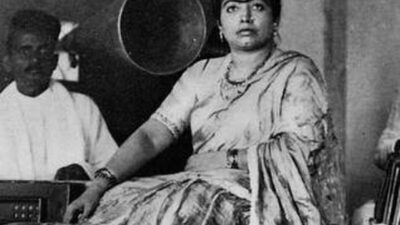
बाई सुंदराबाई जाधव (अनु. 1885 – अनु. 1955) पुणे की वह गायिका थीं जिन्होंने ग्रामोफ़ोन युग में महाराष्ट्र की गायकी को हिंदुस्तानी महफ़िल से जोड़ा। उनकी प्रतिभा का दायरा असाधारण था — उर्दू ग़ज़ल और दादरा-ठुमरी से लेकर मराठी लावणी, भजन और नाट्य-संगीत तक। उत्तर भारत की तवायफ़-परंपरा के बाहर से आकर भी उन्होंने पूरब अंग की अदायगी ऐसी साधी कि उनके तवे हिंदी-उर्दू सुननेवालों में उतने ही बिके जितने मराठी घरों में। 1910 के दशक से वे रिकॉर्डिंग कंपनियों की प्रिय आवाज़ बनीं और अगले तीन दशकों तक बनी रहीं — उस दौर की सबसे अधिक रिकॉर्ड की गई स्त्री-आवाज़ों में एक। उनकी गायकी की पहचान थी साफ़ उच्चारण, ठहरी हुई लय और शब्द के भीतर के भाव की पकड़। बाद के वर्षों में वे पुणे के संगीत-जगत की आदरणीय वरिष्ठ रहीं; नई पीढ़ी की गायिकाओं ने — मंच की हो या रिकॉर्ड की — उनके रास्ते पर चलकर ही महाराष्ट्र में स्त्री-गायन को प्रतिष्ठा दिलाई।
अंग्रेज़ी में पढ़ें · Read in English
Bai Sundarabai Jadhav (c. 1885 – c. 1955) was the Pune singer who joined Maharashtra's voice to the Hindustani mehfil in the gramophone age. Her range was extraordinary — Urdu ghazal, dadra and thumri on one side; Marathi lavani, bhajan and natya sangeet on the other. Coming from outside the North Indian tawaif tradition, she nonetheless mastered the Purab manner so convincingly that her discs sold as briskly among Hindi-Urdu listeners as in Marathi homes. From the 1910s she became a favourite voice of the record companies and remained one for three decades — among the most recorded Indian women of the era. Her singing was marked by clear diction, unhurried rhythm, and a grip on the feeling inside the word. In later years she presided as a respected elder of Pune's music world; the women singers who followed her, on stage or on disc, walked a road she had helped make respectable.
प्रारंभिक जीवन Early Life
सुंदराबाई का जन्म पुणे में अनुमानतः 1885 के आसपास हुआ। उस दौर की अधिकांश पेशेवर गायिकाओं की तरह उनके परिवार और प्रारंभिक तालीम का विश्वसनीय ब्यौरा कम मिलता है; समझा जाता है कि उन्होंने पुणे की मराठी मंच-परंपराओं और आते-जाते उस्तादों व रंगमंच-संगीतकारों से हिंदुस्तानी उपशास्त्रीय शैली — दोनों को आत्मसात किया।
अंग्रेज़ी में पढ़ें · Read in English
Sundarabai was born in Pune around 1885. Reliable detail on her family and early training is scarce, as for most professional women singers of the period; she is understood to have absorbed both the Marathi performance traditions of Pune and the Hindustani light-classical idiom from visiting ustads and theatre musicians.
करियर Career
1910 के दशक तक सुंदराबाई स्थापित रिकॉर्डिंग कलाकार थीं, और 1920–30 के दशकों में उन्होंने ग़ज़ल, दादरा, ठुमरी, मराठी लावणी, भजन और नाट्य-संगीत के तवों की लंबी श्रृंखला ग्रामोफ़ोन कंपनी (एचएमवी) और प्रतिस्पर्धी लेबलों के लिए रिकॉर्ड की। वे पुणे-बंबई की संगीत-सभाओं की स्थायी उपस्थिति थीं और उन पहली महाराष्ट्रीय स्त्रियों में थीं जिनकी ख्याति दरबार या कोठे के संरक्षण पर नहीं, रिकॉर्डों पर टिकी थी। अंतिम दशक पुणे में बीते, जहाँ वे 1940–50 के दशक तक वरिष्ठ कलाकार के रूप में सक्रिय रहीं।
अंग्रेज़ी में पढ़ें · Read in English
By the 1910s Sundarabai was an established recording artist, and through the 1920s and 1930s she cut a long series of discs — ghazals, dadras, thumris, Marathi lavanis, bhajans and natya-sangeet numbers — for the Gramophone Company (HMV) and competing labels. She was a fixture of Pune and Bombay concert life and one of the first Maharashtrian women whose fame rested on records rather than court or kotha patronage. Her later decades were spent in Pune, where she remained active as a senior artist into the 1940s–50s.
विरासत Legacy
सुंदराबाई ने रिकॉर्ड-स्टार होने का नक़्शा बड़ा किया: पुणे की एक स्त्री, जो अधिकार के साथ उर्दू ग़ज़ल गाती थी और बिना संकोच मराठी लावणी। उनके तवों ने वह द्विभाषी उपशास्त्रीय संस्कृति सहेजी जिसे बोलती फ़िल्में जल्द ही उद्योग बना देने वाली थीं, और उनकी मिसाल ने संगीत में महाराष्ट्रीय स्त्रियों की अगली पीढ़ी की राह आसान की।
अंग्रेज़ी में पढ़ें · Read in English
Sundarabai widened the map of who could be a recording star: a Pune woman singing Urdu ghazal with authority, and Marathi lavani without apology. Her discs preserved a bilingual light-classical culture that the talkies would soon industrialise, and her example smoothed the path for the next generation of Maharashtrian women in music.
गायन-शैली Musical Style
चमकीली, खुली आवाज़ और कुरकुरा उच्चारण; ग़ज़ल-दादरा में भारी शास्त्रीयता की जगह उपशास्त्रीय हल्का अलंकरण; लावणी में रंगमंची रस। उनके रिकॉर्ड प्रायः उस दौर के मानक महफ़िली ढाँचे — हारमोनियम, सारंगी, तबला — के साथ चलते थे।
अंग्रेज़ी में पढ़ें · Read in English
A bright, forward voice with crisp Marathi-inflected diction; ghazal and dadra delivered with light-classical ornament rather than heavy classicism; lavani sung with theatrical relish. Her records typically ran with harmonium, sarangi and tabla in the standard salon format of the era.
तालीम, विधाएँ और भाषाएँ
Training · Genres · Languagesतालीम · Training
विश्वसनीय रूप से दर्ज नहीं (c. 1890s–1900s)
हिंदुस्तानी उपशास्त्रीय एवं मराठी मंच-शैलियाँ
Accounts of her teachers vary; her recorded style shows mastery of both Purab-ang light classical and Marathi forms.
भाषाएँ · Languages Sung
जीवन-रेखा
Career Highlights-
1915
1910 के दशक के मध्य तक रिकॉर्डिंग कलाकार के रूप में स्थापित (अनुमानित; सत्र-विवरण अनुपलब्ध)
Established as a recording artist by the mid-1910s (approximate; session details undocumented)
-
1925
1920 के दशक में पश्चिम भारत की सबसे अधिक बिकने वाली स्त्री-आवाज़ों में
Through the 1920s, among the best-selling female voices on disc in western India
रोचक तथ्य
Margin Notesवे उन गिनी-चुनी गायिकाओं में थीं जो एक ही रिकॉर्डिंग-सत्र में उर्दू ग़ज़ल और मराठी लावणी, दोनों दर्ज कराती थीं।
अंग्रेज़ी में पढ़ें · Read in English
She was among the few singers who would record an Urdu ghazal and a Marathi lavani in the same session.
उनकी ख्याति दरबार या कोठे के संरक्षण से नहीं, सीधे रिकॉर्ड-बाज़ार से बनी — उस दौर में स्त्री कलाकार के लिए नई बात।
अंग्रेज़ी में पढ़ें · Read in English
Her fame was built directly in the record market rather than on court or kotha patronage — a new thing for a woman artist of that period.
अन्य विवरण
More Details- Birth Year
- 1885
- Death Year
- 1955
- Active Years
- c. 1905–1950s
- Gramophone Company (HMV) recording sessions in Bombay and Pune
- Pune and Bombay concert and theatre-music circles of the 1910s–30s
Early Life
सुंदराबाई का जन्म पुणे में अनुमानतः 1885 के आसपास हुआ। उस दौर की अधिकांश पेशेवर गायिकाओं की तरह उनके परिवार और प्रारंभिक तालीम का विश्वसनीय ब्यौरा कम मिलता है; समझा जाता है कि उन्होंने पुणे की मराठी मंच-परंपराओं और आते-जाते उस्तादों व रंगमंच-संगीतकारों से हिंदुस्तानी उपशास्त्रीय शैली — दोनों को आत्मसात किया।
Sundarabai was born in Pune around 1885. Reliable detail on her family and early training is scarce, as for most professional women singers of the period; she is understood to have absorbed both the Marathi performance traditions of Pune and the Hindustani light-classical idiom from visiting ustads and theatre musicians.
Career
1910 के दशक तक सुंदराबाई स्थापित रिकॉर्डिंग कलाकार थीं, और 1920–30 के दशकों में उन्होंने ग़ज़ल, दादरा, ठुमरी, मराठी लावणी, भजन और नाट्य-संगीत के तवों की लंबी श्रृंखला ग्रामोफ़ोन कंपनी (एचएमवी) और प्रतिस्पर्धी लेबलों के लिए रिकॉर्ड की। वे पुणे-बंबई की संगीत-सभाओं की स्थायी उपस्थिति थीं और उन पहली महाराष्ट्रीय स्त्रियों में थीं जिनकी ख्याति दरबार या कोठे के संरक्षण पर नहीं, रिकॉर्डों पर टिकी थी। अंतिम दशक पुणे में बीते, जहाँ वे 1940–50 के दशक तक वरिष्ठ कलाकार के रूप में सक्रिय रहीं।
By the 1910s Sundarabai was an established recording artist, and through the 1920s and 1930s she cut a long series of discs — ghazals, dadras, thumris, Marathi lavanis, bhajans and natya-sangeet numbers — for the Gramophone Company (HMV) and competing labels. She was a fixture of Pune and Bombay concert life and one of the first Maharashtrian women whose fame rested on records rather than court or kotha patronage. Her later decades were spent in Pune, where she remained active as a senior artist into the 1940s–50s.
Legacy
सुंदराबाई ने रिकॉर्ड-स्टार होने का नक़्शा बड़ा किया: पुणे की एक स्त्री, जो अधिकार के साथ उर्दू ग़ज़ल गाती थी और बिना संकोच मराठी लावणी। उनके तवों ने वह द्विभाषी उपशास्त्रीय संस्कृति सहेजी जिसे बोलती फ़िल्में जल्द ही उद्योग बना देने वाली थीं, और उनकी मिसाल ने संगीत में महाराष्ट्रीय स्त्रियों की अगली पीढ़ी की राह आसान की।
Sundarabai widened the map of who could be a recording star: a Pune woman singing Urdu ghazal with authority, and Marathi lavani without apology. Her discs preserved a bilingual light-classical culture that the talkies would soon industrialise, and her example smoothed the path for the next generation of Maharashtrian women in music.
Musical Style
चमकीली, खुली आवाज़ और कुरकुरा उच्चारण; ग़ज़ल-दादरा में भारी शास्त्रीयता की जगह उपशास्त्रीय हल्का अलंकरण; लावणी में रंगमंची रस। उनके रिकॉर्ड प्रायः उस दौर के मानक महफ़िली ढाँचे — हारमोनियम, सारंगी, तबला — के साथ चलते थे।
A bright, forward voice with crisp Marathi-inflected diction; ghazal and dadra delivered with light-classical ornament rather than heavy classicism; lavani sung with theatrical relish. Her records typically ran with harmonium, sarangi and tabla in the standard salon format of the era.
Collaborations
अभिलेख-सार
Discography Summary| संग्रह में गीत | 4 — नीचे जुड़े हुए पन्नों में सूचीबद्ध |
|---|---|
| कुल ज्ञात रिकॉर्डिंग | 2 — 2 संग्रह में उपलब्ध |
| रिकॉर्डिंग-काल | 1919–1922 · पहला सत्र 1910s (undocumented) |
| रिकॉर्ड लेबल | The Gramophone Company (HMV) |
| प्रमुख भूमिका | गायक |
| हस्ताक्षर-गीत | Urdu ghazal and Marathi lavani recordings of the 1910s–20s |
| स्रोत | derived from the HindiGeet song archive |
अभिलेख व संदर्भ
Archives & References| संदर्भ | Michael Kinnear's discographies of early Indian recordings (Bajakhana) · Archive of Indian Music — early female recording artists |
|---|---|
| प्रसिद्ध सहयोग |
अंग्रेज़ी में पढ़ें · Read in English
|
जुड़े हुए पन्ने
Connected Plates · The Graph Made Visibleअटलस में कोई पन्ना अकेला नहीं — सुंदराबाई (पुणे) से उनके गीत, फ़िल्में, घराना, समकालीन और युग, सब यहाँ से खुलते हैं।
हस्ताक्षर-गीत · Signature Songs
सहयोगी और समकालीन · Collaborators & Contemporaries
युग · The Era
साझा कीजिए · Share this Plate
यह पन्ना आगे बढ़ाइए
सवाल-जवाब
Questions & Answersसुंदराबाई कौन थीं?
बाई सुंदराबाई जाधव (अनु. 1885–1955) पुणे की प्रसिद्ध गायिका थीं — ग़ज़ल, दादरा, ठुमरी, लावणी और भजन की बहुभाषी आवाज़, जो ग्रामोफ़ोन युग की सबसे अधिक रिकॉर्ड की गई भारतीय स्त्रियों में गिनी जाती हैं।
What made Sundarabai of Pune distinctive?
Her bilingual command: she sang Urdu ghazal and Hindustani dadra-thumri with the same authority as Marathi lavani and bhajan, and built her career on gramophone records rather than traditional patronage.
जुड़ी हुई दुनिया
Explore ConnectionsSongs Sung · गाए गीत
दादरा और भजन — सुंदराबाई के उत्तर-काल के तवे
Dadra and Bhajan — Late Sides of Sundarabai

लावणी और नाट्य-गीत तवे — बाई सुंदराबाई (बंबई के नये लेबल)
Lavani and Natya-Geet Sides — Bai Sundarabai (Bombay’s New Labels)