शास्त्र विंग · वाद्य-पट्टिका · Instrument Plate
संतूर
Santoor
कश्मीर का उपहार, शिवकुमार शर्मा ने इसे शास्त्रीय मंच पर लाया · Kashmir's gift to music, elevated to classical stage by Shivkumar Sharma
अन्य नामसेंटूर · सन्तूर · Santur · Hammered Dulcimer
एक पंक्तिकश्मीर से आया एक सुंदर समलंबित आकृति वाला तारदार वाद्य यंत्र, जिसे मुलायम लकड़ी के मालेट से बजाया जाता है।
परिचय
Overviewसंतूर का आधुनिक इतिहास एक आश्चर्यजनक गल्प है—अस्पष्टता से विश्व मंच तक का यात्रा। कश्मीर में सदियों से बजाया जाने वाला एक यंत्र, लेकिन १९६० तक अधिकांश भारतीयों को इसका नाम तक नहीं पता था। फिर आया शिवकुमार शर्मा, जिन्होंने अपनी संगीत प्रतिभा और दृष्टिकोण के साथ संतूर को परिवर्तित कर दिया। शिव-हरि की जोड़ी ने भारतीय फिल्म संगीत को एक नई दिशा दी। आज, संतूर दुनिया भर में एक स्वीकृत शास्त्रीय वाद्य यंत्र है।
अंग्रेज़ी में पढ़ें · Read in English
The santoor's modern history is a remarkable story—from obscurity to world recognition. For centuries, it was played in Kashmir, but until 1960, few Indians even knew its name. Then came Shivkumar Sharma, who transformed the instrument through his genius and vision. The Shiv-Hari duo revolutionized Indian film music. Today, the santoor is a recognized classical instrument worldwide.
काव्य-पंक्ति · The Verse
काव्य-पंक्ति
संतूर की गहराई में, कश्मीर की आत्मा बसी है।
— रचयिता: हिंदीगीत In the depths of the santoor's resonance, Lies the soul of Kashmir.
वर्गीकरण
ClassificationNatya Shastra
तत (Tata)
Tata (String Instrument)
नाट्यशास्त्र में तत वाद्य (तार वाद्य) की श्रेणी में आता है। कई तारों को आधार पर फैलाया हुआ, और उन्हें मारकर ध्वनि निकाली जाती है।
Classified as a tata (string) instrument in Natya Shastra. Multiple strings stretched over a resonating body, sounded by striking.
Western
String / Percussion Hybrid
Hammered Dulcimer
पश्चिमी वर्गीकरण में यह एक हथौड़े से मारे जाने वाले तार वाद्य यंत्र की श्रेणी में आता है।
In Western classification, a struck string instrument or hammered dulcimer, akin to European zithers and the Persian santur.
Hornbostel Sachs
311.121
Zither with struck strings, played with mallets or hammers
सिनेमा में
In Cinemaसंतूर का फिल्म संगीत में एक क्रांतिकारी प्रभाव है। १९७०-१९९० के दशकों में, शिवकुमार शर्मा और हरिप्रसाद चौरसिया की 'शिव-हरि' जोड़ी ने भारतीय फिल्म संगीत में एक नई दिशा दी। सिलसिला (Silsila), चाँदनी (Chandni), लाम (Lamhe), और दर' जैसी फिल्मों में संतूर की आवाज़ पर्दे पर जादू मचा गई। शिवकुमार शर्मा ने संतूर को एक अप्रासंगिक (obsolete) शाही यंत्र से एक आधुनिक, सुलभ, और प्रिय क्लासिकल वाद्य यंत्र में रूपांतरित किया।
अंग्रेज़ी में पढ़ें · Read in English
The santoor has had a revolutionary impact on Indian film music. From 1970-1990, Shivkumar Sharma and Hariprasad Chaurasia's 'Shiv-Hari' duo revolutionized film music. In films like Silsila, Chandni, Lamhe, and Darr, the santoor's haunting voice captivated audiences. Shivkumar Sharma single-handedly transformed the santoor from an obscure, archaic instrument into a revered, accessible, and beloved classical instrument.
वर्तमान स्थिति
Modern Statusविवरण
संतूर का आधुनिक स्थिति एक सफलता की कहानी है। शिवकुमार शर्मा की वजह से, यह एक प्रमुख शास्त्रीय वाद्य यंत्र बन गया। लेकिन यह अभी भी एक विशेषज्ञ यंत्र माना जाता है—हर जगह आसानी से नहीं मिलता। युवा प्रतिभाएँ इसे सीखने के लिए प्रेरित हो रही हैं।
अंग्रेज़ी में पढ़ें · Read in English
The santoor's modern status is a success story. Thanks to Shivkumar Sharma, it has become a major classical instrument. Yet it remains a specialist instrument—not ubiquitous. Young talents are increasingly drawn to learning it.
Estimated Players
500-1000 serious practitioners globally
Revival Efforts
शिवकुमार शर्मा की विरासत, राहुल शर्मा और अन्य द्वारा जारी शिक्षा।
अंग्रेज़ी में पढ़ें · Read in English
Shivkumar Sharma's legacy, continued teaching by Rahul Sharma and other masters.
बनावट
Physicalविवरण
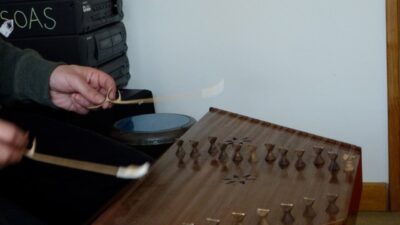
संतूर एक समलंबित आकृति (trapezoid shape) वाला यंत्र है, जो आमतौर पर अखरोट (walnut) की लकड़ी से बना होता है। इसकी लंबाई लगभग ९०-१०० सेमी, चौड़ाई २५-३० सेमी होती है। इसके ऊपर १०० पास-पास की तारें होती हैं, जो ट्रैपेज़ोइडल बॉडी के दोनों सिरों पर पेग से बँधी होती हैं। शरीर के भीतर जाली द्वारी विभाजित कई गुंजन कक्ष (resonance chambers) होते हैं, जो विभिन्न सुरों में गूँजते हैं। वादक मुलायम, फ्लैट लकड़ी के मालेट (mezrab) से तारों को मारता है, आमतौर पर दोनों हाथों में एक-एक मालेट। संतूर की ध्वनि सुंदर, गहरी, और लोरिक (lyrical) होती है।
अंग्रेज़ी में पढ़ें · Read in English
The santoor is a trapezoid-shaped instrument, typically made of walnut wood. It measures about 90-100 cm in length and 25-30 cm in width. Over 100 strings are stretched horizontally across the body, secured at both ends with tuning pegs. Multiple resonance chambers inside the body are separated by bridges, creating rich, multi-layered harmonics. The player strikes strings with soft, flat wooden mallets (mezrab), one in each hand. The santoor's sound is warm, lyrical, and deeply resonant.
Dimensions
25-30 cm (thickness)
25-30 cm
90-100 cm
8-12 kg
Strings Or Keys
संतूर की १०० से १२० तारें होती हैं, आमतौर पर समूहों में (कभी ४, कभी ६ तार एक सुर में)। ये तारें केवल प्रमुख सुरों (सा, रे, ग, म, प, ध, नी) के लिए नहीं, बल्कि सभी १२ क्रोमैटिक नोट्स के लिए होती हैं।
Santoor has 100-120 strings, typically grouped in sets (4-6 strings per note). Strings cover all 12 chromatic pitches across multiple octaves.
100-120 strings (grouped by pitch)
स्टेनलेस स्टील या ब्रॉन्ज़
Tuning
पूर्वी शास्त्रीय संगीत की २२-श्रुति प्रणाली के अनुकूल। कुछ आधुनिक संतूर में १२-tone equal temperament।
Adapted to 22-srutis (microtonal) system of Indian classical music. Some modern santoors use 12-tone equal temperament.
Sa-Re-Ga-Ma-Pa-Dha-Ni-Sa (and all intermediate srutis)
2-3 octaves typically
Construction
अखरोट की लकड़ी से बना समलंबित यंत्र। इसमें कई डिब्बे (compartments) होते हैं जो अलग-अलग सुरों को गूँजाते हैं।
Trapezoid-shaped wooden resonating body made of walnut. Contains multiple compartments that resonate at different frequencies.
१०० या अधिक धातु की तारें, आमतौर पर स्टील, समूहों में बँधी होती हैं। समान सुर की तारें एक साथ काम करती हैं।
100+ metal strings (usually steel), grouped in sets of 4. Each set produces the same note (unison), creating a shimmering tone.
दोनों सिरों पर तारों को बाँधने के लिए लकड़ी के पेग। ये ट्यूनिंग के लिए घुमाए जाते हैं।
Wooden pegs at both ends of the body that secure the strings and allow tuning.
मुलायम, चपटी लकड़ी की छड़ें, जिनसे संतूर को बजाया जाता है। आमतौर पर वादक दोनों हाथों में एक-एक रखता है।
Soft, flat wooden sticks used to strike the strings. Typically played with one in each hand.
लकड़ी या धातु की पतली छड़ें जो तारों को शरीर के ऊपर उठाती हैं और विभिन्न कक्षों को अलग करती हैं।
Wooden or metal strips that elevate strings and partition internal resonance chambers.
ध्वनि-चरित्र
SoundTonal Character
संतूर की ध्वनि शास्त्रीय भारतीय संगीत में सबसे सुंदर और कोमल ध्वनियों में से एक है। यह गहरी, गूँजती हुई, और आनंदमय है। मालेट के मारने के तुरंत बाद, तारें मर्मर करती हैं (vibration) जो कई सेकंड तक बनी रहती है। यह एक आध्यात्मिक, ध्यानात्मक गुण रखता है। समूहों में बँधी तारें एक चमकदार, परिसंपत्ति (glittering) प्रभाव देती हैं।
अंग्रेज़ी में पढ़ें · Read in English
The santoor produces one of the most beautiful and tender sounds in Indian classical music. It is deep, resonant, and spiritually elevating. Each struck note sustains and shimmers for several seconds. The grouped strings create a glittering, multi-layered shimmer. The overall effect is meditative and sublime.
Timbre
गर्म, स्वर्गीय, शांत, ध्यान पूर्ण, चमकदार, परिवर्तनशील
अंग्रेज़ी में पढ़ें · Read in English
Warm, heavenly, serene, meditative, shimmering, sustaining
Dynamic Range
मालेट की शक्ति और गति को नियंत्रित करके गतिशीलता को नियंत्रित किया जा सकता है। पर तारों की प्राकृतिक गूँज की वजह से पूर्ण नियंत्रण सीमित है।
अंग्रेज़ी में पढ़ें · Read in English
Controlled by the force and speed of the mallets. The natural sustain of strings limits precise dynamic control.
Comparison
पियानो की तरह, लेकिन अधिक मेलिस्मैटिक और सुरीला। हरमोनियम की तरह, लेकिन अधिक शास्त्रीय और समृद्ध।
अंग्रेज़ी में पढ़ें · Read in English
Like a piano but more lyrical and flowing. Like a harmonium but more classical and richly resonant.
वादन-तकनीक
Playing Techniqueविवरण
संतूर को आमतौर पर जमीन पर बैठकर बजाया जाता है, या कुर्सी पर बैठकर, यंत्र को अपनी गोद या कंधे के पास रखते हुए। वादक दोनों हाथों में मेज़राब (मालेट) पकड़ता है और तारों को स्ट्राइक (मारता) है। बाएँ हाथ आमतौर पर निचली तारों (bass strings) को संभालता है, दाहिना हाथ ऊँची तारों (treble strings) को। संतूर की विशेषता यह है कि वादक तारों को मारकर, उन्हें अपनी उँगलियों से भी दबा सकता है ताकि ध्वनि को मॉड्यूलेट किया जा सके।
अंग्रेज़ी में पढ़ें · Read in English
Typically played while seated on the floor or on a low stool, with the instrument in the lap or against the shoulder. The player holds mallets in both hands and strikes the strings. The left hand usually handles lower (bass) strings, the right hand upper (treble) strings. A unique feature is that the player can also press or dampen strings with the fingers to modulate sound.
Posture
जमीन पर या कम आसान पर बैठना, संतूर को गोद या कंधे के पास रखते हुए। दोनों हाथ तारों के ऊपर, मालेट पकड़े हुए।
अंग्रेज़ी में पढ़ें · Read in English
Seated on floor or low bench, instrument in lap or against shoulder. Both hands positioned over strings, holding mallets.
Techniques
तारों को सीधा मारना। आमतौर पर शुरुआत में सीखी जाने वाली बुनियादी तकनीक।
Direct striking of strings. Basic technique learned first by beginners.
एक ही तार पर तेजी से मालेट को दोहराना, एक लंबी, कंपकंपाती हुई ध्वनि बनाने के लिए।
Rapid repetition of mallets on a single string, creating a sustained, shimmering effect.
एक तार से दूसरे तार पर तेजी से जाना, एक सुचारु स्लाइडिंग प्रभाव के लिए।
Rapid transition from one string to another, creating a sliding effect.
तारों को उँगलियों से दबाकर उनकी ध्वनि को रोकना या संशोधित करना।
Using fingers to dampen or modify string vibrations, controlling sustain and tone.
निर्माण-प्रक्रिया
Making Processविवरण
संतूर का निर्माण अत्यंत सूक्ष्म कार्य है। पहले अखरोट (walnut) की लकड़ी को सावधानीपूर्वक चुना और सूख जाता है। समलंबित आकार को हाथ से तराशा जाता है। आंतरिक संरचना जटिल है—कई डिब्बे और पुल को एक साथ जोड़ा जाता है ताकि प्रत्येक क्षेत्र एक विशेष सुर में गूँजे। तारों को पेग पर बाँधने के लिए सटीक छेद ड्रिल किए जाते हैं। प्रत्येक तार को व्यक्तिगत रूप से ट्यून किया जाता है। अंतिम चरण में, पूरे यंत्र को परीक्षण किया जाता है और संतुलन किया जाता है।
अंग्रेज़ी में पढ़ें · Read in English
Santoor construction is highly specialized artisan work. Premium walnut wood is carefully selected and seasoned. The trapezoid shape is hand-carved. The internal structure is complex—multiple compartments and bridges are assembled to create specific resonance patterns. Strings are secured with precisely drilled holes and tuning pegs. Each string is individually tuned. Final stages involve testing the entire instrument and balancing its acoustic properties.
Materials
सबसे पसंद की लकड़ी, सुंदर अनाज और अच्छे ध्वनिकी गुण के लिए।
Preferred wood for beautiful grain and acoustic properties.
स्टेनलेस स्टील या ब्रॉन्ज़, विभिन्न मोटाई में।
Stainless steel or bronze strings in varying gauges.
लकड़ी के पेग, जिनके लिए आमतौर पर कठोर लकड़ी का उपयोग किया जाता है।
Wooden pegs, typically carved from hardwood.
Artisan Centers
कश्मीर का राजधानी। संतूर निर्माण का मूल केंद्र।
Capital of Kashmir, the traditional hub of santoor making.
आधुनिक संतूर निर्माता भी यहाँ हैं।
Modern santoor artisans are also based here.
Time To Craft
8-16 weeks (hand-made)
Price Range
₹10,000-150,000 (based on quality)
संगीत-समूह में भूमिका
Role In EnsemblePrimary Role
संतूर आमतौर पर एक सोलो वाद्य यंत्र है, लेकिन समूह में भी बजाया जा सकता है। यह सितार, बांसुरी, या बेला के साथ अच्छी तरह से काम करता है।
अंग्रेज़ी में पढ़ें · Read in English
Santoor is primarily a solo instrument, but can accompany other classical instruments. It pairs well with sitar, bansuri, or vocals.
Solo Capability
उच्च। संतूर राग प्रदर्शन के लिए पूरी तरह सक्षम है और एक पूर्ण विस्तारित निर्माण दे सकता है।
अंग्रेज़ी में पढ़ें · Read in English
High. The santoor is fully capable of raga exposition and can sustain extended classical performances.
Accompaniment For
संतूर और सितार का संयोजन क्लासिकल पेयरिंग है, विशेषकर शिव-हरि (Shiv-Hari) की रचनाओं में।
The santoor-sitar pairing is classical, popularized by Shiv-Hari compositions in film music.
संतूर की गहरी, मेलिस्मैटिक ध्वनि बांसुरी के उच्च नोट्स के साथ अच्छी तरह काम करती है।
Santoor's deep, lyrical tone complements the bansuri's higher register beautifully.
संतूर संगीतकार को तबला के साथ अकेले राग प्रदर्शन के लिए सहायता मिल सकती है।
The tabla can provide rhythmic foundation for santoor solos and raag exposition.
लोक संगीत में
In Folk Musicसंतूर केवल शास्त्रीय संगीत तक सीमित नहीं है। कश्मीर में, इसका उपयोग लोकगीतों और सूफी संगीत में भी होता है। देश के विभिन्न भागों में, संतूर को अब एक 'सार्वभौमिक' शास्त्रीय यंत्र के रूप में स्वीकार किया गया है, लेकिन यह अभी भी कश्मीर की सांस्कृतिक विरासत का एक महत्वपूर्ण भाग है।
अंग्रेज़ी में पढ़ें · Read in English
The santoor is not limited to classical music. In Kashmir, it is used in folk songs and Sufi music. Across India, it is now recognized as a 'universal' classical instrument, yet it remains an important part of Kashmir's cultural heritage.
क्षेत्रीय रूप
Regional Variantsपारंपरिक डिज़ाइन, अखरोट की लकड़ी से। गहरी, आध्यात्मिक ध्वनि।
Traditional design with walnut wood. Deep, meditative tone.
परिवर्तित डिज़ाइन, कभी-कभी पीतल की तारें। अधिक चमकदार, प्रक्षेपित ध्वनि।
Modified designs, sometimes with brass strings. Brighter, more projected tone.
परिवर्तनी संस्करण। कश्मीरी संतूर का मूल पूर्वज।
Historical variant. The original ancestor of the Kashmiri santoor.
प्रसिद्ध वादक
Famous Playersसबसे महत्वपूर्ण संतूर वादक। उन्होंने संतूर को मूल अस्पष्टता से निकाल कर शास्त्रीय मंच पर लाया। उनकी शिव-हरि (हरिप्रसाद चौरसिया के साथ) पेयरिंग भारतीय फिल्म संगीत को नया आयाम दिया।
The most important santoor player. He single-handedly elevated the santoor from obscurity to the classical stage. His Shiv-Hari partnership (with Hariprasad Chaurasia) revolutionized Indian film music.
शिवकुमार शर्मा का पुत्र। पारंपरिक संतूर वादन को आधुनिकता के साथ मिलाता है।
Shivkumar Sharma's son. Blends traditional santoor playing with contemporary sensibilities.
कश्मीरी संतूर परंपरा का एक सम्मानित हस्ताक्षर। विशुद्ध कश्मीरी शैली का प्रतिनिधित्व किया।
Honored custodian of Kashmir's santoor tradition. Represented the purest Kashmiri style.
आधुनिक युग के संतूर वादक। संतूर को समकालीन संगीत के साथ संयोजित करने का प्रयास।
Contemporary santoor artist. Blends santoor with modern musical sensibilities.
राग-उपयुक्तता
Raag Suitabilityसंतूर की कोमल, मेलिस्मैटिक ध्वनि यमन के सुंदर, प्रेमपूर्ण चरित्र को अच्छी तरह व्यक्त करती है।
The santoor's lyrical, tender tone beautifully expresses Yaman's romantic character.
संतूर की गहरी ध्वनि भैरव के गंभीर, आध्यात्मिक चरित्र को दर्शाती है।
The santoor's deep resonance captures Bhairav's solemn, meditative character.
संतूर को इस राग के लिए विशेष रूप से अच्छा माना जाता है, क्योंकि इसकी चमकदार ध्वनि राग की जटिलता को दर्शाती है।
Santoor is particularly suited to this raga, with its shimmering tone capturing the raga's complexity.
घराना-संबंध
Gharana Connectionsसंतूर कश्मीर की संगीत परंपरा का एक आवश्यक अंग है।
The santoor is an integral part of Kashmir's musical tradition and gharana.
सीखने का मार्ग
Learning Pathविवरण
संतूर सीखना सितार या बांसुरी की तुलना में अलग है। हाथ की मांसपेशियों को मजबूत करने से शुरू किया जाता है। मालेट को पकड़ने का तरीका महत्वपूर्ण है। प्रारंभिक छह महीनों में, बुनियादी तारे और सरल राग को सीखा जाता है। पूर्ण दक्षता के लिए ५-७ वर्ष की समर्पित अभ्यास की आवश्यकता है।
अंग्रेज़ी में पढ़ें · Read in English
Learning santoor differs from learning sitar or bansuri. The physical training of hand muscles is critical. Proper mallets grip is essential. Within six months, beginners learn basic strings and simple raags. Full proficiency requires 5-7 years of dedicated practice.
Beginner Steps
कलाई और उँगलियों को मजबूत करने के लिए व्यायाम।
सही तरीके से मालेट पकड़ना, नियंत्रण के लिए महत्वपूर्ण।
सरल राग से शुरू करें, जैसे यमन या भैरव।
रोल, ग्लिसान्डो, और अन्य विशेष तकनीकें।
सामान्य अवधि
5-7 years for proficiency
संस्थान
शिवकुमार शर्मा और अन्य शिक्षकों की शिष्यता आदर्श है।
कश्मीरी परंपरा को सीखने के लिए आदर्श।
सांस्कृतिक महत्व
Cultural Significanceसंतूर कश्मीर की सांस्कृतिक विरासत का एक अभिन्न अंग है। यह सूफी आध्यात्मिकता, लोक परंपराएँ, और शास्त्रीय संगीत को जोड़ता है। शिवकुमार शर्मा की वजह से, यह केवल कश्मीर का नहीं, बल्कि पूरे भारत का, और विश्व का यंत्र बन गया।
अंग्रेज़ी में पढ़ें · Read in English
The santoor is integral to Kashmir's cultural heritage. It bridges Sufi spirituality, folk traditions, and classical music. Through Shivkumar Sharma's genius, it transcended Kashmir to become India's, and the world's, instrument.
सुनने का मार्गदर्शन
The Listening Guideसंतूर सुनने के लिए, शिवकुमार शर्मा की एक पूर्ण राग प्रस्तुति से शुरू करें। उसकी गहरी, शिमरिंग ध्वनि को सुनें। ध्यान दें कि कैसे तारें मर्मर करती हैं और एक लंबी गूँज बनी रहती है। यह ध्यान पूर्ण अनुभव है।
अंग्रेज़ी में पढ़ें · Read in English
To appreciate the santoor, start with a full raga by Shivkumar Sharma. Listen to its deep, shimmering resonance. Notice how each struck note sustains and shimmers. It is a meditative experience.
श्रवण-कक्ष · The Listening Room
देखें-सुनें
Ustad Zakir Hussain vs Pandit Shivkumar Sharma Jugalbandi - Tabla & Santoor · 9:52
Pt Shivkumar Sharma & Ustad Zakir Hussain | Raag Mishra Shivranjani · 36:55
परिचय
Identity- Year Of Origin
- 1600
वर्गीकरण
Classification- Code
- 311.121
- Description
- Zither with struck strings, played with mallets or hammers
- Category
- तत (Tata)
- Category En
- Tata (String Instrument)
- Description
- नाट्यशास्त्र में तत वाद्य (तार वाद्य) की श्रेणी में आता है। कई तारों को आधार पर फैलाया हुआ, और उन्हें मारकर ध्वनि निकाली जाती है।
- Description En
- Classified as a tata (string) instrument in Natya Shastra. Multiple strings stretched over a resonating body, sounded by striking.
Hornbostel Sachs
Natya Shastra
अन्य विवरण
More Details- शरीर / सुंडी (Body / Corpus) — अखरोट की लकड़ी से बना समलंबित यंत्र। इसमें कई डिब्बे (compartments) होते हैं जो अलग-अलग सुरों को गूँजाते हैं। · Body / Corpus
- तारें (Strings) — १०० या अधिक धातु की तारें, आमतौर पर स्टील, समूहों में बँधी होती हैं। समान सुर की तारें एक साथ काम करती हैं। · Strings
- पेग / ट्यूनिंग पेग (Tuning Pegs) — दोनों सिरों पर तारों को बाँधने के लिए लकड़ी के पेग। ये ट्यूनिंग के लिए घुमाए जाते हैं। · Tuning Pegs
- मेज़राब / मालेट (Mallets / Mezrab) — मुलायम, चपटी लकड़ी की छड़ें, जिनसे संतूर को बजाया जाता है। आमतौर पर वादक दोनों हाथों में एक-एक रखता है। · Mallets / Mezrab
- पुल / ब्रिज (Bridges) — लकड़ी या धातु की पतली छड़ें जो तारों को शरीर के ऊपर उठाती हैं और विभिन्न कक्षों को अलग करती हैं। · Bridges
- System
- पूर्वी शास्त्रीय संगीत की २२-श्रुति प्रणाली के अनुकूल। कुछ आधुनिक संतूर में १२-tone equal temperament।
- System En
- Adapted to 22-srutis (microtonal) system of Indian classical music. Some modern santoors use 12-tone equal temperament.
- Standard Tuning
- Sa-Re-Ga-Ma-Pa-Dha-Ni-Sa (and all intermediate srutis)
- Range
- 2-3 octaves typically
- Timbre
- गर्म, स्वर्गीय, शांत, ध्यान पूर्ण, चमकदार, परिवर्तनशील
Construction
Tuning
रोचक तथ्य
Margin Notesशिवकुमार शर्मा को संतूर सीखने के लिए कोई औपचारिक संरक्षक (गुरु) नहीं था। वे कश्मीरी संगीतकार से सीखा करते थे और अपने तरीके से विकसित हुए।
Shivkumar Sharma had no formal guru for learning santoor. He learned from Kashmiri musicians and developed his own style.
सिलसिला फिल्म के लिए संतूर की ध्वनि इतनी प्रभावशाली थी कि हजारों दर्शक उसे सुनकर संगीत निर्देशकों से संतूर की पहचान जानना चाहते थे।
The santoor's sound in Silsila was so striking that thousands of viewers inquired about the unfamiliar instrument after hearing it.
संतूर की तारें केवल एक नियत सुर में बँधी नहीं होतीं। वादक अपनी उँगलियों से तारों को दबाकर सुर को बदल सकता है, जो सितार जैसा लचीलापन देता है।
Santoor strings are not fixed to one pitch. Players can bend strings with their fingers, providing flexibility similar to the sitar.
राहुल शर्मा (शिवकुमार शर्मा के पुत्र) ने संतूर को आधुनिक वाद्य यंत्र जैसे इलेक्ट्रॉनिक संगीत के साथ भी संयोजित किया है।
Rahul Sharma (Shivkumar's son) has experimented with blending santoor with electronic music.
एक संतूर में १०० से १२० तारें होती हैं, लेकिन कुछ खास संतूरों में १६० तक तारें हो सकती हैं।
A standard santoor has 100-120 strings, but specialized versions can have up to 160 strings.
क्या आप जानते हैं?
Did You Knowसंतूर की परंपरागत निर्माण स्थान कश्मीर की पनहار (Panahaar) घाटी है, जहाँ हाथ से बने संतूर अभी भी बनाए जाते हैं।
The traditional santoor-making center is Kashmir's Panahaar Valley, where handcrafted instruments are still made.
शिव-हरि ने १० से अधिक फिल्मों के लिए संगीत दिया, और लगभग हर फिल्म में संतूर का उपयोग किया गया।
Shiv-Hari composed for over 10 films, using santoor in virtually every soundtrack.
दिलचस्प बात यह है कि संतूर को अक्सर 'पूर्वी पियानो' कहा जाता है, क्योंकि इसमें पियानो जैसा ध्वनि प्रजन्म है, लेकिन भारतीय ध्वनि।
Interestingly, santoor is sometimes called the 'Eastern piano' for its piano-like sonority combined with Indian tonal sensibility.
सूक्तियाँ
Words of the Masters“संतूर की आवाज़ आत्मा की भाषा है।”
“The voice of the santoor is the language of the soul.”
— — शिवकुमार शर्मा
“संतूर बजाना सपने देखने जैसा है।”
“Playing the santoor is like dreaming.”
— — एक संतूर वादक
“संतूर की तारें कश्मीर की पहाड़ियों से गाती हैं।”
“The strings of the santoor sing of Kashmir's mountains.”
— — संगीत कवि
सवाल-जवाब
Questions & Answersसंतूर क्या है?
संतूर एक समलंबित आकृति वाला, मुलायम मालेट से बजाया जाने वाला तारदार वाद्य यंत्र है, जो कश्मीर से आता है। इसमें १०० से अधिक तारें होती हैं।
संतूर को किसने शास्त्रीय मंच पर लाया?
शिवकुमार शर्मा ने संतूर को एक अस्पष्ट, लोक यंत्र से एक प्रमुख शास्त्रीय वाद्य यंत्र में रूपांतरित किया।
संतूर कहाँ से आता है?
संतूर कश्मीर से आता है, हालाँकि इसकी उत्पत्ति मध्य एशिया (ईरान) में हुई थी।
इतिहास
The Historyउत्पत्ति — १६००-१८०० Origin
संतूर की उत्पत्ति मध्य एशिया में हुई। ईरानी संतूर से लगभग संबंधित, कश्मीरी संतूर ने अपनी अलग पहचान विकसित की। कश्मीर में, इसका उपयोग लोकगीत, सूफी संगीत, और राजदरबार के संगीत में होता था, लेकिन यह एक शास्त्रीय वाद्य यंत्र माना नहीं जाता था।
अंग्रेज़ी में पढ़ें · Read in English
The santoor originated in Central Asia, related to the Persian santur. In Kashmir, it developed its own distinct identity. It was used in folk songs, Sufi music, and court performances, but was not considered a classical instrument.
विकास-यात्रा · Evolution
- १६००-१९०० आरंभिक काल: संतूर कश्मीर में एक लोक और सूफी यंत्र के रूप में लोकप्रिय था। व्यापक भारतीय दर्शकों को इसके बारे में पता नहीं था।
- १९००-१९६० संक्रमण काल: संतूर अस्पष्ट रहा। केवल कश्मीरी संगीतविद् इसे जानते थे।
- १९६०-१९९० क्रांतिकारी काल: शिवकुमार शर्मा का आगमन। शिव-हरि की जोड़ी। फिल्म संगीत में विस्फोट। संतूर विश्व के मंच पर पहुँचा।
- १९९०-वर्तमान स्थिरता: संतूर अब एक प्रतिष्ठित शास्त्रीय वाद्य यंत्र है। राहुल शर्मा और अन्य द्वारा जारी विकास।
प्रमुख पड़ाव · Key Milestones
- 1600 कश्मीर में संतूर का आगमन / उत्पत्ति
- 1950 शिवकुमार शर्मा का जन्म
- 1964 शिवकुमार शर्मा का पहला रिकॉर्डेड संतूर प्रदर्शन
- 1981 सिलसिला फिल्म; शिव-हरि की शुरुआत
- 1985 शिवकुमार शर्मा को पद्मश्री पुरस्कार
नमूना-पट्टी
The Specimen Table| नाम | संतूर · Santoor |
|---|---|
| अन्य नाम | सेंटूर · सन्तूर · Santur · Hammered Dulcimer |
| उद्गम | 1600 |
| काल | १६००-१८०० |
| प्रकार | वाद्य · Instruments |
जुड़े हुए पन्ने
Connected Plates · The Graph Made Visibleअटलस में कोई पन्ना अकेला नहीं — इस वाद्य से जुड़े गीत, कलाकार, शास्त्र और कहानियाँ, सब यहाँ से खुलते हैं।
इस वाद्य के गीत
Songs of this Instruments










साझा कीजिए · Share this Plate