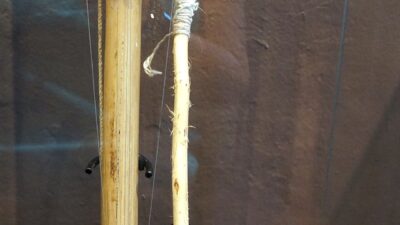
शास्त्र विंग · वाद्य-पट्टिका · Instrument Plate
रावणहत्था
Ravanhatha
दुष्ट राजा के नाम पर, दिव्य संगीत की यंत्री — संसार की सबसे पुरानी वायलिन · Named after a demon king, divine music's tool — world's oldest violin
अन्य नामरावण हारा · रावणहत्या · रावण का वाद्य · Ancient Bowed Instrument
एक पंक्तिरावणहत्था एक राजस्थानी धनुषाकार यंत्र है जो दंतकथा के अनुसार लंका के राजा रावण द्वारा विकसित किया गया था।
परिचय
Overviewरावणहत्था एक अद्भुत वाद्य यंत्र है जो प्राचीन भारत की एक जीवंत कड़ी है। इसका नाम लंका के राजा रावण से आता है, जो एक जटिल पौराणिक चरित्र है — न केवल एक दुष्ट व्यक्ति, बल्कि एक विद्वान संगीतज्ञ और ज्ञानी। दंतकथा के अनुसार, रावण ने इस वाद्य यंत्र का आविष्कार किया था। यह नाम ही इस यंत्र के महत्व को दर्शाता है। रावणहत्था के द्वारा, राजस्थान के भोपा कलाकार हजारों वर्षों से महाभारत, रामायण, और अन्य पौराणिक कथाओं को जीवंत करते आ रहे हैं। ये कलाकार रात भर इस यंत्र को बजाते हुए समाज को अपनी सांस्कृतिक धरोहर से जुड़े रहने में मदद करते हैं। रावणहत्था की गहरी, आध्यात्मिक ध्वनि इन कथाओं को एक दिव्य आयाम देती है। आधुनिक समय में, जब लोग अपनी परंपराओं को भूल रहे हैं, रावणहत्था जैसे यंत्र हमें याद दिलाते हैं कि संगीत केवल एक कला नहीं है, बल्कि एक सांस्कृतिक और आध्यात्मिक दायित्व भी है।
अंग्रेज़ी में पढ़ें · Read in English
Ravanhatha is a remarkable instrument linking us to ancient India. Named after Lanka's king Ravana—a complex mythological character, not merely evil but a learned musician and scholar—legend credits him with its invention. This very name testifies to the instrument's significance.
Through Ravanhatha, Rajasthan's Bhopa artists have brought the Mahabharata, Ramayana, and other epics to life for millennia. Playing through nights, they help society remain connected to its cultural heritage. Ravanhatha's deep, spiritual tone gives these narratives divine dimension.
In modern times, when traditions fade, instruments like Ravanhatha remind us that music isn't merely art but cultural and spiritual responsibility.
काव्य-पंक्ति · The Verse
काव्य-पंक्ति
नारियल के खोल से निकली ध्वनि, प्राचीन काल की गूंज, रावण के नाम पर, संगीत का एक अनंत सेतु।
— आधुनिक भोपा परंपरा Sound from coconut shell, echo of ancient times, Named after Ravana, music's eternal bridge.
वर्गीकरण
ClassificationNatya Shastra
तत — धनुषाकार तारयंत्र
Tata — Bowed Stringed Instrument
नाट्यशास्त्र के अनुसार रावणहत्था को तत वर्ग में वर्गीकृत किया जा सकता है, हालांकि धनुष के साथ वादन इसे अद्वितीय बनाता है।
According to Natya Shastra, Ravanhatha can be classified in Tata category, though bow-playing makes it unique.
Western
Bowed String Instrument
Ancient Violin / Fiddle
पश्चिमी संगीत विज्ञान में, यह एक आदिम वायलिन माना जाता है और विश्व की सबसे पुरानी धनुषवाद्य परंपरा के रूप में देखा जाता है।
In Western musicology, it's considered a primitive violin and world's oldest bowed string tradition.
Hornbostel Sachs
321.312.7
Bowed tubular lute — long-necked, coconut resonator with bow
सिनेमा में
In Cinemaरावणहत्था को हिंदी सिनेमा में बहुत कम प्रदर्शित किया गया है, लेकिन जब भी राजस्थानी ग्रामीण सेटिंग दिखाई गई है, तो इसकी गूंज को पृष्ठभूमि में सुना जा सकता है। १९६०-१९८० के दशक की कुछ फिल्मों में, जहाँ राजस्थान के आदिवासी समाज को दर्शाया गया था, रावणहत्था का संगीत एक प्रामाणिक पृष्ठभूमि संगीत के रूप में कार्य करता था। आधुनिक फिल्मों में इसका उपयोग बहुत दुर्लभ है।
अंग्रेज़ी में पढ़ें · Read in English
Ravanhatha is rarely featured in Hindi cinema, but its resonance can be heard when depicting Rajasthani rural settings. In some 1960s-1980s films depicting Rajasthani tribal society, its music served as authentic background score. Its use in modern films is extremely rare.
वर्तमान स्थिति
Modern Statusविवरण
रावणहत्था आज विलुप्ति की कगार पर है। भोपा समुदाय के बाहर, बहुत कम लोग इस यंत्र को बजाते हैं या जानते हैं। आधुनिकता और विश्वव्यापीकरण के कारण, पारंपरिक कथा-वाचन की परंपरा कमजोर पड़ रही है। भोपा समुदाय के भीतर भी, युवा पीढ़ी इस यंत्र को सीखने में कम रुचि दिखा रही है। हालांकि, सांस्कृतिक पुनरुद्धार और पर्यटन के बढ़ते चलन ने कुछ नई रुचि जगाई है।
अंग्रेज़ी में पढ़ें · Read in English
Ravanhatha is on the brink of extinction. Outside the Bhopa community, very few play or know it. Modernization and globalization weaken traditional narrative traditions. Even within the Bhopa community, youth show less interest. However, cultural preservation and tourism growth have sparked some revival interest.
बनावट
Physicalविवरण
रावणहत्था एक असाधारण रूप से सरल लेकिन प्राचीन बनावट वाला वाद्य यंत्र है। इसका मुख्य शरीर एक नारियल के खोल से बनाया जाता है, जो प्रकृति में खोखला होता है और अच्छे अनुरणन (resonance) के लिए जाना जाता है। इस नारियल के शेल को एक लकड़ी की छड़ी से जोड़ा जाता है जो गर्दन (neck) का काम करती है। आमतौर पर यंत्र की लंबाई ६०-७५ सेंटीमीटर होती है। इसमें आमतौर पर १-३ मुख्य तार होते हैं जो नारियल के शेल के ऊपर से जुड़े होते हैं। नारियल के शेल के एक तरफ एक छेद होता है जो ध्वनि को प्रवर्धित करता है। वादक इसे धनुष (bow) से बजाता है जो बाल (hair) या नीली (thread) से बना होता है।
अंग्रेज़ी में पढ़ें · Read in English
Ravanhatha is an extraordinarily simple yet ancient-crafted instrument. Its main body is made from a coconut shell, naturally hollow and excellent for resonance. This shell connects to a wooden rod serving as the neck, typically 60-75 cm total length. It usually has 1-3 main strings attached above the shell. One side has a sound hole amplifying resonance. Players use a bow made from hair or thread.
Dimensions
60-75 cm
15-20 cm
800-1200 grams
Strings Or Keys
रावणहत्था में आमतौर पर १-३ मुख्य तार होते हैं जो विभिन्न सुरों को उत्पन्न करते हैं। कुछ उन्नत संस्करणों में अतिरिक्त सहानुभूतिशील तार (sympathetic strings) भी हो सकते हैं। तारों को एक पारंपरिक तरीके से ट्यून किया जाता है, जो अक्सर एक विशेष राग या लोक परंपरा पर आधारित होता है।
Ravanhatha typically has 1-3 main strings producing various pitches. Advanced versions may include sympathetic strings. Strings are tuned traditionally, often based on specific raag or folk tradition.
1-3 main + optional sympathetic strings
Horsehair, thread, or metal wire
Tuning
पारंपरिक राजस्थानी लोक ट्यूनिंग
Traditional Rajasthani folk tuning
Variable - often Sa or Pa as drone
1-2 octaves
Construction
पूरे यंत्र का अनुरणन कक्ष, जो प्राकृतिक रूप से गूंज प्रदान करता है।
The instrument's resonating chamber, naturally providing resonance.
लकड़ी की एक सीधी छड़ी जो नारियल के शेल से जुड़ी होती है।
A straight wooden stick attached to the coconut shell.
आमतौर पर १-३ घोड़े के बाल या नीली के तार जो कंपन को बनाए रखते हैं।
Usually 1-3 strings made from horsehair or thread creating vibrations.
लकड़ी की छड़ी जिसमें घोड़े के बाल तना होते हैं।
Wooden stick with horsehair stretched across it.
नारियल के शेल में बना एक छेद जो ध्वनि को बढ़ाता है।
A hole in the coconut shell that amplifies sound.
ध्वनि-चरित्र
SoundTonal Character
रावणहत्था की ध्वनि अत्यंत प्राचीन, कर्कश, और आध्यात्मिक होती है। नारियल के शेल से निकलने वाली ध्वनि में एक विशिष्ट गुणवत्ता होती है जो किसी भी अन्य यंत्र से अलग होती है। यह ध्वनि कभी-कभी पीड़ा को, कभी-कभी आनंद को व्यक्त करती है। धनुष से बजने पर इसकी ध्वनि लंबी, निरंतर, और गहन होती है। कुछ लोगों के लिए यह आध्यात्मिक चेतना का प्रतीक है।
अंग्रेज़ी में पढ़ें · Read in English
Ravanhatha's sound is archaic, resonant, and spiritual. The coconut shell produces a distinctive quality unlike any other instrument. This sound sometimes expresses pain, sometimes joy. When bow-played, it's prolonged, continuous, and profound. For many, it symbolizes spiritual consciousness.
Timbre
खुरदरी, गहरी, और आध्यात्मिक — प्राचीन काल की गूंज
अंग्रेज़ी में पढ़ें · Read in English
Rough, deep, and spiritual — echoes of ancient times
Dynamic Range
नरम से मध्यम तक — एक अंतरंग यंत्र
अंग्रेज़ी में पढ़ें · Read in English
Soft to moderate — an intimate instrument
Comparison
वायलिन की गहराई और भारतीय सारंगी की पीड़ा का मिश्रण
अंग्रेज़ी में पढ़ें · Read in English
A blend of violin's depth and sarangi's pathos
वादन-तकनीक
Playing Techniqueविवरण
रावणहत्था को बैठकर बजाया जाता है, जहाँ वादक यंत्र को अपनी गोद में या छाती के करीब रखता है। धनुष का उपयोग तारों को खींचने के लिए किया जाता है, जो वायलिन की तरह लगता है। हालांकि, रावणहत्था बजाना वायलिन से कहीं अधिक कठिन है क्योंकि इसमें कोई फिंगरबोर्ड नहीं होता है। वादक को तारों पर सीधे अपनी उंगलियां रखनी पड़ती हैं, जो बेहद नाजुक और कौशल की माँग करता है। यंत्र की संरचना इतनी सरल है कि वादन में बेहद सूक्ष्मता की आवश्यकता होती है।
अंग्रेज़ी में पढ़ें · Read in English
Ravanhatha is played sitting, with the instrument held on lap or near chest. The bow is used to pull the strings, similar to violin. However, playing is far harder than violin as there's no fingerboard. The player must place fingers directly on strings requiring extreme delicacy and skill. The instrument's simple structure demands utmost subtlety.
Posture
बैठे हुए, यंत्र को गोद में या छाती के करीब रखते हुए, धनुष को दाहिने हाथ में पकड़ते हुए
अंग्रेज़ी में पढ़ें · Read in English
Sitting, instrument on lap or chest, bow held in right hand
Techniques
धनुष को तारों पर लगातार खींचना, विभिन्न दबाव और गति के साथ।
Continuously drawing the bow across strings with varying pressure and speed.
उंगलियों को तारों पर दबाकर विभिन्न सुर बनाना, बिना फिंगरबोर्ड के।
Producing different pitches by fingering strings directly, without a fingerboard.
तारों को कंपन कराकर ध्वनि को मीठा करना।
Making strings vibrate to sweeten the sound.
एक सुर से दूसरे सुर तक सरलता से स्लाइड करना।
Smoothly sliding from one pitch to another.
निर्माण-प्रक्रिया
Making Processविवरण
रावणहत्था का निर्माण एक सरल लेकिन कुशल प्रक्रिया है। सबसे पहले, एक सूखा नारियल चुना जाता है जो घनत्व और गुणवत्ता के लिए परीक्षण किया जाता है। फिर नारियल के शेल में एक उपयुक्त छिद्र बनाया जाता है। एक लकड़ी की छड़ी को इस शेल से जोड़ा जाता है, जो गर्दन का काम करती है। फिर तारों को जोड़ा जाता है, जो आमतौर पर घोड़े के बाल से बने होते हैं। अंत में, धनुष बनाया जाता है और सूक्ष्म समायोजन किए जाते हैं। पूरी प्रक्रिया २-३ सप्ताह में पूरी हो जाती है।
अंग्रेज़ी में पढ़ें · Read in English
Ravanhatha crafting is a simple yet skilled process. First, a dried coconut is selected and tested for density and quality. A suitable hole is created in the shell. A wooden stick is attached as the neck. Strings are added, typically made from horsehair. Finally, the bow is crafted and fine adjustments made. The entire process takes 2-3 weeks.
Materials
उच्च गुणवत्ता वाला नारियल जो अच्छी गूंज प्रदान करता है।
High-quality coconut providing excellent resonance.
साल, देवदार, या शीशम जैसी कठोर लकड़ी।
Hard woods like Sal, Cedar, or Rosewood.
तारों और धनुष के लिए उपयोग किया जाता है।
Used for strings and bow.
Artisan Centers
राजस्थान में रावणहत्था निर्माण का प्रमुख केंद्र।
Primary center for Ravanhatha crafting in Rajasthan.
मेवाड़ क्षेत्र में रावणहत्था निर्माण की परंपरा।
Ravanhatha tradition in Mewar region.
Time To Craft
2-3 weeks
Price Range
₹2,000-8,000
संगीत-समूह में भूमिका
Role In EnsemblePrimary Role
लोक संगीत में एकल वादक और आध्यात्मिक अनुष्ठानों में प्रयोग
अंग्रेज़ी में पढ़ें · Read in English
Solo player in folk music and spiritual rituals
Solo Capability
रावणहत्था एक पूर्ण एकल वाद्य यंत्र है और अक्सर अकेले बजाया जाता है।
अंग्रेज़ी में पढ़ें · Read in English
Ravanhatha is a complete solo instrument, often played alone.
Accompaniment For
रावणहत्था की गहरी ध्वनि राजस्थानी गायकों का एक आदर्श साथी है।
Its deep tone complements Rajasthani singers excellently.
मंदिरों और आध्यात्मिक समारोहों में रावणहत्था का विशेष उपयोग होता है।
Special use in temples and spiritual ceremonies.
लोक संगीत में
In Folk Musicरावणहत्था राजस्थान के लोक संगीत में एक गहरी जड़ प्राचीन वाद्य यंत्र है। भोपा (Bhopa) समुदाय, जो राजस्थान के पारिहार जनजाति के सदस्य हैं, इस यंत्र को परंपरागत रूप से बजाते हैं। ये कलाकार रात भर इस यंत्र को बजाते हुए देशकथाएं और पौराणिक कहानियाँ सुनाते हैं। रावणहत्था की गहरी, आध्यात्मिक ध्वनि इन कथाओं को एक अलौकिक आयाम देती है।
अंग्रेज़ी में पढ़ें · Read in English
Ravanhatha has deep ancient roots in Rajasthani folk music. The Bhopa community, members of Rajasthan's Parihaar tribe, traditionally play this instrument. These artists spend entire nights telling epic tales and mythological stories while playing. Its deep, spiritual tone gives these narratives an otherworldly dimension.
क्षेत्रीय रूप
Regional Variantsमेवाड़ क्षेत्र में निर्मित, आमतौर पर अलंकृत और विस्तृत।
Made in Mewar region, typically ornate and elaborate.
मारवाड़ क्षेत्र में निर्मित, आमतौर पर सरल और कार्यात्मक।
Made in Marwar region, typically simple and functional.
प्रसिद्ध वादक
Famous Playersभोपा मेघवाल एक प्रसिद्ध भोपा कलाकार थे जिन्होंने रावणहत्था बजाते हुए पारंपरिक राजस्थानी कथाओं को जीवंत किया था। उनके प्रदर्शन अंतर्राष्ट्रीय स्तर पर भी प्रसिद्ध थे।
Bhopa Meghwal was a renowned Bhopa artist who brought traditional Rajasthani narratives to life while playing Ravanhatha. His performances achieved international recognition.
लंगा खुमान एक महान रावणहत्था वादक और लोक संगीतकार थे जिन्होंने इस यंत्र को मंच पर प्रस्तुत करने का प्रयास किया।
Langa Khuman was a great Ravanhatha player and folk musician who worked to present the instrument on concert stages.
चंद्र खुमान एक समकालीन रावणहत्था वादक हैं जो इस प्राचीन यंत्र को आधुनिक संदर्भ में प्रस्तुत करने का प्रयास कर रहे हैं।
Chandra Khuman is a contemporary player attempting to present this ancient instrument in modern contexts.
राग-उपयुक्तता
Raag Suitabilityभैरवी की मेलांचोली रावणहत्था की गहराई के साथ परिपूर्ण मेल खाती है।
Bhairavi's melancholy matches perfectly with Ravanhatha's depth.
अहीर भैरव की गहरी, दर्दनाक संरचना रावणहत्था के आध्यात्मिक स्वर को बढ़ाती है।
Ahir Bhairav's deep, painful structure enhances Ravanhatha's spiritual tone.
दरबारी कानड़ा की गहन संरचना रावणहत्था के साथ एक प्रभावशाली संगति बनाती है।
Darbari Kanada's profound structure creates powerful coordination with Ravanhatha.
घराना-संबंध
Gharana Connectionsभोपा समुदाय की परंपरा, जो रावणहत्था बजाते हुए कथा-सुनाने की एक अलग घराना है।
Bhopa community tradition, a distinct gharana of story-telling while playing Ravanhatha.
राजस्थान के लंगा समुदाय द्वारा प्रतिपादित रावणहत्था परंपरा।
Ravanhatha tradition upheld by Rajasthan's Langa community.
सीखने का मार्ग
Learning Pathविवरण
रावणहत्था सीखना एक बेहद कठिन और लंबी यात्रा है। विद्यार्थी को पहले बुनियादी धनुष-नियंत्रण सीखना पड़ता है, जो अकेले ६-८ महीने ले सकता है। फिर, सुर-नियंत्रण सीखना पड़ता है, जिसमें विद्यार्थी को बिना फिंगरबोर्ड के तारों पर अपनी उंगलियों को सही जगह पर रखना सीखना पड़ता है। यह एक बेहद संवेदनशील कार्य है। तीसरे साल से, विद्यार्थी राग और ताल को समझने लगता है। पूर्ण दक्षता के लिए ७-१० वर्ष की निरंतर साधना की आवश्यकता होती है।
अंग्रेज़ी में पढ़ें · Read in English
Learning Ravanhatha is extremely difficult and lengthy. Students first learn bow control, taking 6-8 months alone. Then pitch control, requiring precise finger placement on strings without a fingerboard. This is incredibly sensitive work. By year three, students understand raag and rhythm. Full mastery requires 7-10 years of continuous practice.
Beginner Steps
पहले ६-८ महीने धनुष को नियंत्रित करना सीखना।
First 6-8 months learning bow control.
अगले ६ महीने में विभिन्न सुरों को पहचानना।
Next 6 months identifying different pitches.
दूसरे वर्ष में विभिन्न तकनीकें सीखना।
Second year learning various techniques.
तीसरे वर्ष से राग और पारंपरिक कथाओं के साथ बजाना।
From year three, playing with raag and traditional narratives.
सामान्य अवधि
7-10 years for proficiency; 3-4 years for basic competence
संस्थान
परंपरागत गुरु-शिष्य पद्धति भोपा समुदाय के भीतर सर्वश्रेष्ठ है।
Traditional guru-shishya method within Bhopa community is best.
कुछ संगीत विद्यालयों में रावणहत्था की शिक्षा उपलब्ध है।
Some music schools offer Ravanhatha instruction.
सांस्कृतिक महत्व
Cultural Significanceरावणहत्था का सांस्कृतिक महत्व अत्यंत गहरा है। यह यंत्र राजस्थान की पहचान है और भोपा समुदाय की परंपरा का प्रतीक है। इसके माध्यम से, भारतीय संस्कृति की गहरी ज्ञान-परंपरा सदियों से सुरक्षित रहती आई है। यह यंत्र जातिगत, धार्मिक और भाषाई सीमाओं को पार करके एक सार्वभौमिक सांस्कृतिक संदेश देता है।
अंग्रेज़ी में पढ़ें · Read in English
Ravanhatha's cultural significance runs extremely deep. It symbolizes Rajasthan's identity and the Bhopa community's tradition. Through it, India's profound knowledge tradition has been preserved for centuries. This instrument transcends caste, religious, and linguistic boundaries to deliver universal cultural message.
सुनने का मार्गदर्शन
The Listening Guideरावणहत्था को सुनते समय, पहले इसकी प्राचीन और आध्यात्मिक ध्वनि को महसूस करें। फिर धीरे-धीरे उसमें बयान की जा रही कथा को समझने का प्रयास करें। इसकी गहरी, निरंतर ध्वनि आपको एक आध्यात्मिक यात्रा पर ले जाएगी। समय के साथ आप पाएंगे कि रावणहत्था केवल एक वाद्य यंत्र नहीं है, बल्कि एक समय-यंत्र है।
अंग्रेज़ी में पढ़ें · Read in English
When listening, first feel its ancient and spiritual tone. Then gradually try to understand the narrative being told. Its deep, continuous sound will take you on a spiritual journey. Over time you'll discover Ravanhatha is not merely an instrument but a time machine.
श्रवण-कक्ष · The Listening Room
देखें-सुनें
रवणहठ - जयपुर के किले में संगीत · 3:22
रवण हठ - परंपरागत भारतीय वाद्य · 3:57
परिचय
Identity- Year Of Origin
- 1500
वर्गीकरण
Classification- Code
- 321.312.7
- Description
- Bowed tubular lute — long-necked, coconut resonator with bow
- Category
- तत — धनुषाकार तारयंत्र
- Category En
- Tata — Bowed Stringed Instrument
- Description
- नाट्यशास्त्र के अनुसार रावणहत्था को तत वर्ग में वर्गीकृत किया जा सकता है, हालांकि धनुष के साथ वादन इसे अद्वितीय बनाता है।
- Description En
- According to Natya Shastra, Ravanhatha can be classified in Tata category, though bow-playing makes it unique.
Hornbostel Sachs
Natya Shastra
अन्य विवरण
More Details- नारियल का खोल (Coconut Shell) — पूरे यंत्र का अनुरणन कक्ष, जो प्राकृतिक रूप से गूंज प्रदान करता है। · Coconut Shell
- गर्दन (Neck) — लकड़ी की एक सीधी छड़ी जो नारियल के शेल से जुड़ी होती है। · Neck/Handle
- तार (Strings) — आमतौर पर १-३ घोड़े के बाल या नीली के तार जो कंपन को बनाए रखते हैं। · Strings
- धनुष (Bow) — लकड़ी की छड़ी जिसमें घोड़े के बाल तना होते हैं। · Bow
- ध्वनि-छिद्र (Sound Hole) — नारियल के शेल में बना एक छेद जो ध्वनि को बढ़ाता है। · Sound Hole
- System
- पारंपरिक राजस्थानी लोक ट्यूनिंग
- System En
- Traditional Rajasthani folk tuning
- Standard Tuning
- Variable - often Sa or Pa as drone
- Range
- 1-2 octaves
- Timbre
- खुरदरी, गहरी, और आध्यात्मिक — प्राचीन काल की गूंज
Construction
Tuning
रोचक तथ्य
Margin Notesरावणहत्था को अक्सर 'विश्व की सबसे पुरानी वायलिन' कहा जाता है। इसकी परंपरा कम से कम १५०० साल पुरानी है।
Ravanhatha is often called 'world's oldest violin.' Its tradition is at least 1,500 years old.
भोपा कलाकार रात भर रावणहत्था बजाते हुए नहीं सोते। यह उनके जीवन का एक महत्वपूर्ण हिस्सा है।
Bhopa artists don't sleep while playing Ravanhatha through the night. It's vital to their life.
रावणहत्था की ध्वनि इतनी गहरी है कि कई लोगों के लिए इसे सुनना एक आध्यात्मिक अनुभव होता है।
Ravanhatha's sound is so deep that listening to it is a spiritual experience for many.
राजस्थान में कई परिवार हैं जहाँ पीढ़ियों से रावणहत्था बजाया जाता है।
In Rajasthan, many families have played Ravanhatha for generations.
क्या आप जानते हैं?
Did You Knowरावणहत्था को बजाने के लिए किसी निश्चित संगीत पद्धति की आवश्यकता नहीं है। भोपा कलाकार इसे अपनी परंपरा और अनुभव के अनुसार बजाते हैं।
Ravanhatha doesn't require formal musical training. Bhopa artists play according to their tradition and experience.
प्रत्येक नारियल अलग-अलग ध्वनि देता है। इसलिए हर रावणहत्था की अपनी अलग पहचान होती है।
Each coconut produces different sound. Hence every Ravanhatha has unique identity.
सूक्तियाँ
Words of the Masters“रावणहत्था की आवाज़ साक्ष्य है कि भारतीय संगीत कितना प्राचीन है।”
“Ravanhatha's voice testifies how ancient Indian music truly is.”
— — संगीत इतिहासविद
“भोपा के बिना राजस्थान की कथा अधूरी है, और भोपा के बिना रावणहत्था सिर्फ एक यंत्र है।”
— — लोक-गीत संग्राहक“Without Bhopa, Rajasthan's story is incomplete; without Bhopa, Ravanhatha is merely an instrument.”
इतिहास
The Historyउत्पत्ति — पौराणिक काल — १५००-१०००+ वर्ष पूर्व Origin
दंतकथा के अनुसार, रावणहत्था का आविष्कार लंका के राजा रावण ने किया था। रावण एक विद्वान संगीतज्ञ थे और उन्होंने यह वाद्य यंत्र बनाया था अपने भगवान शिव की पूजा के लिए। समय के साथ, यह यंत्र राजस्थान में प्रसारित हुआ और भोपा समुदाय ने इसे अपनाया। भोपा कलाकार इसे बजाते हुए महाभारत और रामायण जैसी महान कथाओं को सुनाते आए हैं।
नमूना-पट्टी
The Specimen Table| नाम | रावणहत्था · Ravanhatha |
|---|---|
| अन्य नाम | रावण हारा · रावणहत्या · रावण का वाद्य · Ancient Bowed Instrument |
| उद्गम | 1500 |
| काल | पौराणिक काल — १५००-१०००+ वर्ष पूर्व |
| प्रकार | वाद्य · Instruments |
साझा कीजिए · Share this Plate