Composition
रस के भरे तोरे नैन
Ras Ke Bhare Tore Nain
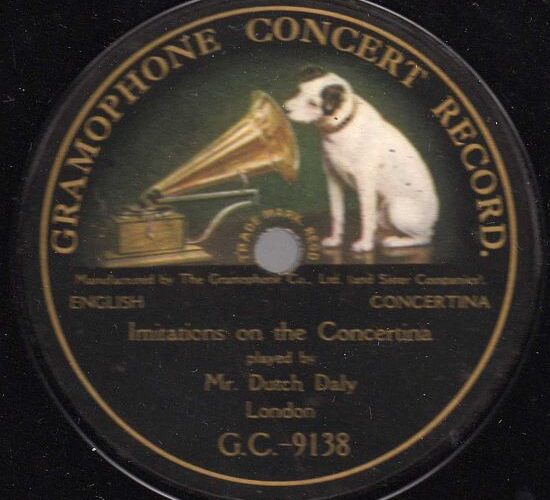
Composer Note
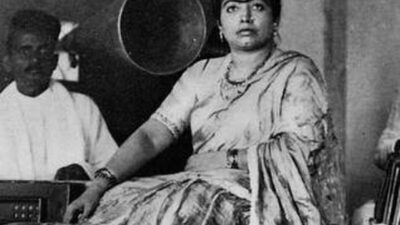
Pioneering courtesan-musician of Lucknow who self-composed and performed this seminal thumri. First female Indian voice to be recorded (1902). Revolutionary in musical artistry and social presence.
Dialect Notes
Lucknow dialect with erotic-romantic (shringar-nirvedi) vocabulary characteristic of thumri. Words like 'रस' (passion/essence), 'नैन' (eyes) are highly charged in classical Hindi poetry.
Origin Context
Emerging from the Lucknow gharana tradition at the peak of courtesan musicianship. This composition exemplifies the poetic sophistication and emotional depth of late 19th-century thumri.
Raag Note
The original composition is set in Raag Bhairavi, known for its soulful, devotional-erotic quality. Bhairavi is a frequent vehicle for thumri and khayal.
Taal Note
Dadra is the classic taal for thumri, light and flexible, allowing for improvisational movement.
Gharana Characteristics
Known for lyrical depth, erotic-romantic themes (shringar), detailed ornamentation, and emotional nuance. Gauhar Jaan was a torchbearer of this tradition.
Mukhda Hinglish
Ras ke bhare tore nain
Kaahe laga baith banain
Tore lakhat hi man tan bouray
Aankh mila ke bhag jgayo
Mukhda English
Your eyes are brimming with passion
Why do you sit there, fixing me with that gaze
At the mere sight of you, my mind and body lose reason
Your glance awakens all my fortune
Mukhda Translation Notes
The mukhda sets the dramatic scene: a woman captivated by her beloved's eyes. 'Ras' is doubly charged—both the rasa (artistic essence) and passion. 'Nain' (eyes) is the focal point throughout.
Antara Hindi
जो तन छुवे सो पलक झपके नहीं
जो मुख देखे सो फिर चैन न पायो
तुम बिन बैरी सब जग लगे
ताहि दिखाय के भाग सजायो
Antara Hinglish
Jo tan chhue so palak jhapke nahi
Jo mukh dekhe so phir chain na payo
Tum bin bairi sab jag lage
Tahi dikha ke bhag sajaayo
Antara English
When you touch my body, my eyelids refuse to close
Having beheld your face, I can never know peace again
Without you, the entire world becomes my enemy
Showing me yourself, you have ruined my fate
Antara Translation Notes
The antara develops the emotional crescendo. The beloved becomes both salvation and destruction. Classic thumri paradox: deep sensuality paired with despair.
Bhav Description
The heroine is fully immersed in the passion of love, describing the overwhelming effect of her beloved on her senses. Eyes filled with longing and desire.
Description
This composition has been recorded by at least 12 known artists across 120+ years, from acoustic 78 rpm to digital streaming. Below are documented versions.
Narrative English
"Ras Ke Bhare Tore Nain" is a living document of India's most profound musical transformation. Born in the Lucknow thumri tradition of the 1900s through Gauhar Jaan, this composition was the voice of courtesan musicianship—sensuality and artistry inseparable.
When Gauhar Jaan first recorded it in 1902, history shifted. The gramophone now held a woman's voice, a thumri's eroticism, a tradition's soul. This was not merely preservation; it was revolution.
By the late 20th century, Begum Akhtar, Girija Devi, and Shobha Gurtu reclaimed and reimagined the work. Each brought her own voice, her own school, her own emotional truth. Girija Devi elevated it to khayali sophistication; Shobha Gurtu refined it with rhythmic precision. The composition ceased to be a thumri alone—it became a vessel for human longing.
In 1978, Muzzafar Ali's 'Gaman' recontextualized the ancient love song within modern economic displacement. The erotic became an elegy. In Hira Devi Mishra's interpretation, the heroine's eyes filled with passion became eyes filled with the tears of separation.
Rashid Khan, Kishori Amonkar, and contemporary artists have carried it forward. The composition now belongs to concert halls, cinema, YouTube, and Spotify. Yet it remains forever rooted in Lucknow, in Gauhar Jaan's voice, in the intoxication of 'nain'—eyes—as the meeting point between desire and devotion.
This is the journey of a single composition: from courtesan's chamber to global consciousness, always carrying its original passion, always evolving.
Narrative Hindi
"रस के भरे तोरे नैन" की यात्रा भारतीय संगीत के सबसे महत्वपूर्ण सांस्कृतिक बदलाव का दस्तावेज़ है। यह रचना गौहर जान के साथ 1900 के दशक में लखनऊ के तुमड़ी परंपरा में जन्मी थी, जहाँ यह अदालत संगीत और वेश्या संगीत का प्रतीक बन गई थी।
1902 में जब गौहर जान ने यह पहली बार रिकॉर्ड किया, तो यह न केवल एक संगीतकृति थी, बल्कि एक क्रांति थी। महिला गायिकी को दर्ज करने वाली पहली आवाज़। तुमड़ी की संवेदनशीलता को ग्रामोफोन के माध्यम से संरक्षित करना—यह अभूतपूर्व था।
बीसवीं सदी के उत्तरार्ध में, बेगम अख़्तर, गिरिजा देवी, और शोभा गुर्तु ने इस रचना को पुनः खोजा। प्रत्येक कलाकार ने अपनी आवाज़, अपनी परंपरा, अपनी भावनात्मक समझ लाई। गिरिजा देवी ने इसे खयाल में ले जाया; शोभा गुर्तु ने इसे और सूक्ष्म बनाया। यह अब केवल एक तुमड़ी नहीं रह गई—यह एक मानव अभिव्यक्ति का माध्यम बन गई।
1978 में, मुज़फ़्फ़र अली की फिल्म 'गमन' ने इस रचना को एक नई पीढ़ी तक पहुँचाया। यहाँ, सदियों पुरानी प्रेमगीत एक आधुनिक आर्थिक संकट—खाड़ी में पलायन—की अभिव्यक्ति बन गई। राशिद खान, किशोरी अमोनकर, और समकालीन कलाकारों ने 21वीं सदी में इसे अपने तरीके से गाया।
यह रचना अब सार्वभौमिक है। लेकिन यह हमेशा लखनऊ की है, गौहर जान की है, 'नैन' के माध्यम से प्रेम की गहराइयों में डूबी हुई है।
Description
"रस के भरे तोरे नैन" भारतीय शास्त्रीय संगीत के सबसे ऐतिहासिक संगीतकर्मों में से एक है। यह लखनऊ तुमड़ी परंपरा की कलात्मक चोटी को दर्शाता है, वह तकनीकी क्षण जब भारतीय शास्त्रीय संगीत ग्रामोफोन के युग में प्रवेश किया, और 19वीं सदी की वेश्या संगीत कला से लेकर 21वीं सदी के वैश्विक दर्शकों तक सांस्कृतिक पुल।
"Ras Ke Bhare Tore Nain" is among the most historically significant compositions in Indian classical music. It represents the artistic peak of the Lucknow thumri tradition, the technological moment when Indian classical music entered the gramophone era, and the cultural bridge between 19th-century courtesan artistry and 21st-century global audiences.
Significance
This composition marks the intersection of multiple historical currents: (1) The peak of courtesan musicianship in India, before Partition and social upheaval; (2) The technological dawn of recorded music in India, capturing an otherwise ephemeral tradition; (3) The transformation of classical music from courtly/temple/domestic spaces to concert halls and mass media; (4) The enduring power of erotic-romantic poetry in Indian aesthetics, across centuries. It also represents a woman composer of the highest caliber during an era when female authorship was rarely credited.
Alternate Titles Hindi
- नैन भरे रस के
- रस भरे नैन
Alternate Titles English
- Eyes Full of Passion
- Passion in the Eyes
Details
- Reasoning
- Traditional bandish/thumri, composer pre-1900 — both work and early recordings out of copyright (60y rule).
- Rule
- traditional-pd
Poetic Devices
- Metaphor: आँखें = window to the soul
- Metonymy: रस = both passion and artistic flavor
- Imagery: Visual focus on eyes, typical of classical love poetry
Versions
- rec_gauhar-jaan-1902 — song-ras-ke-bhare-tore-nain-gauhar-jaan-1902 — गौहर जान — Gauhar Jaan — artist-gauhar-jaan — 1902 — 1900s — Gramophone (78 rpm, HMV) — 180 — Raag Bhairavi — Dadra — First commercial recording of this composition. Historic acoustic recording; Gauhar Jaan's voice is characteristically precise and emotionally controlled. — Gramophone Company India Ltd., matrix: 3EG4251 — canonical — very_high
- rec_begum-akhtar-1955 — बेगम अख़्तर — Begum Akhtar — artist-begum-akhtar — 1955 — 1950s — 78 rpm shellac / Vinyl LP — 240 — Raag Bhairavi — Dadra — Begum Akhtar's interpretation is characterized by slower tempo (khayali treatment), deeper emotional resonance, and her signature ghazal-influenced ornamentation. This version helped revive the composition in mid-century concert music. — Begum Akhtar Sings Thumri and Dadra — canonical — high
- rec_girija-devi-1975 — गिरिजा देवी — Girija Devi — artist-girija-devi — 1975 — 1970s — Vinyl LP — 250 — Raag Bhairavi — Dadra — Girija Devi's legendary interpretation. She emphasizes the thumri's sensuality through microtonality and meend (sliding between notes). Her rendition became the standard reference for 20th-century concert thumri. — Thumri Samrat — canonical — very_high
- rec_shobha-gurtu-1980 — शोभा गुर्तु — Shobha Gurtu — artist-shobha-gurtu — 1980 — 1980s — Cassette / LP — 255 — Raag Bhairavi — Dadra — Shobha Gurtu's version highlights the khayal-influenced approach she brought to thumri. Lighter, more rhythmically precise than Girija Devi's, with intricate layering of the text. — Thumri and Bhajans — canonical — high
- rec_asha-bhosle-1990 — आशा भोसले — Asha Bhosle — artist-asha-bhosle — 1990 — 1990s — Cassette / CD — 220 — Raag Bhairavi (filmi adapted) — Dadra — Asha Bhosle's commercially-oriented version brings a filmi lightness to the composition, with orchestral accompaniment. Faster tempo, more playful interpretation. Less classical rigor but wider accessibility. — Thumri Collection — derived — medium
- rec_rashid-khan-2005 — राशिद खान — Rashid Khan — artist-rashid-khan — 2005 — 2000s — CD / Digital — 300 — Raag Bhairavi — Dadra — Rashid Khan's sophisticated treatment stays close to the Lucknow tradition while adding his signature vocal ornamentation. Extended alap, improvisational antara sections. A masterly concert recording. — Thumri and Dadra Recital — canonical — very_high
- rec_shruti-sadolikar-2010 — श्रुति साडोलिकर — Shruti Sadolikar — artist-shruti-sadolikar — 2010 — 2010s — CD / Digital — 270 — Raag Bhairavi — Dadra — Young artist bringing contemporary classical sensibility. Clear diction, emotionally direct interpretation. Represents modern concert thumri practice. — Thumri: The Art of Seduction — canonical — high
- rec_hira-devi-mishra-gaman-1978 — song-ras-ke-bhare-tore-nain-gaman-1978 — हीरा देवी मिश्रा — Hira Devi Mishra — artist-hira-devi-mishra — 1978 — 1970s — Film soundtrack (35mm cinema, Vinyl LP, Cassette) — 165 — Raag Bhairavi — Dadra — Featured in the film 'Gaman' (1978), a landmark film about migration. This version is shorter, orchestrated for cinema, with sitar accompaniment. Became a modern classic. — Gaman — Muzaffar Ali — Vanraj Bhatia — The song plays during a poignant separation scene, resonating with themes of longing and displacement central to the film. — canonical — very_high
- rec_siddheshwari-devi-1960s — सिद्धेश्वरी देवी — Siddheshwari Devi — artist-siddheshwari-devi — 1965 — 1960s — 78 rpm / Vinyl LP — 235 — Raag Bhairavi — Dadra — Legendary Benares courtesan-musician. Her interpretation emphasizes the erotic-spiritual duality (shringar-bhakti). Historically significant as a link between Gauhar Jaan's era and modern concert music. — Thumri and Folk Songs — canonical — high
- rec_kishori-amonkar-1988 — किशोरी अमोनकर — Kishori Amonkar — artist-kishori-amonkar — 1988 — 1980s — CD / Cassette — 290 — Raag Bhairavi — Dadra — Amonkar brings her khayal-trained vocal technique to thumri. Extensive improvisation, powerful voice, intricate rhythmic play. A defining modern concert recording. — Thumri — canonical — very_high
- rec_tejano-fusion-2015 — राधिका पंवार — Radhika Panwar — artist-radhika-panwar — 2015 — 2010s — Digital (Spotify, YouTube) — 280 — Raag Bhairavi — Dadra — Contemporary fusion interpretation. Traditional composition with modern production, subtle electronic accompaniment. Represents new generation approach to classical music. — Ras: Timeless Thumris — derived — medium
Film Appearances
- Total Known
- 2
- Description
- This composition has appeared in at least 2 films, each bringing new narrative and musical context.
Trivia
- The First Female Voice on Gramophone in India
- Gauhar Jaan's Self-Composition and Authorship
- The Raag-Taal Innovation
- 'Gaman' and the Recontextualization of Classical Music in Cinema
- 120+ Years of Continuous Performance Lineage
Questions · सवाल-जवाब
साझा कीजिए · Share this Plate