कलाकार विंग · कलाकार-पट्टिका · Artist Plate
किशोरी अमोणकर
Kishori Amonkar
गानसरस्वती
जन्म10 April 1932 — बंबई (मुंबई), महाराष्ट्र, भारत
निधन3 April 2017 — Mumbai, Maharashtra, India
जीवन-पट्टी
The Life Specimen| नाम | किशोरी अमोणकर · Kishori Amonkar |
|---|---|
| उपनाम | गानसरस्वती · किशोरी ताई |
| जन्म | 10 April 1932 — बंबई (मुंबई), महाराष्ट्र, भारत · Bombay, Bombay Presidency, British India |
| निधन | 3 April 2017 — Mumbai, Maharashtra, India |
| भूमिकाएँ | गायक · रचनाकार |
| सक्रिय वर्ष | 1950s–2017 |
| युग | Modern |
| राष्ट्रीयता | Indian |
| विधाएँ | शास्त्रीय · उप-शास्त्रीय · भजन · भक्ति |
| भाषाएँ | Hindi · Marathi · Sanskrit · Braj Bhasha |
| माता | मोगूबाई कुर्डीकर |
हस्ताक्षर-पंक्ति · The Signature
हस्ताक्षर-पंक्ति
गानसरस्वती · किशोरी ताई
In EnglishGaan Saraswati — the genius who broke her own gharana's rules to prove that raag is not grammar but feeling; her 'Sahela Re' can stop a room.
पट्टिका-लेख
The Monographजीवनी Biography
किशोरी अमोणकर (10 अप्रैल 1932 – 3 अप्रैल 2017) बीसवीं सदी के उत्तरार्ध की सबसे विलक्षण हिंदुस्तानी शास्त्रीय गायिका थीं — 'गानसरस्वती', जिन्होंने अपने ही घराने की दीवारें तोड़कर सिद्ध किया कि राग व्याकरण नहीं, भाव है। बंबई में जन्मीं किशोरी जयपुर-अतरौली घराने की महान गायिका मोगूबाई कुर्डीकर — उस्ताद अल्लादिया ख़ान की शिष्या — की बेटी थीं। माँ ही गुरु थीं: तालीम कठोर, अनुशासन निर्मम। पर किशोरी ने माँ की विरासत को ज्यों-का-त्यों स्वीकारने से इनकार कर दिया — उन्होंने जयपुर की जटिल लयकारी और वक्र राग-चालों में भक्ति-संगीत की आर्द्रता, ठुमरी की कोमलता और रस-सिद्धांत का दर्शन घोल दिया। परंपरावादी नाराज़ हुए; श्रोता मंत्रमुग्ध। युवावस्था में एक दौर ऐसा आया जब उनकी आवाज़ ही चली गई — लगभग दो वर्ष का वह अंधकार उनकी साधना की भट्टी बना; आवाज़ लौटी तो पहले से अधिक गहरी होकर। राग भूप में 'सहेला रे' उनकी अमर पहचान बनी — वह रचना जो आज भी किसी भी महफ़िल को स्तब्ध कर देती है। भूप, बागेश्री, जौनपुरी, ललित — उनके राग-चित्र ध्यान की तरह खुलते थे। उन्होंने फ़िल्म जगत को लगभग ठुकराया ही रखा: 'गीत गाया पत्थरों ने' (1964) में स्वर दिया और 'दृष्टि' (1990) का संगीत रचा — बस। मंच पर उनकी अडिग शर्तें — संपूर्ण नीरवता, सही तानपूरे, माइक की सटीकता — किंवदंती बन गईं; वे कहती थीं कि यह नख़रा नहीं, संगीत के प्रति सम्मान है। संगीत नाटक अकादमी पुरस्कार (1985), पद्म भूषण (1987), पद्म विभूषण (2002) और संगीत नाटक अकादमी फ़ेलोशिप (2009) से सम्मानित किशोरी ताई अंतिम दिनों तक गाती और सिखाती रहीं। 3 अप्रैल 2017 को मुंबई में नींद में ही उनका देहांत हुआ। उनकी शिष्य-परंपरा और रिकॉर्डिंग्स में वह स्वर आज भी पूछता है — जो उन्हीं का प्रश्न था — 'सुर में परमात्मा क्यों न सुनाई दे?'
अंग्रेज़ी में पढ़ें · Read in English
Kishori Amonkar (10 April 1932 – 3 April 2017) was the most extraordinary Hindustani classical vocalist of the late twentieth century — 'Gaan Saraswati', who broke the walls of her own gharana to prove that raag is not grammar but feeling. Born in Bombay, Kishori was the daughter of Mogubai Kurdikar, the great Jaipur-Atrauli vocalist and disciple of Ustad Alladiya Khan. Her mother was her guru: the training severe, the discipline unsparing. But Kishori refused to inherit the legacy unaltered — into Jaipur's intricate layakari and oblique raag movements she poured the moistness of devotional music, the tenderness of thumri and the philosophy of rasa theory. Traditionalists bristled; listeners were spellbound.
In her youth came a period when her voice itself deserted her — a darkness of roughly two years that became the furnace of her sadhana; when the voice returned, it returned deeper. 'Sahela Re' in Raag Bhoop became her immortal signature — a composition that can still bring any gathering to a standstill. Bhoop, Bageshri, Jaunpuri, Lalit — her raag-portraits opened like meditations. She kept the film world almost entirely at arm's length: she sang in Geet Gaya Patharon Ne (1964) and composed the music of Drishti (1990) — and that was all.
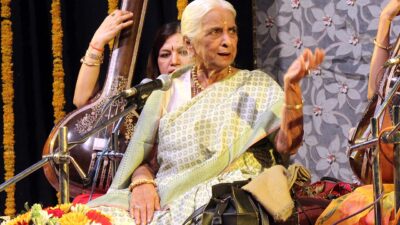
Her unbending conditions on stage — total silence, perfectly tuned tanpuras, exact microphone placement — became legend; she insisted this was not temperament but respect for the music. Honoured with the Sangeet Natak Akademi Award (1985), the Padma Bhushan (1987), the Padma Vibhushan (2002) and the Sangeet Natak Akademi Fellowship (2009), Kishori Tai sang and taught until her final days. She died in her sleep in Mumbai on 3 April 2017, a week short of her 85th birthday. In her students and her recordings, that voice still asks the question that was always hers: why should one not hear God in a note?
गायन-शैली Musical Style
किशोरी अमोणकर को जयपुर-अतरौली का पूरा शस्त्रागार विरासत में मिला — जटिल तानें, वक्र वाक्य-रचना, दुर्लभ संयुक्त राग — और फिर उन्होंने यह सब 'भाव' के अधीन कर दिया। उनका ख़याल धीमे बदलते मौसम-सा खुलता था: लंबे, साँस-थमे आलाप जिनमें एक-एक स्वर को सूक्ष्म श्रुतियों तक तब तक साधा जाता जब तक वह कसकने न लगे — और फिर अचानक जयपुर की बिजली। उन्होंने अपनी गायकी को रस-सिद्धांत के दर्शन से समझाया: राग का एकमात्र प्रयोजन वह भाव है जो वह संप्रेषित करता है — और इस राह में बाधा बनने वाली घराना-रूढ़ियों को उन्होंने बेहिचक बदला या छोड़ा। उनका भूप ('सहेला रे') और बागेश्री आज भी संदर्भ-प्रस्तुतियाँ हैं; उनके मीरा भजनों ने ख़याल की गहराई भक्ति-संगीत में उतार दी।
अंग्रेज़ी में पढ़ें · Read in English
Kishori Amonkar inherited the Jaipur-Atrauli arsenal — complex taans, oblique phrase-architecture, rare compound raags — and then subordinated all of it to bhava. Her khayal unfolded like slow weather: long, breath-suspended aalaps in which a single swara was tuned microtonally until it ached, then sudden Jaipur lightning. She theorised her practice through rasa philosophy, arguing that the raag's sole purpose is the emotion it transmits, and freely adapted or abandoned gharana conventions that obstructed it. Her Bhoop ('Sahela Re') and Bageshri remain reference renditions; her bhajans (Meera, in albums with Bhimsen Joshi's generation of accompanists) carried khayal depth into devotional song.
स्वर-विशेषताएँ Vocal Characteristics
- साँस-थमे आलाप — एक स्वर में समाधि
- श्रुतियों तक साधा गया सुर, जो कसकता है
- जयपुर-अतरौली की बिजली-सी जटिल तानें
- रस-सिद्धांत पर खड़ी भाव-प्रधान गायकी
- 'सहेला रे' — राग भूप की अमर पहचान
अंग्रेज़ी में पढ़ें · Read in English
- Breath-suspended aalaps — meditation inside a single note
- Microtonally tuned swaras that ache
- The lightning of Jaipur-Atrauli's intricate taans
- Bhava-first singing grounded in rasa philosophy
- 'Sahela Re' — the immortal signature in Raag Bhoop
तालीम, विधाएँ और भाषाएँ
Training · Genres · Languagesतालीम · Training
मोगूबाई कुर्डीकर (childhood onward)
ख़याल — जयपुर-अतरौली घराना (अल्लादिया ख़ान परंपरा)
घराना · GharanaMother and guru — herself a foremost disciple of Ustad Alladiya Khan.
विधाएँ · Genres
भाषाएँ · Languages Sung
जीवन-रेखा
Career Highlights-
1940
बचपन में माँ मोगूबाई कुर्डीकर से जयपुर-अतरौली परंपरा की कठोर तालीम आरंभ
Begins rigorous taleem under her mother Mogubai Kurdikar in the Jaipur-Atrauli tradition (approximate, childhood)
- 1964 फ़िल्म 'गीत गाया पत्थरों ने' में स्वर — फिर सिनेमा से किनारा Lends her voice to the film Geet Gaya Patharon Ne — then turns away from cinema
- 1985 संगीत नाटक अकादमी पुरस्कार Receives the Sangeet Natak Akademi Award
- 1987 पद्म भूषण से सम्मानित Awarded the Padma Bhushan
- 1990 गोविंद निहलानी की 'दृष्टि' का संगीत रचा — फ़िल्म-जगत में दुर्लभ वापसी Composes the music of Govind Nihalani's Drishti — her rare return to film
- 2002 पद्म विभूषण से अलंकृत Conferred the Padma Vibhushan
- 2009 संगीत नाटक अकादमी की फ़ेलोशिप — अकादमी का सर्वोच्च सम्मान Elected Fellow of the Sangeet Natak Akademi — its highest honour
- 2017 3 अप्रैल को मुंबई में नींद में देहांत — 85वें जन्मदिन से एक सप्ताह पहले Dies in her sleep in Mumbai on 3 April, a week before her 85th birthday
पुरस्कार एवं सम्मान
Awards & Recognition- 2002 पद्म विभूषण Padma Vibhushan
- 1987 पद्म भूषण Padma Bhushan
- 1985 संगीत नाटक अकादमी पुरस्कार Sangeet Natak Akademi Award
- 2009 संगीत नाटक अकादमी फ़ेलोशिप Sangeet Natak Akademi Fellowship
रोचक तथ्य
Margin Notesयुवावस्था में लगभग दो वर्ष के लिए उनकी आवाज़ चली गई थी — लौटी तो पहले से गहरी होकर।
अंग्रेज़ी में पढ़ें · Read in English
In her youth she lost her voice for roughly two years — it returned deeper than before.
मंच पर संपूर्ण नीरवता उनकी शर्त थी — कैमरे की एक क्लिक पर भी वे गायन रोक देती थीं।
अंग्रेज़ी में पढ़ें · Read in English
Total silence was her condition on stage — even a camera click could halt the recital.
'सहेला रे' (राग भूप) उनकी ऐसी पहचान बनी कि श्रोता उसे 'किशोरी ताई का राष्ट्रगान' कहते थे।
अंग्रेज़ी में पढ़ें · Read in English
'Sahela Re' (Raag Bhoop) became so identified with her that listeners called it 'Kishori Tai's anthem'.
उन्होंने रस-सिद्धांत पर व्याख्यान दिए और 'स्वरार्थरमणी' नामक ग्रंथ में अपना संगीत-दर्शन लिखा।
अंग्रेज़ी में पढ़ें · Read in English
She lectured on rasa theory and set down her musical philosophy in the treatise 'Swarartharamani'.
अन्य विवरण
More Details- Birth Year
- 1932
- Death Year
- 2017
- Active Years
- 1950s–2017
- साँस-थमे आलाप — एक स्वर में समाधि · Breath-suspended aalaps — meditation inside a single note
- श्रुतियों तक साधा गया सुर, जो कसकता है · Microtonally tuned swaras that ache
- जयपुर-अतरौली की बिजली-सी जटिल तानें · The lightning of Jaipur-Atrauli's intricate taans
- रस-सिद्धांत पर खड़ी भाव-प्रधान गायकी · Bhava-first singing grounded in rasa philosophy
- 'सहेला रे' — राग भूप की अमर पहचान · 'Sahela Re' — the immortal signature in Raag Bhoop
- Jaipur-Atrauli gharana lineage — Alladiya Khan tradition through Mogubai Kurdikar
- Govind Nihalani — music of Drishti (1990)
Musical Style
किशोरी अमोणकर को जयपुर-अतरौली का पूरा शस्त्रागार विरासत में मिला — जटिल तानें, वक्र वाक्य-रचना, दुर्लभ संयुक्त राग — और फिर उन्होंने यह सब 'भाव' के अधीन कर दिया। उनका ख़याल धीमे बदलते मौसम-सा खुलता था: लंबे, साँस-थमे आलाप जिनमें एक-एक स्वर को सूक्ष्म श्रुतियों तक तब तक साधा जाता जब तक वह कसकने न लगे — और फिर अचानक जयपुर की बिजली। उन्होंने अपनी गायकी को रस-सिद्धांत के दर्शन से समझाया: राग का एकमात्र प्रयोजन वह भाव है जो वह संप्रेषित करता है — और इस राह में बाधा बनने वाली घराना-रूढ़ियों को उन्होंने बेहिचक बदला या छोड़ा। उनका भूप ('सहेला रे') और बागेश्री आज भी संदर्भ-प्रस्तुतियाँ हैं; उनके मीरा भजनों ने ख़याल की गहराई भक्ति-संगीत में उतार दी।
Kishori Amonkar inherited the Jaipur-Atrauli arsenal — complex taans, oblique phrase-architecture, rare compound raags — and then subordinated all of it to bhava. Her khayal unfolded like slow weather: long, breath-suspended aalaps in which a single swara was tuned microtonally until it ached, then sudden Jaipur lightning. She theorised her practice through rasa philosophy, arguing that the raag's sole purpose is the emotion it transmits, and freely adapted or abandoned gharana conventions that obstructed it. Her Bhoop ('Sahela Re') and Bageshri remain reference renditions; her bhajans (Meera, in albums with Bhimsen Joshi's generation of accompanists) carried khayal depth into devotional song.
Vocal Characteristics
Collaborations
अभिलेख व संदर्भ
Archives & References| विकिपीडिया | Wikipedia |
|---|---|
| संदर्भ | Kishori Amonkar — Wikipedia |
| प्रसिद्ध सहयोग |
अंग्रेज़ी में पढ़ें · Read in English
|
जुड़े हुए पन्ने
Connected Plates · The Graph Made Visibleअटलस में कोई पन्ना अकेला नहीं — किशोरी अमोणकर से उनके गीत, फ़िल्में, घराना, समकालीन और युग, सब यहाँ से खुलते हैं।
सहयोगी और समकालीन · Collaborators & Contemporaries
शास्त्र-सूत्र · Shastra Threads
साझा कीजिए · Share this Plate
यह पन्ना आगे बढ़ाइए
सवाल-जवाब
Questions & Answersकिशोरी अमोणकर किस घराने की गायिका थीं?
जयपुर-अतरौली घराने की — माँ और गुरु मोगूबाई कुर्डीकर उस्ताद अल्लादिया ख़ान की शिष्या थीं। पर किशोरी ताई ने घराने की रूढ़ियाँ तोड़कर भाव-प्रधान अपनी शैली रची।
What is Kishori Amonkar's most famous composition?
'Sahela Re' in Raag Bhoop — her own composition, now among the most beloved recordings in Hindustani classical music.
क्या किशोरी अमोणकर ने फ़िल्मों में गाया?
बहुत कम — 'गीत गाया पत्थरों ने' (1964) में स्वर दिया और गोविंद निहलानी की 'दृष्टि' (1990) का संगीत रचा। उन्होंने जान-बूझकर फ़िल्मी दुनिया से दूरी रखी।
When did Kishori Amonkar die?
On 3 April 2017, in her sleep at her Mumbai home, a week before her 85th birthday.