कलाकार विंग · कलाकार-पट्टिका · Artist Plate
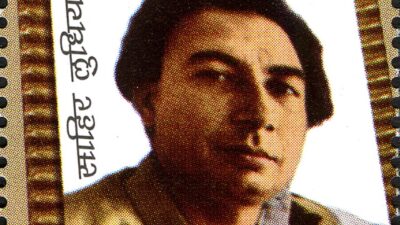
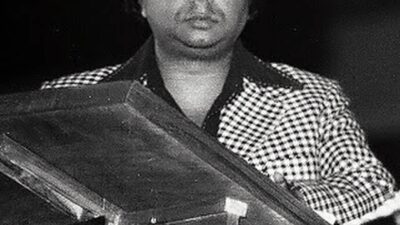
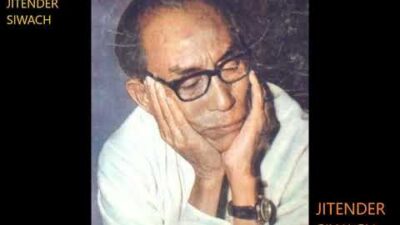
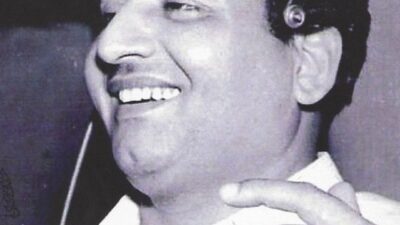
एस.डी. बर्मन
S.D. Burman · Sachin Dev Burman
सचिन कर्ता
जन्म1 October 1906 — कुमिल्ला, बंगाल प्रेसीडेंसी (अब बांग्लादेश)
निधन31 October 1975 — Bombay (Mumbai), Maharashtra, India
जीवन-पट्टी
The Life Specimen| नाम | एस.डी. बर्मन · S.D. Burman |
|---|---|
| जन्म नाम | सचिन देव बर्मन · Sachin Dev Burman |
| उपनाम | सचिन कर्ता · बर्मन दादा · एस.डी. |
| जन्म | 1 October 1906 — कुमिल्ला, बंगाल प्रेसीडेंसी (अब बांग्लादेश) · Comilla, Bengal Presidency, British India (now Bangladesh) |
| निधन | 31 October 1975 — Bombay (Mumbai), Maharashtra, India |
| भूमिकाएँ | संगीतकार · रचनाकार · गायक |
| सक्रिय वर्ष | 1932–1975 |
| युग | golden-era |
| राष्ट्रीयता | Indian |
| विधाएँ | फ़िल्मी · लोक · उप-शास्त्रीय · भजन · ग़ज़ल |
| भाषाएँ | Bengali · Hindi |
| पिता | नबद्वीपचंद्र देव बर्मन |
| जीवनसाथी | मीरा देव बर्मन |
| बच्चे | राहुल देव बर्मन |
हस्ताक्षर-पंक्ति · The Signature
हस्ताक्षर-पंक्ति
सचिन कर्ता · बर्मन दादा
In EnglishThe prince of Tripura who sang like a boatman of the Padma — when S.D. Burman's own cracked, haunting voice entered a film, time stopped: 'Wahan Kaun Hai Tera…'
पट्टिका-लेख
The Monographजीवनी Biography
सचिन देव बर्मन (1 अक्टूबर 1906 – 31 अक्टूबर 1975) हिंदी फ़िल्म संगीत के उन गिने-चुने रचनाकारों में हैं जिन्होंने लोक-संगीत की मिट्टी और शास्त्रीयता की ऊँचाई को एक साथ साध लिया। त्रिपुरा के राजपरिवार से जुड़े घर में, कुमिल्ला (अब बांग्लादेश) में जन्मे सचिन के पिता नबद्वीपचंद्र देव बर्मन सितारवादक थे — पहली तालीम उन्हीं से मिली। फिर कलकत्ता में के.सी. डे (मन्ना डे के चाचा), भीष्मदेव चट्टोपाध्याय और सारंगी नवाज़ बादल ख़ान से वर्षों की साधना। पर सचिन कर्ता की असली पाठशाला थी पूर्वी बंगाल की नदियाँ — भटियाली, साँवरिया माँझियों के गीत, जिनकी कूक उनकी धुनों में उम्र भर बजती रही। 1930 के दशक में वे बंगाल के लोकप्रिय गायक और संगीतकार बने; 1944 में बंबई आए। 'दो भाई' (1947) के 'मेरा सुंदर सपना बीत गया' (गीता दत्त) से पहली बड़ी सफलता मिली। फिर देव आनंद की नवकेतन से ऐतिहासिक नाता जुड़ा: 'बाज़ी' (1951), 'टैक्सी ड्राइवर' (1954 — फ़िल्मफेयर), 'नौ दो ग्यारह', 'काला पानी', 'काला बाज़ार'। गुरु दत्त की 'प्यासा' (1957) और 'कागज़ के फूल' (1959) में उन्होंने हिंदी सिनेमा का सबसे गहरा संगीत-काव्य रचा — 'जाने वो कैसे लोग थे', 'वक़्त ने किया क्या हसीं सितम'। 'सुजाता', 'बंदिनी' ('ओ रे माँझी'), 'गाइड' (1965) — जिसका हर गीत आज पाठ्यपुस्तक है — 'ज्वेल थीफ़', 'आराधना' (1969), 'अभिमान' (1973 — दूसरा फ़िल्मफेयर) और 'मिली' तक उनकी धारा कभी सूखी नहीं। बतौर गायक उनकी दरार-भरी, पुकारती आवाज़ — 'सुन मेरे बंधु रे', 'वहाँ कौन है तेरा', 'सफल होगी तेरी आराधना' (राष्ट्रीय पुरस्कार, 1970) — फ़िल्म में सूत्रधार की तरह उतरती थी। संगीत नाटक अकादमी पुरस्कार (1958) और पद्म श्री (1969) से सम्मानित सचिन दा का निधन 31 अक्टूबर 1975 को हुआ — 'मिली' के गीत रिकॉर्ड करते हुए वे कोमा में चले गए थे। बेटे राहुल देव बर्मन के रूप में उनकी परंपरा अगली पीढ़ी तक बही।
अंग्रेज़ी में पढ़ें · Read in English
Sachin Dev Burman (1 October 1906 – 31 October 1975) belongs to that rare handful of composers who united the soil of folk music with the heights of classicism. Born in Comilla (now in Bangladesh) into a family connected to the royal house of Tripura, Sachin received his first training from his father Nabadwipchandra Dev Burman, a sitarist. Years of rigorous study followed in Calcutta — under K.C. Dey (Manna Dey's uncle), Bhishmadev Chattopadhyay and the sarangi master Badal Khan. But Sachin Karta's true school was the rivers of East Bengal: bhatiyali, the songs of the boatmen of the Padma, whose calling cry sounded through his melodies all his life.
By the 1930s he was one of Bengal's most popular singers and composers; in 1944 he moved to Bombay. His first major Hindi success came with 'Mera Sundar Sapna Beet Gaya' (Geeta Dutt) in Do Bhai (1947). Then began the historic association with Dev Anand's Navketan: Baazi (1951) — which jazzed up the Hindi film song overnight — Taxi Driver (1954, his first Filmfare Award), Nau Do Gyarah, Kala Pani, Kala Bazar. For Guru Dutt's Pyaasa (1957) and Kaagaz Ke Phool (1959) he composed Hindi cinema's profoundest musical poetry — 'Jaane Woh Kaise Log The', 'Waqt Ne Kiya Kya Haseen Sitam'. The stream never ran dry: Sujata, Bandini ('O Re Maajhi'), Guide (1965) — every song of which is now a textbook — Jewel Thief, Aradhana (1969), Sharmilee, Abhimaan (1973, his second Filmfare) and Mili.
As a singer, his cracked, keening voice — 'Sun Mere Bandhu Re', 'Wahan Kaun Hai Tera', 'Safal Hogi Teri Aradhana' (National Film Award for Best Male Playback Singer, 1970) — entered films like a sutradhar, a narrator from beyond the frame. Honoured with the Sangeet Natak Akademi Award (1958) and the Padma Shri (1969), the famously frugal, football-loving, paan-chewing Sachin-da died on 31 October 1975, having slipped into a coma while working on the songs of Mili. His tradition flowed into the next generation through his son, Rahul Dev Burman.
प्रारंभिक जीवन Early Life
एस.डी. बर्मन का जन्म 1 अक्टूबर 1906 को पूर्वी बंगाल के कुमिल्ला में हुआ — सितारवादक और ध्रुपद साधक नबद्वीपचंद्र देव बर्मन के घर, जो त्रिपुरा के राजवंश से जुड़े थे। बालक महल की नफ़ासत और नदी-किनारे के देहात के बीच पला — और उसने नदी को चुना: माँझियों की भटियाली, पूर्वी बंगाल के मछुआरों और किसानों के गीत उसकी सबसे गहरी संगीत-स्मृति बन गए। कुमिल्ला विक्टोरिया कॉलेज से स्नातक होकर वे 1920 के दशक के मध्य उच्च शिक्षा और गंभीर संगीत-साधना के लिए कलकत्ता आए — 1925 से के.सी. डे की शागिर्दी, फिर भीष्मदेव चट्टोपाध्याय और सारंगी नवाज़ बादल ख़ान से तालीम; उस्ताद अलाउद्दीन ख़ान के संगीत-मंडल से भी बहुत कुछ सोखा। 1932 तक वे बांग्ला गीत रिकॉर्ड करने लगे थे, और कुछ ही वर्षों में अर्ध-शास्त्रीय और लोक-रंग के उनके रिकॉर्ड्स ने 'सचिन देव बर्मन' को पूरे बंगाल का प्रिय नाम बना दिया।
अंग्रेज़ी में पढ़ें · Read in English
S.D. Burman was born on 1 October 1906 in Comilla, in eastern Bengal, into the family of Nabadwipchandra Dev Burman — a sitarist and Dhrupad practitioner connected to the royal lineage of Tripura. The boy grew up between palace refinement and riverine countryside, and chose the river: the bhatiyali of boatmen, the songs of fishermen and farmhands of East Bengal became his deepest musical memory. After graduating from Comilla Victoria College, he moved to Calcutta in the mid-1920s for higher studies and serious musical training — under K.C. Dey from 1925, then Bhishmadev Chattopadhyay, and the sarangi master Badal Khan; he also absorbed from Ustad Allauddin Khan's circle. By 1932 he was recording Bengali songs, and within a few years his semi-classical and folk-styled records had made 'Sachin Dev Burman' a beloved name across Bengal.
करियर Career
बंगाल के सितारा गायक-संगीतकार के रूप में एक दशक (और 1930 के दशक के अंत से कलकत्ता में फ़िल्मी काम) के बाद एस.डी. बर्मन 1944 में बंबई आए। 'शिकारी' और 'आठ दिन' (1946) के बाद 'दो भाई' (1947) ने पहली हिंदी सफलता दी। नवकेतन की 'बाज़ी' (1951) ने खेल बदल दिया — 'तदबीर से बिगड़ी हुई तक़दीर' ने ग़ज़ल को धुएँदार जैज़-अदा में ढाल दिया। 1950 के दशक में उन्होंने तीन घराने सँवारे: नवकेतन के शहरी रोमांच ('टैक्सी ड्राइवर', 'नौ दो ग्यारह', 'काला बाज़ार'), बिमल रॉय का काव्यात्मक यथार्थ ('देवदास', 'सुजाता', 'बंदिनी') और गुरु दत्त की त्रासद कविता ('प्यासा', 'कागज़ के फूल')। 1960 के दशक के आरंभ में दिल के दौरे और छोटे विराम के बाद 'गाइड' (1965) उनका एवरेस्ट बना; फिर 'ज्वेल थीफ़' और युग बदलने वाली 'आराधना' (1969), जिसने किशोर कुमार का दौर गढ़ा। हृषिकेश मुखर्जी के साथ शरद ऋतु की कृतियाँ आईं — 'अभिमान' और 'मिली'। 'टैक्सी ड्राइवर' (1955) और 'अभिमान' (1974) के लिए फ़िल्मफेयर, 'आराधना' (1970) के लिए बतौर गायक राष्ट्रीय पुरस्कार — और 1975 में अंतिम कोमा तक वे काम करते रहे।
अंग्रेज़ी में पढ़ें · Read in English
After a decade as Bengal's star singer-composer (and film work in Calcutta from the late 1930s), S.D. Burman moved to Bombay in 1944. Following Shikari and Aath Din (1946), Do Bhai (1947) gave him his first Hindi hit. Baazi (1951) for Navketan changed the game — 'Tadbeer Se Bigdi Hui Taqdeer' turned a ghazal into a smoky jazz seduction. Through the 1950s he built three great houses: the urbane Navketan thrillers (Taxi Driver, Nau Do Gyarah, Kala Bazar), Bimal Roy's lyrical realism (Devdas, Sujata, Bandini) and Guru Dutt's tragic poetry (Pyaasa, Kaagaz Ke Phool). After a heart attack in the early 1960s and a brief lull, Guide (1965) became his Everest, followed by Jewel Thief and the era-turning Aradhana (1969), which minted the Kishore Kumar age. With Hrishikesh Mukherjee came the autumn masterpieces Abhimaan and Mili. He won Filmfare Awards for Taxi Driver (1955) and Abhimaan (1974), the National Award as a singer for Aradhana (1970), and worked till his final coma in 1975.
विरासत Legacy
एस.डी. बर्मन की विरासत इस बात का प्रमाण है कि सादगी सबसे कठिन कला है। उनकी धुनें — अक्सर लोक की एक पंक्ति, पूर्णता तक तराशी हुई — वाद्य-सज्जा के फ़ैशनों से आगे जीती हैं, क्योंकि वे साँस, नदी और स्मृति पर बनी हैं। उन्होंने गायकों के करियर गढ़े या नया जन्म दिया: गीता दत्त को उनके गीतों में अपनी आत्मा मिली; किशोर कुमार उन्हें वह गुरु मानते थे जिसने उन्हें सहगल की छाया से मुक्त किया; और 'आराधना' के 'रूप तेरा मस्ताना' ने उन्हीं की छड़ी तले किशोर-युग का राजतिलक किया। उनकी अपनी आवाज़ ने एक अकेले की विधा रची — भटियाली सूत्रधार — जिसे संगीतकार आज भी तब पुकारते हैं जब फ़िल्म को नियति की आवाज़ चाहिए। आर.डी. बर्मन के ज़रिए उनका रक्त 1990 के दशक तक हिंदी फ़िल्म संगीत को आकार देता रहा। त्रिपुरा में उन्हें सांस्कृतिक स्मारकों से याद किया जाता है, कुमिल्ला में उनका पैतृक घर सुरक्षित है, और बंगाल से बंबई तक संगीतकार आज भी बहसें एक वाक्य से ख़त्म करते हैं: 'पर सचिन दा इसे और सादा बनाते।'
अंग्रेज़ी में पढ़ें · Read in English
S.D. Burman's legacy is the proof that simplicity is the hardest art. His melodies — rarely more than a folk phrase polished to perfection — outlive orchestral fashions because they are built on breath, river and memory. He launched or remade the careers of singers: Geeta Dutt found her soul in his songs, Kishore Kumar credited him as the guru who freed him from Saigal's shadow, and Aradhana's 'Roop Tera Mastana' crowned the Kishore era under his baton. His own voice created a genre of one — the bhatiyali narrator — that composers still invoke whenever a film needs the sound of fate. Through R.D. Burman his bloodline shaped Hindi film music into the 1990s. Tripura's airport bears cultural tributes to him, Comilla preserves his ancestral home, and musicians across Bengal and Bombay still settle arguments with one sentence: 'But Sachin-da would have done it simpler.'
गायन-शैली Musical Style
एस.डी. बर्मन वैसे रचते थे जैसे नदियाँ बहती हैं — धुन की रेखा सर्वोपरि, अलंकार केवल वहाँ जहाँ धारा मुड़ती है। उनकी नींव थी पूर्वी बंगाल का लोक (भटियाली, सारी, झूमर) और हिंदुस्तानी शास्त्रीय अनुशासन का संगम; वे माँझी की पुकार को राग तक उठा सकते थे और राग को लोरी तक उतार सकते थे। मितव्ययिता के उस्ताद: एक अकेली बाँसुरी या सितार-पंक्ति का आरंभ, साँस लेते ताल-खंड, विराम ऐसे जैसे विराम-चिह्न। आवाज़ और प्रसंग का मेल वे कास्टिंग-निर्देशक की सूझ से बैठाते — गीता दत्त की कसक, रफ़ी की भव्यता, लता की स्थिरता ('मोरा गोरा अंग लई ले'), किशोर की आत्मीयता — और अपनी धुनों के पहरेदार थे; फ़ैशन के लिए धुन घोलने से प्रसिद्ध इनकार। अपनी नाक-भरी, दरकी, सदियों-पुरानी-सी आवाज़ वे नियति के क्षणों के लिए बचा कर रखते थे।
अंग्रेज़ी में पढ़ें · Read in English
S.D. Burman composed the way rivers flow — the line of melody always supreme, ornament only where the current turns. His foundations were East Bengali folk (bhatiyali, sari, jhumur) fused with Hindustani classical discipline; he could lift a boatman's call into a raag and lower a raag into a lullaby. He was a master of economy: intros of a single flute or sitar phrase, rhythm sections that breathe, silences placed like punctuation. He matched voice to situation with a casting director's instinct — Geeta Dutt's ache, Rafi's grandeur, Lata's stillness ('Mora Gora Ang Lai Le'), Kishore's intimacy — and guarded his tunes fiercely, famously refusing to dilute a melody for fashion. His own singing voice, nasal, cracked and ancient-sounding, he reserved for moments of fate.
स्वर-विशेषताएँ Vocal Characteristics
- दरकी, पुकारती, युगों-पुरानी-सी आवाज़ — फ़िल्म में नियति का स्वर
- भटियाली माँझी की खुली कूक
- नाक-रंग के साथ अचूक लोक-लहजा
- गिनती के गीत, पर हर एक अविस्मरणीय ('वहाँ कौन है तेरा', 'सुन मेरे बंधु रे')
अंग्रेज़ी में पढ़ें · Read in English
- A cracked, keening, ancient-sounding voice — fate's narrator in a film
- The open calling cry of the bhatiyali boatman
- Distinct nasal timbre with an unerring folk inflection
- Few songs, every one unforgettable
तालीम, विधाएँ और भाषाएँ
Training · Genres · Languagesतालीम · Training
नबद्वीपचंद्र देव बर्मन (childhood, Comilla)
सितार और ध्रुपद की नींव
Father and first guru.
के.सी. डे (1925–c.1930, Calcutta)
गायन — शास्त्रीय और भक्ति संगीत
भीष्मदेव चट्टोपाध्याय (1930s, Calcutta)
Hindustani classical vocal
भाषाएँ · Languages Sung
जीवन-रेखा
Career Highlights-
1932
पहली बांग्ला रिकॉर्डिंग्स; 1930 के दशक में बंगाल के सितारा गायक-संगीतकार बने
First Bengali recordings; becomes a star singer-composer of Bengal through the 1930s
- 1944 हिंदी फ़िल्मों के लिए संगीत रचने बंबई आए Moves to Bombay to compose for Hindi films
- 1947 पहली बड़ी हिंदी सफलता: 'मेरा सुंदर सपना बीत गया' (दो भाई) First major Hindi success: 'Mera Sundar Sapna Beet Gaya' (Do Bhai)
-
1951
नवकेतन की 'बाज़ी' ने हिंदी फ़िल्मी गीत में जैज़ घोला; देव आनंद से ऐतिहासिक साथ शुरू
Baazi for Navketan jazzes up the Hindi film song; the Dev Anand partnership begins
- 1955 'टैक्सी ड्राइवर' के लिए सर्वश्रेष्ठ संगीतकार का पहला फ़िल्मफेयर Wins his first Filmfare Award for Best Music Director (Taxi Driver)
- 1957 'प्यासा' — साहिर लुधियानवी के साथ हिंदी सिनेमा का सबसे गहरा संगीत-काव्य Pyaasa — Hindi cinema's profoundest musical poetry, with Sahir Ludhianvi
- 1958 संगीत नाटक अकादमी पुरस्कार से सम्मानित Receives the Sangeet Natak Akademi Award
- 1963 'बंदिनी' — 'ओ रे माँझी' और 'मोरा गोरा अंग लई ले' (गीतकार गुलज़ार का पदार्पण) Bandini — 'O Re Maajhi' and 'Mora Gora Ang Lai Le' (Gulzar's debut as lyricist)
- 1965 'गाइड' — जिसे हिंदी सिनेमा का सर्वश्रेष्ठ फ़िल्म-संगीत माना जाता है Guide — widely regarded as the greatest Hindi film score ever composed
-
1969
'आराधना' ने किशोर कुमार युग गढ़ा; 'सफल होगी तेरी आराधना' स्वयं गाया
Aradhana mints the Kishore Kumar era; S.D. himself sings 'Safal Hogi Teri Aradhana'
- 1970 'आराधना' के लिए सर्वश्रेष्ठ पार्श्वगायक का राष्ट्रीय फ़िल्म पुरस्कार Wins the National Film Award for Best Male Playback Singer for Aradhana
- 1974 'अभिमान' के लिए दूसरा फ़िल्मफेयर पुरस्कार Second Filmfare Award for Best Music Director (Abhimaan)
पुरस्कार एवं सम्मान
Awards & Recognition- 1969 पद्म श्री Padma Shri
- 1958 संगीत नाटक अकादमी पुरस्कार Sangeet Natak Akademi Award
- 1970 राष्ट्रीय फ़िल्म पुरस्कार — सर्वश्रेष्ठ पार्श्वगायक National Film Award — Best Male Playback Singer For 'Safal Hogi Teri Aradhana'
- 1955 फ़िल्मफेयर पुरस्कार — सर्वश्रेष्ठ संगीतकार Filmfare Award — Best Music Director
- 1974 फ़िल्मफेयर पुरस्कार — सर्वश्रेष्ठ संगीतकार Filmfare Award — Best Music Director
रोचक तथ्य
Margin Notesवे त्रिपुरा राजघराने से जुड़े परिवार के थे — पर उनकी धुनों की असली जागीर पूर्वी बंगाल के माँझियों की भटियाली थी।
अंग्रेज़ी में पढ़ें · Read in English
He belonged to a family connected to Tripura's royal house — but the true estate of his melodies was the bhatiyali of East Bengal's boatmen.
फ़ुटबॉल के दीवाने थे — ईस्ट बंगाल क्लब की हार-जीत उनका मूड तय करती थी।
अंग्रेज़ी में पढ़ें · Read in English
He was a football fanatic — East Bengal Club's wins and losses decided his mood.
पत्नी मीरा देव बर्मन ने उनके कई प्रसिद्ध बांग्ला गीत लिखे।
अंग्रेज़ी में पढ़ें · Read in English
His wife Meera Dev Burman wrote several of his famous Bengali songs.
किशोर कुमार को 'सहगल की नक़ल छोड़ो, अपनी शैली खोजो' की सलाह उन्हीं की थी — और उसने इतिहास बदल दिया।
अंग्रेज़ी में पढ़ें · Read in English
It was his advice to Kishore Kumar — 'stop imitating Saigal, find your own style' — that changed history.
अन्य विवरण
More Details- Birth Year
- 1906
- Death Year
- 1975
- Active Years
- 1932–1975
- दरकी, पुकारती, युगों-पुरानी-सी आवाज़ — फ़िल्म में नियति का स्वर · A cracked, keening, ancient-sounding voice — fate's narrator in a film
- भटियाली माँझी की खुली कूक · The open calling cry of the bhatiyali boatman
- नाक-रंग के साथ अचूक लोक-लहजा · Distinct nasal timbre with an unerring folk inflection
- गिनती के गीत, पर हर एक अविस्मरणीय ('वहाँ कौन है तेरा', 'सुन मेरे बंधु रे') · Few songs, every one unforgettable
- Dev Anand / Navketan Films — Baazi, Taxi Driver, Nau Do Gyarah, Kala Bazar, Guide, Jewel Thief
- Guru Dutt — Pyaasa, Kaagaz Ke Phool, Baazi
- Bimal Roy — Devdas, Sujata, Bandini
- Sahir Ludhianvi — the Pyaasa-era partnership
- Majrooh Sultanpuri and Shailendra — beloved lyricist pairings
- Geeta Dutt, Lata Mangeshkar, Mohammed Rafi, Kishore Kumar, Asha Bhosle — the voices of his cinema
- Hrishikesh Mukherjee — Abhimaan, Mili, Chupke Chupke
Early Life
एस.डी. बर्मन का जन्म 1 अक्टूबर 1906 को पूर्वी बंगाल के कुमिल्ला में हुआ — सितारवादक और ध्रुपद साधक नबद्वीपचंद्र देव बर्मन के घर, जो त्रिपुरा के राजवंश से जुड़े थे। बालक महल की नफ़ासत और नदी-किनारे के देहात के बीच पला — और उसने नदी को चुना: माँझियों की भटियाली, पूर्वी बंगाल के मछुआरों और किसानों के गीत उसकी सबसे गहरी संगीत-स्मृति बन गए। कुमिल्ला विक्टोरिया कॉलेज से स्नातक होकर वे 1920 के दशक के मध्य उच्च शिक्षा और गंभीर संगीत-साधना के लिए कलकत्ता आए — 1925 से के.सी. डे की शागिर्दी, फिर भीष्मदेव चट्टोपाध्याय और सारंगी नवाज़ बादल ख़ान से तालीम; उस्ताद अलाउद्दीन ख़ान के संगीत-मंडल से भी बहुत कुछ सोखा। 1932 तक वे बांग्ला गीत रिकॉर्ड करने लगे थे, और कुछ ही वर्षों में अर्ध-शास्त्रीय और लोक-रंग के उनके रिकॉर्ड्स ने 'सचिन देव बर्मन' को पूरे बंगाल का प्रिय नाम बना दिया।
S.D. Burman was born on 1 October 1906 in Comilla, in eastern Bengal, into the family of Nabadwipchandra Dev Burman — a sitarist and Dhrupad practitioner connected to the royal lineage of Tripura. The boy grew up between palace refinement and riverine countryside, and chose the river: the bhatiyali of boatmen, the songs of fishermen and farmhands of East Bengal became his deepest musical memory. After graduating from Comilla Victoria College, he moved to Calcutta in the mid-1920s for higher studies and serious musical training — under K.C. Dey from 1925, then Bhishmadev Chattopadhyay, and the sarangi master Badal Khan; he also absorbed from Ustad Allauddin Khan's circle. By 1932 he was recording Bengali songs, and within a few years his semi-classical and folk-styled records had made 'Sachin Dev Burman' a beloved name across Bengal.
Career
बंगाल के सितारा गायक-संगीतकार के रूप में एक दशक (और 1930 के दशक के अंत से कलकत्ता में फ़िल्मी काम) के बाद एस.डी. बर्मन 1944 में बंबई आए। 'शिकारी' और 'आठ दिन' (1946) के बाद 'दो भाई' (1947) ने पहली हिंदी सफलता दी। नवकेतन की 'बाज़ी' (1951) ने खेल बदल दिया — 'तदबीर से बिगड़ी हुई तक़दीर' ने ग़ज़ल को धुएँदार जैज़-अदा में ढाल दिया। 1950 के दशक में उन्होंने तीन घराने सँवारे: नवकेतन के शहरी रोमांच ('टैक्सी ड्राइवर', 'नौ दो ग्यारह', 'काला बाज़ार'), बिमल रॉय का काव्यात्मक यथार्थ ('देवदास', 'सुजाता', 'बंदिनी') और गुरु दत्त की त्रासद कविता ('प्यासा', 'कागज़ के फूल')। 1960 के दशक के आरंभ में दिल के दौरे और छोटे विराम के बाद 'गाइड' (1965) उनका एवरेस्ट बना; फिर 'ज्वेल थीफ़' और युग बदलने वाली 'आराधना' (1969), जिसने किशोर कुमार का दौर गढ़ा। हृषिकेश मुखर्जी के साथ शरद ऋतु की कृतियाँ आईं — 'अभिमान' और 'मिली'। 'टैक्सी ड्राइवर' (1955) और 'अभिमान' (1974) के लिए फ़िल्मफेयर, 'आराधना' (1970) के लिए बतौर गायक राष्ट्रीय पुरस्कार — और 1975 में अंतिम कोमा तक वे काम करते रहे।
After a decade as Bengal's star singer-composer (and film work in Calcutta from the late 1930s), S.D. Burman moved to Bombay in 1944. Following Shikari and Aath Din (1946), Do Bhai (1947) gave him his first Hindi hit. Baazi (1951) for Navketan changed the game — 'Tadbeer Se Bigdi Hui Taqdeer' turned a ghazal into a smoky jazz seduction. Through the 1950s he built three great houses: the urbane Navketan thrillers (Taxi Driver, Nau Do Gyarah, Kala Bazar), Bimal Roy's lyrical realism (Devdas, Sujata, Bandini) and Guru Dutt's tragic poetry (Pyaasa, Kaagaz Ke Phool). After a heart attack in the early 1960s and a brief lull, Guide (1965) became his Everest, followed by Jewel Thief and the era-turning Aradhana (1969), which minted the Kishore Kumar age. With Hrishikesh Mukherjee came the autumn masterpieces Abhimaan and Mili. He won Filmfare Awards for Taxi Driver (1955) and Abhimaan (1974), the National Award as a singer for Aradhana (1970), and worked till his final coma in 1975.
Legacy
एस.डी. बर्मन की विरासत इस बात का प्रमाण है कि सादगी सबसे कठिन कला है। उनकी धुनें — अक्सर लोक की एक पंक्ति, पूर्णता तक तराशी हुई — वाद्य-सज्जा के फ़ैशनों से आगे जीती हैं, क्योंकि वे साँस, नदी और स्मृति पर बनी हैं। उन्होंने गायकों के करियर गढ़े या नया जन्म दिया: गीता दत्त को उनके गीतों में अपनी आत्मा मिली; किशोर कुमार उन्हें वह गुरु मानते थे जिसने उन्हें सहगल की छाया से मुक्त किया; और 'आराधना' के 'रूप तेरा मस्ताना' ने उन्हीं की छड़ी तले किशोर-युग का राजतिलक किया। उनकी अपनी आवाज़ ने एक अकेले की विधा रची — भटियाली सूत्रधार — जिसे संगीतकार आज भी तब पुकारते हैं जब फ़िल्म को नियति की आवाज़ चाहिए। आर.डी. बर्मन के ज़रिए उनका रक्त 1990 के दशक तक हिंदी फ़िल्म संगीत को आकार देता रहा। त्रिपुरा में उन्हें सांस्कृतिक स्मारकों से याद किया जाता है, कुमिल्ला में उनका पैतृक घर सुरक्षित है, और बंगाल से बंबई तक संगीतकार आज भी बहसें एक वाक्य से ख़त्म करते हैं: 'पर सचिन दा इसे और सादा बनाते।'
S.D. Burman's legacy is the proof that simplicity is the hardest art. His melodies — rarely more than a folk phrase polished to perfection — outlive orchestral fashions because they are built on breath, river and memory. He launched or remade the careers of singers: Geeta Dutt found her soul in his songs, Kishore Kumar credited him as the guru who freed him from Saigal's shadow, and Aradhana's 'Roop Tera Mastana' crowned the Kishore era under his baton. His own voice created a genre of one — the bhatiyali narrator — that composers still invoke whenever a film needs the sound of fate. Through R.D. Burman his bloodline shaped Hindi film music into the 1990s. Tripura's airport bears cultural tributes to him, Comilla preserves his ancestral home, and musicians across Bengal and Bombay still settle arguments with one sentence: 'But Sachin-da would have done it simpler.'
Musical Style
एस.डी. बर्मन वैसे रचते थे जैसे नदियाँ बहती हैं — धुन की रेखा सर्वोपरि, अलंकार केवल वहाँ जहाँ धारा मुड़ती है। उनकी नींव थी पूर्वी बंगाल का लोक (भटियाली, सारी, झूमर) और हिंदुस्तानी शास्त्रीय अनुशासन का संगम; वे माँझी की पुकार को राग तक उठा सकते थे और राग को लोरी तक उतार सकते थे। मितव्ययिता के उस्ताद: एक अकेली बाँसुरी या सितार-पंक्ति का आरंभ, साँस लेते ताल-खंड, विराम ऐसे जैसे विराम-चिह्न। आवाज़ और प्रसंग का मेल वे कास्टिंग-निर्देशक की सूझ से बैठाते — गीता दत्त की कसक, रफ़ी की भव्यता, लता की स्थिरता ('मोरा गोरा अंग लई ले'), किशोर की आत्मीयता — और अपनी धुनों के पहरेदार थे; फ़ैशन के लिए धुन घोलने से प्रसिद्ध इनकार। अपनी नाक-भरी, दरकी, सदियों-पुरानी-सी आवाज़ वे नियति के क्षणों के लिए बचा कर रखते थे।
S.D. Burman composed the way rivers flow — the line of melody always supreme, ornament only where the current turns. His foundations were East Bengali folk (bhatiyali, sari, jhumur) fused with Hindustani classical discipline; he could lift a boatman's call into a raag and lower a raag into a lullaby. He was a master of economy: intros of a single flute or sitar phrase, rhythm sections that breathe, silences placed like punctuation. He matched voice to situation with a casting director's instinct — Geeta Dutt's ache, Rafi's grandeur, Lata's stillness ('Mora Gora Ang Lai Le'), Kishore's intimacy — and guarded his tunes fiercely, famously refusing to dilute a melody for fashion. His own singing voice, nasal, cracked and ancient-sounding, he reserved for moments of fate.
Vocal Characteristics
Collaborations
अभिलेख-सार
Discography Summary| संग्रह में गीत | 24 — नीचे जुड़े हुए पन्नों में सूचीबद्ध |
|---|---|
| कुल ज्ञात रिकॉर्डिंग | 2 — 2 संग्रह में उपलब्ध |
| रिकॉर्डिंग-काल | 1947–1948 · पहला सत्र 1947 |
| फ़िल्में व डिस्क | Do Bhai 1947 · Suhaag Raat 1948 |
| प्रमुख भूमिका | संगीतकार |
| नित्य सहयोगी | Raja Mehdi Ali Khan · Geeta Dutt · Suraiya · Rajinder Krishan |
| हस्ताक्षर-गीत | Mera Sundar Sapna Beet Gaya |
| स्रोत | derived from the HindiGeet song archive |
अभिलेख व संदर्भ
Archives & References| विकिपीडिया | Wikipedia |
|---|---|
| संदर्भ | S. D. Burman — Wikipedia · S.D. Burman: The Prince-Musician — Anirudha Bhattacharjee and Balaji Vittal (2018) |
| प्रसिद्ध सहयोग |
अंग्रेज़ी में पढ़ें · Read in English
|
जुड़े हुए पन्ने
Connected Plates · The Graph Made Visibleअटलस में कोई पन्ना अकेला नहीं — एस.डी. बर्मन से उनके गीत, फ़िल्में, घराना, समकालीन और युग, सब यहाँ से खुलते हैं।
हस्ताक्षर-गीत · Signature Songs
फ़िल्में · The Films
सहयोगी और समकालीन · Collaborators & Contemporaries
युग · The Era
साझा कीजिए · Share this Plate
यह पन्ना आगे बढ़ाइए
सवाल-जवाब
Questions & Answersएस.डी. बर्मन की आवाज़ वाले प्रसिद्ध गीत कौन-से हैं?
'वहाँ कौन है तेरा' (गाइड), 'सुन मेरे बंधु रे' (सुजाता), 'ओ रे माँझी' (बंदिनी) और 'सफल होगी तेरी आराधना' (आराधना) — जिसके लिए उन्हें 1970 का राष्ट्रीय पुरस्कार मिला।
What is considered S.D. Burman's greatest film score?
Guide (1965) is widely regarded as the greatest Hindi film score ever composed — 'Aaj Phir Jeene Ki Tamanna', 'Piya Tose', 'Tere Mere Sapne', 'Din Dhal Jaye' and 'Wahan Kaun Hai Tera' in one album.
एस.डी. बर्मन और आर.डी. बर्मन का क्या रिश्ता था?
आर.डी. बर्मन (पंचम) उनके इकलौते बेटे थे — पहले पिता के सहायक रहे, फिर स्वयं हिंदी फ़िल्म संगीत के युगपुरुष बने।