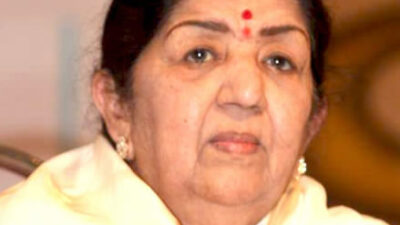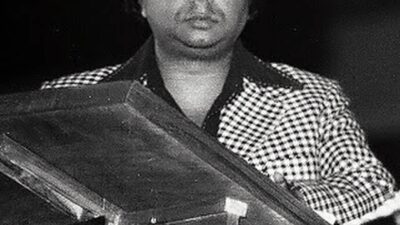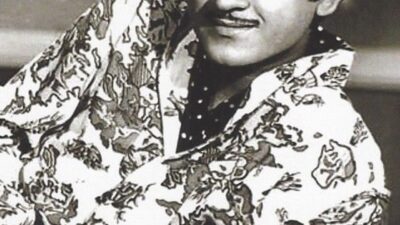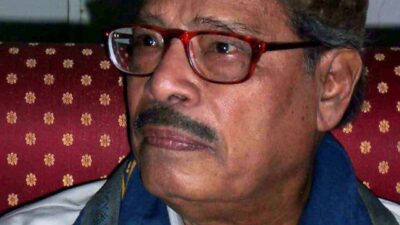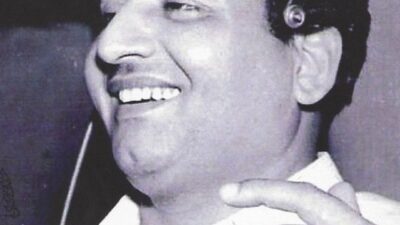
कलाकार विंग · कलाकार-पट्टिका · Artist Plate
आशा भोसले
Asha Bhosle · Asha Mangeshkar
मेलोडी क्वीन
जन्म8 September 1933 — सांगली, महाराष्ट्र, भारत
जीवन-पट्टी
The Life Specimen| नाम | आशा भोसले · Asha Bhosle |
|---|---|
| जन्म नाम | आशा मंगेशकर · Asha Mangeshkar |
| उपनाम | मेलोडी क्वीन · बहुआयामी आवाज़ की रानी |
| जन्म | 8 September 1933 — सांगली, महाराष्ट्र, भारत · Sangli, Maharashtra, India |
| भूमिकाएँ | Playback Singer · Vocalist · Music Artist |
| सक्रिय वर्ष | 1943–present |
| राष्ट्रीयता | Indian |
| विधाएँ | फ़िल्मी · ग़ज़ल · उप-शास्त्रीय · लोक · पॉप · भजन · भक्ति |
| भाषाएँ | Hindi · Marathi · English · Bengali · Gujarati · Tamil · Telugu · Kannada · Punjabi · Urdu |
| पिता | दिनानाथ मंगेशकर |
| माता | लीलावती मंगेशकर |
| भाई-बहन | लता मंगेशकर · Hari Haran Mangeshkar · Usha Mangeshkar |
हस्ताक्षर-पंक्ति · The Signature
हस्ताक्षर-पंक्ति
मेलोडी क्वीन · बहुआयामी आवाज़ की रानी
In EnglishEarthy, sensual, playful, versatile
पट्टिका-लेख
The Monographजीवनी Biography
आशा भोसले (जन्म: 8 सितंबर 1933, सांगली, महाराष्ट्र) भारतीय सिनेमा के इतिहास में सबसे बहुआयामी और प्रतिभाशाली प्लेबैक गायिकाओं में से एक हैं। दिनानाथ मंगेशकर (शास्त्रीय संगीतकार) और लीलावती मंगेशकर की संतान, वह एक संगीत-समृद्ध घर में पली-बढ़ीं। अपनी बहन लता मंगेशकर के विपरीत, जो दिव्य शुद्धता की प्रतीक बनीं, आशा ने जानबूझकर अपना अलग रास्ता चुना। 16 साल की उम्र में उन्होंने गणपतराव भोसले (जो उनसे 31 साल बड़े थे) से शादी की, जिससे परिवार से अलगाववादन हुआ। फिर भी, उन्होंने अपने संगीत करियर में दृढ़ता से आगे बढ़ीं। 1948 में 'चुनरिया' फिल्म के गीत 'सावन आया' से उन्हें हिंदी सिनेमा में शुरुआत मिली। उनके करियर का सबसे महत्वपूर्ण मोड़ 1952 में संगीतकार ओ.पी. नय्यर के साथ काम करने से आया। नय्यर, जिन्होंने लता के साथ कभी काम नहीं किया, आशा को अपनी क्रांतिकारी रचनाओं की आवाज़ बनाया। उन्होंने मिलकर स्वर्ण युग के सबसे प्रतिष्ठित गीत रचे: 'नया दौर' (1957) का 'उड़े जब जब ज़ुल्फ़ें तेरी' यूट्यूब पर 90 मिलियन से अधिक बार देखा गया है। 'हवड़ा ब्रिज' (1958) के कैबरे नंबर — विशेषकर 'मेरा नाम चिन चिन चू' — हिंदी सिनेमा में नारीत्व की आवाज़ को पुनर्परिभाषित करते हैं। 82 साल के अविरत करियर में, उन्होंने 20 भाषाओं में 12,000 से अधिक गीत गाए हैं। 2011 में गिनीज वर्ल्ड रिकॉर्ड्स ने उन्हें 'सबसे अधिक रिकॉर्ड की गई कलाकार' के रूप में मान्यता दी। उन्हें भारत के सर्वोच्च नागरिक सम्मान, पद्म विभूषण (2008) से सम्मानित किया गया है।
अंग्रेज़ी में पढ़ें · Read in English
Asha Bhosle (born September 8, 1933, in Sangli, Maharashtra) is one of the most prolific and versatile playback singers in the history of Indian cinema. Born as Asha Mangeshkar to Dinanath Mangeshkar, a legendary classical singer, and Leelavati Mangeshkar, she grew up in a household filled with music. Her father's death in 1942 when she was just 9 years old was a turning point. Her mother's determination and her older sister Lata Mangeshkar's early success in the playback singing world shaped her path into music.
Unlike her sister Lata, who became synonymous with divine purity and ethereal beauty, Asha consciously carved a distinct identity. At age 16, she eloped with Ganpatrao Bhosle, a widower 31 years her senior, causing estrangement from her family. Despite this personal turmoil, she persisted in her music career. Her debut in Hindi cinema came in 1948 with 'Sawaan Aaya' from Chunariya (music director: Hansraj Behl), followed by her first solo Hindi film song in 1949.
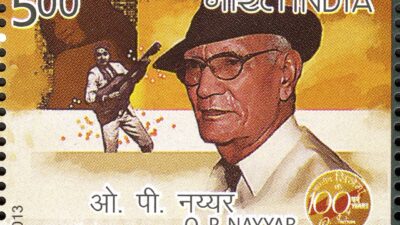
The turning point in her career came with her partnership with music director O.P. Nayyar, starting in 1952. Nayyar, who never worked with Lata Mangeshkar, made Asha the voice of his revolutionary compositions. Together, they created some of the most iconic songs of the golden era: 'Ude Jab Jab Zulfein Teri' from Naya Daur (1957) garnered 90+ million views online, becoming a timeless anthem of love and togetherness. Her cabaret numbers in Howrah Bridge (1958) — particularly 'Mera Naam Chin Chin Choo' — redefined the sound of seductive, playful feminine vocals in Hindi cinema.
Her versatility is unparalleled. Over 82 years of continuous recording, she has sung in 20 languages — Hindi, Marathi, English, Bengali, Gujarati, Tamil, Telugu, Kannada, Punjabi, Urdu, and more — across genres ranging from classical ghazals to modern pop, from devotional bhajans to folk-inspired numbers. In 2011, Guinness World Records recognized her as the 'Most Recorded Artist' with over 12,000 recordings.
Her later partnerships with composer R.D. Burman (1960s-1994) and eventual marriage to him in 1980 extended her dominance into modern Indian cinema. She won the National Film Award twice (1981, 1986) and was honored with India's second-highest civilian award, the Padma Vibhushan, in 2008. The Dadasaheb Phalke Award in 2000 acknowledged her lifetime contribution to Indian cinema.
Asha Bhosle's legacy is not just about the sheer volume of her output, but the quality and distinctiveness she brought to every genre. She proved that a female playback singer could be sensual, rebellious, and modern without compromising artistry. She liberated Hindi cinema music from the constraints of classical formalism, opening doors for generations of singers to follow. Where Lata Mangeshkar was the goddess, Asha Bhosle was the woman—passionate, playful, vulnerable, and real.
प्रारंभिक जीवन Early Life
आशा भोसले का जन्म 8 सितंबर 1933 को सांगली में हुआ — उस मराठी संगीत-परिवार में जो आगे चलकर भारतीय संगीत का सबसे प्रसिद्ध घराना बना। पिता दीनानाथ मंगेशकर शास्त्रीय गायक और रंगमंच के कलाकार थे; उन्होंने बच्चों की तालीम जल्दी शुरू कर दी थी, पर 1942 में उनका निधन हो गया — आशा तब आठ बरस की थीं, और परिवार कठिनाई में घिर गया। परिवार बंबई आया; बड़ी बहन लता ने घर सँभालने के लिए फ़िल्मों में गाना शुरू किया, और आशा ने भी — 1943 में, दस वर्ष की उम्र में, पहला मराठी फ़िल्मी गीत रिकॉर्ड किया। सोलह की उम्र में गणपतराव भोसले से विवाह कर घर छोड़ा; कुछ समय परिवार से दूरी रही — और इसी कठोर आत्मनिर्भरता ने उस निडर, हर-रंग-में-ढल-जाने वाली कलाकार को गढ़ा।
अंग्रेज़ी में पढ़ें · Read in English
Asha Bhosle was born on 8 September 1933 in Sangli, in a Marathi musical family that would become Indian music's most famous dynasty. Her father, the classical vocalist and stage actor Deenanath Mangeshkar, began training his children early — but died in 1942, when Asha was eight, plunging the family into hardship. The family moved to Bombay, where her elder sister Lata began singing in films to support them; Asha followed, recording her first Marathi film song in 1943 at age ten. At sixteen she eloped with Ganpatrao Bhosle, a marriage that estranged her from the family for a time — and that hard independence shaped the fearless, try-anything artist she became.
करियर Career
हिंदी सफ़र 'सावन आया' (चुनरिया, 1948) से शुरू हुआ और अगले ही वर्ष पहला एकल गीत मिला — पर 1950 के दशक ने उन्हें 'बची हुई' समझी जाने वाली विधाएँ थमा दीं: कैबरे, वैम्प, बी-फ़िल्में। आशा ने उन्हीं बचे हुओं को साम्राज्य बना दिया। ओ.पी. नय्यर ने अपनी थिरकती, शोख़ ध्वनि उनकी आवाज़ पर रची ('नया दौर', 'हावड़ा ब्रिज', 'मेरा नाम चिन चिन चू'); एस.डी. बर्मन ने 'सी.आई.डी.' और 'पेइंग गेस्ट' के क्लासिक दिए। फिर आए आर.डी. बर्मन — 'आजा आजा' (तीसरी मंज़िल, 1966) से 'दम मारो दम' और 'पिया तू अब तो आजा' तक दोनों ने हिंदी फ़िल्मी गीत की परिभाषा बदल दी — और 1980 में विवाह भी किया। 'उमराव जान' (1981) ने एक और ही आशा दिखाई — विशुद्ध ग़ज़ल अंदाज़ में पहला राष्ट्रीय पुरस्कार; दूसरा 'इजाज़त' (1987) से मिला। 'रंगीला' (1995) ने बासठ की उम्र में उनका ए.आर. रहमान युग खोला, और क्रोनोस क्वार्टेट के साथ 'यू हैव स्टोलन माय हार्ट' को 2006 में ग्रैमी नामांकन मिला।
अंग्रेज़ी में पढ़ें · Read in English
Asha's Hindi film journey began with 'Saawan Aaya' (Chunariya, 1948) and her first solo a year later — but the 1950s typecast her with leftover songs: cabarets, vamps, B-films. She turned the leftovers into a kingdom. O.P. Nayyar built his rhythmic, flirtatious sound around her (Naya Daur, Howrah Bridge, 'Mera Naam Chin Chin Choo'); S.D. Burman gave her classics in C.I.D. and Paying Guest. Then came R.D. Burman: from 'Aaja Aaja' (Teesri Manzil, 1966) through 'Dum Maro Dum' and 'Piya Tu Ab To Aaja', the two rewrote what a Hindi film song could be — and married in 1980. Umrao Jaan (1981) revealed yet another Asha, winning her first National Award in pure ghazal idiom; Ijaazat (1987) brought the second. Rangeela (1995) launched her A.R. Rahman era at sixty-two, and 'You've Stolen My Heart' with the Kronos Quartet earned a Grammy nomination in 2006.
विरासत Legacy
बीस भाषाओं में ग्यारह हज़ार से अधिक रिकॉर्डिंग्स के साथ आशा भोसले 2011 में गिनीज़ बुक में संगीत-इतिहास की सर्वाधिक रिकॉर्ड की गई कलाकार के रूप में दर्ज हुईं — पर आँकड़े तो उनकी कहानी का सबसे छोटा हिस्सा हैं। उन्होंने बहुरूपिता को ही प्रतिष्ठा दिला दी: आशा के बाद कैबरे, ग़ज़ल, भजन और डिस्को — सब एक ही कण्ठ में बिना किसी संकोच के बस सकते थे। दादासाहेब फालके पुरस्कार (2000) और पद्म विभूषण (2008) राजकीय स्वीकृति बने; वैश्विक निर्माताओं द्वारा उनकी आवाज़ की सैम्पलिंग, क्रोनोस क्वार्टेट का साथ, और यह सीधा-सा सच कि 'आशा' आज भी रसीली, निडर गायकी का पर्याय है — दुनिया की स्वीकृति बने। हर वह भारतीय पार्श्वगायक जो किसी एक साँचे में बँधने से इनकार करता है, उसी राह पर चलता है जो आशा ने काटी थी।
अंग्रेज़ी में पढ़ें · Read in English
With more than eleven thousand recordings across twenty languages, Asha Bhosle entered the Guinness Book in 2011 as the most recorded artist in music history — but numbers are the least of it. She legitimised versatility itself: after Asha, the cabaret number, the ghazal, the bhajan and the disco track could live in one voice without apology. The Dadasaheb Phalke Award (2000) and Padma Vibhushan (2008) made the state's recognition official; the sampling of her voice by global producers, the Kronos Quartet collaboration, and the simple fact that 'Asha' remains shorthand for sensuous, fearless singing made the world's recognition permanent. Every Indian playback singer who refuses to be typecast walks a road she cut.
गायन-शैली Musical Style
आशा की कला तीन स्तंभों पर खड़ी है। पहला, लय: वे ताल पर वैसे सवार होती हैं जैसे कोई तालवादक — शब्दों की मात्राओं को तोड़-मरोड़ कर ('पिया तू—अब तो आजा'), जहाँ और गायक बस धुन गा देते। दूसरा, पात्र-निर्माण: वे किरदार बनकर गाती हैं — क्लब की मोहिनी, शोक-संतप्त पत्नी, 'उमराव जान' की तवायफ़ — स्वर के स्तर पर तीन अलग स्त्रियाँ, जो स्वर-रंग, साँस की जगह और अलंकरण के चुनाव से गढ़ी गई हैं। तीसरा, रजिस्टर का निडर खेल: अचानक गहरी, खुरदुरी छाती की आवाज़ में उतरना, छेड़ता हुआ मींड़, एकदम सही जगह पर हँसी। तीन सप्तकों में बेदाग़ सुर उनकी शास्त्रीय नींव की गवाही देते हैं — पर तकनीक हमेशा शरारत या भाव की सेवा में रहती है, प्रदर्शन में कभी नहीं।
अंग्रेज़ी में पढ़ें · Read in English
Asha's craft rests on three pillars. First, rhythm: she rides a beat the way percussionists do, syncopating syllables ('Piya tu—ab to aaja') where others merely sing the tune. Second, characterisation: she sings in persona — the nightclub siren, the grieving wife, the courtesan of Umrao Jaan are vocally different women, built from changed vowel colours, breath placement and ornament choices. Third, fearless register play: a sudden husky chest-voice drop, a teasing portamento, a perfectly placed laugh. Her classical grounding shows in flawless intonation across three octaves, but she wears it lightly — technique always serves mischief or emotion, never display.
सांस्कृतिक प्रभाव Cultural Impact
आशा भोसले को हिंदी सिनेमा में नारीत्व, विद्रोह और भावनात्मक गहराई की आवाज़ माना जाता है। वह प्लेबैक गायन को शास्त्रीय या भक्ति गायन की सीमाओं से मुक्त करने वाली पहली कलाकार थीं। उनका करियर 82 वर्षों तक फैला है और 12,000 से अधिक रिकॉर्डिंग हैं।
अंग्रेज़ी में पढ़ें · Read in English
Asha Bhosle is widely regarded as the voice of sensuality, rebellion, and versatile emotion in Hindi cinema. She liberated the playback singer from the constraints of purely classical or devotional singing, proving that a female voice could be seductive, flirtatious, and modern without sacrificing artistry. Her partnership with O.P. Nayyar in the 1950s and 60s redefined the soundscape of Hindi films. She sang in 20 languages and across multiple genres, yet each performance was distinctly her own. Her career — spanning 82 years and producing over 12,000 recordings — remains unparalleled in the history of Indian music. She demonstrated that a woman could build a career independent of her famous sister, on her own terms and with her own voice.
स्वर-विशेषताएँ Vocal Characteristics
- तीन सप्तकों की सहज पहुँच — चमकीला ऊपरी रजिस्टर और गहरी, धुएँदार निचली आवाज़
- लय पर तालवादक-सी पकड़ — मात्राओं की चुस्त काट-छाँट
- किरदार के अनुसार बदलता स्वर-रंग
- रसीली हस्की रंगत, जो उनकी पहचान बनी
- ग़ज़ल की बारीक मुर्कियों से डिस्को की खुली पुकार तक — एक ही साँस में
अंग्रेज़ी में पढ़ें · Read in English
- Effortless three-octave range with a smoky lower register
- Percussive rhythmic phrasing and playful syncopation
- Chameleon-like timbre that changes with the character
- The signature sensuous huskiness
- From ghazal's fine murkis to disco's open-throated calls
तालीम, विधाएँ और भाषाएँ
Training · Genres · Languagesतालीम · Training
दीनानाथ मंगेशकर (1938–1942)
नाट्य-संगीत और हिंदुस्तानी शास्त्रीय आधार
Father; first and only formal guru — training cut short by his death.
स्टूडियो की पाठशाला (1948 onward)
ओ.पी. नय्यर, एस.डी. बर्मन, आर.डी. बर्मन के साथ पार्श्वगायन की कला
भाषाएँ · Languages Sung
जीवन-रेखा
Career Highlights- 1943 मराठी फ़िल्म में बाल-कलाकार के रूप में पहला गीत Sang as a child artist in a Marathi film
- 1948 'चुनरिया' के 'सावन आया' से हिंदी सिनेमा में पदार्पण Debut in Hindi cinema as playback singer with 'Sawaan Aaya' from Chunariya
-
1949
पहला एकल हिंदी फ़िल्मी गीत — 'रात की रानी'
First solo song 'Hai Mouj Mein Apne Begaane' in Hindi cinema (also married Ganpatrao Bhosle same year)
- 1952 'संगदिल' के 'दर्द भरी किसी की याद' से गंभीर गायिका के रूप में पहचान Major breakthrough with O.P. Nayyar collaboration
-
1954
राज कपूर की 'बूट पॉलिश' में रफ़ी संग 'नन्हे मुन्ने बच्चे' — राज कपूर ने कई फ़िल्मों के लिए अनुबंधित किया
Duet with Mohammed Rafi in Raj Kapoor's Boot Polish: 'Nanhe Munne Bachche'. Raj Kapoor signs her for multiple films.
- 1955 'बाप रे बाप' के युगल गीतों से ओ.पी. नय्यर की जोड़ी पक्की O.P. Nayyar partnership solidifies with 'Baap Re Baap' duets
-
1957
'नया दौर' की ऐतिहासिक सफलता — ओ.पी. नय्यर युग का शिखर
'Ude Jab Jab Zulfein Teri' from Naya Daur becomes iconic hit (90+ million YouTube views). B.R. Chopra film becomes landmark.
-
1958
'हावड़ा ब्रिज' — 'मेरा नाम चिन चिन चू' से कैबरे की महारानी
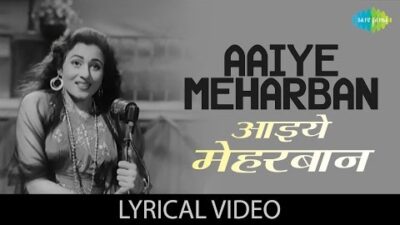
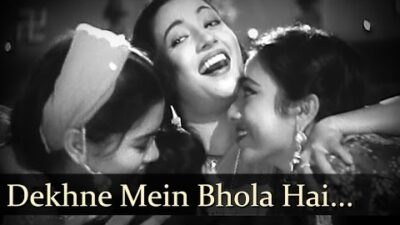
Iconic cabaret numbers in Howrah Bridge with Madhubala: 'Mera Naam Chin Chin Choo', 'Aayiye Meherbaan'. Defines cabaret genre.
- 1960 आर.डी. बर्मन से साथ का आरंभ — आधुनिक संगीत-सज्जा की ओर R.D. Burman partnership begins. Transition to modern arrangements.
- 1980 आर.डी. बर्मन से विवाह Marries R.D. Burman after his divorce
- 1994 आर.डी. बर्मन का निधन — एकल सफ़र जारी R.D. Burman passes away. Continues solo career.
- 2011 गिनीज़ वर्ल्ड रिकॉर्ड्स — संगीत-इतिहास की सर्वाधिक रिकॉर्ड की गई कलाकार Guinness World Record for Most Recorded Artist
पुरस्कार एवं सम्मान
Awards & Recognition- 1981 राष्ट्रीय फिल्म पुरस्कार National Film Award
- 1986 राष्ट्रीय फिल्म पुरस्कार National Film Award
- 2000 दादासाहब फाल्के पुरस्कार Dadasaheb Phalke Award
- 2001 फिल्मफेयर लाइफटाइम अचीवमेंट अवार्ड Filmfare Lifetime Achievement Award
- 2008 पद्म विभूषण Padma Vibhushan
- 2011 गिनीज वर्ल्ड रिकॉर्ड Guinness World Record
अन्य विवरण
More Details- Birth Year
- 1933
- Active Years
- 1943–present
- तीन सप्तकों की सहज पहुँच — चमकीला ऊपरी रजिस्टर और गहरी, धुएँदार निचली आवाज़ · Effortless three-octave range with a smoky lower register
- लय पर तालवादक-सी पकड़ — मात्राओं की चुस्त काट-छाँट · Percussive rhythmic phrasing and playful syncopation
- किरदार के अनुसार बदलता स्वर-रंग · Chameleon-like timbre that changes with the character
- रसीली हस्की रंगत, जो उनकी पहचान बनी · The signature sensuous huskiness
- ग़ज़ल की बारीक मुर्कियों से डिस्को की खुली पुकार तक — एक ही साँस में · From ghazal's fine murkis to disco's open-throated calls
- O.P. Nayyar (1952-1967)
- R.D. Burman (1960s-1994, married 1980)
- Shankar-Jaikishan (1950s-1960s)
Early Life
आशा भोसले का जन्म 8 सितंबर 1933 को सांगली में हुआ — उस मराठी संगीत-परिवार में जो आगे चलकर भारतीय संगीत का सबसे प्रसिद्ध घराना बना। पिता दीनानाथ मंगेशकर शास्त्रीय गायक और रंगमंच के कलाकार थे; उन्होंने बच्चों की तालीम जल्दी शुरू कर दी थी, पर 1942 में उनका निधन हो गया — आशा तब आठ बरस की थीं, और परिवार कठिनाई में घिर गया। परिवार बंबई आया; बड़ी बहन लता ने घर सँभालने के लिए फ़िल्मों में गाना शुरू किया, और आशा ने भी — 1943 में, दस वर्ष की उम्र में, पहला मराठी फ़िल्मी गीत रिकॉर्ड किया। सोलह की उम्र में गणपतराव भोसले से विवाह कर घर छोड़ा; कुछ समय परिवार से दूरी रही — और इसी कठोर आत्मनिर्भरता ने उस निडर, हर-रंग-में-ढल-जाने वाली कलाकार को गढ़ा।
Asha Bhosle was born on 8 September 1933 in Sangli, in a Marathi musical family that would become Indian music's most famous dynasty. Her father, the classical vocalist and stage actor Deenanath Mangeshkar, began training his children early — but died in 1942, when Asha was eight, plunging the family into hardship. The family moved to Bombay, where her elder sister Lata began singing in films to support them; Asha followed, recording her first Marathi film song in 1943 at age ten. At sixteen she eloped with Ganpatrao Bhosle, a marriage that estranged her from the family for a time — and that hard independence shaped the fearless, try-anything artist she became.
Career
हिंदी सफ़र 'सावन आया' (चुनरिया, 1948) से शुरू हुआ और अगले ही वर्ष पहला एकल गीत मिला — पर 1950 के दशक ने उन्हें 'बची हुई' समझी जाने वाली विधाएँ थमा दीं: कैबरे, वैम्प, बी-फ़िल्में। आशा ने उन्हीं बचे हुओं को साम्राज्य बना दिया। ओ.पी. नय्यर ने अपनी थिरकती, शोख़ ध्वनि उनकी आवाज़ पर रची ('नया दौर', 'हावड़ा ब्रिज', 'मेरा नाम चिन चिन चू'); एस.डी. बर्मन ने 'सी.आई.डी.' और 'पेइंग गेस्ट' के क्लासिक दिए। फिर आए आर.डी. बर्मन — 'आजा आजा' (तीसरी मंज़िल, 1966) से 'दम मारो दम' और 'पिया तू अब तो आजा' तक दोनों ने हिंदी फ़िल्मी गीत की परिभाषा बदल दी — और 1980 में विवाह भी किया। 'उमराव जान' (1981) ने एक और ही आशा दिखाई — विशुद्ध ग़ज़ल अंदाज़ में पहला राष्ट्रीय पुरस्कार; दूसरा 'इजाज़त' (1987) से मिला। 'रंगीला' (1995) ने बासठ की उम्र में उनका ए.आर. रहमान युग खोला, और क्रोनोस क्वार्टेट के साथ 'यू हैव स्टोलन माय हार्ट' को 2006 में ग्रैमी नामांकन मिला।
Asha's Hindi film journey began with 'Saawan Aaya' (Chunariya, 1948) and her first solo a year later — but the 1950s typecast her with leftover songs: cabarets, vamps, B-films. She turned the leftovers into a kingdom. O.P. Nayyar built his rhythmic, flirtatious sound around her (Naya Daur, Howrah Bridge, 'Mera Naam Chin Chin Choo'); S.D. Burman gave her classics in C.I.D. and Paying Guest. Then came R.D. Burman: from 'Aaja Aaja' (Teesri Manzil, 1966) through 'Dum Maro Dum' and 'Piya Tu Ab To Aaja', the two rewrote what a Hindi film song could be — and married in 1980. Umrao Jaan (1981) revealed yet another Asha, winning her first National Award in pure ghazal idiom; Ijaazat (1987) brought the second. Rangeela (1995) launched her A.R. Rahman era at sixty-two, and 'You've Stolen My Heart' with the Kronos Quartet earned a Grammy nomination in 2006.
Legacy
बीस भाषाओं में ग्यारह हज़ार से अधिक रिकॉर्डिंग्स के साथ आशा भोसले 2011 में गिनीज़ बुक में संगीत-इतिहास की सर्वाधिक रिकॉर्ड की गई कलाकार के रूप में दर्ज हुईं — पर आँकड़े तो उनकी कहानी का सबसे छोटा हिस्सा हैं। उन्होंने बहुरूपिता को ही प्रतिष्ठा दिला दी: आशा के बाद कैबरे, ग़ज़ल, भजन और डिस्को — सब एक ही कण्ठ में बिना किसी संकोच के बस सकते थे। दादासाहेब फालके पुरस्कार (2000) और पद्म विभूषण (2008) राजकीय स्वीकृति बने; वैश्विक निर्माताओं द्वारा उनकी आवाज़ की सैम्पलिंग, क्रोनोस क्वार्टेट का साथ, और यह सीधा-सा सच कि 'आशा' आज भी रसीली, निडर गायकी का पर्याय है — दुनिया की स्वीकृति बने। हर वह भारतीय पार्श्वगायक जो किसी एक साँचे में बँधने से इनकार करता है, उसी राह पर चलता है जो आशा ने काटी थी।
With more than eleven thousand recordings across twenty languages, Asha Bhosle entered the Guinness Book in 2011 as the most recorded artist in music history — but numbers are the least of it. She legitimised versatility itself: after Asha, the cabaret number, the ghazal, the bhajan and the disco track could live in one voice without apology. The Dadasaheb Phalke Award (2000) and Padma Vibhushan (2008) made the state's recognition official; the sampling of her voice by global producers, the Kronos Quartet collaboration, and the simple fact that 'Asha' remains shorthand for sensuous, fearless singing made the world's recognition permanent. Every Indian playback singer who refuses to be typecast walks a road she cut.
Musical Style
आशा की कला तीन स्तंभों पर खड़ी है। पहला, लय: वे ताल पर वैसे सवार होती हैं जैसे कोई तालवादक — शब्दों की मात्राओं को तोड़-मरोड़ कर ('पिया तू—अब तो आजा'), जहाँ और गायक बस धुन गा देते। दूसरा, पात्र-निर्माण: वे किरदार बनकर गाती हैं — क्लब की मोहिनी, शोक-संतप्त पत्नी, 'उमराव जान' की तवायफ़ — स्वर के स्तर पर तीन अलग स्त्रियाँ, जो स्वर-रंग, साँस की जगह और अलंकरण के चुनाव से गढ़ी गई हैं। तीसरा, रजिस्टर का निडर खेल: अचानक गहरी, खुरदुरी छाती की आवाज़ में उतरना, छेड़ता हुआ मींड़, एकदम सही जगह पर हँसी। तीन सप्तकों में बेदाग़ सुर उनकी शास्त्रीय नींव की गवाही देते हैं — पर तकनीक हमेशा शरारत या भाव की सेवा में रहती है, प्रदर्शन में कभी नहीं।
Asha's craft rests on three pillars. First, rhythm: she rides a beat the way percussionists do, syncopating syllables ('Piya tu—ab to aaja') where others merely sing the tune. Second, characterisation: she sings in persona — the nightclub siren, the grieving wife, the courtesan of Umrao Jaan are vocally different women, built from changed vowel colours, breath placement and ornament choices. Third, fearless register play: a sudden husky chest-voice drop, a teasing portamento, a perfectly placed laugh. Her classical grounding shows in flawless intonation across three octaves, but she wears it lightly — technique always serves mischief or emotion, never display.
Vocal Characteristics
Collaborations
अभिलेख-सार
Discography Summary| संग्रह में गीत | 24 — नीचे जुड़े हुए पन्नों में सूचीबद्ध |
|---|
अभिलेख व संदर्भ
Archives & References| विकिपीडिया | Wikipedia |
|---|---|
| संदर्भ | Wikipedia · Guinness World Records — Most Recorded Artist — (2011) |
| ऑनलाइन सुनें | Spotify · Jiosaavn · Youtube Music |
| प्रसिद्ध सहयोग |
अंग्रेज़ी में पढ़ें · Read in English
|
जुड़े हुए पन्ने
Connected Plates · The Graph Made Visibleअटलस में कोई पन्ना अकेला नहीं — आशा भोसले से उनके गीत, फ़िल्में, घराना, समकालीन और युग, सब यहाँ से खुलते हैं।
हस्ताक्षर-गीत · Signature Songs
फ़िल्में · The Films
साझा कीजिए · Share this Plate