गीत विंग · गीत-पट्टिका · Song Plate
आहें न भरीं शिकवे न किए
Aahen Na Bhari Shikwe Na Kiye
तीन आवाज़ों ने वो कर दिखाया जो सदियों से केवल मर्दों का हक़ माना जाता था — और एक रिकॉर्डिंग में परंपरा की ज़ंजीर टूट गई।
भावमीठा-कड़वा · चुलबुला · रोमांटिक · आध्यात्मिक
भाषाUrdu · Hindi गतिमध्यम स्वरूपFemale Group
श्रेय
The Creditsशब्दकोश
Word Meaningsसूत्र-वाक्य · The Hook
सूत्र-वाक्य
तीन आवाज़ों ने वो कर दिखाया जो सदियों से केवल मर्दों का हक़ माना जाता था — और एक रिकॉर्डिंग में परंपरा की ज़ंजीर टूट गई।
In EnglishThree women sang what only men had dared before — and broke a century of convention in one recording.
पट्टिका-लेख
The Monographपरिचय Overview
"आहें न भरीं शिकवे न किए" — ज़ीनत (1945) की यह क़व्वाली हिंदी सिनेमा के संगीत-इतिहास में एक क्रांतिकारी पल है। सैयद शौकत हुसैन रिज़वी निर्देशित इस फ़िल्म में मीर साहेब और हाफ़िज़ ख़ान के संगीत एवं नक्शब जारचवी की शायरी पर ज़ोहराबाई अम्बालेवाली, नूर जहाँ और कल्याणी ने जो क़व्वाली गाई, वह हिंदी सिनेमा की पहली संपूर्ण महिला क़व्वाली बन गई। उस समय तक क़व्वाली पुरुष गायकों का एकाधिकार थी। एचएमवी पर रिलीज़ यह गीत तुरंत हिट हो गया और ज़ीनत को 1945 की सर्वाधिक कमाई वाली हिंदी फ़िल्म बनाने में इसका बड़ा योगदान रहा। दशकों बाद भी इस क़व्वाली की ताज़गी और जोश कम नहीं हुई।
अंग्रेज़ी में पढ़ें · Read in English
"Aahen Na Bhari Shikwe Na Kiye" from Zeenat (1945), directed by Syed Shaukat Hussain Rizvi and composed by Mir Saheb and Hafiz Khan with poetry by Nakshab Jarchvi, stands as one of the most historically charged recordings in the entire archive of Hindi film music. Sung by Zohrabai Ambalewali, Noor Jehan, and Kalyani, this qawwali — performed entirely by women at a mehfil — is the first all-female qawwali in Indian cinema. Released on HMV in 1945, the film became the highest-grossing Hindi film of that year, and this qawwali was a cornerstone of its appeal: its ecstatic rhythmic drive and melting melodic lines defied every orthodoxy of a genre that had been exclusively male.
संगीत The Music
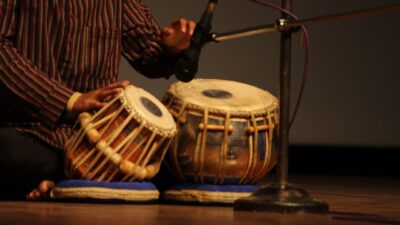
संगीत की बुनावट पारंपरिक क़व्वाली की है — मुखड़े में संयम, फिर अंतरों में उत्तरोत्तर बढ़ता जोश। मीर साहेब और हाफ़िज़ ख़ान ने हारमोनियम को सुर-वाहक बनाया और तबले-ढोलक ने वह चिरपरिचित ताल-लय थामी जो क़व्वाली की पहचान है। तीनों आवाज़ें — ज़ोहराबाई की भरपूर पुकार, नूर जहाँ की शीशे-सी सफ़ाई, कल्याणी की रंगीन संगत — मिलकर एक ऐसी बुनावट बनाती हैं जो क्लासिकल क़व्वाली के सवाल-जवाब का पूरा आनंद देती है। राग काफ़ी की रंगत इस गीत को एक अजीब खिंचाव देती है — उत्सव की सतह के नीचे गहरी तड़प छिपी है।
अंग्रेज़ी में पढ़ें · Read in English
The composition moves in the classic qawwali arc: a measured, almost conversational mukhda, followed by antare that escalate rhythmically and emotionally with each repetition. Mir Saheb and Hafiz Khan's arrangement is spare yet effective — harmonium carries the main melodic line while tabla and dholak drive the ecstatic clapping rhythm that defines qawwali. The three voices interlock in classic call-and-response fashion: Zohrabai Ambalewali's full-throated urgency, Noor Jehan's crystalline sweetness, and Kalyani's textured complement. The melody sits in the territory of Raag Kafi — its characteristic flattened third and seventh lending a folk-modal ache to the harmony. Despite the festive surface energy, there is a genuine undertow of longing that the singers bring to each repetition of the mukhda, making the whole an extraordinary layering of joy and pain.
काव्य The Poetry
नक्शब जारचवी की शायरी संयम की काव्यकला का नमूना है। 'आहें न भरीं, शिकवे न किए, कुछ मुँह से कहा कुछ न कहा' — यह मुखड़ा उर्दू प्रेम-काव्य के केंद्रीय विरोधाभास को एक पंक्ति में समेट लेता है: जो सबसे गहरा महसूस किया जाता है, वही सबसे कम कहा जाता है। दूसरी पंक्ति — 'मैने तो मोहब्बत में तेरी, क्या-क्या न किया' — अचानक संयम से निजी स्वीकारोक्ति पर आ जाती है। क़व्वाली का सवाल-जवाब ढाँचा इन शब्दों को बार-बार दोहराता है और हर बार नई तह खुलती है।
अंग्रेज़ी में पढ़ें · Read in English
Nakshab Jarchvi's Urdu is a study in the eloquence of restraint. The opening gambit — 'I did not sigh, I did not complain; I said something with my lips but said nothing' — crystallises the central paradox of classical Urdu love poetry: the most profound feelings are those left unspoken. The second line, 'In loving you, what all did I not do!', pivots instantly from restraint to private confession. The qawwali's call-and-response structure allows these words to be repeated with mounting intensity, each iteration uncovering a new layer of anguish and acceptance.
कहानी The Story
1945 तक हिंदी फ़िल्मों में क़व्वाली पूरी तरह पुरुष कलाकारों की दुनिया थी। जब निर्देशक शौकत हुसैन रिज़वी ने ज़ीनत के लिए पूरी तरह महिला आवाज़ों में क़व्वाली रिकॉर्ड करने का फ़ैसला किया, तो यह एक साहसी प्रयोग था। पिक्चराइज़ेशन में बाल अभिनेत्री शशिकला (जो बाद में मशहूर चरित्र अभिनेत्री बनीं), रेहाना, ज़ेबुन्निसा, यासमीन और कल्याणी शामिल थीं। बॉम्बे के रिकॉर्डिंग स्टूडियो में दो महान गायिकाओं — ज़ोहराबाई और नूर जहाँ — को एक ही गीत में साथ लाया गया, जो अपने आप में दुर्लभ था। नतीजा — सिनेमाघरों में तहलका।
अंग्रेज़ी में पढ़ें · Read in English
By 1945, qawwali in Hindi cinema was a firmly male preserve — K.L. Saigal, G.M. Durrani, and Khan Mastana had defined its conventions. When director Shaukat Hussain Rizvi and his music team decided to stage a qawwali performed entirely by women for Zeenat, it was a calculated artistic rebellion. The picturisation brought together an array of female performers including young actress Shashikala (later a celebrated character actress) alongside Rehana, Zebunnissa, Yasmin, and Kalyani. Recording sessions in Bombay brought together Zohrabai Ambalewali and Noor Jehan — two colossal vocal personalities rarely committed to the same song — into direct musical dialogue. The result electrified audiences.
विरासत The Legacy
"आहें न भरीं" हिंदी सिनेमा में महिला क़व्वाली की नींव का पत्थर है। इसने एक ऐसी परंपरा को जन्म दिया जो दशकों तक चली — नूर जहाँ की बाद की क़व्वालियों से आशा भोसले और लता मंगेशकर की 1960s की क़व्वाली तक, और रेशमा-रुना लैला से लेकर आज के कलाकारों तक। यह गीत सारेगामा के स्ट्रीमिंग प्लेटफ़ॉर्म पर आज भी उपलब्ध है और दक्षिण एशियाई सिनेमा में लिंग-भेद और प्रदर्शन कला पर शोध में यह एक प्रमुख संदर्भ बना हुआ है।
अंग्रेज़ी में पढ़ें · Read in English
"Aahen Na Bhari" endures as the founding document of female qawwali in Hindi cinema. It paved the way for a tradition of women performing this genre that would continue across decades — from Noor Jehan's later qawwalis to the electrifying duels of Asha Bhosle and Lata Mangeshkar in the 1960s, to the work of Runa Laila, Reshma, and contemporary artists. The song remains in active circulation through Saregama's streaming catalogue and has been discussed extensively in musicological scholarship on gender and performance in South Asian cinema.
वर्गीकरण
Classification- Tempo
- Medium
Genre
अन्य विवरण
More Details- Wikipedia: Zeenat (1945 film), https://en.wikipedia.org/wiki/Zeenat_(1945_film)
- HindiGeetMala: Zeenat (1945) songs, https://www.hindigeetmala.net/movie/zeenat.htm
- Songs of Yore: Best songs of 1945, https://www.songsofyore.com/best-songs-of-1945-and-the-winners-are/
- Grokipedia: Zeenat (1945 film), https://grokipedia.com/page/Zeenat_(1945_film)
- LyricsBogie: Zeenat 1945 songs, https://www.lyricsbogie.com/movies/zeenat-1945/
References
रोचक तथ्य
Margin Notes'आहें न भरी शिकवे न किए' को भारतीय सिनेमा के इतिहास की पहली पूर्णतः महिला क़व्वाली माना जाता है।
अंग्रेज़ी में पढ़ें · Read in English
"Aahen Na Bhari Shikwe Na Kiye" is considered the first all-female qawwali in Indian cinema history.
इस गीत के फ़िल्मांकन में युवा शशिकला भी नज़र आईं, जो आगे चलकर हिंदी सिनेमा की सबसे महान चरित्र अभिनेत्रियों में से एक बनीं।
अंग्रेज़ी में पढ़ें · Read in English
The picturisation featured the young Shashikala, who would later become one of Hindi cinema's greatest character actresses.
ज़ीनत (1945) वर्ष 1945 की सबसे अधिक कमाई करने वाली हिंदी फ़िल्म थी; इसकी व्यापक लोकप्रियता में यह क़व्वाली केंद्रीय भूमिका निभाती थी।
अंग्रेज़ी में पढ़ें · Read in English
Zeenat (1945) was the highest-grossing Hindi film of 1945; this qawwali was central to its mass appeal.
इस गीत ने ज़ोहराबाई अंबालेवाली और नूरजहाँ को एक ही रिकॉर्डिंग में साथ लाया — जो उनके अलग-अलग प्रभाव-क्षेत्रों को देखते हुए एक दुर्लभ अवसर था।
अंग्रेज़ी में पढ़ें · Read in English
The song brought together Zohrabai Ambalewali and Noor Jehan on the same recording — a rare occurrence given their separate spheres of influence.
संगीत निर्देशक मीर साहब 1940 के दशक के बंबई सिनेमा के अपेक्षाकृत अल्पज्ञात नामों में से एक बने हुए हैं, जो बाद के इतिहास-लेखन में अपने अधिक प्रसिद्ध समकालीनों की छाया में दब गए।
अंग्रेज़ी में पढ़ें · Read in English
Music director Mir Saheb remains one of the more obscure names in 1940s Bombay cinema, overshadowed in later histories by better-known contemporaries.
नमूना-पट्टी
The Specimen Table| शीर्षक | आहें न भरीं शिकवे न किए · Aahen Na Bhari Shikwe Na Kiye |
|---|---|
| फ़िल्म | ज़ीनत · 1945 |
| वर्ष · युग | 1945 — Pre-Independence (1931–1947) |
| गायक | Zohrabai Ambalewali, Noor Jehan, Kalyani |
| गीतकार | नक्शब जारचवी |
| संगीतकार | Mir Saheb, हाफ़िज़ ख़ान |
| स्वरूप | Female Group |
| गति | मध्यम |
| भाषा | Urdu · Hindi |
| वाद्य | harmonium · tabla · dholak |
| भाव | मीठा-कड़वा · चुलबुला · रोमांटिक · आध्यात्मिक |
| लोकप्रियता | Very_popular |
| बोल-स्थिति | केवल झलक |
जुड़े हुए पन्ने
Connected Plates · The Graph Made Visibleअटलस में कोई पन्ना अकेला नहीं — इस गीत से जुड़े गीत, कलाकार, फ़िल्म, राग-ताल-विधा, सब यहाँ से खुलते हैं।
मिलते-जुलते गीत · Related Songs
कलाकार · The Artists
फ़िल्म · The Film
साझा कीजिए · Share this Plate
यह पन्ना आगे बढ़ाइए
जब ज़ोहराबाई और नूर जहाँ ने साथ गाया, तो लगा मानो क़व्वाली को ख़ुद एक नई आवाज़ मिल गई हो।
When Zohrabai and Noor Jehan sang together, the qawwali form itself seemed to be discovering a new voice.
— Music historian, on the significance of Zeenat's qawwali
सवाल-जवाब
Questions & Answersइस गीत का ऐतिहासिक महत्व क्या है? · What makes this song historically significant?
यह हिंदी सिनेमा की पहली संपूर्ण महिला क़व्वाली है। 1945 से पहले फ़िल्मों में क़व्वाली केवल पुरुष गाते थे। तीन महिलाओं ने उस परंपरा को तोड़ा।
It is the first all-female qawwali in Indian cinema. Before 1945, qawwali in films was exclusively performed by male singers. Three women — Zohrabai Ambalewali, Noor Jehan, and Kalyani — shattered that tradition.
ज़ीनत (1945) का संगीत किसने दिया? · Who composed the music for Zeenat (1945)?
संगीत मीर साहेब और हाफ़िज़ ख़ान ने मिलकर दिया। बैकग्राउंड म्यूज़िक रफ़ीक़ ग़ज़नवी ने तैयार किया।
The music was jointly composed by Mir Saheb and Hafiz Khan, with Rafiq Ghaznavi credited for background music.
इस क़व्वाली के बोल किसने लिखे? · Who wrote the lyrics of this qawwali?
इस क़व्वाली के बोल नक्शब जारचवी ने लिखे, जो फ़िल्म के चार गीतकारों में से एक थे।
The qawwali's lyrics were penned by Nakshab Jarchvi, one of four lyricists credited to the film Zeenat.
क्या यह गीत आज भी सुना जा सकता है? · Is this song available to listen today?
हाँ, यह सारेगामा के स्ट्रीमिंग प्लेटफ़ॉर्म (जियोसावन, गाना) पर और YouTube पर पुरानी रिकॉर्डिंग के रूप में उपलब्ध है।
Yes, it is available on Saregama's streaming platforms (JioSaavn, Gaana) and through archival YouTube uploads.