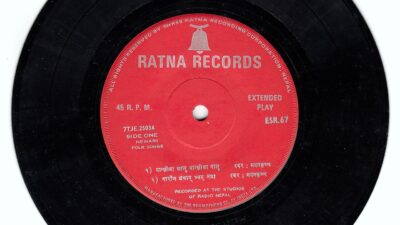
गीत विंग · गीत-पट्टिका · Song Plate
नैनों में कृष्ण मुरारी हैं
Nainon Mein Krishna Murari Hain
'सन्यासी' का भजन, और फ़िल्म का वह अकेला गीत जिसे अस्सी बरस बाद भी कोई श्रोता नाम लेकर माँगता है — ईश्वर मंदिर में नहीं, आँखों के पीछे है।
भावभक्ति · शांत · आध्यात्मिक
भाषाBraj · Hindi गतिमध्यम स्वरूपएकल महिला
श्रेय
The Creditsशब्दकोश
Word Meaningsसूत्र-वाक्य · The Hook
सूत्र-वाक्य
'सन्यासी' का भजन, और फ़िल्म का वह अकेला गीत जिसे अस्सी बरस बाद भी कोई श्रोता नाम लेकर माँगता है — ईश्वर मंदिर में नहीं, आँखों के पीछे है।
In EnglishThe bhajan of Sanyasi, and the one song of the film a listener still asks for by name eighty years on — the god is not in the temple, he is behind the eyes.
पट्टिका-लेख
The Monographपरिचय Overview
'नैनों में कृष्ण मुरारी हैं' 'सन्यासी' (1945) में ज़ोहराबाई अम्बालेवाली का भक्ति-पार्श्व है, जिसे नौशाद ने पंडित मधुर (पंडित बुद्धि चंद्र अग्रवाल) के बोलों पर रचा और एचएमवी ने जारी किया। यह फ़िल्म का सबसे याद रखा गया गीत है: 'सॉन्ग्स ऑफ़ योर' ब्लॉग के एक पाठक ने, उस साइट के 1945 के श्रेष्ठ गीतों के सर्वेक्षण पर टिप्पणी करते हुए लिखा कि सूची में यह गीत होना चाहिए था — ज़ोहराबाई 'और कोरस' का गाया हुआ; यह छोटा-सा प्रमाण गीत की प्रतिष्ठा का भी है और उस कोरस का भी, जिसका नाम छपी सूचियों में नहीं है।
अंग्रेज़ी में पढ़ें · Read in English
"Nainon Mein Krishna Murari Hain" is Zohrabai Ambalewali's devotional side in Sanyasi (1945), composed by Naushad to a lyric by Pandit Madhur (Pandit Buddhi Chandra Aggarwal) and issued on HMV. It is the best-remembered song of the film: a reader of the Songs of Yore blog, working through that site's survey of the best songs of 1945, wrote in to say the list should have included this one, sung by Zohrabai 'and chorus' — a small piece of evidence both for the song's standing and for a choral part not named in the printed catalogues.
संगीत The Music
बंदिश जानबूझकर सादी है — हल्का हारमोनियम और तबला, और वाक्यांशों के अंत पर आवाज़ लगभग बिना संगत के — और लय एक अनहड़बड़ी मध्य गति है जो टेक को चढ़ाने के बजाय बैठने देती है। ज़ोहराबाई अम्बालेवाली इसे उसी ठुमरी-भजन शैली से गाती हैं जिसमें वे तैयार हुई थीं: गोल, खुला स्वर, अलंकार कम और हमेशा किसी शब्द को स्थापित करने के लिए, प्रदर्शन के लिए नहीं। रिकॉर्ड पर जिस कोरस-उत्तर के सुनाई देने की बात एक श्रोता ने कही है, वह 1940 के दशक में नौशाद के फ़िल्मी भजन गढ़ने के ढंग से पूरी तरह मेल खाता है — यद्यपि किसी सूची में इस पार्श्व के लिए कोरस दर्ज नहीं है।
अंग्रेज़ी में पढ़ें · Read in English
The arrangement is deliberately spare — a light harmonium and tabla bed with the voice almost unaccompanied at the phrase ends — and the tempo is an unhurried medium that lets the refrain settle rather than build. Zohrabai Ambalewali sings it out of the thumri-bhajan manner she was trained in: rounded, open tone, ornament used sparingly and always to land a word rather than to display. The choral answer a listener has reported hearing on the record would be entirely characteristic of how Naushad staged a film bhajan in the 1940s, though no catalogue lists a chorus for this side.
काव्य The Poetry
शीर्षक छह शब्दों में एक पूरी भक्ति-स्थिति कह देता है। 'नैनों में कृष्ण मुरारी हैं' — ईश्वर को किसी मूर्ति, मंदिर या ग्रंथ में नहीं, देखने की क्रिया के भीतर ही रख देता है, जिससे भक्त उन्हें खोजता नहीं, उनके साथ देखता है। सूरदास के बाद से ब्रज भक्ति-काव्य की यही केंद्रीय चाल है, और 'मुरारी' — मुर असुर का वध करने वाले कृष्ण — उन मानक विशेषणों में से एक है जो पूरी पौराणिक कथा को एक शब्द में उठा लेता है। पंडित मधुर, जिन्होंने 'सन्यासी' के दसों गीत लिखे और जिनके करियर का बड़ा हिस्सा भक्ति और पौराणिक फ़िल्मों में बीता, यहाँ उसी शब्दावली में काम कर रहे हैं जिसे वे सबसे अच्छा जानते थे। पहली पंक्ति के आगे की रचना प्रलेखित नहीं है और यहाँ उसका पुनर्निर्माण नहीं किया गया।
अंग्रेज़ी में पढ़ें · Read in English
The title states a complete bhakti position in six words. 'Nainon mein Krishna Murari hain' — Krishna is in the eyes — locates the god not in an image, a temple or a scripture but inside the act of seeing itself, so that the devotee is not looking for him but looking with him. This is the central move of the Braj devotional lyric from Surdas onward, and 'Murari' — Krishna as the slayer of the demon Mura — is one of the standard epithets that carries the whole Puranic story in a single word. Pandit Madhur, who wrote all ten Sanyasi songs and spent much of his career on devotional and mythological films, is working here in the vocabulary he knew best. The verse beyond the opening line is not documented and is not reconstructed here.
कहानी The Story
'सन्यासी' 1945 के लिए ए. आर. कारदार की अपनी निर्मित और अपनी निर्देशित फ़िल्म थी — कहानी-संवाद अज़्म बाज़ीदपुरी के, छायांकन द्वारकादास दिवेचा का, बंबई के कारदार स्टूडियो में। नौशाद — 'नई दुनिया' (1942) से कारदार के स्थायी संगीतकार — की उस वर्ष कोई दूसरी रिलीज़ नहीं थी, इसलिए 1945 का उनका पूरा काम यही दस गीत हैं। शीर्षक-भूमिका का संन्यासी अभिनेता ग़ुलाम मोहम्मद ने निभाया (उसी नाम के संगीतकार नहीं), 'राधा' शमीम बानो और 'मोहन' अमर। नौशाद की फ़िल्मोग्राफ़ी इसे सिल्वर जुबली दर्ज करती है। किसी संन्यासी पर बनी फ़िल्म में भक्ति-गीत सजावट नहीं होता — भजन ही वह रूप है जिसमें ऐसी फ़िल्म अपनी बात कहती है।
अंग्रेज़ी में पढ़ें · Read in English
Sanyasi was A. R. Kardar's own production and his own direction for 1945, from a story and dialogue by Azm Bazidpuri, shot by Dwarkadas Diwecha at Kardar Studios in Bombay. Naushad — Kardar's house composer since Nayi Duniya (1942) — had no other release that year, so the whole of his 1945 output is these ten songs. The title role of the sanyasi went to the actor Ghulam Mohammed (not the composer of the same name), with Shamim Bano as Radha and Amar as Mohan; Naushad's filmography records the film as a Silver Jubilee. A devotional song in a film about a renunciate is not decoration — the bhajan is the form in which such a film says what it is about.
विरासत The Legacy
'सन्यासी' जिस गीत के सहारे याद रखी जाती है, वह यही है, और कारण यह कि वह उस श्रेणी का है जिसे 1940 का दशक लगातार बनाता रहा और उद्योग ने बाद में छोड़ दिया: मुख्यधारा का फ़िल्मी भजन, किसी अग्रणी पार्श्व-आवाज़ का गाया, किसी पौराणिक नहीं बल्कि व्यावसायिक सामाजिक नाटक में रखा हुआ। ज़ोहराबाई अम्बालेवाली की इस क़िस्म की रिकॉर्डिंग्स को पुरालेखकार आज ठीक इसलिए मूल्यवान मानते हैं कि उनकी भारी, शास्त्रीय-आधारित आवाज़ इस रिकॉर्ड के तीन वर्षों के भीतर माँग से बाहर हो गई, जब लता मंगेशकर के आगमन ने स्त्री-पार्श्वगायन का बाज़ार बदल दिया। इस पार्श्व के दो स्वतंत्र ट्रांसफ़र ऑनलाइन बचे हैं; इसका कोई व्यावसायिक पुनर्प्रकाशन कभी नहीं हुआ।
अंग्रेज़ी में पढ़ें · Read in English
This is the song by which Sanyasi is remembered at all, and the reason is that it belongs to a category the 1940s produced constantly and the industry then abandoned: the mainstream film bhajan, sung by a leading playback voice, placed in a commercial social drama rather than a mythological. Zohrabai Ambalewali's recordings of that kind are now valued by archivists precisely because her heavier, classically grounded voice went out of demand within three years of this record, when Lata Mangeshkar's arrival reset the female playback market. Two independent transfers of the side survive online; it has never had a commercial reissue.
वर्गीकरण
Classification- Tempo
- Medium
Genre
अन्य विवरण
More Details- https://en.wikipedia.org/wiki/Sanyasi_(1945_film)
- https://www.hindigeetmala.net/movie/sanyasi.htm
- https://en.wikipedia.org/wiki/Naushad
- https://en.wikipedia.org/wiki/Abdur_Rashid_Kardar
- https://en.wikipedia.org/wiki/List_of_Hindi_films_of_1945
- https://www.songsofyore.com/best-songs-of-1945-wrap-up-4/
References
रोचक तथ्य
Margin Notes'सॉन्ग्स ऑफ़ योर' के 1945 के श्रेष्ठ गीतों के सर्वेक्षण पर एक टिप्पणीकार ने कहा कि यह गीत — 'ज़ोहराबाई और कोरस का गाया, सन्यासी (1945) से' — उस सूची में होना चाहिए था; इसकी प्रतिष्ठा का यही सबसे स्पष्ट बचा हुआ चिह्न है, और रिकॉर्ड पर कोरस का कहीं और कोई उल्लेख नहीं है।
अंग्रेज़ी में पढ़ें · Read in English
A commenter on the Songs of Yore survey of the best songs of 1945 argued that this song — 'by Zohrabai and chorus, from Sanyasi (1945)' — should have made the list, which is the clearest surviving trace of its reputation and the only mention anywhere of a chorus on the record.
महमूद, जो बाद में हिंदी सिनेमा के सबसे प्रिय हास्य अभिनेताओं में से एक बने, 'सन्यासी' में बारह वर्ष की आयु में 'बाँके' की भूमिका में हैं; यह उनकी पहली फ़िल्म नहीं थी — वे 'क़िस्मत' (1943) में बालक शेखर की भूमिका पहले ही कर चुके थे।
अंग्रेज़ी में पढ़ें · Read in English
Mehmood, later one of Hindi cinema's most loved comedians, appears in Sanyasi as Banke at the age of twelve; it was not his first film — he had already played the young Shekhar in Kismet (1943).
'सन्यासी' 1945 में नौशाद की इकलौती रिलीज़ थी; उनकी 1946 की सूची — 'अनमोल घड़ी', 'शाहजहाँ' और 'क़ीमत' — तुरंत उसके बाद आई।
अंग्रेज़ी में पढ़ें · Read in English
Sanyasi was Naushad's only release of 1945; his 1946 slate — Anmol Ghadi, Shahjehan and Keemat — followed immediately after.
पंडित मधुर, जिन्हें यहाँ उनके पूरे नाम पंडित बुद्धि चंद्र अग्रवाल से भी श्रेय मिला है, 'सन्यासी' के दसों गीत लिखे और 'मेरी बहन' (1962) तक भक्ति व पौराणिक फ़िल्मों के लिए लिखते रहे।
अंग्रेज़ी में पढ़ें · Read in English
Pandit Madhur, credited here under his full name Pandit Buddhi Chandra Aggarwal, wrote all ten songs of Sanyasi and went on writing for devotional and mythological films as late as Meri Behen (1962).
ब्रजभाषा, मध्यकालीन कृष्ण-भक्ति काव्य की भाषा, 1940 के दशक में भी हिंदी फ़िल्मी गीत का एक कार्यशील स्तर थी; 1960 के दशक तक वह मुख्यधारा के फ़िल्मी गीतों से लगभग लुप्त हो गई।
अंग्रेज़ी में पढ़ें · Read in English
Braj bhasha, the language of medieval Krishna devotional poetry, was still a working register of Hindi film lyric in the 1940s; it had largely faded from mainstream film songs by the 1960s.
नमूना-पट्टी
The Specimen Table| शीर्षक | नैनों में कृष्ण मुरारी हैं · Nainon Mein Krishna Murari Hain |
|---|---|
| फ़िल्म | सन्यासी · 1945 |
| वर्ष · युग | 1945 — Pre-Independence (1931-1947) |
| गायक | Zohrabai Ambalewali |
| गीतकार | Pandit Madhur |
| संगीतकार | Naushad |
| स्वरूप | एकल महिला |
| गति | मध्यम |
| अवधि | 3:02 |
| भाषा | Braj · Hindi |
| भाव | भक्ति · शांत · आध्यात्मिक |
| लोकप्रियता | Known |
| बोल-स्थिति | केवल झलक |
जुड़े हुए पन्ने
Connected Plates · The Graph Made Visibleअटलस में कोई पन्ना अकेला नहीं — इस गीत से जुड़े गीत, कलाकार, फ़िल्म, राग-ताल-विधा, सब यहाँ से खुलते हैं।
मिलते-जुलते गीत · Related Songs
कलाकार · The Artists
फ़िल्म · The Film
साझा कीजिए · Share this Plate
यह पन्ना आगे बढ़ाइए
सवाल-जवाब
Questions & Answers'नैनों में कृष्ण मुरारी हैं' किसने गाया? · Who sang Nainon Mein Krishna Murari Hain?
इसे ज़ोहराबाई अम्बालेवाली ने 'सन्यासी' (1945) के लिए गाया, जिसे ए. आर. कारदार ने बनाया और निर्देशित किया, संगीत नौशाद का और बोल पंडित मधुर के। कम से कम एक श्रोता रिकॉर्ड पर कोरस होने की बात भी कहता है।
Zohrabai Ambalewali sang it for Sanyasi (1945), directed and produced by A. R. Kardar, with music by Naushad and lyrics by Pandit Madhur. At least one listener reports a chorus on the record as well.
1945 में नौशाद ने किन फ़िल्मों के लिए संगीत दिया? · Which films did Naushad compose for in 1945?
सिर्फ़ एक — कारदार प्रोडक्शंस की 'सन्यासी'। यह 1944 की 'रत्तन', 'पहले आप', 'गीत' और 'जीवन' तथा 1946 की 'अनमोल घड़ी', 'शाहजहाँ' और 'क़ीमत' के बीच है।
Just one — Sanyasi, for Kardar Productions. It sits between Rattan, Pehle Aap, Geet and Jeevan in 1944 and Anmol Ghadi, Shahjehan and Keemat in 1946.
क्या इस गीत के बोल हिंदीगीत पर उपलब्ध हैं? · Are the lyrics of this song available on HindiGeet?
नहीं। 'सन्यासी' 1945 की फ़िल्म है और इस साइट के नियम के अनुसार इसके बोल अब भी कॉपीराइट में माने जाते हैं, इसलिए कोई भी लिखित बोल — एक झलक-पंक्ति तक — प्रकाशित नहीं की जाती। इसके बजाय काव्य का संपादकीय वर्णन दिया गया है।
No. Sanyasi is a 1945 film and its lyrics are still treated as in copyright under this site's rule, so no lyric text — not even a preview line — is published. The poetry is described editorially instead.