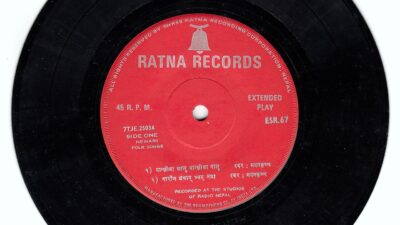
गीत विंग · गीत-पट्टिका · Song Plate
किसी तरह से मुहब्बत में चैन पा ना सके
Kisi Tarah Se Mohabbat Mein Chain Paa Na Sakey
'प्यार ने दुख दिया' नहीं, बल्कि 'मैंने सब आज़मा लिया और कुछ काम न आया' — नूर जहाँ उस थकान को गाती हैं जो टूटने के बाद आती है।
भावमीठा-कड़वा · उदास · दार्शनिक
भाषाUrdu · Hindi गतिधीमी स्वरूपएकल महिला
श्रेय
The Creditsशब्दकोश
Word Meaningsसूत्र-वाक्य · The Hook
सूत्र-वाक्य
'प्यार ने दुख दिया' नहीं, बल्कि 'मैंने सब आज़मा लिया और कुछ काम न आया' — नूर जहाँ उस थकान को गाती हैं जो टूटने के बाद आती है।
In EnglishNot 'love hurt me' but 'I tried everything and none of it worked' — Noor Jehan singing the exhaustion that comes after the heartbreak.
पट्टिका-लेख
The Monographपरिचय Overview
'बड़ी माँ' (1945) में नूर जहाँ के चार एकल गीतों में से एक, और उनमें अकेला ऐसा जो ज़िया सरहदी नहीं, अंजुम पीलीभीती का लिखा है; संगीत के. दत्त का। शीर्षक थक चुकी कोशिश का बयान है: किसी भी तरह से मुहब्बत में चैन नहीं मिला। ऐसे साउंडट्रैक पर, जो बाक़ी समय युद्ध, प्रार्थना और देशभक्ति में बीतता है, यह सबसे भीतरी गीत है।
अंग्रेज़ी में पढ़ें · Read in English
One of the four Noor Jehan solos in Badi Maa (1945), and the only one of them written by Anjum Pilibhiti rather than Zia Sarhadi; K. Datta composed. The title is a statement of exhausted effort: by no means whatever could peace be found in love. It is the most inward song on a soundtrack that otherwise spends its time on war, prayer and patriotism.
संगीत The Music
'बड़ी माँ' का संगीत आवाज़ों में बँटा है: नूर जहाँ के पास चार वयस्क विरह-गीत, बाल-गायिका बेबी अलका के पास तीन हल्के, लता मंगेशकर के पास भक्ति और देशभक्ति का स्वर, मीनाक्षी के पास एक। के. दत्त — सावंतवाड़ी में दत्ता कोरगांवकर के रूप में जन्मे, भजन-गायन के बीच बड़े हुए, और 'मेरा हक़' (1939) से हिंदी में आने से पहले मराठी फ़िल्मों के संगीतकार — बंबई में कभी फ़ैशनेबल नाम नहीं रहे; निर्माता के लिए उनका मोल यह था कि वे एक ही फ़िल्म में इन सारे स्वरों में भरोसेमंद ढंग से लिख सकते थे। 1945 में पूरा गीत शेलैक तवे के एक पार्श्व में समाना होता था, वाद्यवृंद के साथ एक ही बार में रिकॉर्ड — इसलिए व्याख्या का पूरा भार गायिका पर आता था। इस रिकॉर्डिंग की विशिष्ट साज-सज्जा उपलब्ध स्रोतों में दर्ज नहीं है और यहाँ उसका वर्णन नहीं किया गया।
अंग्रेज़ी में पढ़ें · Read in English
Badi Maa's score is divided by voice: Noor Jehan takes the four adult heartbreak numbers, the child singer Baby Alka three light ones, Lata Mangeshkar the devotional and patriotic register, Meenaxi one. K. Datta — born Datta Korgaonkar in Sawantwadi, raised on bhajan singing, and a Marathi film composer before he crossed into Hindi with Mera Haq (1939) — was never a fashionable name in Bombay; his value to a producer was that he could write credibly in all of those registers on one film. In 1945 the whole song had to fit one side of a shellac disc, recorded in a single pass with the orchestra in the room, so the interpretive burden fell on the singer. The specific arrangement of this recording is not documented in the sources consulted and is not described here.
काव्य The Poetry
शुरुआती वाक्यांश 'किसी तरह से' ही शीर्षक को उसका भार देता है। यह मान लेता है कि कोशिशों की एक पूरी क़तार पहले ही की जा चुकी और नाकाम हो चुकी है — यानी गीत कोशिश के दौरान नहीं, उसके बाद शुरू होता है। यह साधारण विलाप से कहीं कठिन जगह है: अब न कोई बचा है जिससे मिन्नत की जाए, न कुछ बचा है जो आज़माया जाए। अंजुम पीलीभीती ने इसी फ़िल्म का देशभक्ति वाला शीर्षक गीत भी लिखा, जो बाहर की ओर राष्ट्र को संबोधित है — यानी यह उसका ठीक उलटा है, एक ही गीतकार उन दो छोरों पर जो 1945 के साउंडट्रैक से अपेक्षित थे।
अंग्रेज़ी में पढ़ें · Read in English
The opening phrase 'kisi tarah se' — by any means at all — is what gives the title its weight. It presupposes a whole sequence of attempts already made and already failed, so the song begins after the effort rather than during it. That is a harder position to write from than ordinary lament: there is no one left to plead with and nothing left to try. Anjum Pilibhiti also wrote the film's patriotic title song, addressed outward to the nation, which makes this its exact inverse — the same lyricist at the two poles of what a 1945 soundtrack was expected to contain.
कहानी The Story
'बड़ी माँ' में नूर जहाँ हेमा हैं, जिसका भाई राजिंदर जापानियों की जासूसी कर रहा है और जिसके पिता की सूदखोरी ने उस आदमी के परिवार को तबाह कर दिया है जिससे वह प्रेम करती है। मास्टर विनायक ने यह फ़िल्म अपने बैनर प्रफुल्ल पिक्चर्स के लिए बनाई — उनकी पहली हिंदी फ़िल्म — वी. एस. खांडेकर की कहानी और ज़िया सरहदी की पटकथा पर, औपनिवेशिक सूचना विभाग के दबाव में, जो 1945 में बंबई के स्टूडियो को युद्ध-प्रयास वाले विषयों की ओर धकेल रहा था। 'फ़िल्मइंडिया' ने इसे एक सितारा दिया; बॉक्स ऑफ़िस ने इसे साल की तीसरी सबसे बड़ी भारतीय कमाई वाली फ़िल्म बना दिया।
अंग्रेज़ी में पढ़ें · Read in English
In Badi Maa, Noor Jehan plays Hema, whose brother Rajinder is spying for the Japanese and whose father's moneylending has ruined the family of the man she loves. Master Vinayak made the film for his own Prafulla Pictures banner, from a story by V. S. Khandekar and a screenplay by Zia Sarhadi, under pressure from the colonial Information Department, which in 1945 was pushing Bombay studios towards war-effort subjects. Filmindia gave it one star; the box office made it the year's third biggest Indian earner.
विरासत The Legacy
'आ इंतज़ार है तेरा' के साथ यही वह 'बड़ी माँ' गीत है जिस पर नूर जहाँ के भारतीय दौर को खोजने वाले श्रोता सबसे ज़्यादा लौटते हैं। उनका बंबई करियर 1947 में विभाजन के साथ बंद हो जाता है, और उसके बाद आम संकलनों पर मशहूर संगीत छाया रहता है — 'ख़ानदान' (1942), 'ज़ीनत' (1945), 'अनमोल घड़ी' (1946) — इसलिए मँझोली सामाजिक फ़िल्मों के रोज़मर्रा के गीत ही रिकॉर्ड से बाहर गिरते हैं। यह गीत नहीं गिरा — इसकी एक वजह यह कि फ़िल्म ख़ुद सार्वजनिक डोमेन में पूरी बची है, और दूसरी यह कि उसी साउंडट्रैक पर और क्या है: लता मंगेशकर की एक शुरुआती रिकॉर्डिंग, उस वक़्त की जब किसी ने तय नहीं किया था कि उनकी आवाज़ बहुत पतली है।
अंग्रेज़ी में पढ़ें · Read in English
Together with 'Aa Intezar Hai Tera', this is the Badi Maa song that listeners tracing Noor Jehan's Indian period most often return to. Her Bombay career closes in 1947 with Partition, and after that the standard collections are dominated by the famous scores — Khandaan (1942), Zeenat (1945), Anmol Ghadi (1946) — so the working songs from mid-tier social dramas are the ones that fall out of the record. That this one has not is partly a function of the film itself surviving complete in the public domain, and partly of what else is on the same soundtrack: an early Lata Mangeshkar recording made when nobody had yet decided her voice was too thin.
वर्गीकरण
Classification- Tempo
- Slow
Genre
अन्य विवरण
More Details- https://en.wikipedia.org/wiki/Badi_Maa
- https://www.hindigeetmala.net/song/kisi_tarah_se_muhabbat_mein.htm
- https://www.hindigeetmala.net/movie/badi_maa_1945.htm
- https://en.wikipedia.org/wiki/Master_Vinayak
References
रोचक तथ्य
Margin Notes'बड़ी माँ' के दस गीत तीन गीतकारों ने लिखे: ज़िया सरहदी ने छह, अंजुम पीलीभीती ने तीन (इनमें यह भी) और मराठी कवि राजा बढ़े ने एक।
अंग्रेज़ी में पढ़ें · Read in English
Badi Maa's ten songs were written by three lyricists: Zia Sarhadi six, Anjum Pilibhiti three (including this one) and the Marathi poet Raja Badhe one.
के. दत्त का जन्म 1908 में सावंतवाड़ी में दत्ता कोरगांवकर के रूप में हुआ। उनकी माँ प्रतिष्ठित भजन-गायिका थीं, उन्होंने 'गायन कला मंदिर' नाम की संगीत पाठशाला की सह-स्थापना की, और मराठी फ़िल्मों से सिनेमा में आए — हिंदी में उनकी शुरुआत 'मेरा हक़' (1939) से हुई।
अंग्रेज़ी में पढ़ें · Read in English
K. Datta was born Datta Korgaonkar in Sawantwadi in 1908. His mother was a respected bhajan singer, he co-founded the music school Gayan Kala Mandir, and he entered cinema through Marathi films before his Hindi debut with Mera Haq (1939).
अंजुम पीलीभीती के पुष्ट श्रेयों में 'नजमा' (1943), 'बड़ी माँ' (1945), 'हमजोली' (1946), नौशाद के संगीत में शकील बदायूँनी के साथ 'अनोखी अदा' (1948), एस. डी. बर्मन के लिए 'विद्या' (1948), और 'दिलबहार' (1950) के आठ गीत शामिल हैं। उनका कोई पुष्ट जन्म या मृत्यु वर्ष उपलब्ध नहीं है।
अंग्रेज़ी में पढ़ें · Read in English
Anjum Pilibhiti's confirmed credits include Najma (1943), Badi Maa (1945), Humjoli (1946), Anokhi Ada (1948) alongside Shakeel Badayuni under Naushad, Vidya (1948) for S. D. Burman, and eight songs for Dilbahar (1950). No verified birth or death year survives.
विभाजन ने यह साझेदारी ख़त्म कर दी: नूर जहाँ 1947 में पाकिस्तान चली गईं और फिर कभी के. दत्त या 'बड़ी माँ' की टीम के किसी और के साथ रिकॉर्ड नहीं किया।
अंग्रेज़ी में पढ़ें · Read in English
Partition ended the collaboration: Noor Jehan left for Pakistan in 1947 and never recorded with K. Datta or anyone else from the Badi Maa unit again.
नमूना-पट्टी
The Specimen Table| शीर्षक | किसी तरह से मुहब्बत में चैन पा ना सके · Kisi Tarah Se Mohabbat Mein Chain Paa Na Sakey |
|---|---|
| फ़िल्म | बड़ी माँ · 1945 |
| वर्ष · युग | 1945 — Pre-Independence (1931-1947) |
| गायक | Noor Jehan |
| गीतकार | Anjum Pilibhiti |
| संगीतकार | के. दत्त (दत्ता कोरगांवकर) |
| स्वरूप | एकल महिला |
| गति | धीमी |
| भाषा | Urdu · Hindi |
| भाव | मीठा-कड़वा · उदास · दार्शनिक |
| लोकप्रियता | Known |
| बोल-स्थिति | केवल झलक |
जुड़े हुए पन्ने
Connected Plates · The Graph Made Visibleअटलस में कोई पन्ना अकेला नहीं — इस गीत से जुड़े गीत, कलाकार, फ़िल्म, राग-ताल-विधा, सब यहाँ से खुलते हैं।
मिलते-जुलते गीत · Related Songs
कलाकार · The Artists
फ़िल्म · The Film
साझा कीजिए · Share this Plate
यह पन्ना आगे बढ़ाइए
सवाल-जवाब
Questions & Answers'किसी तरह से मुहब्बत में चैन पा ना सके' किसने गाया? · Who sang Kisi Tarah Se Mohabbat Mein Chain Paa Na Sakey?
यह गीत 1945 की हिंदी फ़िल्म 'बड़ी माँ' के लिए नूर जहाँ ने गाया। निर्देशक मास्टर विनायक, संगीत के. दत्त (दत्ता कोरगांवकर) का, बोल अंजुम पीलीभीती के।
Noor Jehan sang it for the 1945 Hindi film Badi Maa, directed by Master Vinayak, with music by K. Datta (Datta Korgaonkar) and lyrics by Anjum Pilibhiti.
इस गीत का केंद्रीय भाव क्या है? · What is the song's central idea?
कि प्रेम में चैन किसी भी रास्ते से नहीं मिला। 'किसी तरह से' का अर्थ है कि कोशिशों की पूरी क़तार पहले ही की जा चुकी और नाकाम हो चुकी है — यानी गीत कोशिश के बाद शुरू होता है, उसके दौरान नहीं।
That love offered no peace by any route the speaker could find. The phrase 'kisi tarah se' — by any means at all — implies a whole sequence of attempts already made and already failed, so the song begins after the effort rather than during it.
'बड़ी माँ' (1945) में नूर जहाँ ने कितने गीत गाए? · How many songs did Noor Jehan sing in Badi Maa (1945)?
फ़िल्म के दस में से चार: 'आ इंतज़ार है तेरा दिल बेक़रार है मेरा', 'दिया जलाकर आप बुझाया', 'किसी तरह से मुहब्बत में चैन पा ना सके', और 'तुम हम को भुला बैठे हो'।
Four of the film's ten: 'Aa Intezar Hai Tera Dil Beqarar Hai Mera', 'Diya Jalakar Aap Bujhaya', 'Kisi Tarah Se Mohabbat Mein Chain Paa Na Sakey' and 'Tum Humko Bhula Baithe Ho'.