सिनेमा विंग · फ़िल्म-पट्टिका · Film Plate
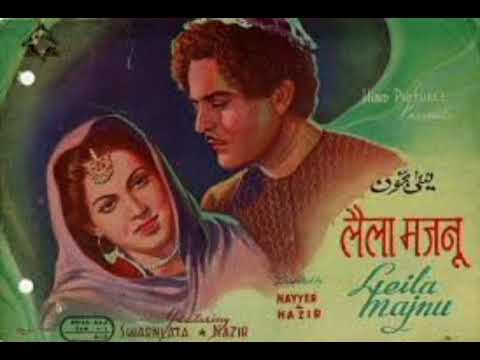
लैला मजनू
Laila Majnu
शैलीRomance · Drama · Musical
भाषाhindi प्रकारकथा-चित्र (फ़ीचर)
गीत12 — नीचे पूरी संगीत-सूची
कथा-सार
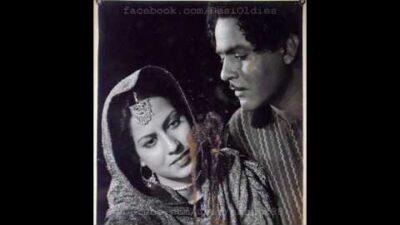
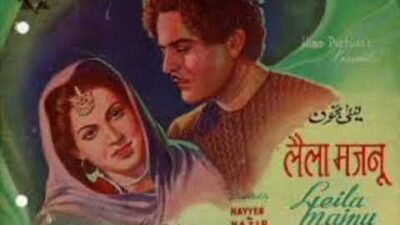
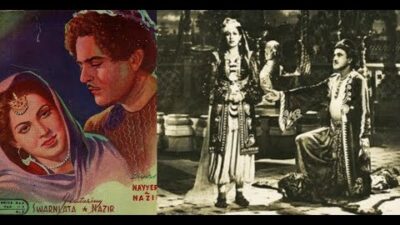
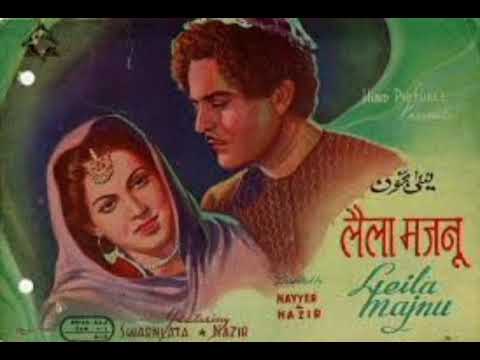
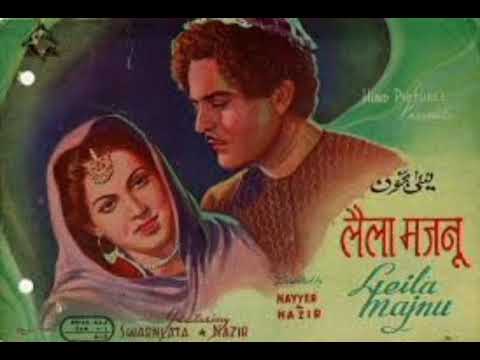
Synopsis'लैला मजनू' (1945) हिंद पिक्चर्स की बनाई उस अरबी प्रेम-कथा की बोलती-फ़िल्मी प्रस्तुति है जो निज़ामी गंजवी की फ़ारसी मसनवी 'लैला-मजनूँ' के रास्ते और बाद में उर्दू पारसी थिएटर के ज़रिए भारत पहुँची। फ़िल्म कथा के जाने-पहचाने ढाँचे पर चलती है: क़ैस नाम का एक नौजवान शायर लैला से इस क़दर मुहब्बत कर बैठता है कि उसके बारे में कहे गए शेर लैला के ख़ानदान की बदनामी बन जाते हैं और उसी वजह से यह रिश्ता ठुकरा दिया जाता है; लैला किसी और की हो जाती है और क़ैस होश खोकर वीराने का रुख़ करता है — वही 'मजनूँ', यानी दीवाना — और दोनों प्रेमी उस दुनिया की पहुँच से बाहर ही दोबारा मिल पाते हैं जिसने उन्हें जुदा किया था। निर्माता-निर्देशक-अभिनेता नज़ीर ने ख़ुद मजनू की भूमिका निभाई और लैला बनीं स्वर्णलता; सहयोगी भूमिकाओं में ख़लील, के. एन. सिंह, गोप, अनीता शर्मा, राजरानी और मक़बूल थे। तनवीर नक़वी के लिखे बारह गीत, जिनका संगीत रफ़ीक़ ग़ज़नवी और पंडित गोबिंद राम के बीच बँटा है, फ़िल्म का असली भार उठाते हैं — और आज यह फ़िल्म काफ़ी हद तक 'यंग इंडिया' लेबल के उन्हीं 78-आरपीएम रिकॉर्डों के सहारे ज़िंदा है।
अंग्रेज़ी में पढ़ें · Read in English
Laila Majnu (1945) is Hind Pictures' sound-era retelling of the Arabic love legend that entered India through Nizami Ganjavi's Persian masnavi Layla and Majnun and, later, through the Urdu Parsi theatre. The film follows the familiar arc of the story: Qais, a young poet, falls so wholly in love with Laila that the verses he makes about her scandalise her family and cost him any chance of marrying her; refused, and with Laila given to another, he is driven out of his senses and into the wilderness — becoming majnun, the possessed one — and the two lovers meet again only past the reach of the world that separated them. The producer-director-actor Nazir cast himself as Majnu opposite Swarnlata's Laila, with Khalil, K. N. Singh, Gope, Anita Sharma, Rajarani and Maqbool in support. Twelve songs written by Tanveer Naqvi and divided between the composers Rafiq Ghaznavi and Pandit Gobind Ram carry the picture, and it is largely through their Young India 78-rpm discs that the film stays in circulation today.
संगीत-सूची
The Soundtrackकुल बारह गीत, सभी तनवीर नक़वी के लिखे हुए, और उनका संगीत दो संगीतकारों में बँटा: रफ़ीक़ ग़ज़नवी, जिन्होंने नायक की पार्श्व-आवाज़ भी दी, और पंडित गोबिंद राम, जिनके हिस्से में स्कोर का बड़ा भाग आया। एल्बम का केंद्र-बिंदु क़व्वाली 'तेरा जलवा जिसने देखा' है — एस. डी. बातिश, मोहम्मद रफ़ी और साथियों की पूर्णतः पुरुष-स्वर वाली प्रस्तुति। उसके इर्द-गिर्द अमीरबाई कर्नाटकी और ग़ज़नवी के युगल, ज़ोहराबाई अम्बालेवाली के एकल, ख़ान मस्ताना के भटकते राही के गीत, और नसीम अख़्तर के नाम दर्ज एक गीत हैं। रिकॉर्ड 'यंग इंडिया' लेबल पर नेशनल ग्रामोफ़ोन रिकॉर्ड मैन्युफ़ैक्चरिंग कंपनी, बंबई ने बनाए — MP 662 पर 'फ़रियाद' और 'ज़िंदगी का कारवाँ', MP 658 पर 'ओ जाने वाले' और 'तुम्हारी जान-ए-तमन्ना' — और गायकों के सबसे भरोसेमंद श्रेय किसी बचे हुए स्टूडियो-काग़ज़ से नहीं, इन्हीं रिकॉर्ड-लेबलों से मिलते हैं। गीत-स्तर के श्रेय रिकॉर्ड-संग्राहकों की सूचियों और ऑनलाइन लिरिक्स डेटाबेसों में अलग-अलग हैं; जहाँ टकराव है, यह प्रविष्टि रिकॉर्ड-लेबल को मानती है और असहमति दर्ज कर देती है।
अंग्रेज़ी में पढ़ें · Read in English
Twelve songs, all written by Tanveer Naqvi, split between two composers: Rafiq Ghaznavi, who also sang the hero's playback, and Pandit Gobind Ram, who carries the larger share of the score. The album's centre of gravity is the qawwali 'Tera Jalwa Jisne Dekha', an all-male ensemble with S. D. Batish, Mohammed Rafi and chorus. Around it sit Amirbai Karnataki's duets with Ghaznavi, Zohrabai Ambalewali's solos, Khan Mastana's wanderer's songs, and a number credited to Naseem Akhtar. The discs were pressed on the Young India label by the National Gramophone Record Mfg. Co., Bombay — 'Fariyaad' and 'Zindagi Ka Karvan' on MP 662, 'O Jane Wale' and 'Tumhari Jaan-e-Tamanna' on MP 658 — and those record labels, rather than any surviving studio paperwork, give the most reliable singer credits for the film. Song-level attributions differ between the record-collector indexes and the online lyrics databases; where they conflict, this catalogue follows the disc labels and records the disagreement.
- दुनिया है अब मेरे लिए ज़िंदा Duniya Hai Ab Mere Liye Zinda स्वर: Amirbai Karnataki, Rafiq Ghaznavi

- तेरा जलवा जिसने देखा Tera Jalwa Jisne Dekha स्वर: एस. डी. बातिश, Mohammed Rafi

- क्या सितम है ज़ुल्म है Kya Sitam Hai Zulm Hai स्वर: Amirbai Karnataki, Rafiq Ghaznavi
- टुकड़े उठा के दिल के Tukde Utha Ke Dil Ke स्वर: G.M. Durrani
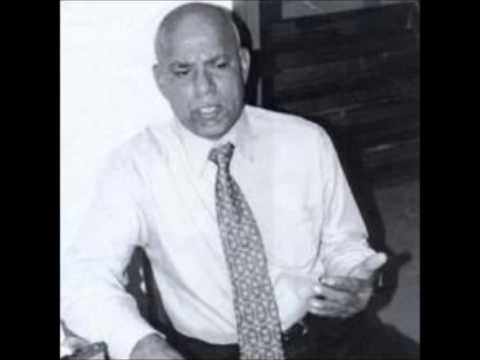
- तुम्हारी जान-ए-तमन्ना Tumhari Jaan-e-Tamanna स्वर: Naseem Akhtar
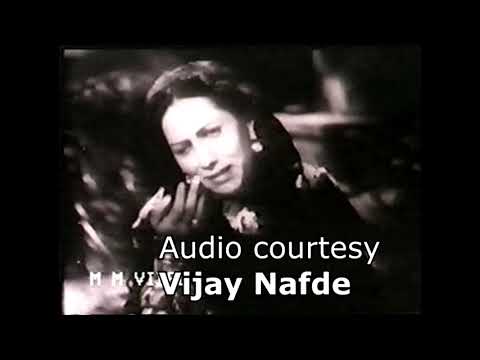
- सख़ी की ख़ैर माई बाबा की ख़ैर Sakhi Ki Khair Mai Baba Ki Khair स्वर: एस. डी. बातिश, Mohammed Rafi
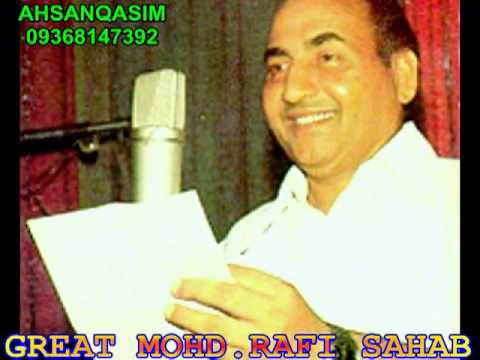
- साँस जो सीने में है Saans Jo Seene Mein Hai स्वर: Zohrabai Ambalewali
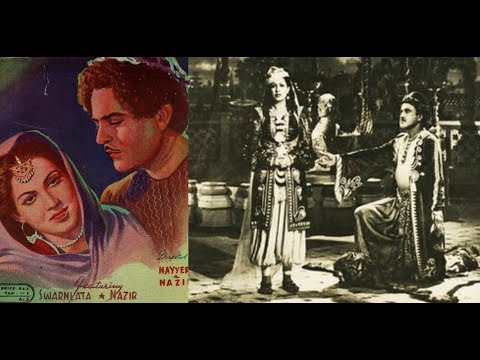
- फ़रियाद क्यूँ मेरी जवानी पे Fariyad Kyun Meri Jawani Pe स्वर: Zohrabai Ambalewali
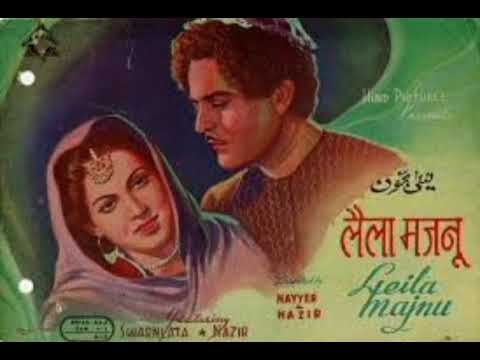
- ओ जाने वाले राही O Jane Wale Raahi स्वर: Khan Mastana

- आओ आओ लिल्लाह Aao Aao Lilla

- हिचकियाँ आ रही हैं Hichkiyan Aa Rahi Hain स्वर: Khan Mastana
- जा रहा है कारवाँ Ja Raha Hai Karvan स्वर: Zohrabai Ambalewali, Khan Mastana
पट्टिका-लेख
The Monographपर्दे के पीछे Behind the Scenes
नज़ीर — यानी नज़ीर अहमद ख़ान, जन्म 1904, लाहौर — इस फ़िल्म के निर्माता भी थे, निर्देशक भी और नायक भी; कुछ विवरणों में निर्देशन का श्रेय नज़ीर और 'नय्यर' नाम के एक सहयोगी को साझा रूप से दिया जाता है। तब तक वे 'हिंद पिक्चर्स' को अपना बैनर बना चुके थे और बंबई में उनका अपना स्टूडियो था; 'लैला मजनू' उनके इसी बंबई-काल के अंतिम दौर की फ़िल्म है — 1947 में वे लाहौर चले गए, जहाँ 'फेरे' (1949) पाकिस्तानी सिनेमा की पहली सिल्वर जुबली फ़िल्म बनी और जहाँ उन्हें उस उद्योग के संस्थापकों में गिना जाता है। रफ़ीक़ ग़ज़नवी, जन्म 1907, रावलपिंडी, उस दौर के उन गिने-चुने कलाकारों में थे जो एक साथ अभिनेता, गायक और संगीतकार तीनों थे — और यहाँ उन्होंने सह-संगीतकार होने के साथ-साथ नज़ीर के मजनू की गायन-आवाज़ का भी काम किया। मोहम्मद रफ़ी का परदे पर आया हुआ हिस्सा इतना छोटा था कि बाद के दर्शकों को क़व्वाली की क़तार में उन्हें पहचानने में दिक़्क़त होती रही है; दाढ़ी ही उन्हें छिपाने का ज़्यादातर काम कर देती है।
अंग्रेज़ी में पढ़ें · Read in English
Nazir — Nazir Ahmed Khan, born in Lahore in 1904 — produced, directed and starred; some accounts credit the direction jointly to Nazir and a collaborator recorded only as Nayyar. He had by then built Hind Pictures into his own banner with a studio in Bombay, and Laila Majnu comes near the end of that Bombay phase: in 1947 he moved to Lahore, where Pheray (1949) became the first silver-jubilee film of Pakistani cinema and where he is remembered as one of the founders of that industry. Rafiq Ghaznavi, born in Rawalpindi in 1907, was one of the period's genuine triple-threats — actor, singer and composer at once — and here did double duty as co-composer and as the singing voice of Nazir's Majnu. Mohammed Rafi's own moment before the camera was modest enough that later viewers have had trouble picking him out of the qawwali line; the beard does most of the work of hiding him.
महत्व Significance
इस फ़िल्म के बारे में सबसे ज़्यादा जो बात दोहराई जाती है, वह एक छोटी-सी पादटिप्पणी है जो आगे चलकर इतिहास बन गई: मोहम्मद रफ़ी, जो तब मुश्किल से बीस के थे और बंबई आए हुए चंद महीने ही हुए थे, इस फ़िल्म में परदे पर दिखाई देते हैं — दाढ़ी लगाए, एक क़व्वाली की क़तार में खड़े, किसी और अभिनेता के लिए नहीं बल्कि अपने ही किरदार के लिए गाते हुए। रफ़ी के शुरुआती दौर पर लिखने वाले 'तेरा जलवा जिसने देखा' को हिंदी फ़िल्म में उनकी पहली परदा-उपस्थिति मानते हैं; दूसरी बार ऐसा 'जुगनू' (1947) में हुआ। इसके अलावा यह फ़िल्म इस बात का साफ़ नमूना है कि लता मंगेशकर से पहले पार्श्वगायन कैसे चलता था: एक ही नायिका स्वर्णलता के लिए तीन अलग-अलग गायिकाओं — अमीरबाई कर्नाटकी, ज़ोहराबाई अम्बालेवाली और नसीम अख़्तर — ने गाया, जबकि सह-संगीतकार रफ़ीक़ ग़ज़नवी ने ख़ुद नज़ीर के मजनू की गायन-आवाज़ का काम किया। यह ग़ज़नवी के आख़िरी बड़े बंबई स्कोरों में भी है — 1947 में वे पाकिस्तान चले गए और फ़िल्मी संगीत छोड़कर रेडियो पाकिस्तान से जुड़ गए।
अंग्रेज़ी में पढ़ें · Read in English
The most-cited fact about this film is a footnote that turned into history: Mohammed Rafi, barely twenty and only months into his Bombay career, appears on screen in it — bearded, standing in the line of a qawwali, singing for himself rather than dubbing another actor. Writers on early Rafi treat 'Tera Jalwa Jisne Dekha' as his first screen appearance in a Hindi film; the second would be Jugnu in 1947. Beyond that, Laila Majnu is a clean cross-section of how playback worked before Lata Mangeshkar standardised it: three different women — Amirbai Karnataki, Zohrabai Ambalewali and Naseem Akhtar — sang for the single heroine Swarnlata, while the co-composer Rafiq Ghaznavi doubled as the singing voice of Nazir's Majnu. It is also among the last substantial Bombay scores by Ghaznavi, who left for Pakistan in 1947 and gave up film music for Radio Pakistan.
विरासत Legacy
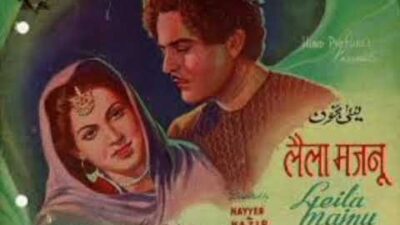
'लैला मजनू' (1945) भारतीय फ़िल्म-निर्माण की सबसे लंबी चलने वाली शृंखला की एक कड़ी है — यह किंवदंती मूक-युग से लेकर आगे तक बार-बार परदे पर आई है, जिसमें 1953, 1976 और 2018 की जानी-पहचानी हिंदी फ़िल्में भी शामिल हैं। यह संस्करण अपने लिए कम और उस नौजवान के लिए ज़्यादा याद किया जाता है जो इसकी क़व्वाली की क़तार में खड़ा था: यहीं हिंदी सिनेमा की आने वाली सबसे परिभाषित आवाज़ पहली बार कैमरे के सामने आई। इसकी दूसरी, कहीं ज़्यादा ख़ामोश विरासत दस्तावेज़ी है — 'यंग इंडिया' के 78-आरपीएम रिकॉर्ड निजी संग्रहों और संग्राहकों की सूचियों में बचे हुए हैं, और चूँकि फ़िल्म के अपने काग़ज़ात नहीं बचे, इसलिए 1945 की एक बंबई फ़िल्म में असल में किसने क्या गाया — इसका प्राथमिक प्रमाण अब वही शेलैक लेबल हैं। पार्श्वगायन के इतिहासकारों के लिए इस फ़िल्म का रिकॉर्ड-कवर उसके प्रिंट से ज़्यादा क़ीमती है।
अंग्रेज़ी में पढ़ें · Read in English
Laila Majnu (1945) is one link in the longest-running chain in Indian film-making — the legend has been put on screen in India again and again, in the silent era and afterwards in versions across the decades, including well-known Hindi films in 1953, 1976 and 2018. This version is remembered less for itself than for the young man standing in its qawwali chorus: it is where the future defining voice of Hindi cinema first faced a camera. Its second, quieter legacy is documentary — the Young India 78s survive in private record collections and in the indexes kept by collectors, and because the film's own paperwork does not, those shellac labels are now the primary evidence for who actually sang what in a 1945 Bombay production. For historians of playback, that makes the record sleeve more valuable than the film print.
अन्य विवरण
More Details- https://www.hindigeetmala.net/movie/laila_majnu_1945.htm
- https://hindi-movies-songs.com/joomla/index.php/hindi-films/posted-songs/1516-laila-majnu-1945
- https://atulsongaday.me/2013/12/19/tera-jalwa-jisne-dekha-wo-deewaaa-ho-gaya/
- https://www.songsofyore.com/best-songs-of-1945-and-the-winners-are/
- https://www.vidursury.com/2012/11/amirbai-karnataki-legendary-indian.html
- https://www.millenniumpost.in/sunday-post/beyond-bygone/beyond-boundaries-rafiq-ghaznavi-398411
- https://en.wikipedia.org/wiki/Nazir_Ahmed_Khan
- https://archive.org/details/a_20210422_20210422_1231
- https://archive.org/details/a_20230412_20230412_1116
- https://en.wikipedia.org/wiki/List_of_Hindi_films_of_1945
- https://en.wikipedia.org/wiki/S._D._Batish
References
नमूना-पट्टी
The Specimen Table| शीर्षक | लैला मजनू · Laila Majnu |
|---|---|
| वर्ष · युग | 1945 — Pre Independence |
| निर्देशक | नज़ीर (नज़ीर अहमद ख़ान) · Nazir (Nazir Ahmed Khan) |
| संगीत-निर्देशक | रफ़ीक़ ग़ज़नवी · Rafiq Ghaznavi · गोबिंद राम · Gobind Ram |
| गीतकार | तनवीर नक़वी · Tanveer Naqvi |
| कलाकार-मंडली | नज़ीर · Nazir · स्वर्णलता · Swarnlata · के. एन. सिंह · K. N. Singh · गोप · Gope · ख़लील · Khalil · अनीता शर्मा · Anita Sharma · राजरानी · Rajarani · मक़बूल · Maqbool |
| निर्माण-गृह | Hind Pictures, Bombay |
| शैली | Romance · Drama · Musical |
| भाषा | hindi |
| प्रकार | कथा-चित्र (फ़ीचर) |
| गीत | 12 गीत — ऊपर पूरी संगीत-सूची |
जुड़े हुए पन्ने
Connected Plates · The Graph Made Visibleअटलस में कोई पन्ना अकेला नहीं — 'लैला मजनू' से उसके गीत, कलाकार, राग और युग, सब जुड़े हैं।
इस फ़िल्म के गीत · Songs of this Film
कलाकार · Cast & Crew
युग · The Era
साझा कीजिए · Share this Plate