कलाकार विंग · कलाकार-पट्टिका · Artist Plate
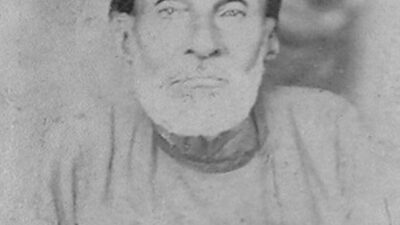
मिर्जा ग़ालिब
Mirza Ghalib · Mirza Asadullah Baig Khan
कवियों का राजा
जन्म27 December 1797 — Agra, Uttar Pradesh, India
निधन15 February 1869 — Delhi, Delhi, India
जीवन-पट्टी
The Life Specimen| नाम | मिर्जा ग़ालिब · Mirza Ghalib |
|---|---|
| जन्म नाम | मिर्जा असदुल्ला बैग़ ख़ान · Mirza Asadullah Baig Khan |
| उपनाम | कवियों का राजा · महान उर्दू कवि · दार्शनिक-कवि |
| जन्म | 27 December 1797 — Agra, Uttar Pradesh, India |
| निधन | 15 February 1869 — Delhi, Delhi, India |
| भूमिकाएँ | कवि · गीतकार · Philosopher · लेखक |
| राष्ट्रीयता | Indian |
| विधाएँ | ग़ज़ल · Poetry · Urdu Literature · Persian Poetry |
| भाषाएँ | Urdu · Persian |
| पिता | Mirza Abul Hasan Khan (Ottoman nobleman, later adopted Mughal traditions) |
| माता | Fatima Begum |
| Grandfather | Mirza Muhammad Baig (Ottoman janissary) |
| पत्नी | Umrao Begum |
| बच्चे | Had children, but family faced poverty in later years |
पट्टिका-लेख
The Monographजीवनी Biography
मिर्जा ग़ालिब (27 दिसंबर 1797 को अग्रा में जन्मे; 15 फरवरी 1869 को दिल्ली में निधन) को उर्दू भाषा का सर्वश्रेष्ठ कवि और 19वीं सदी के दक्षिण एशियाई साहित्य के सबसे प्रभावशाली व्यक्तित्व के रूप में व्यापक रूप से स्वीकार किया जाता है। अग्रा में तुर्क-मुग़ल परिवार में जन्मे होने के बावजूद, उन्होंने अपना अधिकांश जीवन दिल्ली में बिताया, मुग़ल साम्राज्य के अंतिम पतन को देखते हुए। ग़ालिब की रचनाएं उर्दू और फारसी दोनों में हैं, लेकिन उनकी उर्दू ग़ज़लें ही उन्हें अमर प्रसिद्धि दिलाती हैं। ग़ज़ल एक काव्य रूप है जिसमें तुकबंदी वाली पंक्तियां (शेर) होती हैं। ग़ालिब से पहले, ग़ज़लें मुख्यतः रोमांटिक प्रेम के विषय में होती थीं। ग़ालिब ने इस रूप को दार्शनिक गहराई, अस्तित्वगत प्रश्न और मानव स्थिति के अवलोकन से समृद्ध किया। ग़ालिब की 235 से अधिक ग़ज़लें हैं। उनका कलम नाम 'ग़ालिब' (जिसका अर्थ 'विजयी' या 'शक्तिशाली' है) उर्दू कविता के एक नए युग का पर्यायवाची बन गया। हालांकि वह 1869 में अस्पष्टता में मर गए, लेकिन 20वीं सदी की शुरुआत में उनके कार्यों का पुनर्विचार शुरू हुआ। उनकी ग़ज़लों को लता मंगेशकर, मीरा कुमार, ग़ुलाम अली, उस्ताद अमीर ख़ान जैसे महान गायकों द्वारा गाया गया है। आज, ग़ालिब को उर्दू साहित्य का सबसे बड़ा कवि माना जाता है।
अंग्रेज़ी में पढ़ें · Read in English
Mirza Ghalib (born Mirza Asadullah Baig Khan on 27 December 1797 in Agra; died 15 February 1869 in Delhi) was widely acknowledged as the greatest poet of the Urdu language and one of the most influential literary figures of 19th-century South Asia. Though born in Agra to a Turk-Mughal family of considerable standing, he spent most of his life in Delhi, witnessing the final decline and fall of the Mughal Empire during the upheaval of 1857.
Ghalib's mastery extended to both Urdu and Persian, though he personally valued Persian as the 'superior' language. Yet it is his Urdu ghazals that earned him lasting fame. A ghazal is a poetic form consisting of rhyming couplets (called shers) that follow strict meter and rhyme schemes, and each couplet is autonomous in meaning, often employing complex metaphor and wordplay. Before Ghalib, ghazals were primarily confined to themes of romantic love — passionate declarations of desire and grief. Ghalib revolutionized the form by infusing it with philosophical depth, existential questioning, and observations on the human condition. His ghazals touch on themes of mortality, divine justice, suffering, love (both romantic and spiritual), fate, free will, and the nature of poetry itself.
Some of Ghalib's most celebrated couplets include verses that explore the paradox of existence, the pain of separation, and the search for meaning in a chaotic world. His pen name, Ghalib (meaning 'victorious' or 'powerful'), became synonymous with a new age of Urdu poetry. He wrote over 235 ghazals, collected in his Divan (poetic collection).
Ghalib's life was marked by financial hardship and social marginalization, especially in his later years. A gambler and lover of court life, he fell out of favor after the 1857 Rebellion. The British Raj viewed him with suspicion, and his pension was reduced. He spent his final years in relative poverty in Delhi, yet never stopped writing. His correspondence, particularly his letters to his friend Mir Taqi Mir, reveal a brilliant mind engaging with the deep philosophical and political questions of his era.
Though he died in obscurity in 1869, Ghalib's rehabilitation began in the early 20th century. Indian and Pakistani scholars, musicians, and poets recognized the timeless brilliance of his work. His ghazals were set to music by virtually every major Indian vocalist of the gramophone era and beyond. From the earliest recordings to contemporary performances, Ghalib's words have been sung by legendary singers including Lata Mangeshkar, Meera Kumar, Ghulam Ali, Ustad Amir Khan, Kumar Sanu, and countless others. His ghazals permeate Indian and Pakistani cinema, popular music, and classical concert traditions.
Today, Ghalib is considered not just the greatest Urdu poet but one of the most influential writers in all of South Asian literature. His work continues to be studied in universities, performed in concerts, and invoked in popular culture across India and Pakistan. In recent years, numerous biographical works, scholarly editions, and musical interpretations have restored Ghalib to his rightful position as the colossus of Urdu literature.
सांस्कृतिक प्रभाव Cultural Impact
मिर्जा ग़ालिब का विश्व साहित्य और दक्षिण एशियाई संस्कृति पर प्रभाव अतुलनीय है। उन्होंने ग़ज़ल को रोमांटिक भावना से परे दार्शनिक और सामाजिक अन्वेषण का माध्यम बना दिया। भारतीय और पाकिस्तानी संगीत में उनका प्रभाव सर्वव्यापी है। लता मंगेशकर, ग़ुलाम अली, मीरा कुमार जैसे महान गायकों ने उनकी ग़ज़लें गाई हैं। 20वीं सदी में उनकी पुनः खोज ने उन्हें केवल ऐतिहासिक महत्व का नहीं बल्कि समकालीन प्रासंगिकता वाला कवि बना दिया।
अंग्रेज़ी में पढ़ें · Read in English
Mirza Ghalib's impact on world literature and South Asian culture cannot be overstated. He is credited with transforming the ghazal from a form focused primarily on romantic sentiment into a vehicle for philosophical and social inquiry. His work anticipated modernism and existentialism by more than a century. In Indian and Pakistani music, his influence is pervasive — his ghazals form the core repertoire of classical singers and have been adapted for cinema, devotional music, and popular performance. His ability to express profound emotional and intellectual complexity in spare, elegant verse has made his work continuously relevant across centuries. Furthermore, Ghalib's example of an artist maintaining intellectual integrity despite poverty and political marginalization resonates with modern audiences. His rediscovery and scholarly rehabilitation in the 20th century established him as not merely a poet of historical significance but as a figure whose work remains urgently contemporary.
तालीम, विधाएँ और भाषाएँ
Training · Genres · Languagesतालीम · Training
Mullah Abd-ul Samad
Persian and Arabic languages
Court of Mughal Empire
Literary and philosophical traditions
घराना · GharanaMughal court literary tradition
विधाएँ · Genres
भाषाएँ · Languages Sung
जीवन-रेखा
Career Highlights- मील-पत्थर 235+ ग़ज़लें रचीं, जो उर्दू साहित्य का आधार बनीं Composed 235+ ghazals that form the foundation of Urdu literature
- मील-पत्थर मुग़ल साम्राज्य के पतन के समय दिल्ली दरबार के प्रमुख कवि Chief poet of the dying Mughal court during the empire's decline
-
मील-पत्थर
अपने समय से आगे के विचार प्रकट किए — ग़ज़लों में दर्शन, मानवीय अवस्था, और नैतिकता का विश्लेषण
Expressed ideas ahead of his time — philosophy, human condition, and moral reflection in ghazals
-
मील-पत्थर
ग़ज़ल को परिवर्तित किया — प्रेम के पारंपरिक विषय से परे जाकर सामाजिक और दार्शनिक विचार
Transformed the ghazal genre — moving beyond conventional themes of unrequited love to social and philosophical inquiry
-
मील-पत्थर
सदियों बाद भी सर्वाधिक गाए जाने वाले ग़ज़लों के कवि — लता मंगेशकर, मीरा कुमार, गुलाम अली, और अन्य मुख्य गायकों द्वारा
Most frequently set to music and performed by legendary singers across generations — Lata Mangeshkar, Meera Kumar, Ghulam Ali, and others
- मील-पत्थर 1869 में दिल्ली में निर्वासन और गरीबी में मृत्यु — फिर भी विरासत अमर रहा Died in exile and poverty in Delhi in 1869 — yet his legacy remained immortal
-
मील-पत्थर
1911 के बाद से दक्षिण एशिया के संगीतकारों द्वारा बार-बार संगीतबद्ध किए गए
His ghazals have been repeatedly set to music and performed by South Asian vocalists since early 20th century
अन्य विवरण
More Details- Birth Year
- 1797
- Death Year
- 1869
अभिलेख-सार
Discography Summary| संग्रह में गीत | 24 — नीचे जुड़े हुए पन्नों में सूचीबद्ध |
|---|---|
| कुल ज्ञात रिकॉर्डिंग | 2 — 2 संग्रह में उपलब्ध |
| रिकॉर्डिंग-काल | 1899–1903 · पहला सत्र 1899 |
| फ़िल्में व डिस्क | Gramophone Company — First Indian Recordings |
| प्रमुख भूमिका | गीतकार |
| नित्य सहयोगी | Ahemad · Malka Jaan Agra · Unknown Tabla Player · Unknown Sarangi Player |
| हस्ताक्षर-गीत | Ghalib Ghazal Recitation |
| स्रोत | derived from the HindiGeet song archive |
अभिलेख व संदर्भ
Archives & References| विकिपीडिया | Wikipedia |
|---|---|
| संदर्भ | Ghalib - Wikipedia · Mirza Ghalib - The Poetry Foundation · Mirza Asadullah Khan Ghalib - Britannica · Ghalib: 1797-1869 — Life and Letters — Mirza Asadullah Khan Ghalib (1969) · The Collected Poems of Ghalib — Mirza Asadullah Khan Ghalib (translated by W.M. Thackston Jr.) (2000) · Mirza Ghalib: Legendary Poet of the Urdu Language · All Writings of Mirza Ghalib |
जुड़े हुए पन्ने
Connected Plates · The Graph Made Visibleअटलस में कोई पन्ना अकेला नहीं — मिर्जा ग़ालिब से उनके गीत, फ़िल्में, घराना, समकालीन और युग, सब यहाँ से खुलते हैं।
हस्ताक्षर-गीत · Signature Songs
साझा कीजिए · Share this Plate
यह पन्ना आगे बढ़ाइए
सवाल-जवाब
Questions & AnswersWho was Mirza Ghalib?
Mirza Ghalib (1797-1869) was the greatest poet of the Urdu language, renowned for composing over 235 philosophical ghazals that revolutionized Urdu poetry. He was NOT a singer or musician, but a poet whose works have been set to music by legendary singers.
What is a ghazal?
A ghazal is a poetic form consisting of autonomous rhyming couplets (shers) that follow strict meter and rhyme patterns. Each couplet can stand alone in meaning. Ghalib elevated the ghazal from a form focused on romantic love to one exploring philosophy, mortality, and the human condition.
How many ghazals did Ghalib compose?
Mirza Ghalib composed over 235 ghazals, which are collected in his Divan-e-Ghalib (Divan of Ghalib). These ghazals are considered masterpieces of world literature.
What made Ghalib's ghazals revolutionary?
Before Ghalib, ghazals primarily expressed romantic love and separation. Ghalib transformed the form by infusing it with existential philosophy, political commentary, and observations on human suffering, mortality, and meaning — making the ghazal a vehicle for profound intellectual expression.
Which singers have performed Ghalib's ghazals?
Virtually every major Indian vocalist has performed Ghalib's work, including Lata Mangeshkar, Meera Kumar, Ghulam Ali, Ustad Amir Khan, Kumar Sanu, and countless others. His ghazals are central to both classical and popular Indian music.
What happened to Ghalib after the 1857 Rebellion?
After the 1857 Indian Rebellion, Ghalib fell out of favor with both Indian nobility and British authorities. His pension was reduced, and he spent his final years in relative poverty in Delhi, yet continued writing until his death in 1869.
Why is Ghalib important to Hindi cinema and music?
Ghalib's ghazals are the backbone of Hindi film music and classical Indian vocal traditions. His poetry expresses universal human emotions — love, loss, mortality — that resonate across generations and cultures. Songs based on his words appear frequently in films and concerts.
जुड़ी हुई दुनिया
Explore ConnectionsSongs Written · लिखे गीत (10)

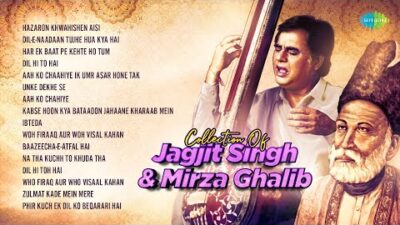
दिल-ए-नादान तुझे हुआ क्या है — भैरवी ग़ज़ल
Dil-e-Nadan Tujhe Hua Kya Hai — Bhairavi Ghazal

हमसे खुल जाओ बवक्ते मयपरस्ती एक दिन
Humse Khul Jao Ba-Waqt-e-Mai-Parasti Ek Din
Vatsala Kumthekar, अमर · Lalaji