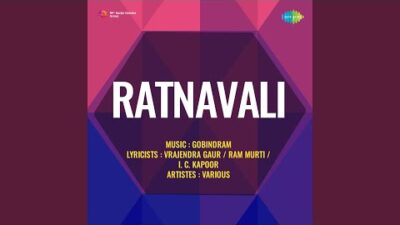
बसंत ऋतु आई रे छाई है हरियाली
Basant Ritu Aayi Re Chhayi Hai Hariyali
Zohrabai Ambalewali, मोती बी. ए. · Ratnavali
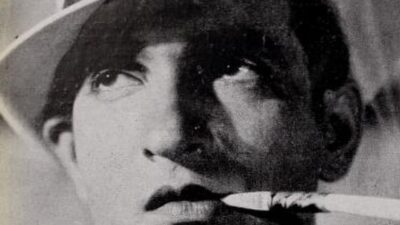
सिनेमा विंग · फ़िल्म-पट्टिका · Film Plate
Ratnavali
शैलीCostume Drama · Romance · Musical
भाषाhindi प्रकारकथा-चित्र (फ़ीचर)
गीत8 — नीचे पूरी संगीत-सूची
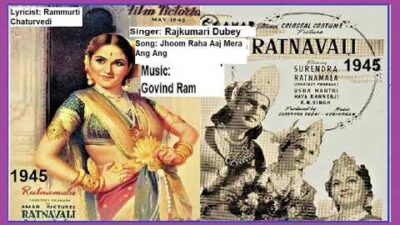
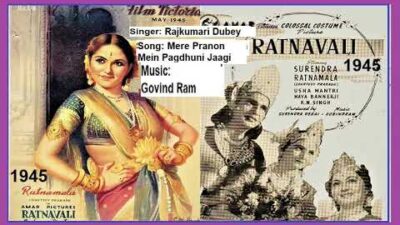
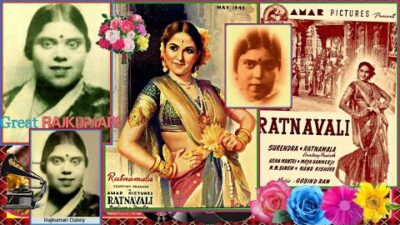
'रत्नावली' सातवीं सदी के सम्राट हर्षवर्धन की मानी जाने वाली इसी नाम की संस्कृत नाटिका पर आधारित एक दरबारी वेशभूषा-प्रधान प्रेमकथा है। लंका के राजा की पुत्री रत्नावली अपने रूप के लिए विख्यात है और उसके साथ यह भविष्यवाणी जुड़ी है कि जो उससे विवाह करेगा वही जगत का राजा बनेगा — इसलिए देश भर के राजा-महाराजा उसके हाथ के लिए अपने दूत भेजते हैं। केवल कौशांबी के मंत्री को सफलता मिलती है और वह उसे अपने स्वामी के दरबार तक ले आता है, जहाँ राजा उस पर मोहित हो जाता है। किंतु पटरानी वासवदत्ता इस दूसरे विवाह का विरोध करती है और कथा इसी अड़चन और षड्यंत्र पर घूमती है; अनेक उतार-चढ़ावों के बाद रानी मान जाती है और विवाह सम्पन्न होता है। अमर पिक्चर्स ने सुरेंद्र, रत्नमाला, उषा मंत्री, माया बनर्जी, के. एन. सिंह, लीला मिश्रा और नंद किशोर को लिया; किसी भी उपलब्ध स्रोत में अलग-अलग भूमिकाओं का बँटवारा दर्ज नहीं है। हिंदी फ़िल्म गीत कोश इसे 'सामाजिक' श्रेणी में दर्ज करता है, पर विषय और वेशभूषा के हिसाब से यह उसी दरबारी कल्पना-चक्र की फ़िल्म है जो बंबई उस दशक के मध्य में लगातार बना रहा था।
Ratnavali is a courtly costume romance adapted from the Sanskrit play of the same name attributed to the seventh-century emperor Harsha. Ratnavali, daughter of the king of Lanka, is famed for her beauty and carries a prophecy that whoever marries her will become sovereign of the world, so kings and maharajas across the subcontinent send emissaries asking for her hand. Only the minister of the kingdom of Kaushambi succeeds in bringing her to his master's court, where the king falls in love with her. His existing queen, Vasavadatta, opposes a second marriage and the film turns on the obstruction and intrigue that follow; after many reversals the queen relents and the marriage takes place. Amar Pictures cast Surendra, Ratnamala, Usha Mantri, Maya Banerjee, K. N. Singh, Leela Mishra and Nand Kishore; no source consulted assigns the individual roles. The Hindi Film Geet Kosh files the picture under 'Social', but by subject and costume it belongs squarely to the courtly-fantasy cycle that Bombay was turning out through the middle of the decade.
हिंदी फ़िल्म गीत कोश आठ गीत दर्ज करता है, सभी का संगीत पंडित गोबिंद राम का। बोल तीन गीतकारों में बँटे हैं: रममूर्ति चतुर्वेदी के चार, व्रजेंद्र गौड़ के दो और आई. सी. कपूर का एक, जबकि आठवें गीत — राजकुमारी के 'मेरे प्राणों में पग धुनि जागी' — का कोई गीतकार कहीं दर्ज नहीं है, इसलिए यहाँ अनुमान से नाम जोड़ने के बजाय उसे खाली छोड़ा गया है। राजकुमारी के तीन एकल हैं, शमशाद बेगम का एक एकल और सुरेंद्र के साथ एक युगल, तथा ज़ोहराबाई अम्बालेवाली के हिस्से एक युगल और ऋतु-गीत का समवेत; नसीम अख़्तर सुरेंद्र के साथ एक युगल गाती हैं, और सुरेंद्र गायक-अभिनेता के नाते अपने गीत स्वयं गाते हैं। बसंत गीत 'बसंत ऋतु आई रे' में मोती बी. ए. और कोरस भी जुड़ते हैं। आठ गीतों का यह फैलाव — विरह की एक रतजगा-पुकार, एक प्रार्थना, दो प्रणय-युगल, एक स्वप्न-गीत, एक उल्लास-नृत्य और एक ऋतु-गीत — इस बात का ठीक नक़्शा है कि 1940 के दशक के मध्य की एक वेशभूषा-फ़िल्म के संगीत से क्या-क्या अपेक्षित था।
The Hindi Film Geet Kosh lists eight songs, all composed by Pt. Gobind Ram. The lyrics are divided between three writers: Rammurti Chaturvedi takes four, Vrajendra Gaur two and I. C. Kapoor one, while the eighth song — Rajkumari's 'Mere Pranon Mein Pag Dhuni Jaagi' — carries no documented lyricist at all and is left unattributed here rather than assigned by guesswork. Rajkumari has three solos, Shamshad Begum one solo and one duet with Surendra, and Zohrabai Ambalewali a duet and the seasonal chorus number; Naseem Akhtar sings one duet with Surendra, who as a singer-actor voices his own songs. The spring song 'Basant Ritu Aayi Re' adds Moti B. A. and a chorus. The range across eight numbers — a sleepless-night lament, a prayer, two courtship duets, a dream song, a dance of elation and a ritu-geet — is a fair map of what a mid-1940s costume score was expected to cover.

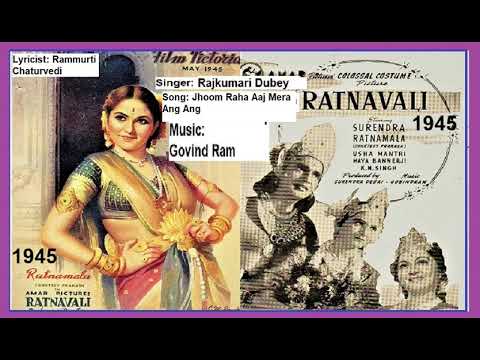
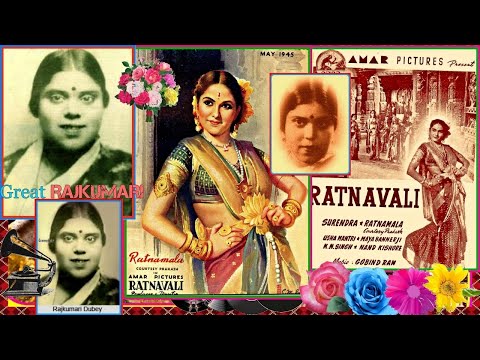


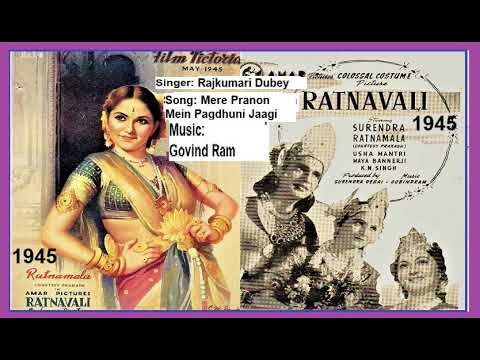
अमर पिक्चर्स चिमनलाल देसाई का अपना बैनर था — और अकेली ऐसी कंपनी जो पूरी तरह उन्हीं की थी। उन्होंने 1930 में डॉ. अंबालाल पटेल के साथ मिलकर सागर मूवीटोन की नींव रखी थी, 1939 में उसे छोड़कर आरसीए के यूसुफ़ फ़ज़लभाई के साथ नेशनल स्टूडियोज़ बनाया, और कुछ ही महीनों में उसे भी छोड़कर ऐसी कंपनी खड़ी की जो किसी और के अधीन न हो; 'अमर' नाम उनके पोते का था — उनके सबसे बड़े बेटे सुरेंद्र देसाई के पुत्र का। उनके दोनों बेटे — वीरेंद्र और सुरेंद्र देसाई — इसी बैनर से जुड़े थे; वीरेंद्र स्वयं निर्देशक थे और उन्होंने 1940 के दशक में अभिनेत्री नलिनी जयवंत से विवाह किया। 'रत्नावली' का निर्देशन सुरेंद्र देसाई ने किया, जिन्हें इसका निर्माता भी दर्ज किया गया है। एक टिप्पणी जो तब से सूचियों को भ्रमित करती आई है: निर्देशक सुरेंद्र देसाई और फ़िल्म के नायक, गायक-अभिनेता सुरेंद्र, दो बिलकुल अलग व्यक्ति हैं।
Amar Pictures was Chimanlal Desai's own banner, and the only company he ever fully owned. He had co-founded Sagar Movietone in 1930 with Dr. Ambalal Patel, left it in 1939 to form National Studios with RCA's Yusuf Fazalbhoy, and within months left that too to set up a firm that answered to nobody else; the name Amar came from his grandson, the son of his eldest son Surendra Desai. Both his sons, Virendra and Surendra Desai, worked at the banner; Virendra, himself a director, married the actress Nalini Jaywant during the 1940s. Ratnavali was directed by Surendra Desai, who is also credited as its producer. A footnote that has confused catalogues ever since: the director Surendra Desai and the film's leading man, the singer-actor Surendra, are two entirely different people.
'रत्नावली' का महत्व उसकी उपलब्धि से कम, उसके दर्ज किए हुए से अधिक है: 1940 के दशक के मध्य में संस्कृत-मूलक दरबारी विषयों की माँग, और पंडित गोबिंद राम की कार्यशैली — उस दशक के सबसे व्यस्त और सबसे कम याद किए गए संगीतकारों में से एक। 'फ़िल्मइंडिया' में बाबूराव पटेल ने इसे छापकर ख़ारिज किया, इसे समय की बरबादी बताया और पूरी असफलता की भविष्यवाणी की; फिर भी फ़िल्म ने अपनी लागत निकाली और मुनाफ़ा भी कमाया। यह इस बात की अच्छी याद दिलाता है कि उस दौर की व्यापार-पत्रिकाओं का फ़ैसला और दर्शकों का असली फ़ैसला कितने अलग हो सकते थे। यह गोबिंद राम की नियमित मंडली का छोटा-सा नमूना भी है: शमशाद बेगम और ज़ोहराबाई अम्बालेवाली — जिन दो आवाज़ों को स्थापित करने में उनका सबसे बड़ा हाथ था — तथा राजकुमारी और गायक-अभिनेता सुरेंद्र।
Ratnavali is significant less for what it achieved than for what it records: the mid-1940s appetite for Sanskrit-derived courtly subjects, and the working method of Pt. Gobind Ram, one of the busiest and least remembered composers of the decade. Filmindia's Baburao Patel dismissed the film in print, declaring it a waste of time and predicting a total flop; the picture nonetheless recovered its cost and turned a profit, a useful reminder of how far the period's trade-press verdicts could diverge from what audiences actually paid for. It is also a compact sample of Gobind Ram's regular ensemble: Shamshad Begum and Zohrabai Ambalewali, the two voices he did most to establish, together with Rajkumari and the singer-actor Surendra.
फ़िल्म स्वयं व्यावहारिक रूप से लुप्त हो चुकी है: एक के बाद एक गीत का केवल ऑडियो बचा है, और जो दस्तावेज़ीकरण ऑनलाइन उपलब्ध है वह बार-बार दर्ज करता है कि चित्रांकन अज्ञात है। जो चीज़ इससे आगे तक टिकी, वह एक धुन है। राजकुमारी की प्रार्थना 'मेरी पुकार सुन ले ओ जग के रखवाले' की धुन दो साल बाद नौशाद के 'बेताब है दिल' के रूप में 'दर्द' (1947) में लौटी, जिसे सुरैया और उमा देवी ने गाया, और गोबिंद राम ने उसे स्वयं भी 'घर की इज़्ज़त' (1948) में शमशाद बेगम के 'फ़रियाद मेरी सुन ले' के लिए फिर बरता — यानी 1945 की एक ठुकराई हुई वेशभूषा-फ़िल्म में पहली बार सुनी गई धुन आगे चलकर किसी और संगीतकार के नाम से उस दशक के सबसे परिचित गीतों में गिनी गई। आठों गीत हिंदी फ़िल्म गीत कोश और माईस्वर में सूचीबद्ध हैं, पर 'अतुल्स सॉन्ग अ डे' पर गीत-दर-गीत विवरण पूरे होने में मई 2013 से दिसंबर 2025 तक का समय लगा।
The film itself has effectively disappeared: for song after song only the audio survives, and the documentation that exists online repeatedly notes that the picturisation is unknown. What has outlasted it is a tune. The melody of Rajkumari's prayer 'Meri Pukaar Sun Le O Jag Ke Rakhwale' reappeared two years later as Naushad's 'Betaab Hai Dil' in Dard (1947), sung by Suraiya and Uma Devi, and Gobind Ram used it again himself for Shamshad Begum's 'Fariyad Meri Sun Le' in Ghar Ki Izzat (1948) — so a melody first heard in a dismissed 1945 costume film went on to become one of the best-known songs of the decade under another composer's name. The eight songs are catalogued by the Hindi Film Geet Kosh and by MySwar, but the song-by-song write-ups on Atul's Song A Day took from May 2013 to December 2025 to cover the complete score.
| शीर्षक | रत्नावली · Ratnavali |
|---|---|
| वर्ष · युग | 1945 — Pre Independence |
| निर्देशक | सुरेंद्र देसाई · Surendra Desai |
| संगीत-निर्देशक | गोबिंद राम · Gobind Ram |
| गीतकार | रममूर्ति चतुर्वेदी · Rammurti Chaturvedi · व्रजेंद्र गौड़ · Vrajendra Gaur · आई. सी. कपूर · I. C. Kapoor |
| कलाकार-मंडली | सुरेंद्र · Surendra · रत्नमाला · Ratnamala · उषा मंत्री · Usha Mantri · के. एन. सिंह · K. N. Singh · माया बनर्जी · Maya Banerjee · लीला मिश्रा · Leela Mishra · नंद किशोर · Nand Kishore · एन. ए. अंसारी · N. A. Ansari · जानी बाबू · Jaani Babu · एस. नज़ीर · S. Nazir |
| निर्माण-गृह | Amar Pictures, Bombay |
| शैली | Costume Drama · Romance · Musical |
| भाषा | hindi |
| प्रकार | कथा-चित्र (फ़ीचर) |
| गीत | 8 गीत — ऊपर पूरी संगीत-सूची |
अटलस में कोई पन्ना अकेला नहीं — 'रत्नावली' से उसके गीत, कलाकार, राग और युग, सब जुड़े हैं।
साझा कीजिए · Share this Plate
Basant Ritu Aayi Re Chhayi Hai Hariyali
Zohrabai Ambalewali, मोती बी. ए. · Ratnavali
Nain Baan Se Karke Ghayal Roopwati Kahan Jaaye
Ratiyan Guzaroon Kaise Haay Ram