सिनेमा विंग · फ़िल्म-पट्टिका · Film Plate
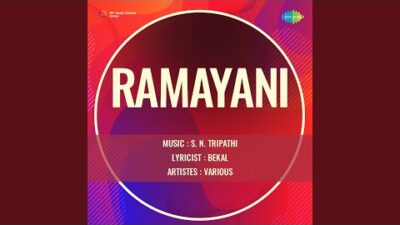
रामायणी
Ramayani
शैलीMythological · Drama
भाषाhindi प्रकारकथा-चित्र (फ़ीचर)
गीत9 — नीचे पूरी संगीत-सूची
कथा-सार
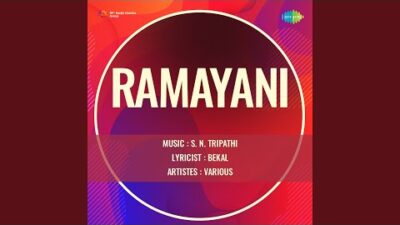
Synopsis'रामायणी' 1945 की हिंदी फ़िल्म है, जिसका निर्देशन सर्वोत्तम बादामी ने पूर्णिमा प्रोडक्शंस के लिए किया; संगीत एस. एन. त्रिपाठी का और गीत बेकल के हैं। संदर्भ-ग्रंथ इसे रामायण पर आधारित पौराणिक फ़िल्म बताते हैं — हेडी पॉवेल्स इसे विजय भट्ट की 'राम राज्य' (1943) की अपार सफलता के बाद बनी रामायण-आधारित फ़िल्मों की लहर में रखती हैं, जिसमें पूर्णिमा प्रोडक्शंस ने अपना संस्करण 'रामायणी' नाम से बनाया। इससे आगे कथानक का कोई विस्तृत विवरण किसी सुलभ स्रोत में सुरक्षित नहीं है, और यह प्रविष्टि कोई कहानी गढ़ती नहीं। जो निश्चित रूप से दर्ज है वह है इसकी टोली: बांग्ला अभिनेता-गायक पहाड़ी सान्याल और मंजे हुए चरित्र-अभिनेता चंद्रमोहन के साथ बहुत युवा नरगिस — 'तक़दीर' (1943) में अपनी पहली वयस्क भूमिका के केवल दो वर्ष बाद — तथा मूक-युग की 'नर्तकी अभिनेत्री' रोज़ मुस्लेह, मोनी चटर्जी, कन्हैयालाल, प्रभा और गायिका-अभिनेत्री अमीरबाई कर्नाटकी। बचा हुआ अभिलेख नौ गीतों का संगीत है, जो कोलंबिया रिकॉर्ड्स पर जारी हुआ। ध्यान देने योग्य है कि अंग्रेज़ी स्रोत इसकी श्रेणी पर एकमत नहीं: विकिपीडिया का लेख इसे रामायण-पौराणिक कहता है, जबकि उसी साइट की '1945 की हिंदी फ़िल्मों की सूची' इसे 'सामाजिक' के अंतर्गत रखती है।
अंग्रेज़ी में पढ़ें · Read in English
Ramayani is a 1945 Hindi film directed by Sarvottam Badami for Purnima Productions, with music by S. N. Tripathi and lyrics by Bekal. Reference works describe it as a mythological drawn from the Ramayana: the Encyclopedia of Indian Cinema lists it among Badami's 1940s output, and Heidi Pauwels places it in the wave of Ramayana adaptations that followed the enormous success of Vijay Bhatt's Ram Rajya (1943) — Purnima Productions' answer to that film, titled Ramayani rather than after Rama himself. Beyond that framing, no detailed plot summary survives in any accessible source, and this entry does not invent one. What is securely recorded is the company it kept: a cast headed by the Bengali actor-singer Pahari Sanyal and the veteran character star Chandra Mohan, with a very young Nargis — only two years past her first adult lead in Taqdeer (1943) — alongside the silent-era 'dancing actress' Rose Musleah, Moni Chatterjee, Kanhaiyalal, Prabha, and the singer-actress Amirbai Karnataki. The surviving catalogue is a nine-song score issued on Columbia Records. Notably, English-language sources disagree on the film's category: Wikipedia's article calls it a Ramayana mythological, while the same site's List of Hindi films of 1945 files it under 'Social', and several of the documented song titles read as social-drama rather than devotional material. Both readings are recorded here without preferring one.
संगीत-सूची
The Soundtrack'रामायणी' के लिए नौ गीत दर्ज हैं, सभी एस. एन. त्रिपाठी के संगीत में और बेकल के बोलों पर, जो कोलंबिया रिकॉर्ड्स लेबल पर जारी हुए। प्रति-गीत गायक-श्रेय अधिकतर सुरक्षित नहीं रहे: नौ में से केवल दो को किसी सुलभ सूची में श्रेय मिला है — 'ऐसे न हमें छेड़ो', पहाड़ी सान्याल और राजकुमारी के नाम, तथा 'मेरे मन मंदिर की देवी', हमीदा बानो और पहाड़ी सान्याल के नाम। पहाड़ी सान्याल का रिकॉर्ड पर गाना अचरज की बात नहीं — वे पार्श्वगायन-पूर्व पीढ़ी के अंतिम अभिनेता-गायकों में से थे। शेष सात गीतों में गायक-सूची जान-बूझकर खाली रखी गई है, अनुमान लगाने के बजाय।
अंग्रेज़ी में पढ़ें · Read in English
Nine songs are catalogued for Ramayani, all composed by S. N. Tripathi to lyrics by Bekal, and issued on the Columbia Records label. Per-track singer credits have largely not survived: of the nine, only two carry attributions in any accessible catalogue — 'Aise Na Hame Chhedo', credited to Pahari Sanyal with Rajkumari, and 'Mere Mann Mandir Ki Devi', credited to Hamida Banu with Pahari Sanyal. That Pahari Sanyal sings on the record is unsurprising; he was one of the last of the actor-singers of the pre-playback generation, and studios cast him as much for the voice as the face. The remaining seven titles are recorded here with empty singer arrays rather than guesses, even though Amirbai Karnataki — a leading playback voice of the mid-1940s — appears in the film's cast and may well be among them.
- ऐसे न हमें छेड़ो ऐसे न सताओ Aise Na Hame Chhedo Aise Na Satao स्वर: Pahari Sanyal, Rajkumari
- हमें किसका डर हमें किसकी फ़िक्र Hame Kiska Dar Hame Kiski Fikar

- वो तो मेरे हुए मगर दुनिया मेरी हुई नहीं Woh Toh Mere Huye Magar Duniya Meri Hui Nahin

- ये जीवन स्वर्ग बनायेंगे Ye Jeevan Swarg Banayenge
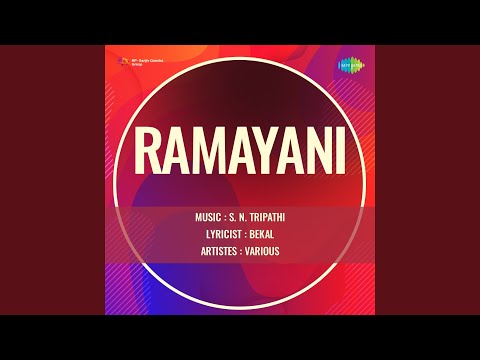
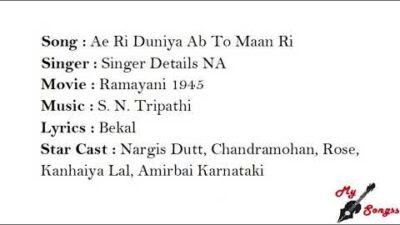
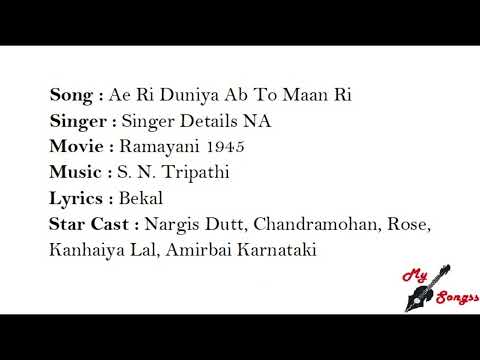
- ऐ री दुनिया अब तो मान री Ae Ri Duniya Ab To Maan Ri
- दीवानी श्याम मैं तो तेरी दीवानी Diwani Shyam Main To Teri Diwani
- उन्हें प्रेम से प्रेम सिखा दूँगी Unhen Prem Se Prem Sikha Doongi
- मेरे मन मंदिर की देवी Mere Mann Mandir Ki Devi स्वर: Hamida Banu, Pahari Sanyal
- मोरे राम मदद कर मोरी More Ram Madad Kar Mori
पट्टिका-लेख
The Monographपर्दे के पीछे Behind the Scenes
सर्वोत्तम बादामी ने 1930 के दशक में सागर मूवीटोन में सामाजिक फ़िल्मों से नाम कमाया था, और 'रामायणी' उनके निर्देशन-जीवन के अंतिम दौर की फ़िल्म है, जो 1940 के दशक में लगभग समाप्त हो गया। निर्माण की सबसे उल्लेखनीय दर्ज विशेषता इसका कास्टिंग है: पहाड़ी सान्याल कलकत्ता के न्यू थिएटर्स और उसकी अभिनेता-गायक परंपरा से आए थे; चंद्रमोहन उस दौर की सबसे प्रभावशाली उपस्थितियों में थे; और रोज़ मुस्लेह, 1911 में कलकत्ता के एक बग़दादी यहूदी परिवार में जन्मीं, मूक-युग की नृत्य के लिए प्रसिद्ध तारिका थीं, जिन्हें बोलती फ़िल्मों के आने पर हिंदी शुरू से सीखनी पड़ी। 'रामायणी' उनके अंतिम श्रेयों में से एक है। नरगिस तब किशोरावस्था में ही थीं।
अंग्रेज़ी में पढ़ें · Read in English
Sarvottam Badami had made his name at Sagar Movietone in the 1930s directing socials, and Ramayani sits late in a directing career that effectively ended in the 1940s. The casting is the most striking documented feature of the production: Pahari Sanyal came out of New Theatres in Calcutta and its actor-singer tradition; Chandra Mohan was among the most commanding presences of the period; and Rose Musleah, born in Calcutta in 1911 to a Baghdadi Jewish family, had been a star of the silent era known for dance before talkies forced her to learn Hindi from scratch. Ramayani is one of her late credits — she retired after a back injury from which she never recovered. Nargis, still in her teens, was at the very start of the career that would define the next two decades of Hindi cinema.
महत्व Significance
'रामायणी' एस. एन. त्रिपाठी के आरंभिक करियर के सबसे व्यस्त दौर से है: अकेले 1945 में उन्हें 'बचपन', 'जी हाँ', 'आधार' और 'रामायणी' मिलीं। बनारस में जन्मे त्रिपाठी ने लखनऊ के पंडित वी. एन. भातखंडे के मॉरिस कॉलेज में शास्त्रीय संगीत की शिक्षा ली और बंबई में पहला काम बॉम्बे टॉकीज़ में सरस्वती देवी के सहायक वायलिन-वादक के रूप में किया; स्वतंत्र संगीतकार वे 'चंदन' (1942) से ही बने थे। 'रामायणी' जैसी फ़िल्में पौराणिक और धार्मिक विषयों से उस जुड़ाव के आरंभ में हैं जिसने उनका शेष करियर तय किया: होमी वाडिया की 'श्री राम भक्त हनुमान' (1948) में उन्होंने संगीत भी दिया और परदे पर स्वयं हनुमान की भूमिका भी निभाई, जिसे उन्होंने 'हनुमान पाताल विजय' (1951) में दोहराया।
अंग्रेज़ी में पढ़ें · Read in English
Ramayani belongs to the busiest stretch of S. N. Tripathi's early career: 1945 alone brought him Bachpan, Ji Haan, Adhar and Ramayani. Tripathi — Benares-born, trained in classical music at Pandit V. N. Bhatkhande's Morris College in Lucknow, and first employed in Bombay as a violinist assisting Saraswati Devi at Bombay Talkies — had been an independent composer only since Chandan (1942). Assignments like Ramayani sit at the start of the association with mythological and religious subjects that defined the rest of his career: from Homi Wadia's Shri Ram Bhakta Hanuman (1948) he both composed the score and played Hanuman on screen himself, a role he returned to in Hanuman Patal Vijay (1951).
विरासत Legacy
किसी भी देखे गए स्रोत में 'रामायणी' का कोई बचा हुआ प्रिंट दर्ज नहीं है — इसकी अभिनेत्री रोज़ मुस्लेह पर विकिपीडिया का लेख कहता है कि उनकी केवल एक फ़िल्म 'नई कहानी' (1943) बची हुई ज्ञात है, और 'रामायणी' उनका अंतिम श्रेय है — इसलिए यह मुख्यतः एक सूची-प्रविष्टि के रूप में बची है — 'एनसाइक्लोपीडिया ऑफ़ इंडियन सिनेमा' में एक शीर्षक, 1945 की फ़िल्मोग्राफ़ी में एक पंक्ति, ग्रामोफ़ोन रजिस्टरों में नौ गीतों की सूची। आज इसका महत्व तीन कारणों से है: इस बात के प्रमाण के रूप में कि उद्योग ने 'राम राज्य' की सफलता की नक़ल कितनी तेज़ी से की; एस. एन. त्रिपाठी के धार्मिक-पौराणिक विषयों से लंबे जुड़ाव के आरंभिक श्रेय के रूप में; और किशोरी नरगिस के 1945 के कई श्रेयों में से एक के रूप में — 'तक़दीर' (1943) में उनकी पहली मुख्य भूमिका के दो वर्ष बाद और 1949 की 'अंदाज़'/'बरसात' की सफलता से चार वर्ष पहले; 'एनसाइक्लोपीडिया ऑफ़ इंडियन सिनेमा' इस दौर की फ़िल्मों को केवल मध्यम सफल बताता है। इसके नौ में से सात गीतों के खोए हुए गायक-श्रेय इस बात का छोटा-सा प्रतिनिधि उदाहरण हैं कि 1940 के दशक के मध्य के हिंदी फ़िल्म संगीत का प्रलेखन कितना क्षीण हो चुका है।
अंग्रेज़ी में पढ़ें · Read in English
No surviving print of Ramayani is recorded in any source consulted — Wikipedia's article on its cast member Rose Musleah states that the only one of her films known to survive is Nai Kahani (1943), and Ramayani is her last credit — so it survives chiefly as a catalogue entry — a title in the Encyclopedia of Indian Cinema, a row in the 1945 filmography, a nine-song list on the gramophone registers. Its interest today is threefold: as evidence of how quickly the industry moved to imitate Ram Rajya's success, as an early credit in S. N. Tripathi's long association with religious and mythological subjects, and as one of several 1945 credits for the teenaged Nargis, two years after her first leading role in Taqdeer (1943) and four before the Andaz/Barsaat breakthrough of 1949 — the Encyclopedia of Indian Cinema rates this group of films only moderately successful. The lost singer credits for seven of its nine songs are a small, representative instance of how thin the documentation of mid-1940s Hindi film music has become.
नमूना-पट्टी
The Specimen Table| शीर्षक | रामायणी · Ramayani |
|---|---|
| वर्ष · युग | 1945 — Pre Independence |
| निर्देशक | सर्वोत्तम बादामी · Sarvottam Badami |
| संगीत-निर्देशक | एस. एन. त्रिपाठी · S. N. Tripathi |
| गीतकार | बेकल · Bekal |
| कलाकार-मंडली | पहाड़ी सान्याल · Pahari Sanyal · नरगिस · Nargis · चंद्रमोहन · Chandra Mohan · रोज़ मुस्लेह · Rose Musleah · मोनी चटर्जी · Moni Chatterjee · कन्हैयालाल · Kanhaiyalal · प्रभा · Prabha · अमीरबाई कर्नाटकी · Amirbai Karnataki |
| निर्माण-गृह | Purnima Productions |
| लेबल | Columbia Records |
| शैली | Mythological · Drama |
| भाषा | hindi |
| प्रकार | कथा-चित्र (फ़ीचर) |
| गीत | 9 गीत — ऊपर पूरी संगीत-सूची |
जुड़े हुए पन्ने
Connected Plates · The Graph Made Visibleअटलस में कोई पन्ना अकेला नहीं — 'रामायणी' से उसके गीत, कलाकार, राग और युग, सब जुड़े हैं।
इस फ़िल्म के गीत · Songs of this Film
कलाकार · Cast & Crew
युग · The Era
साझा कीजिए · Share this Plate