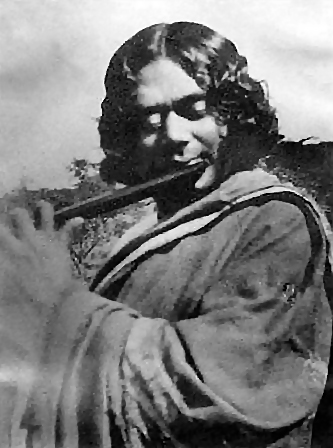
कलाकार विंग · कलाकार-पट्टिका · Artist Plate
काज़ी नज़रुल इस्लाम
Kazi Nazrul Islam
जन्म1899 — Churulia village, Asansol, Burdwan district, Bengal Presidency (present-day West Bengal, India)
निधन1976
जीवन-पट्टी
The Life Specimen| नाम | काज़ी नज़रुल इस्लाम · Kazi Nazrul Islam |
|---|---|
| जन्म | 1899 — Churulia village, Asansol, Burdwan district, Bengal Presidency (present-day West Bengal, India) |
| निधन | 1976 |
| भूमिकाएँ | गीतकार · संगीतकार |
पट्टिका-लेख
The Monographजीवनी Biography
काज़ी नज़रुल इस्लाम का जन्म 24 मई 1899 को बंगाल प्रेसीडेंसी के बर्दवान ज़िले के आसनसोल स्थित चुरुलिया गांव में एक बंगाली मुस्लिम परिवार में हुआ था। 1908 में पिता की मृत्यु के बाद, दस वर्षीय नज़रुल ने परिवार का भरण-पोषण करने के लिए एक मस्जिद के देखभालकर्ता और बाद में मुअज़्ज़िन का काम किया, और फिर एक घुमंतू लोक थिएटर मंडली में शामिल हो गए, जहाँ उन्होंने अभिनय, गीत-लेखन और नाट्य-लेखन सीखा। 1917 में उन्होंने ब्रिटिश भारतीय सेना में भर्ती होकर कराची में 49वीं बंगाल रेजिमेंट में सेवा दी और हवलदार के पद तक पहुंचे, तथा वहीं रहते हुए कविता और गद्य लिखना शुरू किया। 1920 में सेना से मुक्त होने के बाद, नज़रुल कलकत्ता में एक पत्रकार और कवि के रूप में बस गए, और 1922 में अपनी कविता 'विद्रोही' से बड़ी पहचान प्राप्त की, जिसने उन्हें भारतीय स्वतंत्रता आंदोलन के 'विद्रोही कवि' के रूप में ख्याति दिलाई। उन्होंने लगभग 4,000 गीत लिखे, जिन्हें सामूहिक रूप से 'नज़रुल गीति' कहा जाता है, और इनमें से कई ग्रामोफोन कंपनी ऑफ़ इंडिया द्वारा रिकॉर्ड किए गए; उन्होंने बंगाली भाषा में फ़ारसी और उर्दू काव्य रूपों को शामिल कर बंगाली ग़ज़ल रचनाओं की शुरुआत भी की। अपनी पत्रिका 'धूमकेतु' सहित अपने राष्ट्रवादी लेखन के कारण उन्हें 1923 में राजद्रोह के आरोप में जेल हुई। नज़रुल ने विद्यापति, पातालपुरी और गोरा सहित कई बंगाली फ़िल्मों में संगीत निर्देशक और गीतकार के रूप में काम किया, और 'ध्रुव' का निर्देशन कर किसी बंगाली फ़िल्म के पहले मुस्लिम निर्देशक बने; 1945 तक विभिन्न फ़िल्मों में उनके लगभग पचास गीतों का प्रयोग हो चुका था। 1942 में उन्हें पिक्स डिज़ीज़ नामक एक दुर्लभ तंत्रिका-अपक्षयी रोग हो गया, जिसने धीरे-धीरे उनकी वाणी और स्मरण-शक्ति छीन ली। 1972 में उन्हें नवस्वतंत्र बांग्लादेश लाया गया और 1976 में वहां की नागरिकता दी गई, जहां उन्हें राष्ट्रीय कवि का सम्मान मिला। 29 अगस्त 1976 को ढाका में उनका निधन हुआ और उन्हें ढाका विश्वविद्यालय की केंद्रीय मस्जिद के निकट दफ़नाया गया। उन्हें भारत का पद्म भूषण (1960) तथा बांग्लादेश का एकुशी पदक और स्वाधीनता पुरस्कार (1977) प्रदान किए गए।
अंग्रेज़ी में पढ़ें · Read in English
Kazi Nazrul Islam was born on 24 May 1899 in the village of Churulia in Asansol, Burdwan district of the Bengal Presidency, into a Bengali Muslim family. After his father's death in 1908, the ten-year-old Nazrul took on work as a mosque caretaker and later a muezzin to support his family, before joining a travelling folk theatre troupe where he learned acting, songwriting, and playwriting. In 1917 he enlisted in the British Indian Army, serving with the 49th Bengal Regiment in Karachi and rising to havildar, and began composing poetry and prose while stationed there.
After his 1920 discharge, Nazrul settled in Calcutta as a journalist and poet, achieving major recognition in 1922 with his poem "Bidrohi" (The Rebel), which won him renown as the "Bidrohi Kobi" (Rebel Poet) of the Indian independence movement. He wrote an estimated 4,000 songs, collectively known as Nazrul Geeti, many recorded by the Gramophone Company of India, and pioneered Bengali ghazal compositions by introducing Persian and Urdu poetic forms into Bengali literature. His nationalist writings, including in his magazine Dhumketu, led to his imprisonment on sedition charges in 1923.
Nazrul worked as a music director and lyricist for several Bengali film productions, including Vidyapati, Patalpuri, and Gora, and directed Dhruba, becoming the first Muslim director of a Bengali film; nearly fifty of his songs had been used across various films by 1945. In 1942 he contracted Pick's disease, a rare neurodegenerative condition that progressively robbed him of speech and cognition. Brought to the newly independent Bangladesh in 1972 and granted citizenship in 1976, he was honoured as that nation's national poet. He died in Dhaka on 29 August 1976 and was buried beside the central mosque of Dhaka University. His honours include India's Padma Bhushan (1960) and Bangladesh's Ekushey Padak and Independence Award (1977).
अन्य विवरण
More Details- Birth Year
- 1899
- Death Year
- 1976
अभिलेख-सार
Discography Summary| संग्रह में गीत | 14 — नीचे जुड़े हुए पन्नों में सूचीबद्ध |
|---|
अभिलेख व संदर्भ
Archives & References| विकिपीडिया | Wikipedia |
|---|
जुड़े हुए पन्ने
Connected Plates · The Graph Made Visibleअटलस में कोई पन्ना अकेला नहीं — काज़ी नज़रुल इस्लाम से उनके गीत, फ़िल्में, घराना, समकालीन और युग, सब यहाँ से खुलते हैं।
हस्ताक्षर-गीत · Signature Songs
फ़िल्में · The Films
साझा कीजिए · Share this Plate