सिनेमा विंग · फ़िल्म-पट्टिका · Film Plate
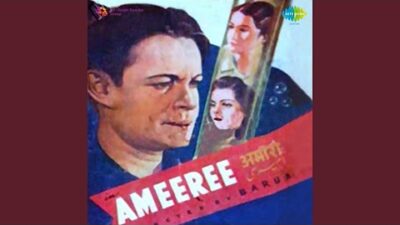
अमीरी
Amiree
शैलीSocial Drama · Musical
भाषाhindi प्रकारकथा-चित्र (फ़ीचर)
गीत9 — नीचे पूरी संगीत-सूची
कथा-सार
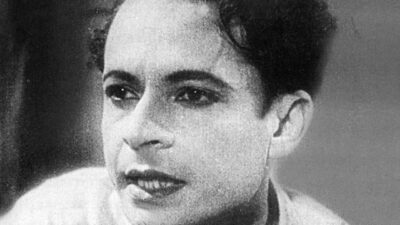
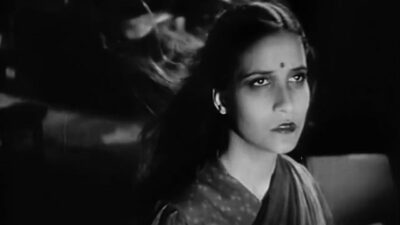
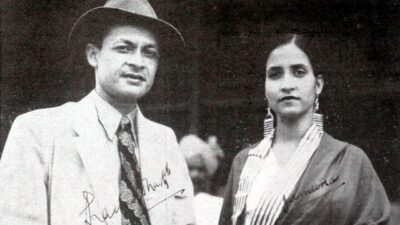
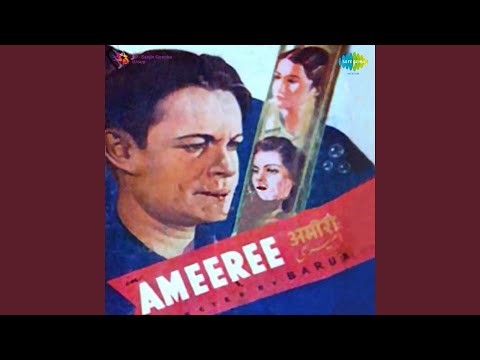
Synopsis'अमीरी' — शीर्षक का अर्थ है धन-सम्पन्नता, अमीर होने की अवस्था — 1945 की एक हिंदी सामाजिक फ़िल्म है, जिसका निर्देशन पी. सी. बरुआ ने किया और जिसमें नायक की भूमिका भी उन्होंने ही निभाई, अपनी पत्नी जमुना के साथ। यह फ़िल्म बरुआ के स्वतंत्र दौर की है — न्यू थिएटर्स छोड़ने के छह वर्ष बाद की, उस कलकत्ता स्टूडियो को छोड़ने के बाद जहाँ उन्होंने 'देवदास' (1935) बनाई थी और भारतीय सिनेमा के सबसे प्रशंसित निर्देशक-अभिनेता बने थे। 'अमीरी' की विस्तृत कथा किसी भी मानक संदर्भ-ग्रंथ में सुरक्षित नहीं है; तत्कालीन सूचियाँ इसे केवल 'सोशल' कहती हैं — यानी परिवार, पैसे और नैतिक चुनाव की समकालीन कहानी — और शीर्षक स्वयं उस अमीरी-ग़रीबी के विषय की ओर संकेत करता है जो उस दशक की अधिकांश बंगाल-निर्मित सामाजिक फ़िल्मों में चलता था। फ़िल्म बॉक्स ऑफ़िस पर बुरी तरह असफल रही और लगभग तुरंत ही परदे से ग़ायब हो गई। जो बचा, वह था उसका रिकॉर्ड-भंडार: कोलंबिया लेबल पर जारी नौ गीत, संगीतकार दक्षिणा मोहन टैगोर के।
अंग्रेज़ी में पढ़ें · Read in English
Amiree — the title means wealth, or the condition of being rich — is a 1945 Hindi social drama directed by P. C. Barua, who also took the male lead opposite his wife Jamuna. It was made in the freelance phase of Barua's career, six years after he had left New Theatres, the Calcutta studio where he had made Devdas (1935) and become the most admired director-actor in Indian cinema. No detailed plot summary of Amiree survives in the standard reference literature; contemporary listings classify it only as a 'social', the industry's label for a present-day drama of family, money and moral choice, and the title itself points at the wealth-and-poverty theme that ran through most Bengali-made socials of the decade. The film failed at the box office and disappeared almost immediately from circulation. What survived it was the record catalogue: nine songs issued on the Columbia label, composed by Dakshina Mohan Tagore.
संगीत-सूची
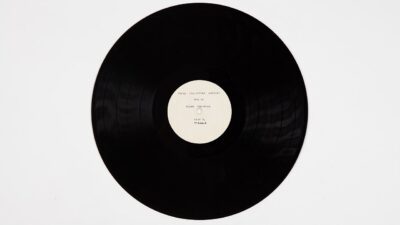
The Soundtrack'अमीरी' के नौ गीत दर्ज हैं, सभी दक्षिणा मोहन टैगोर के संगीत में। इनमें से किसी एक का भी गीतकार दर्ज नहीं है — 1945 की एक असफल फ़िल्म के मानकों से भी यह असामान्य रूप से पूरा रिक्त स्थान है, और हर ओर से इसकी पुष्टि होती है: 'हिंदी फ़िल्म गीत कोश' कोई गीतकार नहीं बताता, और विकिपीडिया की 1945 की हिंदी फ़िल्म-सूची में इस फ़िल्म का 'गीत' स्तंभ रिक्त है। गीत कोश गायकों के नाम भी नहीं देता — सदानंद कामथ इसका स्पष्ट उल्लेख करते हैं; जो छह गायक-श्रेय उपलब्ध हैं वे सारेगामा-आधारित माईस्वर/बॉलीस्वर सूची से आते हैं, और वही एकमात्र देखा गया स्रोत है जो फ़िल्म को कोई रिकॉर्ड लेबल — कोलंबिया — देता है। वे श्रेय हैं: तीन गीतों में नीलिमा बनर्जी, दो में रणजीत रॉय, और एक में जगमोहन सुरसागर, जो सूची में उनके मूल नाम जगन्मय मित्र से दर्ज हैं। हिंदीगीतमाला वही नौ-गीत सूची देती है, पर गायिका का नाम निर्मला बनर्जी लिखती है और उन्हें केवल एक ही गीत से जोड़ती है। जो दो गीत संग्राहकों के बीच फिर सामने आए हैं, वे एक ऐसे संगीतकार को दिखाते हैं जो पहचानने योग्य पूर्वी-भारतीय मुहावरे में काम कर रहा है: हल्की, मधुर रूप से पारदर्शी रचना, जिसकी धुन और वाद्य-सज्जा दोनों में श्रोताओं ने विशिष्ट बंगाली रंग पाया है — नौशाद के उन्हीं वर्षों में बंबई पर छाते लखनऊ-पंजाब संश्लेषण से कहीं अधिक कलकत्ता के आधुनिक गान के निकट।
अंग्रेज़ी में पढ़ें · Read in English
Nine songs are recorded for Amiree, all composed by Dakshina Mohan Tagore. The lyricist is not named for a single one of them — an unusually complete gap even by the standards of a 1945 flop, and one confirmed on every side: the Hindi Film Geet Kosh names no lyricist, and Wikipedia's list of 1945 Hindi films leaves the film's Lyrics field blank. HFGK does not name the singers either, as Sadanand Kamath notes explicitly; the six singer credits that do exist come from the Saregama-derived MySwar/BollySwar catalogue, which is also the only consulted source that attributes a record label to the film — Columbia. Those credits are Neelima Banerjee on three songs, Ranjit Roy on two, and Jagmohan Sursagar, catalogued under his birth name Jaganmay Mitra, on one. HindiGeetMala carries the same nine-track list but names the female singer Nirmala Banerjee and attaches her to one song only. The two songs that have resurfaced in the collectors' circuit show a composer working in a recognisably eastern-Indian idiom: light, melodically transparent writing with what listeners have described as a distinctly Bengali flavour in both tune and orchestration, closer to the Calcutta adhunik song than to the Lucknow-Punjab synthesis that Naushad was making dominant in Bombay in the same years.
- आओ मन बहलायें साजन Aao Mann Bahlayen Saajan स्वर: नीलिमा बनर्जी
- आई सुहानी ऋतु आई Aayi Suhani Ritu Aayi स्वर: नीलिमा बनर्जी
- चकई के चकदुम Chakai Ke Chakadum स्वर: रणजीत रॉय
- देखो देखो साजन मोरे Dekho Dekho Saajan More
- डूब गये डूब गये तूफ़ान उठा फिर आस गई Doob Gaye Doob Gaye Toofan Utha Phir Aas Gayi स्वर: Jagmohan Sursagar
- गोरे गोरे गालों ने Gore Gore Gaalon Ne
- हालत से जिनकी ग़ाफ़िल रहता है Haalat Se Jinki Gafil Rahta Hai
- जो भी झोंका हवा का आता है Jo Bhi Jhonka Hawa Ka Aata Hai स्वर: नीलिमा बनर्जी

- उपदेश यही है सफ़ाई किया करो Updesh Yahi Hai Safai Kiya Karo स्वर: रणजीत रॉय
पट्टिका-लेख
The Monographपर्दे के पीछे Behind the Scenes
1945 तक पी. सी. बरुआ उस स्थान से बहुत दूर काम कर रहे थे जो दस साल पहले उनका था। उन्होंने 1939 में न्यू थिएटर्स छोड़ दिया था और उसके बाद स्वतंत्र रूप से काम कर रहे थे; जो फ़िल्में आगे आईं उनमें केवल 'शेष उत्तर / जवाब' (1942) ने वास्तविक ध्यान खींचा। वे बहुत शराब पीने लगे थे, स्वास्थ्य बिगड़ रहा था, और 1951 में अड़तालीस वर्ष की आयु में उनका निधन हुआ। 'अमीरी' 1945 की उनकी इकलौती रिलीज़ थी। निर्माण-संस्था के नाम में स्रोतों के बीच मतभेद है — गीत-सूची के स्रोत 'एशियाटिक पिक्चर्स' देते हैं जबकि फ़िल्म-ब्लॉग और जनगणना-स्रोत 'एसोसिएट (या एसोसिएटेड) पिक्चर्स लिमिटेड, कलकत्ता' — और यह विसंगति यहाँ हल नहीं की गई है। कास्टिंग का एक विवरण उल्लेखनीय है: रणजीत रॉय अभिनेताओं की सूची में भी हैं और दो गीतों के श्रेय-प्राप्त गायक भी, जिसका इस समय की कलकत्ता-निर्मित फ़िल्म में प्रायः अर्थ यह होता है कि वे पार्श्वगायक नहीं बल्कि परदे पर अपने ही गीत गाने वाले अभिनेता-गायक थे।
अंग्रेज़ी में पढ़ें · Read in English
By 1945 P. C. Barua was working far from the position he had held ten years earlier. He had left New Theatres in 1939 and freelanced thereafter; of the films that followed, only Shesh Uttar / Jawab (1942) drew real attention. He was drinking heavily, his health was failing, and he would die in 1951 at forty-eight. Amiree was his single release of 1945. The production company is recorded inconsistently — song-catalogue sources give Asiatic Pictures while film-blog and census sources give Associate (or Associated) Pictures Ltd., Calcutta — and the discrepancy has not been resolved here. One detail of the casting is worth noting: Ranjit Roy appears both in the cast list and as the credited singer of two songs, which in a Calcutta production of this date usually means an actor-singer performing his own numbers on screen rather than a playback voice.
महत्व Significance
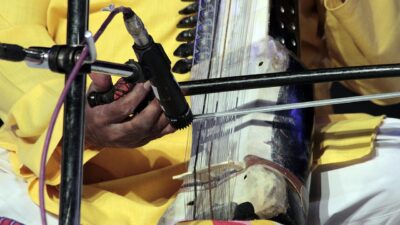
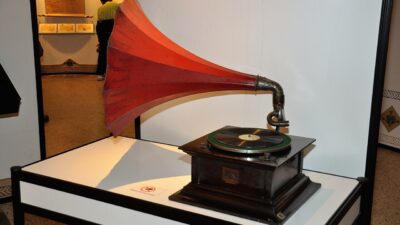
आज 'अमीरी' का महत्व लगभग पूरी तरह संगीत-सम्बन्धी और अभिलेखीय है। दक्षिणा मोहन टैगोर (1916-1986) बीसवीं सदी के भारतीय संगीत के सबसे असाधारण वादकों में से एक थे: कलकत्ता के टैगोर परिवार में जन्मे, उन्हें इसराज में ग्रामोफ़ोन-हॉर्न का ध्वनि-विस्तारक जोड़कर 'तार शहनाई' बनाने का श्रेय दिया जाता है — एक ऐसा वाद्य जिसका स्वर शहनाई से भी अधिक तीखा और करुण है। आगे चलकर उन्होंने यही वाद्य एस. डी. बर्मन, ओ. पी. नय्यर और आर. डी. बर्मन के लिए बजाया, बिमल रॉय की फ़िल्मों के पार्श्व-संगीत में बजाया, और सबसे प्रसिद्ध रूप से रवि शंकर के 'पथेर पांचाली' (1955) के संगीत में। लेकिन संगीत निर्देशक के रूप में उनकी केवल एक ही प्रदर्शित हिंदी फ़िल्म है — और वह यही है। इस तरह 'अमीरी' भारतीय सिनेमा की एक बड़ी वाद्य-आवाज़ को संगीतकार की भूमिका में देखने का इकलौता बचा हुआ दस्तावेज़ है। साथ ही यह बरुआ-जमुना की उस परदे की जोड़ी का एक अंतिम अध्याय भी है जिसने न्यू थिएटर्स के सबसे चर्चित दशक को परिभाषित किया था।
अंग्रेज़ी में पढ़ें · Read in English
The importance of Amiree today is almost entirely musical and archival. Dakshina Mohan Tagore (1916-1986) was one of the most unusual instrumentalists in twentieth-century Indian music: born into the Tagore family of Calcutta, he is credited with modifying the esraj by fitting it with a gramophone-horn amplifier to make the taar shehnai, an instrument with a more piercing, grief-carrying tone than the shehnai itself. He went on to play it for S. D. Burman, O. P. Nayyar and R. D. Burman, in the background scores of Bimal Roy's films, and — most famously — in Ravi Shankar's score for Pather Panchali (1955). But he worked as a film music director on exactly one released Hindi picture, and this is it. Amiree is therefore the only surviving document of a major instrumental voice of Indian cinema functioning as a composer. It is also a late chapter in the Barua-Jamuna screen partnership that had defined New Theatres' most celebrated decade.
विरासत Legacy
'अमीरी' ने न आलोचनात्मक छाप छोड़ी न व्यावसायिक; इसे केवल रिकॉर्ड-सूचीकार और 1940 के दशक के हिंदी फ़िल्मी रिकॉर्ड खोजने वाले थोड़े-से श्रोता याद रखते हैं। इसके नौ गीतों में से केवल दो पिछले दो दशकों में सार्वजनिक रूप से फिर सामने आए हैं, दोनों अभिलेखीय ब्लॉग 'अतुल्स सॉन्ग अ डे' के माध्यम से — 2016 में 'आई सुहानी ऋतु आई' और 2021 में 'आओ मन बहलायें साजन' — और इन दोनों में से पहले, 'आई सुहानी ऋतु आई', के गायक की पहचान पर आज भी बहस है: सारेगामा/एचएमवी की सूची नीलिमा बनर्जी का नाम देती है, जबकि स्वर-पहचान के एक विशेषज्ञ (जयरामन, सदानंद कामथ द्वारा उद्धृत) सुप्रभा सरकार का नाम प्रस्तावित करते हैं। दक्षिणा मोहन टैगोर ने फिर कभी किसी प्रदर्शित हिंदी फ़िल्म का संगीत नहीं रचा; वर्षों बाद उन्हें 'रामदूत हनुमान' मिली, पर वह फ़िल्म अप्रदर्शित रह गई और केवल उसके रिकॉर्ड जारी हुए। वे उसी वाद्य की ओर लौट गए जिसने उन्हें नाम दिया था, कलकत्ता में आकाशवाणी से जुड़े, बंबई में अन्नपूर्णा देवी के शिष्य बने, और बंबई के स्टूडियो-संगीतकारों के बीच 'दुखीदा' कहलाए — उस शोक-भरे स्वर के कारण जो वे तार शहनाई से निकाल सकते थे।
अंग्रेज़ी में पढ़ें · Read in English
Amiree left no critical or commercial footprint; it is remembered only by discographers and by the small community of listeners who track down 1940s Hindi film records. Of its nine songs, just two have resurfaced publicly in the last two decades, both through the archival blog Atul's Song A Day — 'Aayi Suhani Ritu Aayi' in 2016 and 'Aao Mann Bahlayen Saajan' in 2021 — and for the earlier of the two, 'Aayi Suhani Ritu Aayi', the singer's identity is still argued over: the Saregama/HMV listing names Neelima Banerjee, while a voice-identification specialist (Jayraman, reported by Sadanand Kamath) proposes Suprabha Sarkar instead. Dakshina Mohan Tagore never composed for a released Hindi film again; he was offered Ramdoot Hanuman years later, but that picture went unreleased and only its records appeared. He returned to the instrument that made his name, joined All India Radio in Calcutta, became a disciple of Annapurna Devi in Bombay, and was known among Bombay's studio musicians as 'Dukhida' — the sorrowful one — for the mourning tone he could draw out of the taar shehnai.
अन्य विवरण
More Details- https://myswar.co/album/ameeri-1945
- https://en.wikipedia.org/wiki/List_of_Hindi_films_of_1945
- https://bombaymann2.blogspot.com/2020/08/film-amiree1945.html
- https://atulsongaday.me/list-of-songs-moviewise/
- https://atulsongaday.me/2016/12/21/aayi-aayi-suhaani-ritu-aayi/
- https://atulsongaday.me/2021/09/07/aao-man-bahlaayen-saajan/
- https://pakmag.net/film/predetails.php?pid=2612
- https://en.wikipedia.org/wiki/Pramathesh_Barua
- https://indiancine.ma/ECZ
- https://www.hindigeetmala.net/movie/ameeri_1945.htm
- https://en.wikipedia.org/wiki/Tar_shehnai
- https://en.wikipedia.org/wiki/Jagmohan_Sursagar
- https://en.wikipedia.org/wiki/Annapurna_Devi
References
नमूना-पट्टी
The Specimen Table| शीर्षक | अमीरी · Amiree |
|---|---|
| वर्ष · युग | 1945 — Pre Independence |
| निर्देशक | पी. सी. बरुआ · P. C. Barua |
| संगीत-निर्देशक | दक्षिणा मोहन टैगोर · Dakshina Mohan Tagore |
| कलाकार-मंडली | पी. सी. बरुआ · P. C. Barua · जमुना · Jamuna · रमोला · Ramola · मोलिना · Molina · माया बनर्जी · Maya Banerjee · अहीन्द्र चौधरी · Ahindra Choudhury · सैलेन चौधरी · Sailen Choudhury · राजलक्ष्मी · Rajlakshmi · वीणा · Veena · फणी राय · Phani Rai |
| निर्माण-गृह | Asiatic Pictures |
| शैली | Social Drama · Musical |
| भाषा | hindi |
| प्रकार | कथा-चित्र (फ़ीचर) |
| गीत | 9 गीत — ऊपर पूरी संगीत-सूची |
जुड़े हुए पन्ने
Connected Plates · The Graph Made Visibleअटलस में कोई पन्ना अकेला नहीं — 'अमीरी' से उसके गीत, कलाकार, राग और युग, सब जुड़े हैं।
इस फ़िल्म के गीत · Songs of this Film
कलाकार · Cast & Crew
युग · The Era
साझा कीजिए · Share this Plate