सिनेमा विंग · फ़िल्म-पट्टिका · Film Plate
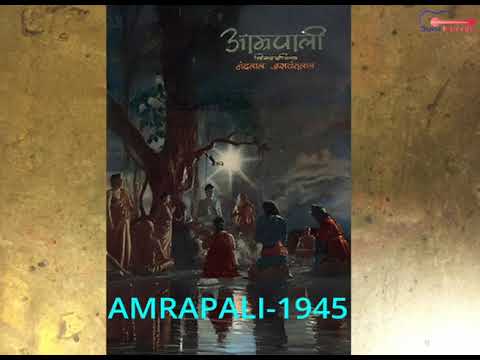
आम्रपाली
Amrapali
शैलीCostume Drama · Historical · Drama
भाषाhindi प्रकारकथा-चित्र (फ़ीचर)
गीत11 — नीचे पूरी संगीत-सूची
कथा-सार
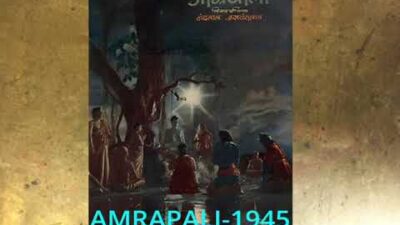
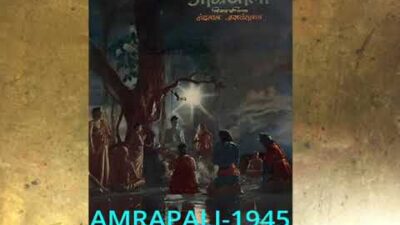
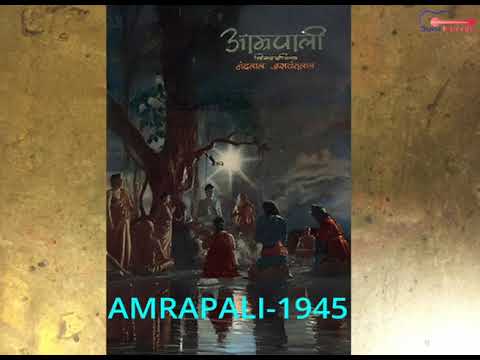
Synopsis'आम्रपाली' (1945) नंदलाल जसवंतलाल द्वारा निर्देशित एक कॉस्ट्यूम ड्रामा है, जो प्राचीन वैशाली की नगरवधू आम्रपाली (अम्बपाली) की कथा पर आधारित है। परंपरागत वृत्तांत के अनुसार वह अपने युग की सर्वाधिक सम्मानित गणिका और राजनर्तकी थी, जिसका वैभव किसी राज्य के बराबर कहा जाता था, और जिसका जीवन तब बदल गया जब उसने वैशाली में बुद्ध का उपदेश सुना, नगर के श्रेष्ठियों के विरोध के बावजूद उन्हें अपने घर भोजन के लिए आमंत्रित किया, और उसके बाद अपना आम्रवन तथा समस्त संपत्ति संघ को दान कर दी। यह फ़िल्म 1940 के दशक के मध्य में बंबई के स्टूडियो द्वारा बनाई गई पौराणिक और ऐतिहासिक 'कॉस्ट्यूम' फ़िल्मों की लहर का हिस्सा है; इसमें सबिता देवी, प्रेम अदीब, जीवन, अरुण, जगदीश सेठी, बद्री प्रसाद, गुलाब और संकठा प्रसाद हैं। इसका कोई प्रिंट प्रचलन में ज्ञात नहीं है और बचा हुआ प्रलेखन अल्प है: आज यह मुख्यतः अपनी ग्यारह गीतों की सूची से जानी जाती है, जिसका संगीत सरस्वती देवी ने रचा और बोल कवि प्रदीप ने लिखे।
अंग्रेज़ी में पढ़ें · Read in English
Amrapali is a 1945 costume drama directed by Nandlal Jaswantlal, drawn from the legend of Amrapali (Ambapali), the celebrated nagarvadhu — 'bride of the city' — of the ancient Licchavi republic of Vaishali. In the traditional account she was the most honoured courtesan and court dancer of her age, a woman whose wealth was said to rival a kingdom's, and whose life turned when she heard the Buddha preach at Vaishali, invited him to dine at her house against the objections of the city's nobles, and afterwards gave away her mango grove and her entire fortune to his order. The film belongs to the wave of mythological and historical 'costume' pictures that Bombay studios produced through the mid-1940s, and is cast with Sabita Devi, Prem Adib, Jeevan, Arun, Jagdish Sethi, Badri Prasad, Gulab and Sankatha Prasad. No print is known to be in circulation and the surviving documentation is thin: the film is known today chiefly through its eleven-song record list, composed by Saraswati Devi to lyrics by Kavi Pradeep.
संगीत-सूची
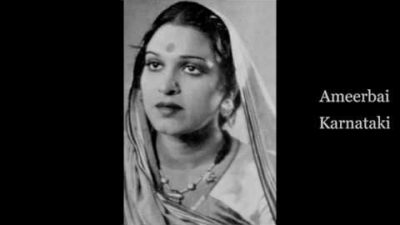
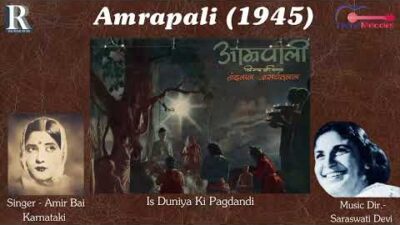
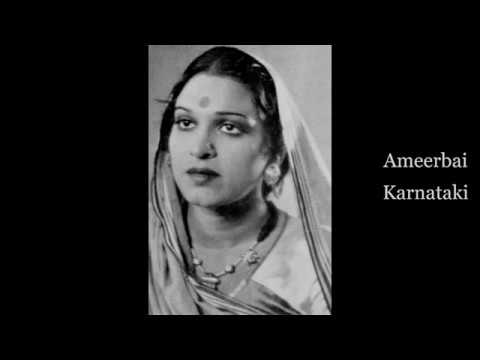
The Soundtrack'आम्रपाली' के लिए रिकॉर्ड पर ग्यारह गीत प्रलेखित हैं, सभी का संगीत सरस्वती देवी का, और फ़िल्म के गीतकार के रूप में कवि प्रदीप का नाम दर्ज है — एचएफ़जीके-आधारित सूचियों के अनुसार उन्होंने ये गीत 'मिस कमल बी.ए.' के छद्म नाम से लिखे। इनमें से छह पर गायिका के रूप में अमीरबाई कर्नाटकी का नाम है — 'इस दुनिया की पगडंडी पर', 'मुझे नैनों के बंधन', 'रुनक झुनक चपल चरण नाच', 'उड़ जाऊँ रे मैं तो तारों की दुनिया में', 'पिया मेरे साथ रहेंगे' और 'अँखड़ियों का नीर पोंछ ले' — यानी यह व्यावहारिक रूप से अमीरबाई का एल्बम है। शेष पाँच के गायक, जिनमें देवी-स्तुति 'खड्गधारी विजयकारिणी महाशक्ति माता' और भजन 'भगत तेरे भाग जागेंगे' शामिल हैं, देखी गई सूचियों में दर्ज नहीं हैं और उन्हें अनुमान से भरने के बजाय यहाँ ख़ाली छोड़ा गया है। 'उड़ जाऊँ रे मैं तो तारों की दुनिया में' अकेला ऐसा गीत है जिसके साथ परदे के कलाकार भी सूचीबद्ध हैं — सबिता देवी, प्रेम अदीब, जीवन और बद्री प्रसाद — और हिंदीगीतमाला पर ग्यारह में सबसे अधिक श्रोता-मत इसी को मिले हैं; संभवतः यही फ़िल्म का प्रचारित गीत था।
अंग्रेज़ी में पढ़ें · Read in English
Eleven songs are documented on record for Amrapali, all composed by Saraswati Devi, with Kavi Pradeep credited as the film's lyricist — HFGK-derived listings add that he wrote them under the pen-name 'Miss Kamal B.A.'. Amirbai Karnataki is named as the singer on six of them — 'Is Duniya Ki Pagdandi Par', 'Mujhe Naino Ke Bandhan', 'Runak Jhunak Chapal Charan Naach', 'Ud Jaoon Re Main To Taaron Ki Duniya Mein', 'Piya Mere Saath Rahenge' and 'Ankhdiyon Ka Neer Ponch Le' — which makes this effectively an Amirbai album. The singers of the remaining five, including the Devi invocation 'Khadagdhari Vijaykarni Mahashakti Mata' and the bhajan 'Bhagat Tere Bhag Jagenge', are not recorded in the catalogues consulted and have been left blank here rather than guessed. 'Ud Jaoon Re Main To Taaron Ki Duniya Mein' is the only track for which on-screen performers are also listed — Sabita Devi, Prem Adib, Jeevan and Badri Prasad — and it carries the most listener votes of the eleven on hindigeetmala, which suggests it was the promoted number.
- इस दुनिया की पगडंडी पर Is Duniya Ki Pagdandi Par स्वर: Amirbai Karnataki
- मुझे नैनों के बंधन Mujhe Naino Ke Bandhan स्वर: Amirbai Karnataki

- रुनक झुनक चपल चरण नाच Runak Jhunak Chapal Charan Naach स्वर: Amirbai Karnataki
- उड़ जाऊँ रे मैं तो तारों की दुनिया में Ud Jaoon Re Main To Taaron Ki Duniya Mein स्वर: Amirbai Karnataki
- पिया मेरे साथ रहेंगे Piya Mere Saath Rahenge स्वर: Amirbai Karnataki
- अँखड़ियों का नीर पोंछ ले Ankhdiyon Ka Neer Ponch Le स्वर: Amirbai Karnataki
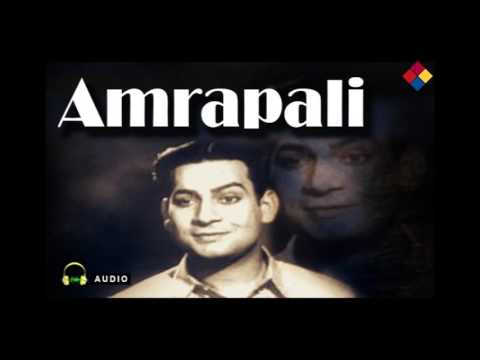
- आज अपने घर में Aaj Apne Ghar Mein
- अंधकार है मेरे चारों ओर Andhakar Hai Mere Charon Ore
- भगत तेरे भाग जागेंगे Bhagat Tere Bhag Jagenge
- खड्गधारी विजयकारिणी महाशक्ति माता Khadagdhari Vijaykarni Mahashakti Mata
- मैं तो ना बोलूँ Main To Na Boloon

पट्टिका-लेख
The Monographपर्दे के पीछे Behind the Scenes
सरस्वती देवी का जन्म-नाम ख़ुर्शीद मीनोचर-होमजी था; 1912 में एक पारसी परिवार में जन्मीं और विष्णु नारायण भातखंडे से हिंदुस्तानी शास्त्रीय संगीत की शिक्षा पाई। हिमांशु राय ने उनकी और उनकी बहन की रेडियो प्रस्तुतियाँ सुनीं — दोनों 'होमजी सिस्टर्स' के नाम से प्रस्तुत होती थीं — और 1935 में उन्हें बॉम्बे टॉकीज़ लाए, जिससे वे किसी बड़े स्टूडियो के संगीत विभाग की प्रमुख बनने वाली पहली महिला हुईं और सामान्य गणना के अनुसार हिंदी सिनेमा की पहली महिला संगीत निर्देशक; 'अछूत कन्या' (1936) का संगीत वह काम है जिससे उन्हें याद किया जाता है। 1940 के दशक के मध्य तक वे स्टूडियो छोड़कर बाहर के काम ले रही थीं, जिनमें 'आम्रपाली' (1945) 'डॉ. कुमार' (1944) और 'महारानी मृणाल देवी' (1946) के बीच आती है। यहाँ उनके गीतकार कवि प्रदीप पिछले दो वर्षों का कुछ हिस्सा जनता की नज़रों से दूर रहकर बिता चुके थे, क्योंकि 'किस्मत' के गीत पर औपनिवेशिक सरकार ने वारंट जारी कर दिया था। निर्देशक नंदलाल जसवंतलाल तब अपने करियर के शिखर से बहुत दूर थे: वे आगे चलकर फ़िल्मिस्तान के लिए 'अनारकली' (1953) और 'नागिन' (1954) बनाने वाले थे — उस दशक की दो सबसे बड़ी संगीत-सफलताएँ।
अंग्रेज़ी में पढ़ें · Read in English
Saraswati Devi was born Khorshed Minocher-Homji into a Parsi family in 1912 and trained in Hindustani classical music under Vishnu Narayan Bhatkhande. Himanshu Rai heard her radio broadcasts with her sister — the two were billed as the Homji Sisters — and brought her to Bombay Talkies in 1935, making her the first woman to head a major studio's music department and, by the usual reckoning, the first woman to work as a music director in Hindi cinema; her score for Achhut Kanya (1936) is the work she is remembered by. By the mid-1940s she had left the studio and was taking outside assignments, of which Amrapali (1945) sits between Dr Kumar (1944) and Maharani Mrinal Devi (1946). Her lyricist here, Kavi Pradeep, had spent part of the preceding two years out of public view after the colonial government issued a warrant over the Kismet song. The director Nandlal Jaswantlal was then far from the peak of his career: he would go on to make Anarkali (1953) and Nagin (1954) for Filmistan, two of the decade's biggest musical successes.
महत्व Significance
'आम्रपाली' उन गिनी-चुनी फ़िल्मों में से एक है जिनका संगीत सरस्वती देवी ने बॉम्बे टॉकीज़ के वर्षों के बाद रचा — उन्हें प्रायः हिंदी सिनेमा की पहली महिला संगीत निर्देशक कहा जाता है — यद्यपि जद्दनबाई और बिब्बो भी उन्हीं वर्षों में संगीत रच रही थीं — और 1945 तक स्वतंत्र रूप से काम कर रही थीं, इसलिए इस दौर का हर बचा हुआ श्रेय उनके अभिलेख के लिए महत्त्वपूर्ण है। यह उन्हें कवि प्रदीप के साथ उनके करियर के एक ख़ास क्षण में जोड़ती है: 'किस्मत' (1943) के 'दूर हटो ऐ दुनियावालो' के दो वर्ष बाद, जिसने उनके सिर पर ब्रिटिश गिरफ़्तारी-वारंट ला दिया था। 1945 की किसी एक फ़िल्म के लिए ग्यारह गीतों की यह सूची असामान्य रूप से विविध है — एक नृत्य-गीत और मान के गीत से लेकर चिंतनशील रचनाएँ, एक भजन और एक रणचंडी-स्तुति तक — यह इसका अच्छा नमूना है कि उस दौर की कॉस्ट्यूम फ़िल्म अपने संगीतकार से क्या-क्या माँगती थी।
अंग्रेज़ी में पढ़ें · Read in English
Amrapali is one of the small number of films Saraswati Devi scored after her Bombay Talkies years — she is usually named the first woman to work as a music director in Hindi cinema — though Jaddanbai and Bibbo were composing in the same years — and by 1945 was working freelance, so every surviving credit from this period matters to her record. It also pairs her with Kavi Pradeep at a particular moment in his career: two years after 'Door Hato Ae Duniyawalon' in Kismet (1943) had brought a British arrest warrant on his head. The eleven-song list is unusually wide for a single 1945 picture, running from a dance number and a maan song through philosophical lyrics and a bhajan to a martial Devi stuti — a useful cross-section of what a mid-1940s costume film asked its composer to cover.
विरासत Legacy
फ़िल्म स्वयं व्यावहारिक रूप से लुप्त हो चुकी है; जो बचा है वह उसकी ग्रामोफ़ोन रिकॉर्ड-सूची है, और वह सूची मुख्यतः दो करियरों के एक विशेष क्षण के प्रलेखन के रूप में उपयोगी है — बॉम्बे टॉकीज़ के बाद सरस्वती देवी का 1940 के दशक के मध्य का स्वतंत्र दौर, और युद्धकालीन बंबई की सबसे अधिक रिकॉर्ड की जाने वाली स्त्री-आवाज़ों में से एक के रूप में अमीरबाई कर्नाटकी का दौर, ठीक उन बरसों में जब लता मंगेशकर के आगमन ने यह क्षेत्र बदल दिया। ग्यारह में से कोई भी गीत 1940 के दशक के मानक पुनरुद्धार-भंडार में नहीं पहुँचा। आम्रपाली की कथा इक्कीस वर्ष बाद लेख टंडन की रंगीन फ़िल्म 'आम्रपाली' (1966) के रूप में हिंदी सिनेमा में लौटी, जिसने जनस्मृति में इस पुरानी फ़िल्म को लगभग पूरी तरह विस्थापित कर दिया — यहाँ तक कि आज 'आम्रपाली' खोजने पर सूचियाँ पहले 1966 वाली फ़िल्म ही दिखाती हैं।
अंग्रेज़ी में पढ़ें · Read in English
The film itself has effectively vanished; what survives is its gramophone record list, and that list is useful mainly as documentation of two careers at a particular moment — Saraswati Devi's freelance mid-1940s period after Bombay Talkies, and Amirbai Karnataki's run as one of the most-recorded female voices of wartime Bombay, in the seasons just before Lata Mangeshkar's arrival redrew the field. None of the eleven songs entered the standard 1940s revival repertoire. The Amrapali legend returned to Hindi cinema twenty-one years later as Lekh Tandon's colour production Amrapali (1966), which has almost entirely displaced this earlier version in public memory — to the point that catalogue searches for 'Amrapali' now return the 1966 film first.
अन्य विवरण
More Details- https://atulsongaday.me/2025/06/22/udd-jaaoon-re-main-to-taaaron-kee-duniya-mein-udd-jaaoon-re/
- https://atulsongaday.me/2025/11/18/mujhko-nainon-ke-bandhan-se-kas-gaya-re/
- https://commons.wikimedia.org/wiki/File:Sabita_Devi_in_%22Teen_Sau_Din_Ke_Baad%22.jpg
- https://en.wikipedia.org/wiki/Ambapali
- https://en.wikipedia.org/wiki/Kavi_Pradeep
- https://en.wikipedia.org/wiki/List_of_Hindi_films_of_1945
- https://en.wikipedia.org/wiki/Saraswati_Devi_(music_director)
- https://www.bollywoodmdb.com/movie/amrapali-13123/cast-crew
- https://www.cinemaazi.com/film/amrapali
- https://www.hindigeetmala.net/movie/amrapali.htm
- https://www.imdb.com/title/tt0037513/
References
नमूना-पट्टी
The Specimen Table| शीर्षक | आम्रपाली · Amrapali |
|---|---|
| वर्ष · युग | 1945 — Pre Independence |
| निर्देशक | नंदलाल जसवंतलाल · Nandlal Jaswantlal |
| संगीत-निर्देशक | सरस्वती देवी · Saraswati Devi |
| गीतकार | कवि प्रदीप · Kavi Pradeep |
| कलाकार-मंडली | सबिता देवी · Sabita Devi · प्रेम अदीब · Prem Adib · जीवन · Jeevan · अरुण · Arun · जगदीश सेठी · Jagdish Sethi · बद्री प्रसाद · Badri Prasad · गुलाब · Gulab · संकठा प्रसाद · Sankatha Prasad |
| निर्माण-गृह | Murli Movietone, Bombay |
| शैली | Costume Drama · Historical · Drama |
| भाषा | hindi |
| प्रकार | कथा-चित्र (फ़ीचर) |
| गीत | 11 गीत — ऊपर पूरी संगीत-सूची |
जुड़े हुए पन्ने
Connected Plates · The Graph Made Visibleअटलस में कोई पन्ना अकेला नहीं — 'आम्रपाली' से उसके गीत, कलाकार, राग और युग, सब जुड़े हैं।
इस फ़िल्म के गीत · Songs of this Film
कलाकार · Cast & Crew
युग · The Era
साझा कीजिए · Share this Plate