गीत विंग · गीत-पट्टिका · Song Plate
डूब गये डूब गये तूफ़ान उठा फिर आस गई
Doob Gaye Doob Gaye Toofan Utha Phir Aas Gayi
तूफ़ान उठता है, नाव डूब जाती है, आस भी साथ चली जाती है — 'अमीरी' का निराशा-गीत, और फ़िल्म का वह इकलौता गीत जो सचमुच एक प्रसिद्ध आवाज़ ने गाया।
भावतीव्र · उदास · दार्शनिक
भाषाhindi गतिधीमी स्वरूपएकल पुरुष
श्रेय
The Creditsसूत्र-वाक्य · The Hook
सूत्र-वाक्य
तूफ़ान उठता है, नाव डूब जाती है, आस भी साथ चली जाती है — 'अमीरी' का निराशा-गीत, और फ़िल्म का वह इकलौता गीत जो सचमुच एक प्रसिद्ध आवाज़ ने गाया।
In EnglishThe storm rises, the boat goes down, hope goes with it — Amiree's song of despair, and the one number in the film sung by a genuinely famous voice.
पट्टिका-लेख
The Monographपरिचय Overview
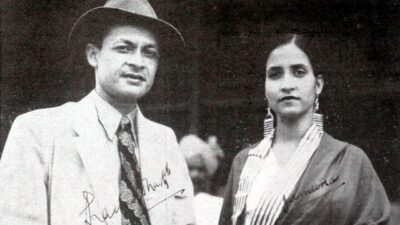
'अमीरी' के संगीत का सबसे वज़नदार श्रेय। गायक हैं जगमोहन सुरसागर (1918-2003), जिन्हें रिकॉर्ड पर उनके मूल नाम जगन्मय मित्र से श्रेय मिला है — कलकत्ता में जन्मे वह सुगम-संगीत गायक जो उसी वर्ष 'मेघदूत' के लिए 'ओ वर्षा के पहले बादल' रिकॉर्ड करते, 1955 में 'सरदार' के लिए लता मंगेशकर हेतु 'प्यार की ये तल्ख़ियाँ' रचते, और 1999 में पद्मश्री पाते। गीतकार, इस फ़िल्म में हर जगह की तरह, अज्ञात है।
अंग्रेज़ी में पढ़ें · Read in English
The most substantial credit on Amiree's soundtrack. The singer is Jagmohan Sursagar (1918-2003), credited on the disc under his birth name Jaganmay Mitra — the Calcutta-born light-music singer who would go on to record 'O Varsha Ke Pahle Badal' for Meghdoot the same year, compose 'Pyar Ki Yeh Talkhiyan' for Lata Mangeshkar in Sardar (1955), and receive the Padma Shri in 1999. The lyricist, as everywhere in this film, is unrecorded.
संगीत The Music
इस गीत का कोई ऑडियो नहीं मिला, इसलिए रिकॉर्डिंग से इसकी स्वर-रचना का वर्णन संभव नहीं। जो दर्ज है वह गीत-सूचियों में इसका वर्गीकरण है — सुगम संगीत के मुहावरे में एक फ़िल्मी रचना, यानी संयत, अनुद्विग्न गायकी और विरल संगत वाली वह बंगाल-मूल शैली जिस पर जगमोहन सुरसागर ने 1945 तक अपनी प्रतिष्ठा खड़ी कर ली थी। धीमा, ठहरा हुआ बरताव उस मुहावरे और शीर्षक के विषय — दोनों के अनुकूल है, और यहाँ लय उसी आधार पर दर्ज है, अनुमान के रूप में चिह्नित।
अंग्रेज़ी में पढ़ें · Read in English
No audio of this track has been located, so the setting cannot be described from the recording. What is documented is its classification in the song catalogues as a filmi piece in the sugam sangeet idiom — the Bengali-rooted light-song manner of controlled, unhurried delivery over sparse accompaniment, which is precisely the style Jagmohan Sursagar had built his reputation on by 1945. A slow, sustained treatment is the natural fit for both that idiom and the title's subject, and that is how the tempo is entered here, flagged as an inference.
काव्य The Poetry
शीर्षक एक ही पंक्ति में पूरा भाव-चक्र समेट लेता है: तूफ़ान उठता है, सब कुछ डूब जाता है, और फिर आस भी डूब जाती है। आरंभ में क्रिया का दोहराव उर्दू-हिंदी विलाप की सबसे पुरानी युक्ति है — पुनरावृत्ति उस मन की ध्वनि है जो एक क्षति के चारों ओर घूमता रहता है — और उजड़े जीवन के लिए नौका-भंग का रूपक उस दौर की फ़िल्मी कविता का स्थायी उपकरण है, जहाँ नाव, तूफ़ान और दूर का किनारा क्रमशः भाग्य, विपत्ति और उद्धार के प्रतीक हैं। 'अमीरी' नाम की फ़िल्म में सब कुछ बह जाने का गीत संयोग-मात्र होने की संभावना कम है; पर कथा का सार न बचे होने से यह संबंध केवल सुझाया जा सकता है।
अंग्रेज़ी में पढ़ें · Read in English
The title carries a complete emotional arc in one line: a storm rises, everything goes under, and then hope goes under too. The doubling of the verb at the start is the oldest device in the Urdu-Hindi lament — repetition as the sound of a mind circling a loss it cannot get past — and the shipwreck metaphor for a ruined life is a fixture of the period's film verse, where the boat, the storm and the far shore stand in for fortune, catastrophe and deliverance. In a film called Amiree, a song about everything being swept away is unlikely to be incidental; but with no plot summary surviving, the connection can only be suggested.
कहानी The Story
इस संगीत में जगमोहन सुरसागर की उपस्थिति उस दायरे का सबसे स्पष्ट संकेत है जिसके भीतर 'अमीरी' बनी। वे कलकत्ता के सुगम संगीत में पहले ही स्थापित नाम थे और 1940 के दशक के आरंभ से बंगाल के स्टूडियो की हिंदी फ़िल्मों के लिए गा चुके थे; संगीतकार दक्षिणा मोहन टैगोर भी ठीक उसी कलकत्ता के रेडियो-और-रिकॉर्डिंग संसार से आते थे। जिस फ़िल्म का बाक़ी गायक-वर्ग लगभग अनाम है, उसमें यह एक श्रेय दिखाता है कि निर्माण पूर्वी सुगम-संगीत जगत तक पहुँच सकता था, भले ही दर्शकों तक न पहुँच सका हो।
अंग्रेज़ी में पढ़ें · Read in English
Jagmohan Sursagar's presence on this soundtrack is the clearest sign of the network Amiree was made inside. He was already an established name in Calcutta light music and had sung for Hindi films from the Bengali studios through the early 1940s; the composer Dakshina Mohan Tagore came from exactly the same Kolkata radio-and-recording world. In a film with an otherwise near-anonymous singing cast, this single credit shows that the production could reach the eastern light-music establishment even if it could not reach an audience.
विरासत The Legacy
यह गीत जगमोहन सुरसागर के स्मरणीय भंडार का हिस्सा नहीं है; उनके श्रेष्ठ कार्य का सारेगामा संकलन उनकी ग़ैर-फ़िल्मी और बाद की फ़िल्मी रिकॉर्डिंग से बना है, और उनके कैरियर के लोकप्रिय विवरणों में 'अमीरी' कहीं नहीं आती। आज इसकी दिलचस्पी दस्तावेज़ी है — यह एक पद्मश्री-प्राप्त गायक को उस इकलौते हिंदी संगीत के भीतर रखता है जो तार शहनाई के आविष्कारक ने कभी रचा, और वह भी ऐसी फ़िल्म में जिसे किसी ने नहीं देखा।
अंग्रेज़ी में पढ़ें · Read in English
The song is not part of Jagmohan Sursagar's remembered repertoire; the Saregama compilation of his best work draws on his non-film and later film recordings, and Amiree appears nowhere in the popular accounts of his career. Its interest now is documentary — it places a Padma Shri-winning singer inside the one Hindi score ever written by the man who invented the taar shehnai, in a film that nobody watched.
वर्गीकरण
Classification- Tempo
- Slow
Genre
अन्य विवरण
More Details- https://myswar.co/album/ameeri-1945
- https://en.wikipedia.org/wiki/List_of_Hindi_films_of_1945
- https://bombaymann2.blogspot.com/2020/08/film-amiree1945.html
- https://atulsongaday.me/list-of-songs-moviewise/
- https://en.wikipedia.org/wiki/Jagmohan_Sursagar
- https://www.hindigeetmala.net/movie/ameeri_1945.htm
References
रोचक तथ्य
Margin Notesजगमोहन सुरसागर का जन्म 6 सितंबर 1918 को कलकत्ता में जगन्मय मित्र के रूप में हुआ था, और 1940 के दशक के रिकॉर्ड-लेबल उन्हें दोनों नामों से श्रेय देते हैं — यही कारण है कि 'अमीरी' की कुछ गीत-सूचियों में एक ऐसा गायक दिखता है जो फ़िल्म के बाक़ी श्रेय में कहीं नहीं मिलता।
अंग्रेज़ी में पढ़ें · Read in English
Jagmohan Sursagar was born Jaganmay Mitra in Calcutta on 6 September 1918, and 1940s record labels credit him under both names — which is why some Amiree song lists show a singer who appears nowhere else in the film's credits.
उन्हें 1999 में पद्मश्री से सम्मानित किया गया — इस गीत को उस फ़िल्म के लिए गाने के आधी सदी से भी अधिक समय बाद, जो रिलीज़ पर असफल रही थी।
अंग्रेज़ी में पढ़ें · Read in English
He was awarded the Padma Shri in 1999, more than half a century after singing this song for a film that failed on release.
नमूना-पट्टी
The Specimen Table| शीर्षक | डूब गये डूब गये तूफ़ान उठा फिर आस गई · Doob Gaye Doob Gaye Toofan Utha Phir Aas Gayi |
|---|---|
| फ़िल्म | अमीरी · 1945 |
| वर्ष · युग | 1945 |
| गायक | Jagmohan Sursagar |
| संगीतकार | दक्षिणा मोहन टैगोर |
| स्वरूप | एकल पुरुष |
| गति | धीमी |
| भाषा | hindi |
| भाव | तीव्र · उदास · दार्शनिक |
| लोकप्रियता | Obscure |
| बोल-स्थिति | केवल झलक |
जुड़े हुए पन्ने
Connected Plates · The Graph Made Visibleअटलस में कोई पन्ना अकेला नहीं — इस गीत से जुड़े गीत, कलाकार, फ़िल्म, राग-ताल-विधा, सब यहाँ से खुलते हैं।
मिलते-जुलते गीत · Related Songs
कलाकार · The Artists
फ़िल्म · The Film
साझा कीजिए · Share this Plate