गीत विंग · गीत-पट्टिका · Song Plate
आओ मन बहलायें साजन
Aao Mann Bahlayen Saajan
एक स्त्री अपने साजन को न्योता देती है कि मन की वीणा छेड़ो और काँटों में जाने के बजाय आशाओं के फूल चुनें — 'अमीरी' का वह इकलौता गीत जिसकी बंगाली महक वाली धुन आज भी सुनी जा सकती है।
भावप्रेरणादायक · शांत · रोमांटिक
भाषाhindi गतिमध्यम स्वरूपएकल महिला
श्रेय
The Creditsसूत्र-वाक्य · The Hook
सूत्र-वाक्य
एक स्त्री अपने साजन को न्योता देती है कि मन की वीणा छेड़ो और काँटों में जाने के बजाय आशाओं के फूल चुनें — 'अमीरी' का वह इकलौता गीत जिसकी बंगाली महक वाली धुन आज भी सुनी जा सकती है।
In EnglishA woman invites her beloved to play the veena of the mind and gather the flowers of hope instead of walking among thorns — the one song from Amiree whose Bengali-scented tune can still be heard today.
पट्टिका-लेख
The Monographपरिचय Overview
दक्षिणा मोहन टैगोर ने पी. सी. बरुआ की 'अमीरी' (1945) के लिए जो नौ गीत रचे, यह उनमें से एक है — और फ़िल्म के उन दो में से दूसरा जो सार्वजनिक रूप से फिर सामने आए, जब शोधकर्ता सदानंद कामथ ने इसे सितंबर 2021 में 'अतुल्स सॉन्ग अ डे' पर प्रस्तुत किया। 'हिंदी फ़िल्म गीत कोश' इसका गायक नहीं बताता; सारेगामा-आधारित माईस्वर सूची नीलिमा बनर्जी को श्रेय देती है, और कामथ ने उनकी बांग्ला रिकॉर्डिंग से आवाज़ मिलाकर इस श्रेय को विश्वसनीय पाया। गीतकार, फ़िल्म के हर गीत की तरह, अज्ञात है।
अंग्रेज़ी में पढ़ें · Read in English
One of nine songs Dakshina Mohan Tagore composed for P. C. Barua's Amiree (1945), and the second of only two from the film to resurface publicly, when the researcher Sadanand Kamath posted it on Atul's Song A Day in September 2021. The Hindi Film Geet Kosh names no singer for it; the Saregama-derived MySwar catalogue credits Neelima Banerjee, and Kamath, comparing the voice with her Bengali recordings, found the attribution convincing. The lyricist, as for every song in the film, is unrecorded.
संगीत The Music
गीत एक कोमल, मध्यम-लय की स्वर-रेखा पर टिका है जो बोलचाल की आवाज़ के पास रहती है और बिना अलंकार के विश्राम पाती है — यह उन्हीं वर्षों की बंबइया राग-विस्तार वाली शैली नहीं, बल्कि कलकत्ता के सुगम-गान की पारदर्शी, गाने-योग्य पद्धति है। श्रोताओं ने बार-बार कहा है कि धुन और वाद्य-सज्जा दोनों में विशिष्ट बंगाली रंग है, और यह स्वाभाविक भी है: दक्षिणा मोहन टैगोर अपने इस इकलौते फ़िल्म-संगीत तक कलकत्ता के एक वादक और रेडियो-वादक-वृंद के सदस्य के जीवन से आए थे, और उन्होंने वैसे ही रचा जैसे वह दुनिया गाती थी।
अंग्रेज़ी में पढ़ें · Read in English
The song is built on a gentle, mid-tempo melodic line that stays close to the speaking voice and resolves without ornament — the transparent, singable manner of the Calcutta light-song school rather than the raag-elaborated Bombay style of the same years. Listeners have consistently remarked that both the tune and the orchestration carry a distinctly Bengali flavour, which is unsurprising: Dakshina Mohan Tagore came to this, his only film score, from a life as a Kolkata instrumentalist and radio-orchestra player, and he wrote the way that world sang.
काव्य The Poetry
यह पंक्ति विलाप नहीं, निमंत्रण है। गायिका अपने साथी से कहती है कि मन की वीणा को झंकृत करो ताकि दोनों मिलकर कुछ सुंदर गा सकें; वह भीतर के उपवन को हरा-भरा और निष्कलंक बताती है, और सुझाती है कि काँटों में भटकने के बजाय आशाओं के फूल चुने जाएँ। अंतिम बिंब ऋतु का है — कलियों की अँगड़ाई, फूलों पर छाती मस्ती, झूमती हवा — ताकि प्रकृति की मनोदशा को उस मनोदशा के पक्ष में तर्क की तरह रखा जा सके जो गायिका चाहती है। यह 1940 के दशक की फ़िल्मी कविता की एक छोटी और आकर्षक श्रेणी का गीत है: सांत्वना-गीत, जो किसी बिछड़े प्रियतम को नहीं बल्कि पास मौजूद उदास साथी को संबोधित है, और जिसमें मन-बहलाव को पलायन नहीं, एक नैतिक भलाई की तरह प्रस्तावित किया जाता है।
अंग्रेज़ी में पढ़ें · Read in English
The lyric is an invitation rather than a lament. The speaker asks her companion to set the mind's own veena sounding so that the two of them can sing something beautiful together; she describes the inner garden as green and unblemished, and proposes that they pick the flowers of hope rather than go walking among thorns. The closing image is seasonal — buds stirring, an intoxication settling over the flowers, the wind swaying — so that the mood of the natural world is offered as the argument for the mood the singer wants. It belongs to a small and appealing category of 1940s film verse: the consolation song addressed not to a departed lover but to a present one who is downcast, in which distraction is proposed as a moral good rather than an escape.
कहानी The Story
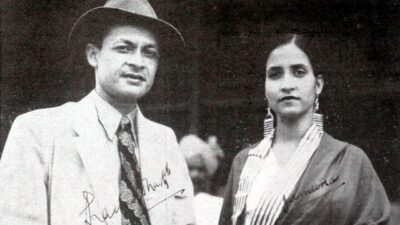
'अमीरी' 1945 में पी. सी. बरुआ की इकलौती रिलीज़ थी और जमुना के साथ उनका अंतिम महत्वपूर्ण सहयोग — न्यू थिएटर्स छोड़ने के छह वर्ष बाद बनी। फ़िल्म एक सामाजिक ड्रामा थी, व्यावसायिक रूप से असफल रही, और संदर्भ-साहित्य में उसकी कथा का कोई सार सुरक्षित नहीं है — इसलिए यह गीत काफ़ी हद तक अकेले खड़ा है, उस दृश्य के बिना जिसका वह कभी हिस्सा था। इसका फ़िल्मांकन अज्ञात है; 2016 में जब फ़िल्म की पहली रिकॉर्डिंग ऑनलाइन आई तो ब्लॉग के पाठकों से स्पष्ट रूप से पूछा गया था, और कोई नहीं बता सका कि फ़िल्म के गीत परदे पर कैसे रचे गए थे।
अंग्रेज़ी में पढ़ें · Read in English
Amiree was P. C. Barua's only release of 1945 and his last significant collaboration with Jamuna, made six years after he had left New Theatres. The film was a social drama, it failed commercially, and no plot summary of it survives in the reference literature — so this song has to stand largely on its own, without the scene it once belonged to. Its picturisation is unknown; when the recording was first published online in 2016 the blog's readers were explicitly asked, and could not say, how any of the film's songs had been staged.
विरासत The Legacy
इस गीत का उत्तर-जीवन पूरी तरह अभिलेखीय है। यह आधुनिक श्रोता तक केवल इसलिए पहुँचा क्योंकि इसकी एक एमपी3 प्रति उस शोधकर्ता के हाथ लगी जो दक्षिणा मोहन टैगोर की तार शहनाई पर लिख रहे थे और जिन्होंने उसी रिकॉर्डिंग को लेख का अवसर बनाया। 1945 की किसी असफल फ़िल्म का संगीत आज इसी रास्ते बचता है: पुनर्प्रकाशन या रेडियो से नहीं, बल्कि किसी संग्राहक की प्रतिलिपि और एक ब्लॉग-पोस्ट से। 'आई सुहानी ऋतु आई' के साथ यह 'अमीरी' के उन केवल दो गीतों में से एक है जिनका कोई ऑडियो सार्वजनिक रूप से उपलब्ध ज्ञात है।
अंग्रेज़ी में पढ़ें · Read in English
The song's afterlife is entirely archival. It reached a modern audience only because a single mp3 of it came into the hands of a researcher who was writing about Dakshina Mohan Tagore's taar shehnai and used the recording as the occasion for the piece. That is now the standard route by which a 1945 flop's music survives at all: not through reissue or radio, but through a collector's transfer and a blog post. Along with 'Aayi Suhani Ritu Aayi', this is one of only two Amiree songs of which any audio is known to be publicly available.
वर्गीकरण
Classification- Tempo
- Medium
Genre
अन्य विवरण
More Details- https://myswar.co/album/ameeri-1945
- https://en.wikipedia.org/wiki/List_of_Hindi_films_of_1945
- https://bombaymann2.blogspot.com/2020/08/film-amiree1945.html
- https://atulsongaday.me/list-of-songs-moviewise/
- https://atulsongaday.me/2021/09/07/aao-man-bahlaayen-saajan/
- https://www.hindigeetmala.net/movie/ameeri_1945.htm
References
रोचक तथ्य
Margin Notesदक्षिणा मोहन टैगोर ने अपने जीवन में ठीक एक प्रदर्शित हिंदी फ़िल्म का संगीत रचा — 'अमीरी' (1945)। बाद में मिली 'रामदूत हनुमान' कभी रिलीज़ नहीं हुई, यद्यपि उसके छह गीत रिकॉर्ड पर आए।
अंग्रेज़ी में पढ़ें · Read in English
Dakshina Mohan Tagore composed the music for exactly one released Hindi film in his life — Amiree (1945). A later assignment, Ramdoot Hanuman, was never released, though six of its songs did appear on record.
टैगोर 'तार शहनाई' के निर्माता और प्रचारक के रूप में कहीं अधिक प्रसिद्ध हैं — यह ग्रामोफ़ोन-हॉर्न का ध्वनि-विस्तारक लगी हुई इसराज है; उन्होंने इसे रवि शंकर के 'पथेर पांचाली' के संगीत में तथा एस. डी. बर्मन, ओ. पी. नय्यर और आर. डी. बर्मन के लिए बजाया।
अंग्रेज़ी में पढ़ें · Read in English
Tagore is far better known as the creator and champion of the taar shehnai, an esraj fitted with a gramophone-horn amplifier; he played it on Ravi Shankar's Pather Panchali score and for S. D. Burman, O. P. Nayyar and R. D. Burman.
'हिंदी फ़िल्म गीत कोश' में 'अमीरी' के किसी भी गीत का गीतकार दर्ज नहीं है, इसलिए इस गीत के बोलों का कोई ज्ञात रचयिता नहीं है।
अंग्रेज़ी में पढ़ें · Read in English
No lyricist is recorded for any of Amiree's nine songs in the Hindi Film Geet Kosh, so this song's words have no known author.
नमूना-पट्टी
The Specimen Table| शीर्षक | आओ मन बहलायें साजन · Aao Mann Bahlayen Saajan |
|---|---|
| फ़िल्म | अमीरी · 1945 |
| वर्ष · युग | 1945 |
| गायक | नीलिमा बनर्जी |
| संगीतकार | दक्षिणा मोहन टैगोर |
| स्वरूप | एकल महिला |
| गति | मध्यम |
| भाषा | hindi |
| भाव | प्रेरणादायक · शांत · रोमांटिक |
| लोकप्रियता | Obscure |
| बोल-स्थिति | केवल झलक |
जुड़े हुए पन्ने
Connected Plates · The Graph Made Visibleअटलस में कोई पन्ना अकेला नहीं — इस गीत से जुड़े गीत, कलाकार, फ़िल्म, राग-ताल-विधा, सब यहाँ से खुलते हैं।
मिलते-जुलते गीत · Related Songs
फ़िल्म · The Film
साझा कीजिए · Share this Plate