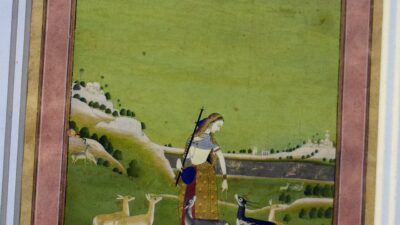
शास्त्र विंग · राग-पट्टिका · Raag Plate
गयकप्रिय
Gayakapriya
एक वीर Carnatic राग · A Heroism Carnatic Raag
भावऊर्जावान · साहसी · भव्य · शक्तिशाली
ऊर्जातीव्र
स्वर-चित्र · The Swara Panel
आरोह — अवरोह · The Ascent and the Descent
आरोह · Aroha चढ़ती हुई सीढ़ी
अवरोह · Avaroha उतरती हुई सीढ़ी
सˊ = तार सप्तक का षड्ज
पकड़ · पहचान वाक्यांश
रे॒ ग म प ध॒ नि॒॒ सा'
Re♭ Ga Ma Pa Dha♭ Ni♭♭ Sa' — Sa' Ni♭♭ Dha♭ Pa Ma Ga Re♭ Sa
Gayakapriya has no Hindustani-tradition pakad. This phrase highlights its defining upper-tetrachord anomaly: komal Dha (D1) followed by N1 (9 semitones, the lowest Nishada), which is only one semitone above Dha—an interval that produces a compressed, searching quality unlike any standard Hindustani thaat.
वादी–संवादी टिप्पणी · Vadi–Samvadi note
Vadi — In the Carnatic tradition, Raag Gayakapriya emphasizes Pancham (Pa) as a key resting note.
Samvadi — Sa (Shadj) serves as the complementary note.
समय और भाव
Time Theory & Moodसमय-सिद्धांत · Time Theory
प्रातः काल
परंपरागत रूप से सुबह के समय (6:00 AM - 10:00 AM) गाया जाता है, जब दिन ताज़ा होता है।
Traditionally performed during the morning hours (6:00 AM - 10:00 AM), when the day is fresh and the atmosphere is calm.
भाव और गति · Mood & Tempo
वीर · Heroism/Valor
साहस, ऊर्जा और दृढ़ संकल्प का रस। शक्ति, आत्मविश्वास और उत्साही प्रदर्शन को जगाता है।
ऊर्जा · Energyतीव्र
स्तर · Leveladvanced — राग Gayakapriya के लिए कर्नाटक संगीत सिद्धांत की मजबूत नींव आवश्यक है।
पट्टिका-लेख
The Monographपरिचय Introduction
राग Gayakapriya कर्नाटक शास्त्रीय संगीत परंपरा का एक राग है। इसका प्रमुख रस वीर (Heroism/Valor) है। यह परंपरागत रूप से सुबह के समय (6:00 AM - 10:00 AM) गाया जाता है गाया जाता है।
अंग्रेज़ी में पढ़ें · Read in English
Raag Gayakapriya is a complete scale with all 7 notes in both ascent and descent raga in the Carnatic classical music tradition. It is derived from the Gayakapriya melakarta (#13). With its Sampurna-Sampurna jati structure, this raag creates a distinctive tonal landscape. The predominant rasa is Heroism/Valor (वीर), making it suitable for compositions that evoke energetic, bold emotions. It is traditionally performed during morning hours, and its melodic contour offers rich possibilities for alapana, kalpanaswaram, and creative improvisation.
सांस्कृतिक महत्व Cultural Significance
भारतीय शास्त्रीय संगीत की समृद्ध परंपरा के अंग के रूप में, राग Gayakapriya Carnatic परंपरा को परिभाषित करने वाले स्वर संरचना और भावनात्मक अभिव्यक्ति के बीच गहरे संबंध का प्रतिनिधित्व करता है।
अंग्रेज़ी में पढ़ें · Read in English
As part of the rich tapestry of Indian classical music, Raag Gayakapriya represents the deep connection between melodic structure and emotional expression that defines the Carnatic tradition.
ऐतिहासिक महत्व Historical Significance
गायकप्रिय कर्नाटक संगीत की 72-मेलकर्ता प्रणाली में 13वाँ मेलकर्ता है और अग्नि चक्र (मेलकर्ता 13–18), अर्थात् 3वें चक्र, का प्रथम सदस्य है। अग्नि चक्र में कोमल ऋषभ और अंतर गंधार का युगल होता है। पहले स्थान में शुद्ध धैवत और शुद्ध निषाद/चतुःश्रुति धैवत (N1=D2, 9 अर्धस्वर) का प्रयोग होता है। कोमल ऋषभ से अंतर गंधार तक तीन अर्धस्वरों का बड़ा अंतराल और ऊपर D1-N1 का संकीर्ण क्षेत्र एक असामान्य स्वर-परिदृश्य बनाते हैं। वेंकटमखिन ने इसे चतुर्दंडिप्रकाशिका (लगभग 1620 ई.) में वर्गीकृत किया। 'गायकप्रिय' नाम का अर्थ है 'गायकों का प्रिय।' यह अग्नि चक्र का द्वार है किन्तु कर्नाटक मंच पर स्वतंत्र रूप से विरले ही प्रस्तुत होता है।
अंग्रेज़ी में पढ़ें · Read in English
Gayakapriya is the 13th melakarta in the Carnatic 72-raga system, the first member of the Agni chakra (melakartas 13–18), the 3rd of the 12 chakras. The Agni chakra uses komal Rishabha (R1, 1 semitone) and antara Gandhara (G3, 4 semitones); the first position within this chakra employs shuddha Dhaivata (D1, 8 semitones) and shuddha Nishada / chatusshruti Dhaivata (N1=D2, 9 semitones). The name 'Gayakapriya' translates as 'beloved of singers' (gayaka = singer, priya = beloved), a fitting name for the opening melakarta of a chakra. Venkatamakhin classified it in the Caturdandiprakasika (c. 1620 CE). The conjunction of komal Ri with antara Ga (a semitone gap of three between them) alongside the compressed D1-N1 upper tetrachord creates an unusual scale that sits outside the Hindustani thaat framework. Like the first-position melakartas of other chakras, Gayakapriya is rarely performed independently but serves as the systematic gateway to the Agni chakra.
शिक्षा
Teaching & LearningBegin with slow aalapana to internalize the raag's swaroopa (melodic form)
Practice the arohana and avarohana patterns with a tanpura drone
Listen to recordings by master performers to understand the raag's gamakas (ornamentations)
Work on kalpanaswaram (improvisation) within the raag's framework
Using incorrect gamakas that belong to a different raag
Not maintaining proper swar sthana (note placement)
Rushing through phrases without allowing the raag bhava to develop
तुलना
A Specimen Comparisonदोनों में केवल निषाद का अंतर है: गयकप्रिय में Ni♭♭ (शुद्ध Ni से पूरे एक स्वर नीचे) और मायमालवगौल में शुद्ध Ni। मायमालवगौल कर्नाटक संगीत का सर्वाधिक शैक्षणिक महत्त्व वाला राग है।
| तुलनाSpecimen | गयकप्रिय | मायमालवगौल |
|---|---|---|
| स्वर-अंतर | Gayakapriya has Ni♭♭ (ati-komal); Mayamalavagowla has shuddha Ni; all other six notes identical. | |
| भाव-अंतर | Mayamalavagowla's shuddha Ni gives transcendent clarity; Gayakapriya's Ni♭♭ creates deep sorrow. | |
गयकप्रिय (#13), वकुलाभरणम (#14) और मायमालवगौल (#15) — ये तीनों मिलकर अग्नि चक्र में एक क्रमिक श्रृंखला बनाते हैं: गयकप्रिय का Ni♭♭ → वकुलाभरणम का कोमल Ni (Ni♭) → मायमालवगौल का शुद्ध Ni। निषाद के इस क्रमिक उन्नयन से एक ही निचला स्वर-समूह गहरी वेदना से करुणा होते हुए दिव्य स्पष्टता तक पहुँचता है।
| तुलनाSpecimen | गयकप्रिय | वकुलाभरणम |
|---|---|---|
| स्वर-अंतर | Vakulabharanam has komal Ni (Ni♭) — intermediate between Gayakapriya's Ni♭♭ and Mayamalavagowla's shuddha Ni. | |
चक्रवाकम (#16) और सूर्यकांत (#17) में गयकप्रिय जैसा Sa Re♭ Ga Ma है, पर शुद्ध धैवत — इससे वे गयकप्रिय के कोमल धैवत की तुलना में अधिक उज्जवल हैं।
| तुलनाSpecimen | गयकप्रिय | चक्रवाकम / सूर्यकांत |
|---|---|---|
| स्वर-अंतर | Chakravakam and Suryakantam use shuddha Dha; Gayakapriya uses komal Dha. | |
प्रस्तुति
Performance- Description
- परंपरागत रूप से सुबह के समय (6:00 AM - 10:00 AM) गाया जाता है, जब दिन ताज़ा होता है। Traditionally performed during the morning hours (6:00 AM - 10:00 AM), when the day is fresh and the atmosphere is calm.
- Prahar Number
- 1
- Prahar Name
- प्रातः काल Pratah Kaal
- Time Start
- 06:00
- Time End
- 10:00
- Time Flexibility
- flexible
Time
और जानें
More to Know- raag-mayamalavagowla — Mayamalavagowla — मायमालवगौल — Both ragas are identical in every note except nishada: Gayakapriya has Ni♭♭ (ati-komal, pitched a whole tone below shuddha Ni) while Mayamalavagowla has shuddha Ni (natural seventh). Mayamalavagowla is the most pedagogically important raga in all of Carnatic music. — दोनों में केवल निषाद का अंतर है: गयकप्रिय में Ni♭♭ (शुद्ध Ni से पूरे एक स्वर नीचे) और मायमालवगौल में शुद्ध Ni। मायमालवगौल कर्नाटक संगीत का सर्वाधिक शैक्षणिक महत्त्व वाला राग है। — Gayakapriya has Ni♭♭ (ati-komal); Mayamalavagowla has shuddha Ni; all other six notes identical. — Mayamalavagowla's shuddha Ni gives transcendent clarity; Gayakapriya's Ni♭♭ creates deep sorrow.
- raag-vakulabharanam — Vakulabharanam — वकुलाभरणम — Gayakapriya (#13), Vakulabharanam (#14), and Mayamalavagowla (#15) together form a graduated series in the Agni chakra: Gayakapriya has the most extreme Ni♭♭, Vakulabharanam has the intermediate komal Ni (Ni♭), and Mayamalavagowla has the open shuddha Ni. Each progressively raised nishada transforms the same lower tetrachord from deep sorrow through pathos to transcendent clarity. — गयकप्रिय (#13), वकुलाभरणम (#14) और मायमालवगौल (#15) — ये तीनों मिलकर अग्नि चक्र में एक क्रमिक श्रृंखला बनाते हैं: गयकप्रिय का Ni♭♭ → वकुलाभरणम का कोमल Ni (Ni♭) → मायमालवगौल का शुद्ध Ni। निषाद के इस क्रमिक उन्नयन से एक ही निचला स्वर-समूह गहरी वेदना से करुणा होते हुए दिव्य स्पष्टता तक पहुँचता है। — Vakulabharanam has komal Ni (Ni♭) — intermediate between Gayakapriya's Ni♭♭ and Mayamalavagowla's shuddha Ni.
- raag-chakravakam — Chakravakam / Suryakantam — चक्रवाकम / सूर्यकांत — Beyond these direct siblings, Gayakapriya shares its striking Sa Re♭ Ga Ma scale opening with Chakravakam (#16) and Suryakantam (#17), but those ragas use shuddha Dha rather than Gayakapriya's komal Dha. — चक्रवाकम (#16) और सूर्यकांत (#17) में गयकप्रिय जैसा Sa Re♭ Ga Ma है, पर शुद्ध धैवत — इससे वे गयकप्रिय के कोमल धैवत की तुलना में अधिक उज्जवल हैं। — Chakravakam and Suryakantam use shuddha Dha; Gayakapriya uses komal Dha.
In Film Music
Gayakapriya — meaning 'beloved of singers' — is a Carnatic melakarta whose inviting name belies its rarity in actual performance. It has no documented presence in Hindi film music. The raga is most illuminating when understood in relation to Mayamalavagowla (#15), the foundational raga taught to every Carnatic music student: Gayakapriya shares Mayamalavagowla's komal Re, shuddha Ga, shuddha Ma, and komal Dha, but replaces Mayamalavagowla's crystalline shuddha Ni with an ati-komal Ni (Ni♭♭, a whole tone below shuddha Ni). This substitution transforms the raga's character entirely — where Mayamalavagowla achieves a sense of luminous resolution in its upper register, Gayakapriya's extreme lowering of the nishada creates an unresolved, searching quality. No Hindustani raga or Hindi film song tradition maps onto this combination.
Comparisons
सीखने के लिए
For Learners- Difficulty Level
- advanced
अन्य विवरण
More Details- Indian_Music_Raga_Encyclopedia_v2.xlsx
- Carnatic 72 melakarta system — Agni chakra (13-18)
- Comparison with Mayamalavagowla (#15) — foundational Carnatic raga
- S. Bhagyalekshmy — Ragas in Carnatic Music (1990)
- P. Sambamurthy — South Indian Music (4 vols)
- Carnatic 72-melakarta system: melakarta 13 in the Agni chakra (Venkatamakhin, Caturdandiprakasika, c. 1620 CE)
- Govindacharya, Samgraha-Chudamani, c. 1800 CE
References
नमूना-पट्टी
The Specimen Table| नाम | गयकप्रिय · Gayakapriya |
|---|---|
| थाट | — |
| आरोह | Sa Re♭ Ga Ma Pa Dha♭ Ni♭♭ Sa' Sa' |
| अवरोह | Sa' Sa' Ni♭♭ Dha♭ Pa Ma Ga Re♭ Sa |
| पकड़ | रे॒ ग म प ध॒ नि॒॒ सा' |
| जाति | संपूर्ण-संपूर्ण · Sampurna-Sampurna |
| समय | प्रातः काल |
| ऊर्जा | तीव्र |
| परिवार | Gayakapriya |
| स्तर | advanced |
| लोकप्रियता | Obscure |
| कर्नाटक समतुल्य | Gayakapriya · Melakarta 13 |
जुड़े हुए पन्ने
Connected Plates · The Graph Made Visibleअटलस में कोई पन्ना अकेला नहीं — इस राग से गीत, प्रस्तुतियाँ, कलाकार, ताल, घराने और मिलते-जुलते राग, सब यहाँ से खुलते हैं।
ताल-साथी · Taal Pairings
श्रवण-कक्ष · The Listening Room
सुनिए — गयकप्रिय · Hear the Raag
Raag Gayakapriya — Classical Performance
प्रश्नोत्तर
Questions & Answersराग Gayakapriya किस संगीत पद्धति का राग है?
राग Gayakapriya कर्नाटक (दक्षिण भारतीय) शास्त्रीय संगीत पद्धति का राग है।
अंग्रेज़ी में पढ़ें · Read in English
Which music system does Raga Gayakapriya belong to? — Raga Gayakapriya belongs to the Carnatic (South Indian) classical music system.
साझा कीजिए · Share this Plate