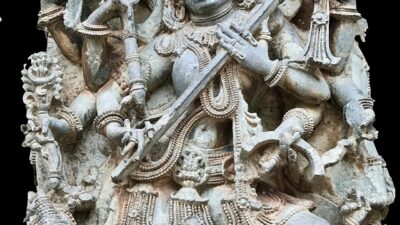
शास्त्र विंग · वाद्य-पट्टिका · Instrument Plate
वीणा
Veena
भारतीय तारवाले वाद्यों की माता — देवी सरस्वती का वाद्य · Mother of Indian stringed instruments — the instrument of Goddess Saraswati
अन्य नामवीणा · बीणा · सरस्वती वीणा · Saraswati Veena
एक पंक्तिवीणा भारत के सबसे प्राचीन और सबसे सम्मानित तारवाले वाद्य हैं, जिन्हें संगीत की देवी सरस्वती का वाद्य माना जाता है।
परिचय
Overviewवीणा भारतीय संगीत परंपरा की आत्मा है। यह न केवल एक संगीत यंत्र है, बल्कि यह भारतीय सभ्यता, आध्यात्मिकता और कलात्मकता का प्रतीक है। हजारों साल की परंपरा में वीणा को देवी सरस्वती का वाद्य माना जाता है। प्राचीन संस्कृत ग्रंथों में वीणा का उल्लेख मिलता है, जहाँ इसे 'कला का हृदय' कहा गया है। वीणा की ध्वनि अन्य किसी भी वाद्य से अलग है। यह मानव हृदय की गहरी भावनाओं को व्यक्त करने में सक्षम है। वीणा की मेंड (bending) की तकनीक मानव आवाज़ के सबसे निकट है। एक कुशल वीणा वादक ऐसा प्रभाव पैदा कर सकता है जो श्रोताओं को रुला दे या उन्हें परमानंद की स्थिति में ले जाए। दक्षिण भारतीय संगीत परंपरा (कर्नाटक) का पूरा आधार वीणा पर है। कर्नाटक संगीत के सभी राग, सभी ताल, सभी रचनाएँ वीणा पर ही विकसित हुई हैं। इसलिए, वीणा को कर्नाटक संगीत का प्रमुख वाद्य माना जाता है।
अंग्रेज़ी में पढ़ें · Read in English
The veena is the soul of Indian musical tradition. It is not merely an instrument but a symbol of Indian civilization, spirituality, and artistry. For millennia, it has been considered the instrument of Goddess Saraswati. Ancient Sanskrit texts refer to it as 'the heart of art.'
The veena's sound is unique among all instruments. It can express humanity's deepest emotions. Its meend technique is closest to the human voice. A skilled veena player can move audiences to tears or transport them to bliss.
South Indian music tradition (Carnatic) is entirely based on the veena. All ragas, talas, and compositions in Carnatic music originated on the veena. Therefore, it is considered the primary instrument of Carnatic music.
काव्य-पंक्ति · The Verse
काव्य-पंक्ति
सरस्वती की वीणा बजती है, ज्ञान की बृष्टि होती है, हर नोट में ब्रह्मांड बसा है, हर राग में मुक्ति होती है।
— पारंपरिक संस्कृत काव्य (Traditional Sanskrit Poetry) When Saraswati's veena plays, knowledge descends like rain, In each note the cosmos dwells, in each raga lies liberation.
वर्गीकरण
ClassificationNatya Shastra
तत वाद्य (एकतारी/बहुतारी)
Tata Vadya (Single-stringed/Multi-stringed)
नाट्यशास्त्र में वीणा को सबसे प्रमुख तत वाद्य माना गया है। वीणा का वर्गीकरण इसकी संरचना और तारों की संख्या के आधार पर किया जाता है। नाट्यशास्त्र में पहले तो 'महती वीणा' (बड़ी वीणा) और फिर अन्य प्रकारों का वर्णन है।
In Natya Shastra, the veena is classified as the most prominent stringed instrument. Its categorization is based on structure and number of strings. The text describes various types, beginning with the 'Mahi Veena' (large veena).
Western
String Instrument
Plucked zither-like lute
पश्चिमी संगीत शास्त्र में वीणा को 'zither' और 'lute' परिवार के बीच माना जाता है। इसमें गिटार जैसी संरचना है, किंतु इसके तार और बजाने की पद्धति पूरी तरह अलग है।
In Western classification, the veena is considered between zither and lute families. While structurally similar to a guitar, its strings and playing technique are entirely distinct.
Hornbostel Sachs
321.321.22
Pluriarc composite chordophone with long neck and fixed frets
सिनेमा में
In Cinemaवीणा का फिल्मों में प्रयोग मुख्यतः धार्मिक और आध्यात्मिक दृश्यों में होता है। हिंदी सिनेमा में वीणा को देवी सरस्वती के प्रतीक के रूप में दिखाया जाता है। तमिल और तेलुगु फिल्मों में वीणा का प्रयोग अधिक व्यापक है क्योंकि वीणा दक्षिण भारतीय संस्कृति का एक जीवंत अंग है। मंदिर के दृश्यों, पूजा के दृश्यों और आध्यात्मिक क्षणों में वीणा की ध्वनि अत्यंत प्रभावी है। रवि शंकर जैसे संगीतकारों की बदौलत, वीणा को विश्वव्यापी मंच भी मिला है।
अंग्रेज़ी में पढ़ें · Read in English
The veena in cinema is primarily used in religious and spiritual scenes. In Hindi films, it symbolizes Goddess Saraswati. Tamil and Telugu films use the veena more extensively as it is integral to South Indian culture. Its sound is particularly effective in temple scenes, worship moments, and spiritual sequences. Through master musicians like Ravi Shankar, the veena has gained global platform recognition.
वर्तमान स्थिति
Modern Statusविवरण
आजकल वीणा की स्थिति मिश्रित है। दक्षिण भारत में, विशेषकर तमिलनाडु और कर्नाटक में, वीणा अभी भी एक जीवंत परंपरा है। बहुत सारे युवा संगीतकार वीणा सीख रहे हैं। हालाँकि, उत्तर भारत में रुद्र वीणा की स्थिति बहुत गंभीर है। यह परंपरा अब लगभग विलुप्त हो गई है। विश्व संगीत में भी वीणा की मान्यता बढ़ रही है, लेकिन यह बाँसुरी या तबले जितना लोकप्रिय नहीं है।
अंग्रेज़ी में पढ़ें · Read in English
The veena's status today is mixed. In South India, especially Tamil Nadu and Karnataka, the veena remains a vibrant tradition with many young musicians learning it. However, the North Indian Rudra Veena is in critical condition—nearly extinct. Internationally, the veena's recognition is growing, though it remains less popular than the bansuri or tabla.
Estimated Players
500-800 skilled practitioners (Saraswati Veena); fewer than 10 (Rudra Veena)
Revival Efforts
दक्षिण भारत में संगीत संस्थान और परिवार-आधारित शिक्षा परंपरा वीणा को जीवंत रखे हुए हैं। उत्तर भारत में, सांस्कृतिक संगठन रुद्र वीणा के पुनरुद्धार के लिए कार्य कर रहे हैं। यूनेस्को जैसे अंतर्राष्ट्रीय संगठन भी भारतीय वाद्य परंपराओं के संरक्षण में सहायता कर रहे हैं।
अंग्रेज़ी में पढ़ें · Read in English
South Indian music institutions and family traditions keep the veena alive. In North India, cultural organizations work to revive the Rudra Veena. International bodies like UNESCO also support preservation of Indian instrument traditions.
बनावट
Physicalविवरण
वीणा की भौतिक संरचना अत्यंत जटिल और सुंदर है। इसमें दो गुंबद के आकार के गोल भाग (जिन्हें 'कुंडु' कहते हैं) होते हैं, जो एक लंबी गर्दन से जुड़े होते हैं। दक्षिण भारतीय सरस्वती वीणा में आमतौर पर दोनों सिरों पर गुंबद होते हैं। उत्तर भारतीय रुद्र वीणा में केवल एक ही सिरे पर गुंबद होता है। वीणा की गर्दन पर 24 से 26 'फ्रेट्स' होते हैं, जो दक्षिण भारतीय शास्त्रीय संगीत के पूरे स्वर प्रणाली को दर्शाते हैं। वीणा के तार सामान्यतः पीतल या स्टील के होते हैं। इसका निर्माण वृक्ष (आमतौर पर नीम या महोगनी) से किया जाता है। वीणा की गर्दन बहुत लंबी और पतली होती है, जिसे बनाने के लिए विशेष कौशल की आवश्यकता होती है।
अंग्रेज़ी में पढ़ें · Read in English
The veena's physical structure is complex and beautiful. It features two gourd-shaped resonating chambers (called 'kunda') connected by a long neck. The South Indian Saraswati Veena typically has gourds at both ends. The North Indian Rudra Veena has a single gourd. The neck features 24-26 fixed frets corresponding to the South Indian classical music system. Veena strings are typically brass or steel. The body is carved from wood (usually neem or mahogany). The long, slender neck requires exceptional craftsmanship.
Dimensions
120-150 cm (total length)
20-25 cm (gourd diameter)
2.5-4 kg
Strings Or Keys
वीणा के तार संख्या और भूमिका में दो तरह के होते हैं — मुख्य मेलोडी तार और ड्रोन तार। सरस्वती वीणा में आमतौर पर 4 मुख्य मेलोडी तार होते हैं जिन पर राग को बजाया जाता है, और 3 ड्रोन तार होते हैं जो निरंतर एक ही नोट बजाते रहते हैं। रुद्र वीणा में भी समान संरचना होती है, किंतु इसमें सहानुभूति वाले तार (sympathetic strings) नहीं होते।
Veena strings are of two types—melody strings and drone strings. Saraswati Veena typically has 4 main melody strings for playing the raga and 3 drone strings that maintain a continuous note. Rudra Veena has a similar structure but without sympathetic strings.
4 main + 3 drone (total 7)
Brass or steel
Tuning
भारतीय संगीत की सा-रे-ग-म-प-ध-नी प्रणाली
Indian classical music Sa-Re-Ga-Ma-Pa-Dha-Ni system
मध्य सप्तक (Middle octave)
2.5-3 octaves (मध्य सप्तक से अनुमति तक)
Construction
वीणा का ऊपरी गुंबदनुमा भाग। सरस्वती वीणा में यह ऊपरी सिरे पर स्थित होता है।
The upper gourd-shaped chamber providing resonance and tone.
दोनों गुंडों को जोड़ने वाला लंबा और पतला भाग। इसी पर फ्रेट्स लगी होती हैं।
The long, slender section connecting the gourds, bearing the frets.
गर्दन पर 24-26 तार से बँधी हुई छोटी-छोटी पट्टियाँ। ये राग प्रणाली के अनुसार रखी जाती हैं।
24-26 thin rods tied to the neck with thread, corresponding to the musical scale.
आमतौर पर 4 मुख्य मेलोडी तार और 3 ड्रोन तार होते हैं।
Usually 4 main melody strings and 3 drone strings.
तारों को खींचने और ट्यून करने के लिए।
For tightening and tuning the strings.
ड्रोन तारों को नियंत्रित करने के लिए विशेष तंत्र।
Special mechanism for controlling drone strings.
ध्वनि-चरित्र
SoundTonal Character
वीणा की ध्वनि भारतीय संगीत की सबसे विशिष्ट और पहचानी जाने वाली ध्वनि है। यह गहराई, संवेदनशीलता और दिव्यता से भरपूर है। जब वीणा को माहिर हाथों से बजाया जाता है, तो इसकी ध्वनि किसी विरलाप (lament) जैसी प्रतीत होती है — ऐसी ध्वनि जो आत्मा को स्पर्श करती है। सरस्वती वीणा की ध्वनि अधिक चमकीली और मधुर है, जबकि रुद्र वीणा की ध्वनि गहरी और अधिक व्यक्तिगत (intimate) है।
अंग्रेज़ी में पढ़ें · Read in English
The veena's sound is one of the most distinctive and recognizable in Indian music. It is rich in depth, sensitivity, and divinity. When played by a skilled musician, its sound resembles a lament—resonating with the soul. The Saraswati Veena has a brighter, sweeter tone, while the Rudra Veena has a deeper, more intimate sound.
Timbre
गहरी, दिव्य, भावपूर्ण, पवित्र, आंतरिक (introspective)
अंग्रेज़ी में पढ़ें · Read in English
Deep, divine, emotional, sacred, introspective
Dynamic Range
बहुत नरम से लेकर सशक्त तक — किंतु सदा एक पवित्रता बनी रहती है
अंग्रेज़ी में पढ़ें · Read in English
From very soft to powerful — yet always maintaining sacred dignity
Comparison
मानव कंठ की गहराई के साथ, देवी सरस्वती की वाणी की सदृश
अंग्रेज़ी में पढ़ें · Read in English
Like the depth of human voice combined with Goddess Saraswati's divine utterance
वादन-तकनीक
Playing Techniqueविवरण
वीणा को बजाने की तकनीक भारतीय संगीत में सबसे परिष्कृत और कठिन मानी जाती है। खिलाड़ी को आमतौर पर पद्मासन (lotus position) या बैठकर बजाना पड़ता है। वीणा को बाईं ओर झुकाकर रखा जाता है, जबकि दाहिना हाथ तारों को बजाता है। बाएँ हाथ की उँगलियों का प्रयोग तारों को दबाने (fret करने) के लिए होता है। दाहिने हाथ में प्रायः 'प्लेक्ट्रम' (plectrum) का प्रयोग किया जाता है या फिर आँगुलियों से ही बजाया जाता है। वीणा का सबसे कठिन हिस्सा 'मेंड' (meend) को नियंत्रित करना है — यानी एक नोट से दूसरे नोट में सुखद ढंग से मेंड लगाना। इसके लिए बाएँ हाथ की अत्यंत सूक्ष्म गतिविधियों की आवश्यकता होती है।
अंग्रेज़ी में पढ़ें · Read in English
Playing the veena is considered the most refined and challenging technique in Indian music. The musician typically sits in lotus position or cross-legged. The veena is held at an angle to the left while the right hand plucks the strings. The left hand fingers are used to press the strings against the frets. A plectrum is often used in the right hand, or the fingers directly. The most difficult aspect is controlling 'meend' (bending)—smoothly transitioning from one note to another. This requires extremely subtle left-hand movements.
Posture
पद्मासन (lotus position) या आरामदेह बैठक, वीणा बाईं ओर झुकी हुई, दाहिना पैर आगे
अंग्रेज़ी में पढ़ें · Read in English
Lotus position or comfortable sitting, veena angled to the left, right leg extended
Techniques
एक नोट से दूसरे नोट तक ध्वनि को सुखद ढंग से ढलते हुए ले जाना। वीणा में मेंड का विशेष महत्व है क्योंकि यह तारों को दबाकर अनिश्चित डिग्री में ध्वनि निकाल सकता है।
Smoothly sliding from one note to another. Meend is particularly important on veena because the player can produce intermediate pitches by pressing the strings.
बहुत तेजी से कई नोट्स को एक संगत क्रम में बजाना। यह तकनीक दोनों हाथों के समन्वय की माँग करती है।
Rapid passages combining multiple notes in quick succession. Requires coordination between both hands.
एक ही नोट को हल्का-हल्का कंपित करना। बाएँ हाथ की तरंग गति से यह प्रभाव पैदा किया जाता है।
Subtle wavering of a single note. Achieved through fine vibrato motion of the left hand.
एक लंबा स्वर निरंतर बजाते हुए विभिन्न सूक्ष्म भाव (ores) को दर्शाना।
Sustaining a long note while revealing subtle microtonal variations.
तेजी से कई नोट्स को इकट्ठा बजाना। यह एक चमकदार और प्रभावशाली तकनीक है।
Playing multiple notes in rapid succession. A brilliant and impressive technique.
प्राचीन वीणा परंपरा के अनुसार बजाना। यह परंपरागत शैली है।
Playing in the ancient veena tradition. The classical approach.
निर्माण-प्रक्रिया
Making Processविवरण
वीणा का निर्माण एक अत्यंत कलात्मक और समय-साध्य प्रक्रिया है। सबसे पहले, वीणा की गर्दन (दांडु) के लिए उपयुक्त लकड़ी का चयन किया जाता है। इसके बाद, दो कद्दू/तूंबे (gourds) को खोदा जाता है और उन्हें सुखाया जाता है। इन गुंडों को गर्दन से जोड़ने के लिए विशेष गोंद और निर्माण तकनीक का प्रयोग किया जाता है। फिर, गर्दन पर 24-26 फ्रेट्स को सटीक दूरी पर रखा जाता है। यह कार्य अत्यंत सूक्ष्म है क्योंकि राग प्रणाली के पूरे संगीतात्मक विवरण फ्रेट्स की सटीक स्थिति पर निर्भर करता है। फिर तारों को बिछाया जाता है और ट्यूनिंग मैकेनिज्म को स्थापित किया जाता है। अंत में, वीणा को पॉलिश किया जाता है। एक पूरी वीणा बनाने में 6-8 महीने तक का समय लग सकता है।
अंग्रेज़ी में पढ़ें · Read in English
Veena making is an extremely artistic and time-consuming process. First, suitable wood is selected for the neck (dandu). Two gourds are then hollowed out and dried. These are attached to the neck using special adhesive and joining techniques. Next, 24-26 frets are positioned precisely on the neck. This is extremely delicate work as the entire musical system depends on exact fret placement. Strings are then installed and tuning mechanisms set up. Finally, the veena is polished. Crafting a complete veena can take 6-8 months.
Materials
आमतौर पर नीम, महोगनी, या अन्य कठोर लकड़ियाँ। लकड़ी को कई महीने सूखना पड़ता है।
Usually neem, mahogany, or other hardwoods. Wood must be dried for months.
विशेष किस्म का सूखा कद्दू। इन्हें सावधानीपूर्वक खोदा और तैयार किया जाता है।
Special dried gourds, carefully hollowed and prepared.
पीतल या स्टील के तार। विभिन्न मोटाई के तार विभिन्न नोट्स के लिए।
Brass or steel. Different gauges for different notes.
पीतल या तांबा की छोटी-छोटी पट्टियाँ।
Thin brass or copper rods.
Artisan Centers
सरस्वती वीणा निर्माण का सबसे प्रसिद्ध केंद्र। यहाँ की वीणाएँ भारत भर में प्रसिद्ध हैं।
The most famous center for Saraswati Veena making. Thanjavur veenas are renowned across India.
एक महत्वपूर्ण वीणा निर्माण केंद्र।
An important veena-making center.
उत्तर भारतीय रुद्र वीणा के निर्माण का केंद्र।
Center for Rudra Veena (North Indian) making.
एक प्राचीन वीणा निर्माण परंपरा।
An ancient veena-making tradition.
Time To Craft
6-8 months (for a quality instrument)
Price Range
₹50,000-3,00,000+ (depending on craftsmanship and materials)
संगीत-समूह में भूमिका
Role In EnsemblePrimary Role
वीणा मुख्य रूप से एकल वाद्य है। यह पूरे राग को प्रस्तुत करने में सक्षम है। दक्षिण भारतीय संगीत परंपरा में, वीणा एक प्रमुख वाद्य है और इसे तबला के साथ भी बजाया जाता है।
अंग्रेज़ी में पढ़ें · Read in English
The veena is primarily a solo instrument capable of presenting complete ragas. In South Indian music, it is a primary instrument often accompanied by tabla.
Solo Capability
वीणा का एकल वादन अत्यंत पूर्ण और सर्वांगीण होता है। यह हर तरह के राग को पूरी गहराई के साथ प्रस्तुत कर सकता है।
अंग्रेज़ी में पढ़ें · Read in English
Veena solo performances are complete and comprehensive. It can present any raga with full depth.
Accompaniment For
वीणा कर्नाटक संगीत में गायक का साथी यंत्र है। यह गायक के साथ समरसता से बजाई जाती है।
In Carnatic music, the veena is the principal accompaniment to vocal music, blending seamlessly.
दक्षिण भारतीय नृत्य परंपराओं में वीणा का महत्वपूर्ण स्थान है।
The veena plays an important role in South Indian dance traditions.
मंदिरों में भक्ति संगीत के साथ वीणा बजाई जाती है।
Used extensively in temple music and devotional settings.
लोक संगीत में
In Folk Musicवीणा भारतीय लोक संगीत परंपराओं में भी एक महत्वपूर्ण स्थान रखता है। विशेषकर दक्षिण भारत में, वीणा स्थानीय लोक परंपराओं का एक अभिन्न अंग है। गाँवों में मंदिरों के संगीत समारोहों में वीणा बजाई जाती है। उत्तर भारत में रुद्र वीणा की परंपरा भक्ति और सूफी संगीत परंपरा से जुड़ी हुई है।
अंग्रेज़ी में पढ़ें · Read in English
The veena holds an important place in Indian folk music traditions. Particularly in South India, it is integral to local traditions. It is played in temple music events in villages. In North India, the Rudra Veena tradition is connected with devotional and Sufi music.
क्षेत्रीय रूप
Regional Variantsसरस्वती वीणा दक्षिण भारतीय संगीत परंपरा का सबसे महत्वपूर्ण वाद्य है। इसमें दोनों सिरों पर गुंबद होते हैं। यह छः या सात तारों वाली होती है। इसकी ध्वनि चमकीली और स्पष्ट है। कर्नाटक संगीत इसी वीणा पर पूरी तरह निर्भर है।
The Saraswati Veena is the most important instrument in South Indian music tradition. It has gourds at both ends. Typically has six or seven strings. Its sound is bright and clear. Carnatic music is entirely based on this veena.
रुद्र वीणा उत्तर भारतीय संगीत की सबसे प्राचीन परंपरा का प्रतीक है। इसमें केवल एक ही सिरे पर गुंबद होता है। इसकी ध्वनि गहरी और अंतरंग है। रुद्र वीणा को हिंदुस्तानी संगीत का एक गौरवशाली यंत्र माना जाता है, किंतु यह अब लगभग विलुप्त हो गई है।
The Rudra Veena represents North India's oldest musical tradition. It has a single gourd at one end. Its sound is deep and intimate. Considered a glorious instrument in Hindustani music, it is now nearly extinct.
विचित्र वीणा एक आधुनिक संस्करण है जिसमें 18-20 तार होते हैं। इसे बजाने का तरीका सरस्वती वीणा से अलग है। यह एक उन्नत और जटिल यंत्र है।
Vichitra Veena is a modern variant with 18-20 strings. Playing technique differs from Saraswati Veena. It is an advanced and complex instrument.
प्रसिद्ध वादक
Famous Playersभारतीय संगीत के इतिहास में महिला वीणा वादकों का एक महत्वपूर्ण स्थान रहा है। ये महिलाएँ भारत भर में अपनी प्रतिभा के लिए जानी जाती थीं।
Women veena players have held important places in Indian music history, renowned across the country.
डॉ. एन. राजम वीणा के अग्रदूतों में से एक हैं। उन्होंने वीणा को एक आधुनिक मंच दिया है। भारत के बाहर वीणा को लोकप्रिय करने में उनका बहुत योगदान रहा है।
Dr. N. Rajam is a pioneer of the veena. He has given the instrument a modern platform and significantly popularized it internationally.
शारदा सैलम एक प्रसिद्ध वीणा वादक हैं। उनका आधुनिक दृष्टिकोण और गहन परंपरागत प्रशिक्षण वीणा को नए दर्शकों तक पहुँचाता है।
Sharada Sailam is a renowned veena player whose modern approach and deep traditional training bring the veena to new audiences.
समकालीन वीणा वादक जो वीणा को एकल यंत्र के रूप में प्रचारित कर रहे हैं। वे विश्व के विभिन्न देशों में प्रदर्शन करते हैं।
A contemporary veena player promoting the instrument as a solo art, performing internationally.
एक आधुनिक वीणा वादक जो वीणा के पारंपरिक और समकालीन रूपों को प्रस्तुत करते हैं।
A modern veena player presenting both traditional and contemporary forms of the instrument.
राग-उपयुक्तता
Raag Suitabilityइस राग में वीणा की गहरी ध्वनि पूरी तरह प्रकट होती है। यह वीणा के लिए सबसे उपयुक्त राग है।
The veena's deep sound fully resonates in this raga. It is the most suitable for veena.
एक लोकप्रिय और सुंदर राग जिसमें वीणा की मधुरता सुनाई देती है।
A popular and beautiful raga where the veena's sweetness shines.
वीणा के लिए एक प्रमुख राग। इसमें गहराई और आध्यात्मिकता है।
A primary raga for veena, rich in depth and spirituality.
एक उज्ज्वल और सुखद राग जिसमें वीणा का उपयोग अच्छा है।
A bright and pleasant raga suited to veena.
एक भावपूर्ण राग जिसमें वीणा की संवेदनशीलता प्रकट होती है।
An emotional raga that reveals the veena's sensitivity.
घराना-संबंध
Gharana Connectionsसरस्वती वीणा वादन की सबसे प्रमुख परंपरा। यहाँ से आधुनिक वीणा शिक्षा का आरंभ हुआ।
The most prominent Saraswati Veena tradition. Modern veena instruction originated here.
कर्नाटक का एक महत्वपूर्ण वीणा घराना।
An important veena tradition from Karnataka.
रुद्र वीणा की परंपरागत परंपरा। यह परंपरा अब लगभग विलुप्त है।
Traditional Rudra Veena lineage. This tradition is now nearly extinct.
सीखने का मार्ग
Learning Pathविवरण
वीणा सीखना एक लंबी और समर्पित यात्रा है जिसमें धैर्य, निष्ठा और नियमित अभ्यास आवश्यक है। प्रारंभ में, छात्र को सही बैठने की मुद्रा सीखनी चाहिए। फिर धीरे-धीरे फिंगरिंग तकनीकें सीखी जाती हैं। साधारण नोट्स को बजाने का अभ्यास किया जाता है। फिर सरल राग सीखे जाते हैं जैसे धीरशङ्करभैरव या कामबोजी। समय के साथ अधिक जटिल राग सीखे जाते हैं और तकनीकें जोड़ी जाती हैं। वीणा के साथ तबला और गायन के साथ समन्वय भी सीखा जाता है।
अंग्रेज़ी में पढ़ें · Read in English
Learning the veena is a long and dedicated journey requiring patience, commitment, and regular practice. Initially, proper sitting posture is learned. Then fingering techniques are gradually acquired. Simple notes are practiced repeatedly. Basic ragas like Dheerashankarabharava are learned. Over time, complex ragas are mastered and techniques refined. Accompanying vocal music and tabla is also learned.
Beginner Steps
पद्मासन या बैठकर सही मुद्रा सीखना।
वीणा की संरचना को समझना।
सा, रे, ग, म, प, ध, नी को सीखना।
धीरशङ्करभैरव जैसे राग धीरे-धीरे सीखना।
सामान्य अवधि
7-12 years for basic proficiency, 20+ years for advanced mastery
संस्थान
वीणा सीखने का एक प्रमुख संस्थान।
दक्षिण भारतीय संगीत शिक्षण के लिए प्रसिद्ध।
वीणा सहित भारतीय वाद्यों की शिक्षा।
विभिन्न शहरों में व्यक्तिगत शिक्षकों से।
सांस्कृतिक महत्व
Cultural Significanceवीणा भारतीय संस्कृति में ज्ञान, संगीत, सौंदर्य और आध्यात्मिकता का प्रतीक है। देवी सरस्वती की मूर्तियों में वीणा को दिखाया जाता है। इसका अर्थ है कि वीणा ज्ञान का द्वार है। मंदिरों में, सरस्वती पूजा के समय वीणा की ध्वनि सुनी जाती है। भारतीय समाज में, वीणा सीखना एक सम्मानजनक कार्य माना जाता है। वीणा वादक को समाज में एक विशेष स्थान दिया जाता है। यह परंपरा आज भी दक्षिण भारत में जीवंत है।
अंग्रेज़ी में पढ़ें · Read in English
In Indian culture, the veena symbolizes knowledge, music, beauty, and spirituality. Statues of Goddess Saraswati depict her holding a veena. This represents the veena as a gateway to knowledge. In temples, the veena's sound accompanies Saraswati worship. In Indian society, learning the veena is considered an honorable pursuit. Veena players hold a special place in society. This tradition remains vibrant in South India today.
सुनने का मार्गदर्शन
The Listening Guideवीणा को सुनने के लिए सबसे अच्छा समय प्रातःकाल या संध्या काल है। एकांत स्थान पर बैठकर, बिना किसी विचलन के वीणा सुनना चाहिए। पहली बार वीणा सुनते समय, धीमी गति से शुरू होने वाली रचना चुनें। डॉ. एन. राजम या शारदा सैलम की रिकॉर्डिंग से शुरुआत करें। अपनी आँखें बंद करें और वीणा की हर नोट को महसूस करें। धीरे-धीरे, आप वीणा की गहराई को समझने लगेंगे।
अंग्रेज़ी में पढ़ें · Read in English
Best time to listen to veena is early morning or evening. Sit in solitude without distractions. For first listening, choose slower compositions. Start with recordings by Dr. N. Rajam or Sharada Sailam. Close your eyes and feel each note. Gradually, you will understand the instrument's depth.
श्रवण-कक्ष · The Listening Room
देखें-सुनें
Classical Veena instrumental music | Ronak Ramchandran & Sarvesh Karthick · 32:24
Veenai, Indian Traditional Music Instrument - Meditation Music · 1:07:21
परिचय
Identity- Year Of Origin
- 1500
वर्गीकरण
Classification- Code
- 321.321.22
- Description
- Pluriarc composite chordophone with long neck and fixed frets
- Category
- तत वाद्य (एकतारी/बहुतारी)
- Category En
- Tata Vadya (Single-stringed/Multi-stringed)
- Description
- नाट्यशास्त्र में वीणा को सबसे प्रमुख तत वाद्य माना गया है। वीणा का वर्गीकरण इसकी संरचना और तारों की संख्या के आधार पर किया जाता है। नाट्यशास्त्र में पहले तो 'महती वीणा' (बड़ी वीणा) और फिर अन्य प्रकारों का वर्णन है।
- Description En
- In Natya Shastra, the veena is classified as the most prominent stringed instrument. Its categorization is based on structure and number of strings. The text describes various types, beginning with the 'Mahi Veena' (large veena).
Hornbostel Sachs
Natya Shastra
अन्य विवरण
More Details- ग्रह (Head/Upper Gourd) — वीणा का ऊपरी गुंबदनुमा भाग। सरस्वती वीणा में यह ऊपरी सिरे पर स्थित होता है। · Gourd Chamber (Upper)
- दांडु (Neck) — दोनों गुंडों को जोड़ने वाला लंबा और पतला भाग। इसी पर फ्रेट्स लगी होती हैं। · Neck/Stem
- फ्रेट्स (दंड) — गर्दन पर 24-26 तार से बँधी हुई छोटी-छोटी पट्टियाँ। ये राग प्रणाली के अनुसार रखी जाती हैं। · Frets
- तार/स्वर — आमतौर पर 4 मुख्य मेलोडी तार और 3 ड्रोन तार होते हैं। · Strings
- तारबंदी — तारों को खींचने और ट्यून करने के लिए। · String Pegs
- पहिया (Wheel/Tuning mechanism) — ड्रोन तारों को नियंत्रित करने के लिए विशेष तंत्र। · Tuning Wheel
- System
- भारतीय संगीत की सा-रे-ग-म-प-ध-नी प्रणाली
- System En
- Indian classical music Sa-Re-Ga-Ma-Pa-Dha-Ni system
- Standard Tuning
- मध्य सप्तक (Middle octave)
- Range
- 2.5-3 octaves (मध्य सप्तक से अनुमति तक)
- Timbre
- गहरी, दिव्य, भावपूर्ण, पवित्र, आंतरिक (introspective)
Construction
Tuning
रोचक तथ्य
Margin Notesवीणा को सबसे पहले नाट्यशास्त्र में विस्तार से लिखा गया था, जो लगभग 2,000 साल पहले की किताब है।
The veena is described in detail in Natyashastra, a text from approximately 2,000 years ago.
दक्षिण भारत में, वीणा को सीखना एक परिवार की परंपरा है जो कई पीढ़ियों से चली आ रही है।
In South India, learning veena is a family tradition passed through generations.
रुद्र वीणा अब विश्व में मात्र 5-6 पेशेवर वादकों के पास ही बची है, जिससे यह एक विलुप्तप्राय परंपरा बन गई है।
Only 5-6 professional Rudra Veena players remain globally, making it an endangered art form.
वीणा की एक अच्छी प्रतिलिपि बनाने में 6-8 महीने लगते हैं, जो एक बहुत ही समय-साध्य प्रक्रिया है।
Crafting a quality veena takes 6-8 months, making it an extremely time-consuming process.
वीणा के 24 फ्रेट्स दक्षिण भारतीय संगीत प्रणाली के 24 श्रुतियों को दर्शाते हैं।
The 24 frets of the veena correspond to the 24 srutis (microtones) in South Indian music.
वीणा की विशेषता यह है कि इसमें 'हार्मोनिक्स' (harmonics) बहुत कम होते हैं, जिससे ध्वनि पवित्र और स्पष्ट रहती है।
The veena has minimal harmonics, which keeps its sound pure and clear.
क्या आप जानते हैं?
Did You Knowगुप्तकाल (4-6 शताब्दी) में वीणा को सबसे महत्वपूर्ण वाद्य माना जाता था।
During the Gupta period (4-6th century), the veena was the most important instrument.
तंजावुर का राजकुल वीणा को बहुत महत्व देता था और राजदरबार में विख्यात वीणा वादक रहते थे।
The Thanjavur royal court highly valued the veena and employed renowned players.
भारत ने 1970 में एक डाक टिकट जारी किया था जिसमें वीणा को दिखाया गया था, इसकी सांस्कृतिक महत्ता को दर्शाते हुए।
India issued a postage stamp in 1970 featuring the veena, recognizing its cultural importance.
सूक्तियाँ
Words of the Masters“वीणा वह वाद्य है जो आत्मा की भाषा बोलता है।”
“The veena is the instrument that speaks the language of the soul.”
— — भारतीय संगीत परंपरा
“जब तक आप वीणा की प्रत्येक नोट को प्रेम से नहीं बजाते, आप इसके वास्तविक सार को नहीं समझ सकते।”
— — प्राचीन संगीत गुरु“Unless you play each veena note with love, you cannot understand its true essence.”
“वीणा एक दर्पण है — यह तुम्हारे अंदर का खालीपन दिखाता है, और तुम्हें भरने के लिए ध्वनि देता है।”
“The veena is a mirror—it shows your inner emptiness and fills it with sound.”
— — समकालीन वीणा वादक
सवाल-जवाब
Questions & Answersवीणा क्या है?
वीणा भारत के सबसे प्राचीन तारवाले वाद्यों में से एक है। इसमें दो गुंबद के आकार के भाग होते हैं जो एक लंबी गर्दन से जुड़े होते हैं। इसमें 4 मुख्य तार और 3 ड्रोन तार होते हैं।
सरस्वती वीणा और रुद्र वीणा में क्या अंतर है?
सरस्वती वीणा में दोनों सिरों पर गुंबद होते हैं और यह दक्षिण भारतीय संगीत में प्रयोग होता है। रुद्र वीणा में केवल एक ही सिरे पर गुंबद होता है और यह उत्तर भारतीय संगीत में प्रयोग होता है।
वीणा सीखने में कितना समय लगता है?
वीणा की बुनियादी तकनीकें 1-2 साल में सीखी जा सकती हैं, लेकिन एक कुशल वीणा वादक बनने के लिए 7-12 साल का नियमित अभ्यास आवश्यक है।
वीणा की कीमत कितनी होती है?
एक साधारण छात्र वीणा 50,000-100,000 रुपये में मिल सकती है, जबकि एक पेशेवर वीणा 2,00,000 रुपये या अधिक की हो सकती है।
क्या वीणा विलुप्त हो रही है?
दक्षिण भारत में सरस्वती वीणा अभी भी जीवंत परंपरा है। हालाँकि, उत्तर भारतीय रुद्र वीणा लगभग विलुप्त हो गई है, जिसमें विश्व में मात्र 5-6 पेशेवर वादक बचे हैं।
इतिहास
The Historyउत्पत्ति — प्राचीन काल (1500 ईसा पूर्व से पहले) Origin
वीणा का उद्भव भारत में बहुत प्राचीन है। ऋग्वेद में भी वीणा का संदर्भ मिलता है। नाट्यशास्त्र (2000 साल पहले) में वीणा का विस्तृत वर्णन दिया गया है। प्राचीन मिट्टी की मूर्तियों और सिक्कों पर भी वीणा को दिखाया गया है। लेकिन वीणा की सबसे विख्यात पहचान देवी सरस्वती के साथ है, जिन्हें वीणा बजाते हुए दिखाया जाता है।
अंग्रेज़ी में पढ़ें · Read in English
The veena's origins in India are ancient. The Rigveda mentions it. Natyashastra (2000 years ago) provides detailed descriptions. Ancient pottery and coins depict it. But its most famous association is with Goddess Saraswati, always shown holding a veena.
विकास-यात्रा · Evolution
- प्राचीन और मध्यकाल (2000 ईसा पूर्व — 1200 ईसवीं) इस काल में वीणा के विभिन्न प्रकार विकसित हुए। नाट्यशास्त्र में 'महती वीणा' (बड़ी वीणा) का वर्णन है। धीरे-धीरे सरस्वती वीणा और रुद्र वीणा का विकास हुआ। इस काल में वीणा को मंदिरों में भी महत्व दिया गया।
- मध्यकाल (1200 — 1800 ईसवीं) इस काल में दक्षिण भारत में सरस्वती वीणा का विशेष विकास हुआ। तंजावुर के राजदरबार में वीणा को बहुत महत्व दिया जाता था। उत्तर भारत में रुद्र वीणा की परंपरा विकसित हुई। इस काल में वीणा संगीत और नृत्य दोनों में प्रमुख भूमिका निभाता रहा।
- आधुनिक काल (1800 — वर्तमान) आधुनिक काल में वीणा को विश्व मंच मिला। डॉ. एन. राजम जैसे संगीतकारों ने वीणा को अंतर्राष्ट्रीय मंचों पर प्रस्तुत किया। हालाँकि, रुद्र वीणा की परंपरा धीरे-धीरे विलुप्त हो गई। दक्षिण भारत में वीणा की परंपरा अभी भी जीवंत है।
प्रमुख पड़ाव · Key Milestones
- 1500 वीणा का आधुनिक रूप विकसित हो गया
- 1600 तंजावुर राजदरबार में वीणा को सर्वोच्च सम्मान
- 1900 आधुनिक वीणा शिक्षा का आरंभ
- 1925 डॉ. एन. राजम का जन्म — वीणा को विश्व मंच देने वाले
- 1960 वीणा को यूनेस्को की सांस्कृतिक विरासत सूची में स्थान
नमूना-पट्टी
The Specimen Table| नाम | वीणा · Veena |
|---|---|
| अन्य नाम | वीणा · बीणा · सरस्वती वीणा · Saraswati Veena · Mother of Indian stringed instruments · Rudra Veena |
| उद्गम | 1500 |
| काल | प्राचीन काल (1500 ईसा पूर्व से पहले) |
| प्रकार | वाद्य · Instruments |
जुड़े हुए पन्ने
Connected Plates · The Graph Made Visibleअटलस में कोई पन्ना अकेला नहीं — इस वाद्य से जुड़े गीत, कलाकार, शास्त्र और कहानियाँ, सब यहाँ से खुलते हैं।
इस वाद्य के गीत
Songs of this Instruments

साझा कीजिए · Share this Plate