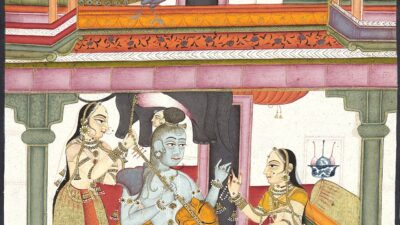
शास्त्र विंग · राग-पट्टिका · Raag Plate
मायामालवगौला
Mayamalavagowla
एक भक्ति Carnatic राग · A Devotion Carnatic Raag
भावभक्तिपूर्ण · आध्यात्मिक · पवित्र · प्रार्थनापूर्ण
ऊर्जामध्यम
स्वर-चित्र · The Swara Panel
आरोह — अवरोह · The Ascent and the Descent
आरोह · Aroha चढ़ती हुई सीढ़ी
अवरोह · Avaroha उतरती हुई सीढ़ी
सˊ = तार सप्तक का षड्ज
वादी–संवादी टिप्पणी · Vadi–Samvadi note
Vadi — In the Carnatic tradition, Raag Mayamalavagowla emphasizes Pancham (Pa) as a key resting note.
Samvadi — Sa (Shadj) serves as the complementary note.
समय और भाव
Time Theory & Moodसमय-सिद्धांत · Time Theory
प्रातः काल
परंपरागत रूप से सुबह के समय (6:00 AM - 10:00 AM) गाया जाता है, जब दिन ताज़ा होता है।
Traditionally performed during the morning hours (6:00 AM - 10:00 AM), when the day is fresh and the atmosphere is calm.
भाव और गति · Mood & Tempo
भक्ति · Devotion
दिव्य प्रेम और आध्यात्मिक भक्ति का रस। समर्पण, प्रार्थना और पवित्र जुड़ाव जगाता है।
ऊर्जा · Energyमध्यम
स्तर · Leveladvanced — राग Mayamalavagowla के लिए कर्नाटक संगीत सिद्धांत की मजबूत नींव आवश्यक है।
पट्टिका-लेख
The Monographपरिचय Introduction
राग Mayamalavagowla कर्नाटक शास्त्रीय संगीत परंपरा का एक राग है। इसका प्रमुख रस भक्ति (Devotion) है। यह परंपरागत रूप से सुबह के समय (6:00 AM - 10:00 AM) गाया जाता है गाया जाता है।
अंग्रेज़ी में पढ़ें · Read in English
Raag Mayamalavagowla is a complete scale with all 7 notes in both ascent and descent raga in the Carnatic classical music tradition. It is derived from the Mayamalavagowla melakarta (#15). With its Sampurna-Sampurna jati structure, this raag creates a distinctive tonal landscape. The predominant rasa is Devotion (भक्ति), making it suitable for compositions that evoke devotional, spiritual emotions. It is traditionally performed during morning hours, and its melodic contour offers rich possibilities for alapana, kalpanaswaram, and creative improvisation.
सांस्कृतिक महत्व Cultural Significance
भारतीय शास्त्रीय संगीत की समृद्ध परंपरा के अंग के रूप में, राग Mayamalavagowla Carnatic परंपरा को परिभाषित करने वाले स्वर संरचना और भावनात्मक अभिव्यक्ति के बीच गहरे संबंध का प्रतिनिधित्व करता है।
अंग्रेज़ी में पढ़ें · Read in English
As part of the rich tapestry of Indian classical music, Raag Mayamalavagowla represents the deep connection between melodic structure and emotional expression that defines the Carnatic tradition.
शिक्षा
Teaching & LearningBegin with slow aalapana to internalize the raag's swaroopa (melodic form)
Practice the arohana and avarohana patterns with a tanpura drone
Listen to recordings by master performers to understand the raag's gamakas (ornamentations)
Work on kalpanaswaram (improvisation) within the raag's framework
Using incorrect gamakas that belong to a different raag
Not maintaining proper swar sthana (note placement)
Rushing through phrases without allowing the raag bhava to develop
तुलना
A Specimen Comparisonचक्रवाकम (#16) में समान स्वर हैं, केवल निषाद में अंतर: वहाँ कोमल नि है, मायामालवगौला में शुद्ध नि। शुद्ध नि से मायामालवगौला को एक समाधानकारी स्पष्टता और आध्यात्मिक ऊर्ध्वगति मिलती है; जबकि कोमल नि चक्रवाकम को अधिक अनिश्चित, व्याकुल बनाता है।
| तुलनाSpecimen | मायामालवगौला | चक्रवाकम |
|---|---|---|
| स्वर-अंतर | Chakravakam: komal Ni; Mayamalavagowla: shuddha Ni | |
| भाव-अंतर | Mayamalavagowla: resolving clarity, spiritual uplift; Chakravakam: unsettled, yearning | |
सूर्यकांतम (#17) में शुद्ध धैवत है — मायामालवगौला के कोमल ध के विपरीत — जिससे वह अधिक उजला और कम कठोर है।
| तुलनाSpecimen | मायामालवगौला | सूर्यकांतम |
|---|---|---|
| स्वर-अंतर | Suryakantam: shuddha Dha; Mayamalavagowla: komal Dha | |
हिंदुस्तानी परंपरा में भैरव (= मायामालवगौला) को कभी-कभी भैरवी से भ्रमित किया जाता है — किंतु भैरवी में कोमल ग भी होता है और कोमल नि भी, जबकि भैरव/मायामालवगौला में ग और नि दोनों शुद्ध हैं। भैरव की पहचान-संकेत है कोमल रे + शुद्ध ग का अर्ध-स्वर तनाव।
| तुलनाSpecimen | मायामालवगौला | भैरवी |
|---|---|---|
| स्वर-अंतर | Bhairavi: komal Ga and komal Ni; Mayamalavagowla/Bhairav: shuddha Ga and shuddha Ni | |
प्रस्तुति
Performance- Description
- परंपरागत रूप से सुबह के समय (6:00 AM - 10:00 AM) गाया जाता है, जब दिन ताज़ा होता है। Traditionally performed during the morning hours (6:00 AM - 10:00 AM), when the day is fresh and the atmosphere is calm.
- Prahar Number
- 1
- Prahar Name
- प्रातः काल Pratah Kaal
- Time Start
- 06:00
- Time End
- 10:00
- Time Flexibility
- flexible
Time
और जानें
More to Know- raag-chakravakam — Chakravakam — चक्रवाकम — Chakravakam (#16) shares all the same notes except Ni: it has komal Ni where Mayamalavagowla has shuddha Ni. This shift from shuddha to komal Ni changes the raag's emotional color: Mayamalavagowla's shuddha Ni gives it a resolving clarity and spiritual uplift at the top of the scale, while Chakravakam's komal Ni creates a more unsettled, yearning quality. — चक्रवाकम (#16) में समान स्वर हैं, केवल निषाद में अंतर: वहाँ कोमल नि है, मायामालवगौला में शुद्ध नि। शुद्ध नि से मायामालवगौला को एक समाधानकारी स्पष्टता और आध्यात्मिक ऊर्ध्वगति मिलती है; जबकि कोमल नि चक्रवाकम को अधिक अनिश्चित, व्याकुल बनाता है। — Chakravakam: komal Ni; Mayamalavagowla: shuddha Ni — Mayamalavagowla: resolving clarity, spiritual uplift; Chakravakam: unsettled, yearning
- raag-suryakantam — Suryakantam — सूर्यकांतम — Suryakantam (#17) uses shuddha Dha instead of Mayamalavagowla's komal Dha — the result is a brighter, less austere feel. — सूर्यकांतम (#17) में शुद्ध धैवत है — मायामालवगौला के कोमल ध के विपरीत — जिससे वह अधिक उजला और कम कठोर है। — Suryakantam: shuddha Dha; Mayamalavagowla: komal Dha
- raag-bhairavi — Bhairavi — भैरवी — Bhairav (= Mayamalavagowla) is sometimes confused with Bhairavi thaat — but Bhairavi uses both komal Ga AND komal Ni, while Bhairav/Mayamalavagowla has shuddha Ga and shuddha Ni. Bhairav's combination of komal Re + shuddha Ga creates a distinctive half-step tension at the bottom of the scale that is the raag's most recognizable feature. — हिंदुस्तानी परंपरा में भैरव (= मायामालवगौला) को कभी-कभी भैरवी से भ्रमित किया जाता है — किंतु भैरवी में कोमल ग भी होता है और कोमल नि भी, जबकि भैरव/मायामालवगौला में ग और नि दोनों शुद्ध हैं। भैरव की पहचान-संकेत है कोमल रे + शुद्ध ग का अर्ध-स्वर तनाव। — Bhairavi: komal Ga and komal Ni; Mayamalavagowla/Bhairav: shuddha Ga and shuddha Ni
In Film Music
Mayamalavagowla occupies a uniquely privileged position among all 72 Carnatic melakartas: it is the very first raag taught to beginners in Carnatic music, serving as the gateway to the entire tradition. It is also the direct Carnatic counterpart of Hindustani Bhairav — both raags use the identical seven svaras: komal Re, shuddha Ga, shuddha Ma, shuddha Pa, komal Dha, and shuddha Ni (Sa Re♭ Ga Ma Pa Dha♭ Ni). This precise equivalence means that the rich Bhairav tradition of Hindi film music is directly accessible as a parallel for Mayamalavagowla. Raag Bhairav — a morning raag of devotion, awe, and spiritual surrender — has been a recurring presence in Hindi film music wherever directors sought to evoke dawn, prayer, or a deeply sacred mood. Among web-verified examples: 'Jaago Mohan Pyaare' from the film Jaagte Raho (1956), composed by Salil Chowdhury and sung by Lata Mangeshkar, is a classic Bhairav-based film song set at dawn. 'Mohe Bhool Gaye Sanwariya' from Baiju Bawra (1952), composed by Naushad and sung by Lata Mangeshkar, is also attributed to Raag Bhairav (with shades of Kalingada, its close relative). In South Indian film music, Mayamalavagowla itself — not just the Hindustani Bhairav equivalent — appears extensively in Tamil and Telugu film compositions, particularly in devotional and classical-influenced songs by composers like Ilayaraja and M.S. Viswanathan.
Comparisons
सीखने के लिए
For Learners- Difficulty Level
- advanced
अन्य विवरण
More Details- Indian_Music_Raga_Encyclopedia_v2.xlsx
- https://musicalltheway-music.blogspot.com/2018/04/mayamalavagowla-raga-tamil-songs-in.html — Tamil songs in Mayamalavagowla
- https://www.facebook.com/justicekatju/posts/song-jaago-mohan-pyaare-in-raag-bhairav — Jaago Mohan Pyaare in Bhairav
- https://sureshs65music.blogspot.com/2011/05/naushad-bhairav-is-so-fundamental-to.html — Naushad and Bhairav
- https://www.raagbased.com/2021/07/hindi-film-songs-in-raag-bhairav.html — Hindi Film Songs in Raag Bhairav
References
नमूना-पट्टी
The Specimen Table| नाम | मायामालवगौला · Mayamalavagowla |
|---|---|
| आरोह | Sa Re♭ Ga Ma Pa Dha♭ Ni Sa' Sa' |
| अवरोह | Sa' Sa' Ni Dha♭ Pa Ma Ga Re♭ Sa |
| जाति | संपूर्ण-संपूर्ण · Sampurna-Sampurna |
| समय | प्रातः काल |
| ऊर्जा | मध्यम |
| परिवार | Mayamalavagowla |
| स्तर | advanced |
| लोकप्रियता | Obscure |
| कर्नाटक समतुल्य | Mayamalavagowla · Melakarta 15 |
जुड़े हुए पन्ने
Connected Plates · The Graph Made Visibleअटलस में कोई पन्ना अकेला नहीं — इस राग से गीत, प्रस्तुतियाँ, कलाकार, ताल, घराने और मिलते-जुलते राग, सब यहाँ से खुलते हैं।
फ़िल्मी गीत इस राग में · Famous Film Songs
ताल-साथी · Taal Pairings
श्रवण-कक्ष · The Listening Room
सुनिए — मायामालवगौला · Hear the Raag
Raag Mayamalavagowla — Classical Performance
प्रश्नोत्तर
Questions & Answersराग Mayamalavagowla किस संगीत पद्धति का राग है?
राग Mayamalavagowla कर्नाटक (दक्षिण भारतीय) शास्त्रीय संगीत पद्धति का राग है।
अंग्रेज़ी में पढ़ें · Read in English
Which music system does Raga Mayamalavagowla belong to? — Raga Mayamalavagowla belongs to the Carnatic (South Indian) classical music system.
साझा कीजिए · Share this Plate