गीत विंग · गीत-पट्टिका · Song Plate
मेरा जूता है जापानी
Mera Joota Hai Japani
चार पंक्तियों में शैलेंद्र ने वह कह दिया जो कोई नेता नहीं कह पाया — भारतीय होना कपड़ों में नहीं, दिल की धड़कन में है।
भावउत्सव · देशभक्ति · दार्शनिक · चुलबुला
भाषाHindi · Hinglish गतिMedium-Fast स्वरूपएकल पुरुष
श्रेय
The Creditsबोल · The Lyrics
बोल — झलक · Lyrics Preview
ये पतलून इंग्लिस्तानी
सर पे लाल टोपी रूसी
फिर भी दिल है हिंदुस्तानी
Ye patlon Inglisatani
Sar pe lal topi Rusi
Phir bhi dil hai Hindustani
कॉपीराइट के कारण केवल झलक — पूरे बोल आधिकारिक मंचों पर।
शब्दकोश
Word Meaningsसूत्र-वाक्य · The Hook
सूत्र-वाक्य
चार पंक्तियों में शैलेंद्र ने वह कह दिया जो कोई नेता नहीं कह पाया — भारतीय होना कपड़ों में नहीं, दिल की धड़कन में है।
In EnglishIn four lines, Shailendra captured what no politician could: that being Indian is not about what you wear, but what beats in your chest.
पट्टिका-लेख
The Monographपरिचय Overview
राज कपूर की १९५५ की अमर फ़िल्म 'श्री ४२०' का यह गीत 'मेरा जूता है जापानी' हिंदी सिनेमा के इतिहास में सबसे अधिक प्रिय देशभक्ति-लोक गीतों में से एक है। मुकेश की सहज मस्तमौला आवाज़, शंकर-जयकिशन का लोक-रंग से सजा संगीत और शैलेंद्र की चार पंक्तियों की अमर कविता — जापानी जूता, अंग्रेज़ी पतलून, रूसी टोपी, और 'फिर भी दिल है हिंदुस्तानी' — यह गीत नेहरू-युग के भारत की आत्मा है। HMV इंडिया द्वारा प्रकाशित, केहरवा ताल में बँधा, लोक वाद्यों और भव्य ऑर्केस्ट्रा से सजा यह गीत बिनाका गीतमाला में शीर्ष पर रहा। सात दशक बाद भी यह स्कूलों, क्रिकेट स्टेडियमों और राजनीतिक भाषणों में गूँजता है।
अंग्रेज़ी में पढ़ें · Read in English
"Mera Joota Hai Japani" from Raj Kapoor's landmark 1955 film Shree 420 is arguably the most beloved patriotic-folk song ever composed for Hindi cinema. Sung by Mukesh with infectious warmth, composed by Shankar-Jaikishan, and penned by Shailendra, this four-line mukhda — declaring Japanese shoes, British trousers, a Russian hat, yet an uncompromisingly Indian heart — became India's post-Independence anthem of self-assured identity. Released by HMV India, picturized on Raj Kapoor's iconic Chaplinesque tramp character Raju, the song encapsulates the Nehruvian era's pride in cultural fusion without loss of roots. Sung at medium-fast Keherwa tempo with folk instruments alongside rich orchestration, it rose to the top of Binaca Geetmala charts and has never left the national consciousness. Seven decades later it is sung at school functions, played at cricket matches, and quoted in political speeches — a true evergreen.
संगीत The Music
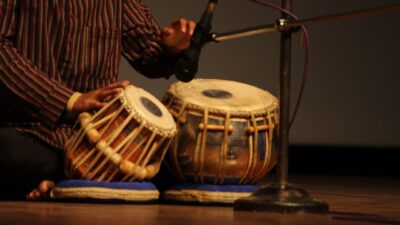
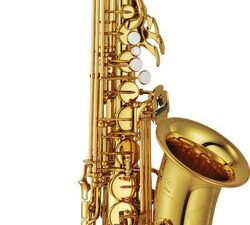
शंकर-जयकिशन ने इस गीत को जान-बूझकर लोक-सरलता की पोशाक पहनाई, जिसके भीतर गहरी संगीत-कुशलता छिपी है। धुन खमाज राग के रंगों में रंगी है — उष्ण, उत्सवी, हर कान को प्रिय। बैंजो, ढोलक और मनोहरी सिंह की सैक्सोफोन की तरंगें मिलकर एक ऐसी ध्वनि रचती हैं जो एक साथ भारतीय भी है और विश्व-नागरिक भी। केहरवा ताल की चलती-फिरती लय उस व्यक्ति के क़दमों जैसी है जो शहर में पाँव रखता है पर अपनी पहचान नहीं खोता। दत्ताराम का तबला खेलता है, मस्ती करता है। मुकेश की आवाज़ — रफ़ी से गहरी, तलत से ज़्यादा ज़मीन से जुड़ी — इस गीत के लिए परफ़ेक्ट थी। शंकर ने तब तक टेक लिए जब तक मुकेश में वह निर्मलता और गर्व का मिश्रण नहीं आ गया।
अंग्रेज़ी में पढ़ें · Read in English
Shankar-Jaikishan crafted this song with deliberate folk simplicity that belies its sophistication. The melody moves in Khamaj-like tones — warm, celebratory, accessible to every listener. The arrangement layers banjo and dholak with Manohari Singh's characteristic saxophone fills to create a sound simultaneously Indian and cosmopolitan — mirroring the lyric's message. The Keherwa taal drives a bouncy walking rhythm suited to a man strolling into the city with confidence. Dattaram's percussion is light and playful. Mukesh's voice — lower and more grounded than Rafi's, less ornamented than Talat's — was the ideal vehicle: the voice of the ordinary man who knows exactly who he is. The song's refrain has no elaborate melisma; it is direct, joyful, complete in its four-line statement. Shankar reportedly demanded multiple takes until Mukesh achieved the precise blend of innocence and pride.
काव्य The Poetry
शैलेंद्र की कविता की शक्ति संकुचन में थी — संसार को चार पंक्तियों में समेटने की। हर वस्तु विदेशी है: जापानी जूता (औपनिवेशिक विमर्श में जूता अपमान का प्रतीक था), अंग्रेज़ी पतलून (साम्राज्य का वस्त्र), लाल टोपी (शायद सोवियत-भारत मित्रता का इशारा)। लेकिन कमाल है 'फिर भी' — जो पूरी कविता को पलट देता है। दिल है हिंदुस्तानी — न कड़वाहट से, न संकीर्णता से, बल्कि हँसते-खेलते। एक रेलवे मज़दूर से कवि बने शैलेंद्र इस उधारी आधुनिकता को जीवन की ठोकरों से समझते थे।
अंग्रेज़ी में पढ़ें · Read in English
Shailendra's genius was compression. Four lines of mukhda — and in those four lines, the entire post-colonial condition of India is mapped. Each object is foreign-made: Japanese shoes (footwear was loaded with colonial humiliation), British trousers (the empire's own cloth), a Russian red cap (winking perhaps at Soviet-India friendship). But the punchline is 'phir bhi' — 'yet still' — which turns the poem on its head. The heart remains defiantly, joyfully Indian. There is no bitterness in this pride, no xenophobia — only the confidence of a culture that absorbs influences without losing its centre. Shailendra, himself a railway worker turned poet, understood this borrowed modernity through lived experience.
कहानी The Story
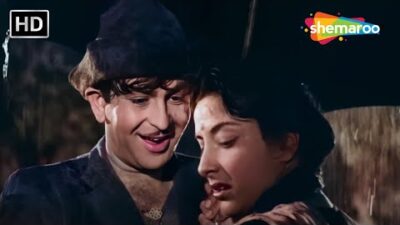
राज कपूर की 'श्री ४२०' चैपलिन की भटकती-ट्रैम्प फ़िल्मों से प्रेरित थी। शुरुआती दृश्य के लिए एक ऐसा गीत चाहिए था जो राजू का परिचय पलभर में करा दे। शैलेंद्र ने यह गीत तब लिखा जब राज कपूर ने दृश्य समझाया — शब्द उनके अपने प्रवासी जीवन से आए। यह दृश्य बंबई के बाहरी इलाके में फ़िल्माया गया — राज कपूर अपनी प्रसिद्ध पोशाक में। मुकेश — जो तब तक राज कपूर की आवाज़ बन चुके थे — स्वाभाविक पसंद थे। रिकॉर्डिंग फ़ेमस स्टूडियोज़ में हुई।
अंग्रेज़ी में पढ़ें · Read in English
Raj Kapoor's Shree 420 was partly inspired by Chaplin's wandering tramp films. The opening sequence needed a song to establish Raju's character instantly: a man from small-town India walking to Bombay, cheerful in poverty, secure in identity. Shailendra reportedly wrote the lyric quickly when Raj Kapoor explained the scene — the words flowing from his own life as a displaced migrant. The song was filmed on the outskirts of Bombay with Raj Kapoor in his iconic costume: rolled-up trousers, red cap, small bundle. Mukesh was the natural choice; by 1955 he and Raj Kapoor were inseparable. Recorded at Famous Studios Bombay, Shankar demanded multiple takes until the innocence of the melody was perfectly matched by Mukesh's lightness.
विरासत The Legacy
'मेरा जूता है जापानी' हिंदी फ़िल्म संगीत से निकलकर भारतीय सांस्कृतिक स्मृति का हिस्सा बन गया। स्वतंत्रता दिवस, राजनीतिक रैलियाँ, स्कूल समारोह, क्रिकेट — हर जगह गूँजता है। १९७१ में बांग्लादेश की आज़ादी के जश्न में भी यह गाया गया। बिनाका गीतमाला आर्काइव में यह १९५० के सबसे माँगे जाने वाले गीतों में है। पीढ़ियों के संगीतकारों ने इसे लोक, फ़्यूज़न और रॉक रूप में गाया है।
अंग्रेज़ी में पढ़ें · Read in English
"Mera Joota Hai Japani" has transcended film music to become part of Indian cultural DNA. It is used at Independence Day celebrations, political rallies, school functions, and cricket matches. In 1971 it was played during Bangladesh Liberation War celebrations. Binaca Geetmala's archive confirms it as one of the most-requested songs of the 1950s. Internationally it is often the first Hindi film song non-Indian listeners recognize. It has been covered in folk, fusion, and rock versions across generations. Raj Kapoor reportedly called these four lines the summation of his entire philosophy: joy, hope, and the dignity of the common Indian.
वर्गीकरण
Classification- Tempo
- Medium-Fast
Genre
अन्य विवरण
More Details- Wikipedia: Shree 420 (film). https://en.wikipedia.org/wiki/Shree_420
- Wikipedia: Mukesh (singer). https://en.wikipedia.org/wiki/Mukesh_(singer)
- Wikipedia: Shailendra (lyricist). https://en.wikipedia.org/wiki/Shailendra_(lyricist)
- Binaca Geetmala annual chart archives, Radio Ceylon, 1955
- Dwyer, Rachel. Filming the Gods: Religion and Indian Cinema. Routledge, 2006.
References
रोचक तथ्य
Margin Notesशुरुआती पंक्ति 'मेरा जूता है जापानी' अपने समय के अनुकूल थी: 1955 में जापानी उपभोक्ता वस्तुएँ भारतीय बाज़ार में तेज़ी से आ रही थीं, जिससे यह पंक्ति तुरंत समसामयिक बन गई।
अंग्रेज़ी में पढ़ें · Read in English
The opening line 'Mera joota hai Japani' was timely: Japan's consumer goods were flooding the Indian market in 1955, making the lyric immediately topical.
कहा जाता है कि जब 'श्री 420' चार्ली चैपलिन को दिखाई गई, तो उन्होंने राज कपूर की चैपलिन-शैली की आवारा भूमिका की सराहना की।
अंग्रेज़ी में पढ़ें · Read in English
Charlie Chaplin reportedly expressed admiration for Raj Kapoor's Chaplinesque tramp portrayal in Shree 420 when the film was screened for him.
इस फ़िल्म में राज कपूर की लाल टोपी सोवियत संघ में एक प्रतिष्ठित प्रतीक बन गई, जहाँ 'श्री 420' बेहद लोकप्रिय हुई और कपूर भारत से भी बड़े सितारे माने गए।
अंग्रेज़ी में पढ़ें · Read in English
Raj Kapoor's red cap from this film became iconic in the Soviet Union, where Shree 420 was enormously popular and Kapoor was a bigger star than in India.
यह गीत रेडियो सीलोन पर नियमित रूप से बजने वाले शुरुआती हिंदी फ़िल्मी गीतों में से एक था, जिसने इसे पूरे दक्षिण एशिया के श्रोताओं तक पहुँचाया।
अंग्रेज़ी में पढ़ें · Read in English
The song was among the first Hindi film songs to receive regular airplay on Radio Ceylon, helping it reach audiences across South Asia.
'श्री 420' के लिए शैलेंद्र को प्रति गीत लगभग 500 रुपये मिले थे — यह उस समय के लिहाज़ से बड़ी रकम थी, पर गीत की आगे चलकर बनी सांस्कृतिक पहुँच के सामने बहुत कम।
अंग्रेज़ी में पढ़ें · Read in English
Shailendra was paid approximately Rs. 500 per song for Shree 420 — significant but not proportionate to the song's eventual cultural reach.
नमूना-पट्टी
The Specimen Table| शीर्षक | मेरा जूता है जापानी · Mera Joota Hai Japani |
|---|---|
| वर्ष · युग | 1955 — Golden Era |
| गायक | Mukesh |
| गीतकार | Shailendra |
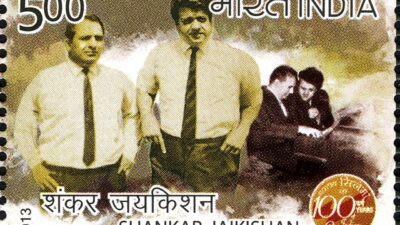
| संगीतकार | Shankar-Jaikishan |
| स्वरूप | एकल पुरुष |
| गति | Medium-Fast |
| अवधि | circa 3:20 |
| भाषा | Hindi · Hinglish |
| वाद्य | harmonium · tabla · saxophone · instrument-banjo · dholak |
| भाव | उत्सव · देशभक्ति · दार्शनिक · चुलबुला |
| लोकप्रियता | Legendary |
| बोल-स्थिति | केवल झलक |
जुड़े हुए पन्ने
Connected Plates · The Graph Made Visibleअटलस में कोई पन्ना अकेला नहीं — इस गीत से जुड़े गीत, कलाकार, फ़िल्म, राग-ताल-विधा, सब यहाँ से खुलते हैं।
मिलते-जुलते गीत · Related Songs
कलाकार · The Artists
युग · The Era
साझा कीजिए · Share this Plate
यह पन्ना आगे बढ़ाइए
ये चार पंक्तियाँ महज़ एक गीत नहीं — ये हिंदुस्तानी दिल का संविधान है।
This four-line refrain is more than a song — it is the Constitution of the Indian heart.
— Attributed to Shailendra, circa 1956
सवाल-जवाब
Questions & Answersमेरा जूता है जापानी किस फ़िल्म का गाना है? · Which film is Mera Joota Hai Japani from?
यह राज कपूर की १९५५ की फ़िल्म 'श्री ४२०' का गाना है।
From Raj Kapoor's 1955 film Shree 420, picturized on Raj Kapoor as the wandering everyman Raju arriving in Bombay.
मेरा जूता है जापानी किसने गाया? · Who sang Mera Joota Hai Japani?
मुकेश ने राज कपूर के लिए प्लेबैक में गाया।
Mukesh sang it as playback for Raj Kapoor. Mukesh was Raj Kapoor's voice throughout the 1950s-60s.
मेरा जूता है जापानी का क्या अर्थ है? · What does Mera Joota Hai Japani mean?
मेरा जूता जापानी है, पतलून अंग्रेज़ी, टोपी रूसी — पर दिल है हिंदुस्तानी।
My shoes are Japanese, my trousers English, my cap Russian — yet my heart is Indian. It celebrates Indian identity while embracing global influences.
इस गाने के गीतकार कौन हैं? · Who wrote the lyrics of Mera Joota Hai Japani?
शैलेंद्र — मज़दूर-वर्ग से उठे महान कवि जिन्होंने हिंदी फ़िल्म संगीत के सबसे मानवीय गीत लिखे।
Shailendra — the great working-class poet who wrote the most humanist songs in Hindi film music.
क्या यह गाना आज भी लोकप्रिय है? · Is Mera Joota Hai Japani still popular today?
बहुत अधिक — स्वतंत्रता दिवस, क्रिकेट मैचों और राजनीतिक रैलियों में गाया जाता है।
Enormously so — it is sung at Independence Day events, cricket matches, and political rallies. It has never left Indian cultural memory.