गीत विंग · गीत-पट्टिका · Song Plate
मेरा मन मोरा मन मोह लियो रे
Mera Mann Mora Mann Moh Liyo Re
तुमने मेरा मन मोह लिया — अनिल बिस्वास के आसरा संगीत का एक कोमल गीत।
भावभक्ति · रोमांटिक
भाषाhindi गतिमध्यम स्वरूपUnknown
श्रेय
The Creditsसूत्र-वाक्य · The Hook
सूत्र-वाक्य
तुमने मेरा मन मोह लिया — अनिल बिस्वास के आसरा संगीत का एक कोमल गीत।
In EnglishYou have stolen my heart — a tender number from Anil Biswas's Aasra score.
पट्टिका-लेख
The Monographपरिचय Overview
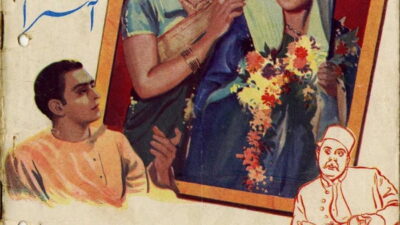
आसरा (1941) का एक गीत, बोल सफ़दर आह के और संगीत अनिल बिस्वास का, डिस्कोग्राफ़ियों में शीर्षक 'मेरा मन मोरा मन मोह लियो रे'। उपलब्ध स्रोतों में गायक का उल्लेख नहीं है। इसकी भक्ति-रूमानी पदावली उस दौर के फ़िल्मी प्रेमगीतों में सामान्य भक्ति-रंगत मुहावरे की प्रतिध्वनि है।
अंग्रेज़ी में पढ़ें · Read in English
A song from Aasra (1941), lyrics by Safdar Aah and music by Anil Biswas, titled in discographies as 'Mera Mann Mora Mann Moh Liyo Re'. The singer is not specified in the available sources. Its devotional-romantic phrasing echoes the bhakti-tinged idiom common to filmi love songs of the period.
काव्य The Poetry
'मन मोह लेना' का भाव हिंदी में भक्ति और रोमांटिक — दोनों परिवेशों में एक साथ विद्यमान है। भक्ति-साहित्य में 'मन मोह लेना' ईश्वर का कार्य है — कृष्ण 'मन मोहन' हैं — जबकि रोमांटिक गीत में वही मोहन-कर्म प्रिय द्वारा किया जाता है। 'मेरा मन मोरा मन मोह लियो रे' शीर्षक इस अस्पष्टता को और गहरा करता है: 'मोरा मन' ब्रज भाषा में 'मेरा मन' का रूप है, और 'रे' प्रत्यय किसी प्रिय के लिए संबोधन-कारक और भजन की विस्मयादिबोधक अलंकृति — दोनों ही है। गीतकार डॉ. सफ़दर 'आह' — जिनका तख़ल्लुस 'आह' (नि:श्वास) स्वयं एक उर्दू काव्य-प्रतीक है — 1941 के बॉम्बे के कई निर्माणों में सक्रिय थे और हिंदी-उर्दू मिश्रित मुहावरे में काम करते थे। यह शीर्षक एक ऐसे गीत का सुझाव देता है जहाँ दोनों परिवेश — भक्ति और रोमांटिक — जानबूझकर धुँधले छोड़े गए थे, ताकि ईश्वर को पुकारने वाला भक्त और प्रिय के लिए आह भरने वाला प्रेमी — शब्दों में — एक ही व्यक्ति बन जाएँ।
अंग्रेज़ी में पढ़ें · Read in English
The phrase 'Mann Moh Lena' — to enchant, to captivate the mind — belongs simultaneously to the devotional and the romantic registers in Hindi. In bhakti literature 'mann moh lena' is the act of the divine — Krishna moh lene wala (the one who captivates the mind) — while in romantic song it is the beloved who performs the same enchantment. The title 'Mera Mann Mora Mann Moh Liyo Re' layers this ambiguity: 'mora mann' is the Braj bhasha inflection for 'mera mann' (my mind), and the 're' suffix carries both the vocative address to a beloved and the rhetorical exclamation of bhajan verse. Lyricist Dr. Safdar 'Aah' — whose pen name 'Aah' (sigh) is itself an Urdu poetic token — was active across multiple 1941 Bombay productions, working in a Hindi-Urdu hybrid idiom. This title suggests a song where the two registers — bhakti and romantic — were deliberately allowed to blur, so that a devotee singing to God and a lover sighing for the beloved became, in the words, the same person.
कहानी The Story
आसरा (1941) अनिल बिस्वास (1914–2003) के कैरियर का एक प्रारंभिक मील-पत्थर था, जो हिंदी फ़िल्म इतिहास के सबसे महत्वपूर्ण संगीत निर्देशकों में से एक थे। 1941 तक बिस्वास अपने 1935 में धर्म की देवी से हुई शुरुआत के बाद से हिंदी फ़िल्मों के लिए संगीत रच रहे थे और खुद को उस संगीतकार के रूप में स्थापित कर रहे थे जो उत्तर भारतीय शास्त्रीय मधुर संरचनाओं को उस वाद्यवृंद-व्यवस्था के साथ एकीकृत कर सके जिसे उनका बाद का बारह-टुकड़ों का वाद्यवृंद मॉडल अंततः व्यवस्थित करेगा। आसरा की कलाकार मंडली में भूदो अडवाणी, सरदार अख़्तर, हुस्न बानू, वीना और कन्हैयालाल शामिल थे। गीतकार डॉ. सफ़दर 'आह' ने फ़िल्म के संगीत-पट्टी में कई गीत लिखे, जिनमें हुस्न बानो द्वारा गाया 'बिताई कहाँ रतियाँ हो महाराजा' और वीना कुमारी द्वारा 'छुपे छुपे आए हैं चितचोर' शामिल हैं। आसरा के एक वर्ष के भीतर अनिल बिस्वास देविका रानी के निमंत्रण पर बॉम्बे टॉकीज़ में शामिल हो जाएंगे — एक करियर-परिवर्तन जो किस्मत (1943) के ऐतिहासिक संगीत-स्कोर की ओर ले जाएगा। 'मेरा मन मोरा मन मोह लियो रे' उस निर्णायक छलाँग से ठीक पहले के काल से संबंधित है।
अंग्रेज़ी में पढ़ें · Read in English
Aasra (1941) was an early milestone in the career of Anil Biswas (1914–2003), one of the most consequential music directors in Hindi film history. By 1941 Biswas had been composing for Hindi films since his debut with Dharam Ki Devi (1935), and was establishing himself as a composer who could integrate North Indian classical melodic structures with the kind of orchestral arrangement that his later mentor model — a twelve-piece orchestra — would eventually systemize. The cast of Aasra included Bhudo Advani, Sardar Akhtar, Husn Banu, Veena, and Kanhaiyalal — cross-sections of the performing talent of Bombay's social film circuit. Lyricist Dr. Safdar 'Aah' shared writing duties across the film's score, including the documented songs 'Bitaai Kahan Ratiyan Ho Maharaja' sung by Husn Bano and 'Chhupe Chhupe Aye Hai Chitchor' by Veena Kumari. Within a year of Aasra, Anil Biswas would join Bombay Talkies at Devika Rani's invitation — a career move that would lead to the landmark score of Kismet (1943). 'Mera Mann Mora Mann Moh Liyo Re' belongs to the period just before that defining leap.
विरासत The Legacy
आसरा (1941) अनिल बिस्वास के करियर के प्रारंभिक चाप में स्थित है — एक संगीतकार जिनकी विरासत हिंदी पार्श्व-संगीत के पहले युग को परिभाषित करने के लिए विकसित हुई। इस फ़िल्म के एक दशक के भीतर, बिस्वास ने किस्मत (1943) का संगीत रचा था — 1940 के दशक की सबसे लंबे समय तक चलने वाली हिंदी फ़िल्मों में से एक — और उन्हें भारतीय फ़िल्म में बारह-टुकड़ों के वाद्यवृंद को प्रस्तुत करने का श्रेय दिया गया था, जो स्वर्ण-युग की पूर्ण वाद्यवृंद-ध्वनि की नींव थी। वे पहले लोगों में से थे जिन्होंने महिला पार्श्व-गायिकाओं के लिए श्वास-तकनीक और स्वर-प्रशिक्षण पर व्यवस्थित ध्यान दिया — यह ज्ञान उन्होंने एक युवा लता मंगेशकर को व्यक्तिगत रूप से दिया। आसरा का 'मेरा मन मोरा मन मोह लियो रे' इसलिए कोई पृथक फ़िल्म-कलाकृति नहीं है बल्कि एक ऐसे संगीतकार के करियर में एक प्रारंभिक बिंदु है जिन्होंने हिंदी फ़िल्म-संगीत की धुनों को उतना ही आकार दिया जितना उसके ढाँचे को।
अंग्रेज़ी में पढ़ें · Read in English
Aasra (1941) sits in the early arc of Anil Biswas's career, a composer whose legacy grew to define the first era of Hindi playback music. Within a decade of this film, Biswas had composed for Kismet (1943), one of the longest-running Hindi films of the 1940s, and had been credited with introducing the twelve-piece orchestra into Indian film — the foundation of the full orchestral sound that the Golden Era would build on. He was among the first to give systematic attention to breathing technique and voice training for female playback singers, passing this knowledge personally to a young Lata Mangeshkar. Aasra's 'Mera Mann Mora Mann Moh Liyo Re' is therefore not an isolated film artefact but an early data-point in the career of a composer who shaped the infrastructure of Hindi film music as much as he shaped its melodies.
वर्गीकरण
Classification- Tempo
- Medium
Genre
अन्य विवरण
More Details- en.wikipedia.org/wiki/Anil_Biswas_(composer)
- hindigeetmala.net/movie/aasra_1941.htm
- songsofyore.com/anil-biswas-songs-for-vintage-female-singers/
- amazon.com/Beetai-Kahan-Ratiyan-Ho-Maharaj/dp/B076HW8751
References
रोचक तथ्य
Margin Notesआसरा (1941) के संगीतकार अनिल बिस्वास (1914-2003) को बारह वाद्यों वाले पहले भारतीय फ़िल्म ऑर्केस्ट्रा को प्रस्तुत करने का श्रेय दिया जाता है, जिसने वह वाद्यवृंद-नींव रखी जिस पर स्वर्ण युग का हिंदी फ़िल्म संगीत आगे चलकर खड़ा हुआ।
अंग्रेज़ी में पढ़ें · Read in English
Anil Biswas (1914–2003), the composer of Aasra (1941), is credited with introducing the first Indian film orchestra of twelve pieces, laying the orchestral foundation that the Hindi film music of the Golden Era would build upon.
गीतकार डॉ. सफ़दर 'आह' — जिनका उपनाम 'आह' स्वयं उर्दू काव्य-परंपरा का प्रतीक है — ने 1941 की कई बंबई फ़िल्मों में योगदान दिया; आसरा के लिए उनके दर्ज गीतों में हुस्न बानो द्वारा गाया गया 'बिताई कहाँ रतियाँ हो महाराजा' शामिल है।
अंग्रेज़ी में पढ़ें · Read in English
Lyricist Dr. Safdar 'Aah' — whose pen name 'Aah' (sigh) is itself a token of the Urdu poetic tradition — contributed to multiple 1941 Bombay film productions; his documented songs for Aasra include 'Bitaai Kahan Ratiyan Ho Maharaja' sung by Husn Bano.
आसरा के एक वर्ष के भीतर ही अनिल बिस्वास देविका रानी के आमंत्रण पर बॉम्बे टॉकीज़ से जुड़ गए और उन्होंने किस्मत (1943) का संगीत रचा, जो उस दशक की सबसे अधिक कमाई करने वाली हिंदी फ़िल्मों में से एक बनी।
अंग्रेज़ी में पढ़ें · Read in English
Within a year of Aasra, Anil Biswas joined Bombay Talkies at Devika Rani's invitation and composed the score for Kismet (1943), which became one of the highest-grossing Hindi films of the decade.
अनिल बिस्वास ने लता मंगेशकर के पार्श्वगायन करियर के शुरुआती दौर में स्वयं उन्हें श्वास-तकनीक और स्वर-निर्माण का प्रशिक्षण दिया — इस मार्गदर्शन ने हिंदी फ़िल्म संगीत के इतिहास की सबसे प्रतिष्ठित आवाज़ को गढ़ने में अहम भूमिका निभाई।
अंग्रेज़ी में पढ़ें · Read in English
Anil Biswas personally trained Lata Mangeshkar in breathing technique and voice production during the early phase of her playback career — a mentorship that helped shape the most iconic voice in Hindi film music history.
नमूना-पट्टी
The Specimen Table| शीर्षक | मेरा मन मोरा मन मोह लियो रे · Mera Mann Mora Mann Moh Liyo Re |
|---|---|
| फ़िल्म | आसरा · 1941 |
| वर्ष · युग | 1941 |
| गीतकार | Safdar Aah |
| संगीतकार | Anil Biswas |
| स्वरूप | Unknown |
| गति | मध्यम |
| भाषा | hindi |
| भाव | भक्ति · रोमांटिक |
| लोकप्रियता | Obscure |
| बोल-स्थिति | केवल झलक |
जुड़े हुए पन्ने
Connected Plates · The Graph Made Visibleअटलस में कोई पन्ना अकेला नहीं — इस गीत से जुड़े गीत, कलाकार, फ़िल्म, राग-ताल-विधा, सब यहाँ से खुलते हैं।
कलाकार · The Artists
फ़िल्म · The Film
साझा कीजिए · Share this Plate