कहानियाँ विंग · कहानी · Music History · 1933
देवलोक उतरा परदे पर
When the Gods Came to the Screen
प्रकाशित20 June 2026
आमुख
1933 में सत्तर हिंदी फ़िल्मों में से असाधारण संख्या पौराणिक-भक्ति विषयों पर थी — 'राजरानी मीरा', 'पूरन भगत', 'महाभारत', 'रामायण', 'कृष्ण-सुदामा' और अन्य। देबकी बोस और आर.सी. बोरल ने न्यू थिएटर्स के लिए मंदिर-संगीत की परंपरा को परदे पर उतारा, और एक ऐसी प्रवृत्ति की नींव रखी जिसने हिंदी सिनेमा में भजन-कीर्तन को हमेशा के लिए स्थापित कर दिया।
अंग्रेज़ी में पढ़ें · Read in English
In 1933, an extraordinary proportion of Hindi cinema's seventy-odd films turned to mythological and devotional subjects — Rajrani Meera, Puran Bhagat, Mahabharat, Ramayana, Krishna Sudama and more. Debaki Bose and R. C. Boral, working for New Theatres, carried the idiom of temple music onto the screen and laid the foundation for a tradition that made the bhajan-kirtan a permanent fixture of Hindi cinema.
सत्तर फ़िल्में — और आधी देवताओं की
Seventy films — and half of them belonged to the gods1933 तक हिंदी सिनेमा अपनी रफ़्तार पकड़ चुका था। उस एक साल में लगभग सत्तर हिंदी सवाक् फ़िल्में बनीं — न्यू थिएटर्स, सागर मूवीटोन, रणजीत स्टूडियोज़, मदन थिएटर्स — और इनमें से उल्लेखनीय संख्या पौराणिक या भक्ति विषयों पर थी। 'महाभारत' (निर्देशक नानूभाई वकील), 'कुरुक्षेत्र' (सरदार बालासाहेब यादव), 'रामायण' (जे.जे. मदन), 'सीता स्वयंवर' (एच.एम. रेड्डी), 'कृष्ण-सुदामा' (जयंत देसाई), 'नल-दमयंती', 'पांडव कौरव' — एक के बाद एक, परदे पर देव-कथाएँ उतरती रहीं। यह संयोग नहीं था। भारतीय दर्शक उन्हीं आख्यानों को जानता था जो पुराणों में थे, रामलीला में थे, कथावाचकों की ज़बान पर थे — और अब वे गाते-बजाते परदे पर आ रहे थे। सिनेमाघर एक नई तरह का मंदिर बन रहा था।
अंग्रेज़ी में पढ़ें · Read in English
By 1933 Hindi cinema had found its stride. Some seventy Hindi sound films were made that year — New Theatres, Sagar Movietone, Ranjit Studios, Madan Theatres — and a striking proportion drew on mythological or devotional subjects. Mahabharat (dir. Nanubhai Vakil), Kurukshetra (Sardar Balasaheb Yadav), Ramayana (J. J. Madan), Sita Swayamvar (H. M. Reddy), Krishna Sudama (Jayant Desai), Nal Damayanti, Pandav Kaurav — one after another, the divine epics descended onto the screen. This was no coincidence. Indian audiences already knew these narratives from the Puranas, from Ramlila, from the storyteller's lips — and now they came singing. The cinema hall was becoming a new kind of temple.
मीरा का भजन और न्यू थिएटर्स का दाँव
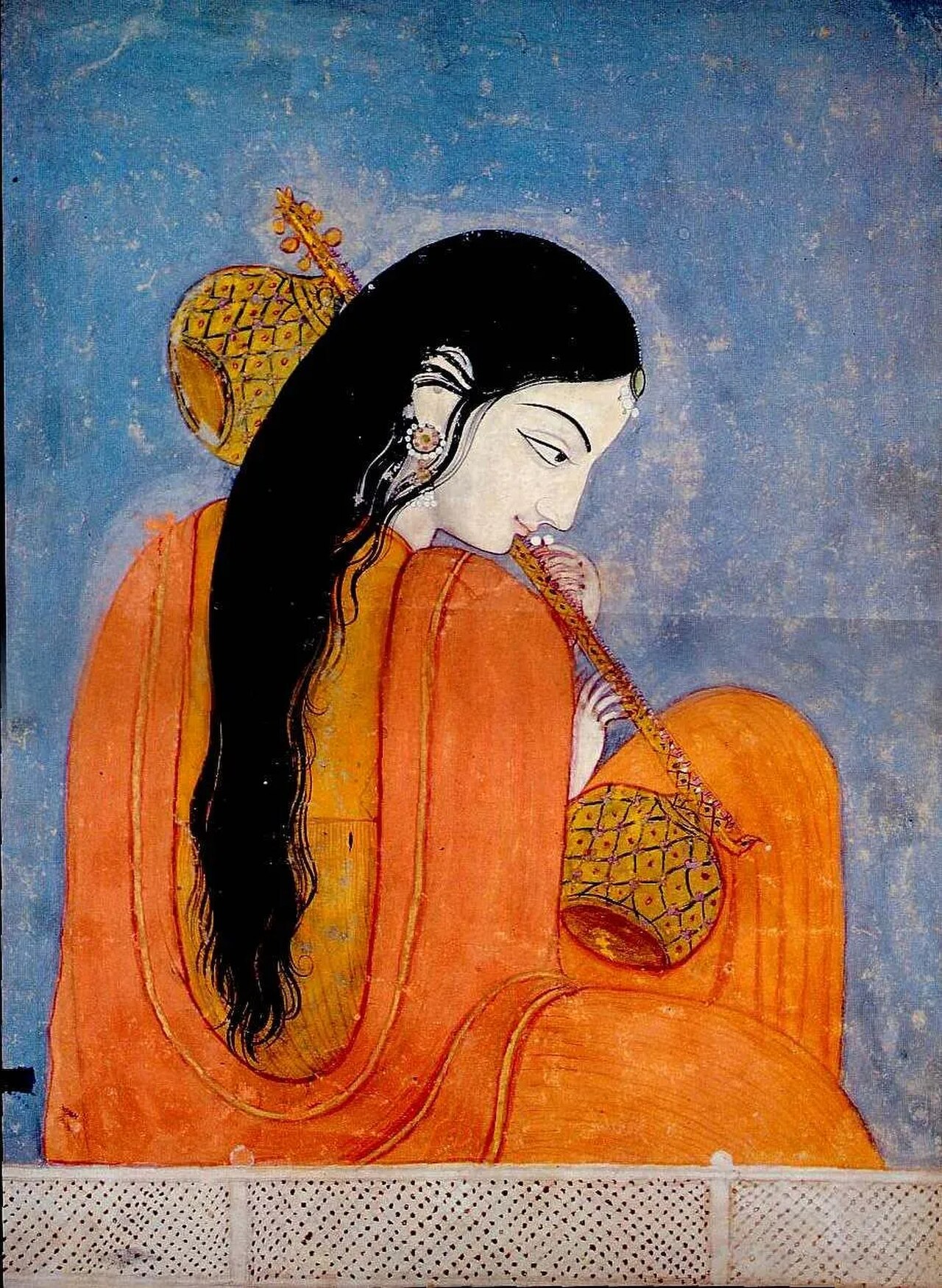
Meera's bhajan and New Theatres' gambleइस लहर के केंद्र में थी न्यू थिएटर्स (कलकत्ता) की 'राजरानी मीरा' — देबकी बोस के निर्देशन में, आर.सी. बोरल के संगीत में। सोलहवीं सदी की राजपूत कवि-संत मीराबाई की कथा, जो मेवाड़ के राणा की पत्नी होते हुए भी कृष्ण-भक्ति में डूबी रहीं, महल छोड़कर मंदिरों-मंदिरों घूमती रहीं और भजन गाती रहीं — यही इस फ़िल्म की आत्मा थी। फ़िल्म में उन्नीस भक्ति-रचनाएँ थीं; हर एक मंदिर-संगीत की शास्त्रीय परंपरा से उठाई हुई — धुन, भजन, कीर्तन के रंगों में। इसी वर्ष देबकी बोस ने 'पूरन भगत' भी बनाई — एक और भक्ति-बायोपिक, जिसमें के.एल. सहगल और के.सी. डे की आवाज़ें थीं, संगीत फिर बोरल का। दोनों फ़िल्में उस वर्ष की सबसे चर्चित रहीं।
अंग्रेज़ी में पढ़ें · Read in English
At the heart of this wave stood New Theatres (Calcutta) with Rajrani Meera — directed by Debaki Bose, music by R. C. Boral. The film told the story of Mirabai, the sixteenth-century Rajput poet-saint who, even as wife of the Rana of Mewar, remained submerged in Krishna-devotion — wandering from temple to temple, singing bhajans — until she renounced the palace altogether. The film carried nineteen devotional compositions, each rooted in the classical idiom of temple music: dhun, bhajan, kirtan. That same year Debaki Bose also made Puran Bhagat — another devotional biopic, with K. L. Saigal and K. C. Dey as its singing voices, again scored by Boral. Both films were among the most talked-about of the year.
मंदिर का संगीत, सिनेमा की भाषा
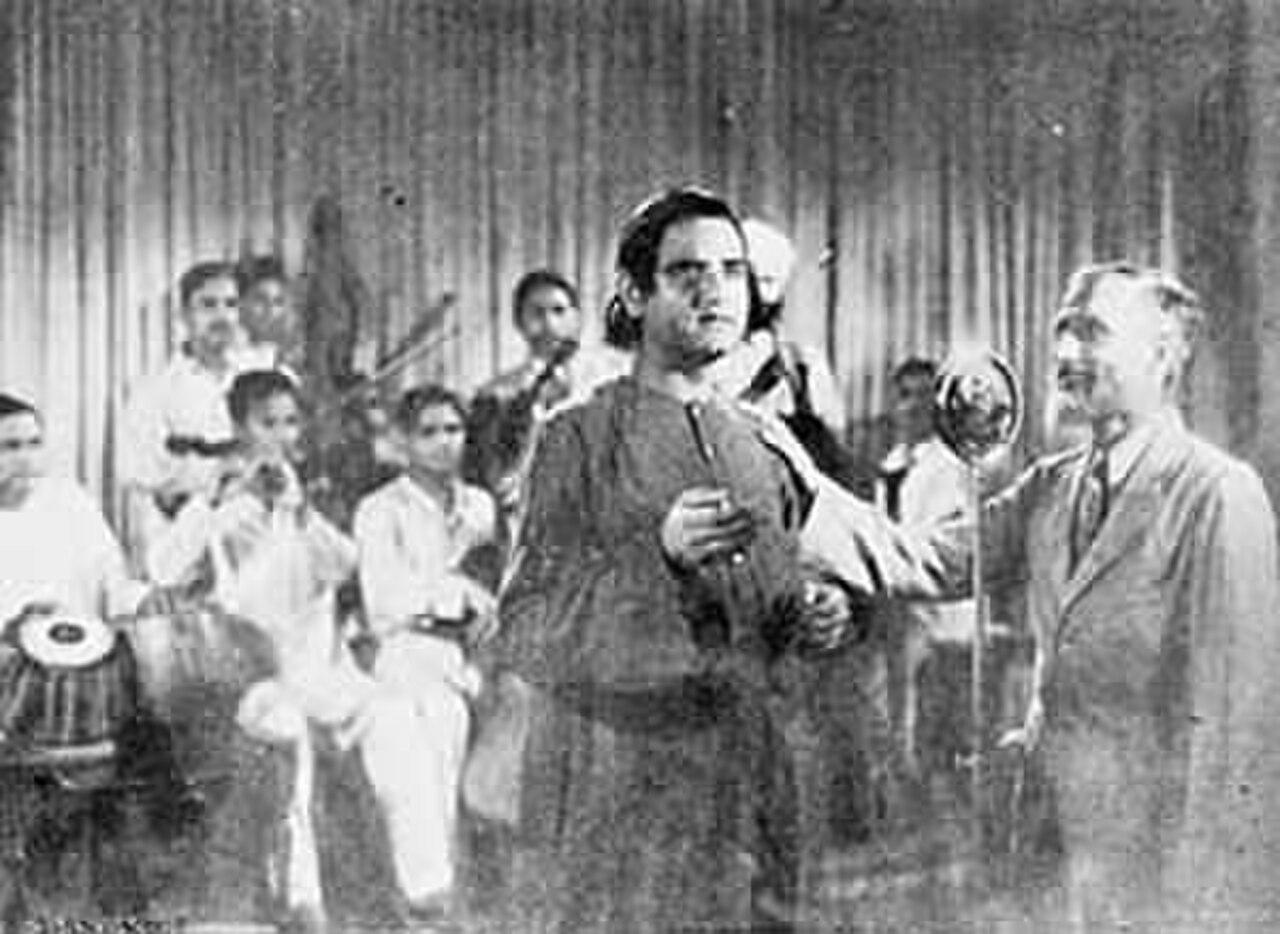
Temple music, cinema's new languageपार्श्वगायन अभी आया नहीं था — अभिनेता ख़ुद गाते थे, ध्वनि और दृश्य एक ही पट्टी पर। इस सीमा ने एक विचित्र वरदान दिया: भक्ति-संगीत के लिए यह पद्धति स्वाभाविक थी, क्योंकि भजन और कीर्तन में शरीर की उपस्थिति, आँख का भाव और स्वर का मेल — सब एक ही पल में होते हैं। परदे पर मंत्रोच्चार, आरती, कीर्तन — ये दृश्य-श्रव्य माध्यम के लिए बने लगते थे। पारसी रंगमंच की गीत-केंद्रित नाटक-परंपरा, पुराण-कथावाचन की शैली और मंदिर-संगीत की राग-ताल — तीनों का संगम 1933 की इन फ़िल्मों में हुआ। इस वर्ष जो प्रवृत्ति बनी, उसने आने वाले दशकों में भक्ति-गीत को हिंदी सिनेमा की एक अमिट विधा बना दिया।
अंग्रेज़ी में पढ़ें · Read in English
Playback singing had not yet arrived — actors sang themselves, sound and image on one strip. This constraint turned out to be an unexpected gift for devotional cinema: in bhajan and kirtan, the singer's bodily presence, the expression in the eyes, and the voice are inseparable — all must happen in the same instant. Chant, aarti, kirtan on screen seemed made for the audio-visual medium. The 1933 devotional films brought together three streams: the song-centred dramatic tradition of Parsi theatre, the storytelling manner of Puranic recitation, and the raga-and-tala grammar of temple music. The tendency formed in this single year would make the devotional song an indelible genre in Hindi cinema for decades to come.
परिचय
IdentityEpithet
1933 — when devotional song turned the cinema hall into a temple
कहानी-नमूना
The Story Specimen| शीर्षक | देवलोक उतरा परदे पर · When the Gods Came to the Screen |
|---|---|
| श्रेणी | Music History |
| प्रकार | विशेष लेख |
| प्रकाशित | 20 June 2026 — admin |
| वर्ष | 1933 |
और कहानियाँ
More Stories from the Atlas
साझा कीजिए · Share this Plate
यह पन्ना आगे बढ़ाइए
सवाल-जवाब
Questions & Answers1933 में कितनी पौराणिक-भक्ति हिंदी फ़िल्में बनीं? · How many mythological or devotional Hindi films were made in 1933?
उस वर्ष लगभग सत्तर हिंदी सवाक् फ़िल्मों में से उल्लेखनीय संख्या पौराणिक या भक्ति वर्ग की थी — जिनमें 'महाभारत', 'कुरुक्षेत्र', 'रामायण', 'सीता स्वयंवर', 'कृष्ण-सुदामा', 'नल-दमयंती', 'राजरानी मीरा', 'पूरन भगत', 'सती अनसूया' और 'पांडव कौरव' शामिल थे।
Of the roughly seventy Hindi sound films made that year, a striking number fell into the mythological or devotional category — including Mahabharat, Kurukshetra, Ramayana, Sita Swayamvar, Krishna Sudama, Nal Damayanti, Rajrani Meera, Puran Bhagat, Sati Anusuya, and Pandav Kaurav.
'राजरानी मीरा' में भजन इतने महत्त्वपूर्ण क्यों थे? · Why were bhajans so central to Rajrani Meera?
मीराबाई की पूरी कथा ही उनके भजनों के इर्द-गिर्द बुनी है — भक्ति उनकी पहचान है, उनका विद्रोह है, उनकी मुक्ति है। देबकी बोस ने इस जीवनी-फ़िल्म में उन्नीस भक्ति-रचनाएँ रखीं, जो मंदिर-संगीत की परंपरा — धुन, भजन, कीर्तन — से सीधे उठाई गई थीं। पार्श्वगायन से पहले के उस दौर में अभिनेत्री को ख़ुद गाना होता था, जिससे भाव और स्वर का वह जीवंत संयोग मिला जो भक्ति-संगीत की आत्मा है।
Mirabai's entire story is woven around her bhajans — devotion is her identity, her rebellion, and her liberation. Debaki Bose structured the biographical film around nineteen devotional compositions drawn directly from the temple-music tradition — dhun, bhajan, kirtan. In the pre-playback era the actress had to sing herself, producing that living fusion of expression and voice that is the very soul of devotional music.