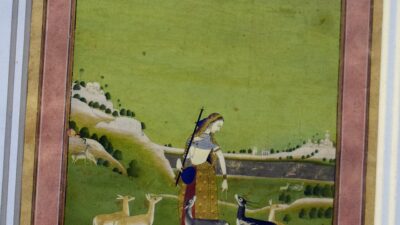
शास्त्र विंग · राग-पट्टिका · Raag Plate
कोकिलप्रिया
Kokilapriya
एक श्रृंगार Carnatic राग · A Romance Carnatic Raag
भावरोमांटिक · सुंदर · कोमल · प्रेमपूर्ण
ऊर्जामध्यम
स्वर-चित्र · The Swara Panel
आरोह — अवरोह · The Ascent and the Descent
आरोह · Aroha चढ़ती हुई सीढ़ी
अवरोह · Avaroha उतरती हुई सीढ़ी
सˊ = तार सप्तक का षड्ज
पकड़ · पहचान वाक्यांश
रे॒ ग॒ म प ध नि सा' — सा' नि ध प म ग॒ रे॒ सा
Re♭ Ga♭ Ma Pa Dha Ni Sa' — Sa' Ni Dha Pa Ma Ga♭ Re♭ Sa
Kokilapriya has no Hindustani-tradition pakad. This characteristic bidirectional phrase highlights its distinctive upper tetrachord: unlike the Netra chakra melakartas with komal Dha (e.g. Hanumatodi, Dhenuka), Kokilapriya uses shuddha Dha and shuddha Ni—an unusually bright upper resolution after the dark komal Re and Ga in the lower tetrachord.
वादी–संवादी टिप्पणी · Vadi–Samvadi note
Vadi — In the Carnatic tradition, Raag Kokilapriya emphasizes Pancham (Pa) as a key resting note.
Samvadi — Sa (Shadj) serves as the complementary note.
समय और भाव
Time Theory & Moodसमय-सिद्धांत · Time Theory
अपराह्न
परंपरागत रूप से दोपहर (12:00 PM - 4:00 PM) में गाया जाता है।
Traditionally performed during afternoon hours (12:00 PM - 4:00 PM), suited for the warmth and energy of midday.
भाव और गति · Mood & Tempo
श्रृंगार · Romance/Beauty
प्रेम, सौंदर्य और भक्ति का रस। रोमांटिक तड़प, सौंदर्यपरक आनंद और गहरे भावनात्मक जुड़ाव को जगाता है।
ऊर्जा · Energyमध्यम
स्तर · Leveladvanced — राग Kokilapriya के लिए कर्नाटक संगीत सिद्धांत की मजबूत नींव आवश्यक है।
पट्टिका-लेख
The Monographपरिचय Introduction
राग Kokilapriya कर्नाटक शास्त्रीय संगीत परंपरा का एक राग है। इसका प्रमुख रस श्रृंगार (Romance/Beauty) है। यह परंपरागत रूप से दोपहर (12:00 PM - 4:00 PM) में गाया जाता है। गाया जाता है।
अंग्रेज़ी में पढ़ें · Read in English
Raag Kokilapriya is a complete scale with all 7 notes in both ascent and descent raga in the Carnatic classical music tradition. It is derived from the Kokilapriya melakarta (#11). With its Sampurna-Sampurna jati structure, this raag creates a distinctive tonal landscape. The predominant rasa is Romance/Beauty (श्रृंगार), making it suitable for compositions that evoke romantic, beautiful emotions. It is traditionally performed during afternoon hours, and its melodic contour offers rich possibilities for alapana, kalpanaswaram, and creative improvisation.
सांस्कृतिक महत्व Cultural Significance
भारतीय शास्त्रीय संगीत की समृद्ध परंपरा के अंग के रूप में, राग Kokilapriya Carnatic परंपरा को परिभाषित करने वाले स्वर संरचना और भावनात्मक अभिव्यक्ति के बीच गहरे संबंध का प्रतिनिधित्व करता है।
अंग्रेज़ी में पढ़ें · Read in English
As part of the rich tapestry of Indian classical music, Raag Kokilapriya represents the deep connection between melodic structure and emotional expression that defines the Carnatic tradition.
ऐतिहासिक महत्व Historical Significance
कोकिलप्रिय कर्नाटक संगीत की 72-मेलकर्ता प्रणाली में 11वाँ मेलकर्ता है और नेत्र चक्र (मेलकर्ता 7–12), अर्थात् 2वें चक्र, का पाँचवाँ सदस्य है। नेत्र चक्र में कोमल ऋषभ और साधारण गंधार का युगल होता है; पाँचवें स्थान में चतुःश्रुति धैवत (शुद्ध ध) और काकली निषाद (शुद्ध नि) हैं। इस प्रकार निचले चतुष्टक में 'अंधेरा' (कोमल रे, कोमल ग) और ऊपरी में 'उजाला' (शुद्ध ध, शुद्ध नि) — यह असंतुलन एक मधुर-उदास भाव उत्पन्न करता है। वेंकटमखिन ने इसे चतुर्दंडिप्रकाशिका (लगभग 1620 ई.) में वर्गीकृत किया। 'कोकिलप्रिय' नाम का अर्थ है 'कोयल का प्रिय' — कोयल की मीठी आवाज़ संस्कृत और हिंदी काव्य का प्रिय प्रतीक है। यह राग कर्नाटक मंच पर विरले ही सुना जाता है।
अंग्रेज़ी में पढ़ें · Read in English
Kokilapriya is the 11th melakarta in the Carnatic 72-raga system, the fifth member of the Netra chakra (melakartas 7–12), the 2nd of the 12 chakras. The Netra chakra uses komal Rishabha (R1, 1 semitone) and sadharana Gandhara (G2, 3 semitones); the fifth position within this chakra uses chatusshruti Dhaivata (shuddha Dha, D2, 9 semitones) and kakali Nishada (shuddha Ni, N3, 11 semitones). This creates an unusual asymmetry: the lower tetrachord is 'dark' (komal Re, komal Ga) while the upper tetrachord is entirely 'bright' (shuddha Ma, shuddha Dha, shuddha Ni), giving Kokilapriya a distinctive bittersweet quality. Venkatamakhin classified it in the Caturdandiprakasika (c. 1620 CE). The name 'Kokilapriya' means 'beloved of the cuckoo' (kokila = Indian cuckoo/koel, priya = beloved), evoking the sweet, melodious song of the koel—one of the most beloved bird-metaphors in Sanskrit and Hindi poetry. The raga remains rare in Carnatic concert life.
शिक्षा
Teaching & LearningBegin with slow aalapana to internalize the raag's swaroopa (melodic form)
Practice the arohana and avarohana patterns with a tanpura drone
Listen to recordings by master performers to understand the raag's gamakas (ornamentations)
Work on kalpanaswaram (improvisation) within the raag's framework
Using incorrect gamakas that belong to a different raag
Not maintaining proper swar sthana (note placement)
Rushing through phrases without allowing the raag bhava to develop
तुलना
A Specimen Comparisonनटकप्रिय (#10) इसका तत्काल पूर्ववर्ती है, जिसमें केवल निषाद का अंतर है — वहाँ कोमल नि है, जबकि कोकिलप्रिया में शुद्ध नि। यह एकल परिवर्तन नटकप्रिय को अधिक भारी और अंतर्मुखी बनाता है, जबकि कोकिलप्रिया का शुद्ध निषाद उसे ऊपर की ओर हल्कापन और समाधान देता है।
| तुलनाSpecimen | कोकिलप्रिया | नटकप्रिय |
|---|---|---|
| स्वर-अंतर | Natakapriya: komal Ni; Kokilapriya: shuddha Ni | |
| भाव-अंतर | Natakapriya is heavier and more introspective; Kokilapriya has a lighter, upward-resolving quality | |
धेनुक (#9) एक कदम और आगे जाकर कोमल धैवत लेता है, जो कोकिलप्रिया के शुद्ध धैवत की तुलना में गहरा-उदास स्वभाव बनाता है।
| तुलनाSpecimen | कोकिलप्रिया | धेनुक |
|---|---|---|
| स्वर-अंतर | Dhenuka: komal Dha; Kokilapriya: shuddha Dha | |
हनुमतोडी (#8) — जो कर्नाटक और हिंदुस्तानी दोनों परंपराओं में 'टोडी' के रूप में प्रसिद्ध है — में कोमल ध और कोमल नि दोनों हैं, जिससे टोडी का वह तीव्र, करुणातुर मिजाज़ उत्पन्न होता है। इस परिवार में कोकिलप्रिया सबसे 'उजला' मेलकर्ता है — क्योंकि यही एकमात्र है जिसमें कोमल रे + कोमल ग के बावजूद ऊपरी स्वर (ध और नि) शुद्ध हैं।
| तुलनाSpecimen | कोकिलप्रिया | हनुमतोडी |
|---|---|---|
| स्वर-अंतर | Hanumatodi: komal Dha and komal Ni; Kokilapriya: shuddha Dha and shuddha Ni | |
| भाव-अंतर | Hanumatodi: intense, grief-laden (Todi); Kokilapriya: bright, upward-resolving | |
प्रस्तुति
Performance- Description
- परंपरागत रूप से दोपहर (12:00 PM - 4:00 PM) में गाया जाता है। Traditionally performed during afternoon hours (12:00 PM - 4:00 PM), suited for the warmth and energy of midday.
- Prahar Number
- 3
- Prahar Name
- अपराह्न Aparahna
- Time Start
- 12:00
- Time End
- 16:00
- Time Flexibility
- flexible
Time
और जानें
More to Know- raag-natakapriya — Natakapriya — नटकप्रिय — Natakapriya (#10) is the immediate predecessor, differing only in having komal Ni where Kokilapriya has shuddha Ni — this single change makes Natakapriya heavier and more introspective, while Kokilapriya's shuddha Ni in the upper tetrachord gives it a comparatively lighter, upward-resolving quality. — नटकप्रिय (#10) इसका तत्काल पूर्ववर्ती है, जिसमें केवल निषाद का अंतर है — वहाँ कोमल नि है, जबकि कोकिलप्रिया में शुद्ध नि। यह एकल परिवर्तन नटकप्रिय को अधिक भारी और अंतर्मुखी बनाता है, जबकि कोकिलप्रिया का शुद्ध निषाद उसे ऊपर की ओर हल्कापन और समाधान देता है। — Natakapriya: komal Ni; Kokilapriya: shuddha Ni — Natakapriya is heavier and more introspective; Kokilapriya has a lighter, upward-resolving quality
- raag-dhenuka — Dhenuka — धेनुक — Dhenuka (#9) goes one step further, using komal Dha where Kokilapriya uses shuddha Dha, making Dhenuka the darkest in the trio. — धेनुक (#9) एक कदम और आगे जाकर कोमल धैवत लेता है, जो कोकिलप्रिया के शुद्ध धैवत की तुलना में गहरा-उदास स्वभाव बनाता है। — Dhenuka: komal Dha; Kokilapriya: shuddha Dha
- raag-hanumatodi — Hanumatodi — हनुमतोडी — Hanumatodi (#8), the most famous of this group in both Carnatic and Hindustani traditions (Todi), uses komal Dha AND komal Ni — the starkest contrast, producing the intense, grief-laden mood for which Todi is famous. Against this family, Kokilapriya stands apart as the brightest of the komal-Re-komal-Ga melakartas, precisely because it retains shuddha Dha and shuddha Ni in the upper register. — हनुमतोडी (#8) — जो कर्नाटक और हिंदुस्तानी दोनों परंपराओं में 'टोडी' के रूप में प्रसिद्ध है — में कोमल ध और कोमल नि दोनों हैं, जिससे टोडी का वह तीव्र, करुणातुर मिजाज़ उत्पन्न होता है। इस परिवार में कोकिलप्रिया सबसे 'उजला' मेलकर्ता है — क्योंकि यही एकमात्र है जिसमें कोमल रे + कोमल ग के बावजूद ऊपरी स्वर (ध और नि) शुद्ध हैं। — Hanumatodi: komal Dha and komal Ni; Kokilapriya: shuddha Dha and shuddha Ni — Hanumatodi: intense, grief-laden (Todi); Kokilapriya: bright, upward-resolving
In Film Music
Kokilapriya is a Carnatic melakarta with no established Hindustani equivalent and no known presence in Hindi film music. Its name — meaning 'beloved of the cuckoo' (kokilā = cuckoo, priyā = beloved/dear) — reflects a poetic, springtime imagery, but its svar combination of komal Re, komal Ga, shuddha Ma, shuddha Pa, shuddha Dha, and shuddha Ni is quite specific to the Carnatic system. The Hindustani tradition does not have a commonly performed raag with komal Re + komal Ga + shuddha Dha + shuddha Ni together, which would be needed to correspond to Kokilapriya's upper-octave brightness alongside its lower-octave flatness. The raag lives in the Carnatic concert circuit, where it is performed during afternoon hours and explored primarily through alapana and kritis. Listeners approaching this raag should look to South Indian classical vocal and instrumental recordings rather than any Hindi film repertoire.
Comparisons
सीखने के लिए
For Learners- Difficulty Level
- advanced
अन्य विवरण
More Details- Indian_Music_Raga_Encyclopedia_v2.xlsx
- https://en.wikipedia.org/wiki/Kokilapriya
- 72 Melakarta system — Netra chakra (melakartas 7–12)
- Carnatic 72-melakarta system: melakarta 11 in the Netra chakra (Venkatamakhin, Caturdandiprakasika, c. 1620 CE)
- Govindacharya, Samgraha-Chudamani, c. 1800 CE
References
नमूना-पट्टी
The Specimen Table| नाम | कोकिलप्रिया · Kokilapriya |
|---|---|
| थाट | — |
| आरोह | Sa Re♭ Ga♭ Ma Pa Dha Ni Sa' Sa' |
| अवरोह | Sa' Sa' Ni Dha Pa Ma Ga♭ Re♭ Sa |
| पकड़ | रे॒ ग॒ म प ध नि सा' — सा' नि ध प म ग॒ रे॒ सा |
| जाति | संपूर्ण-संपूर्ण · Sampurna-Sampurna |
| समय | अपराह्न |
| ऊर्जा | मध्यम |
| परिवार | Kokilapriya |
| स्तर | advanced |
| लोकप्रियता | Obscure |
| कर्नाटक समतुल्य | Kokilapriya · Melakarta 11 |
जुड़े हुए पन्ने
Connected Plates · The Graph Made Visibleअटलस में कोई पन्ना अकेला नहीं — इस राग से गीत, प्रस्तुतियाँ, कलाकार, ताल, घराने और मिलते-जुलते राग, सब यहाँ से खुलते हैं।
ताल-साथी · Taal Pairings
श्रवण-कक्ष · The Listening Room
सुनिए — कोकिलप्रिया · Hear the Raag
Raag Kokilapriya — Classical Performance
प्रश्नोत्तर
Questions & Answersराग Kokilapriya किस संगीत पद्धति का राग है?
राग Kokilapriya कर्नाटक (दक्षिण भारतीय) शास्त्रीय संगीत पद्धति का राग है।
अंग्रेज़ी में पढ़ें · Read in English
Which music system does Raga Kokilapriya belong to? — Raga Kokilapriya belongs to the Carnatic (South Indian) classical music system.
साझा कीजिए · Share this Plate