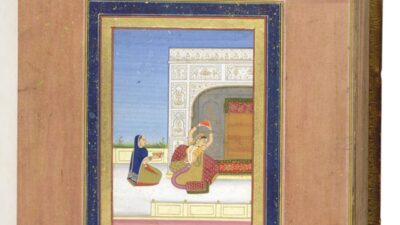
शास्त्र विंग · राग-पट्टिका · Raag Plate
गवंबहोदि
Gavambhodi
एक करुण Carnatic राग · A Compassion Carnatic Raag
भावउदास · चिंतनशील · भावपूर्ण · विचारशील
ऊर्जाधीमी
स्वर-चित्र · The Swara Panel
आरोह — अवरोह · The Ascent and the Descent
आरोह · Aroha चढ़ती हुई सीढ़ी
अवरोह · Avaroha उतरती हुई सीढ़ी
सˊ = तार सप्तक का षड्ज
पकड़ · पहचान वाक्यांश
रे॒ ग॒ म॑ प ध॒ नि॒॒ सा'
Re♭ Ga♭ Ma♯ Pa Dha♭ Ni♭♭ Sa'
Gavambhodi has no Hindustani-tradition pakad. This ascending phrase moves through komal Re, komal Ga, tivra Ma, komal Dha, and N1 (the lowest Nishada, 9 semitones). The compressed upper tetrachord—D1 followed immediately by N1 only one semitone higher—is the defining characteristic that distinguishes this raga from others in the Vasu chakra.
वादी–संवादी टिप्पणी · Vadi–Samvadi note
Vadi — In the Carnatic tradition, Raag Gavambhodi emphasizes Pancham (Pa) as a key resting note.
Samvadi — Sa (Shadj) serves as the complementary note.
समय और भाव
Time Theory & Moodसमय-सिद्धांत · Time Theory
संध्या काल
परंपरागत रूप से संध्या काल (4:00 PM - 7:00 PM) में गाया जाता है।
Traditionally performed during evening/twilight hours (4:00 PM - 7:00 PM), when day transitions to night.
भाव और गति · Mood & Tempo
करुण · Compassion/Pathos
करुणा, दुख और गहरी भावना का रस। सहानुभूति, उदासी और चिंतनशील ध्यान जगाता है।
ऊर्जा · Energyधीमी
स्तर · Leveladvanced — राग Gavambhodi के लिए कर्नाटक संगीत सिद्धांत की मजबूत नींव आवश्यक है।
पट्टिका-लेख
The Monographपरिचय Introduction
राग Gavambhodi कर्नाटक शास्त्रीय संगीत परंपरा का एक राग है। इसका प्रमुख रस करुण (Compassion/Pathos) है। यह परंपरागत रूप से संध्या काल (4:00 PM - 7:00 PM) में गाया जाता है। गाया जाता है।
अंग्रेज़ी में पढ़ें · Read in English
Raag Gavambhodi is a complete scale with all 7 notes in both ascent and descent raga in the Carnatic classical music tradition. It is derived from the Gavambhodi melakarta (#43). With its Sampurna-Sampurna jati structure, this raag creates a distinctive tonal landscape. The predominant rasa is Compassion/Pathos (करुण), making it suitable for compositions that evoke melancholic, contemplative emotions. It is traditionally performed during evening hours, and its melodic contour offers rich possibilities for alapana, kalpanaswaram, and creative improvisation.
सांस्कृतिक महत्व Cultural Significance
भारतीय शास्त्रीय संगीत की समृद्ध परंपरा के अंग के रूप में, राग Gavambhodi Carnatic परंपरा को परिभाषित करने वाले स्वर संरचना और भावनात्मक अभिव्यक्ति के बीच गहरे संबंध का प्रतिनिधित्व करता है।
अंग्रेज़ी में पढ़ें · Read in English
As part of the rich tapestry of Indian classical music, Raag Gavambhodi represents the deep connection between melodic structure and emotional expression that defines the Carnatic tradition.
ऐतिहासिक महत्व Historical Significance
गावांभोदि कर्नाटक संगीत की 72-मेलकर्ता प्रणाली में 43वाँ मेलकर्ता है और वसु चक्र (मेलकर्ता 43–48), अर्थात् 8वें चक्र, का प्रथम सदस्य है। यह प्रतिमध्यम (तीव्र मध्यम) मेलकर्ताओं के दूसरे समूह (37–72) में उस ऋषभ-गंधार जोड़े का पहला उपयोगकर्ता है जो नेत्र चक्र (7–12) के समान है: कोमल ऋषभ और साधारण गंधार। वसु चक्र के पहले स्थान में शुद्ध धैवत (8 अर्धस्वर) और शुद्ध निषाद/चतुःश्रुति धैवत (N1=D2, 9 अर्धस्वर) हैं — एक-एक अर्धस्वर के अंतराल वाला संकीर्ण ऊपरी चतुष्टक। वेंकटमखिन ने इसे चतुर्दंडिप्रकाशिका (लगभग 1620 ई.) में वर्गीकृत किया। 'गावांभोदि' नाम की व्युत्पत्ति 'गव' (गौ/पशु) से संभव है। यह वसु चक्र का आधार है किन्तु कर्नाटक मंच पर विरले ही प्रस्तुत होता है।
अंग्रेज़ी में पढ़ें · Read in English
Gavambhodi is the 43rd melakarta in the Carnatic 72-raga system, the first member of the Vasu chakra (melakartas 43–48), the 8th of the 12 chakras. It is also the first melakarta of the second set of 36 melakartas using prati-madhyama (tivra Ma) whose Ri-Ga combination mirrors the Netra chakra: komal Rishabha (R1, 1 semitone) and sadharana Gandhara (G2, 3 semitones). The first position in the Vasu chakra uses shuddha Dhaivata (D1, 8 semitones) and shuddha Nishada / chatusshruti Dhaivata (N1=D2, 9 semitones). This compressed D1-N1 upper interval is one of the most unusual features of the Indu and Vasu chakra melakartas. Venkatamakhin classified it in the Caturdandiprakasika (c. 1620 CE). The name 'Gavambhodi' may be connected to 'gava' (cattle/cow) or interpreted as awakening of the senses. Like many first-position chakra melakartas, it is theoretically important as the foundation of the Vasu series but is rarely performed as an independent concert raga.
शिक्षा
Teaching & LearningBegin with slow aalapana to internalize the raag's swaroopa (melodic form)
Practice the arohana and avarohana patterns with a tanpura drone
Listen to recordings by master performers to understand the raag's gamakas (ornamentations)
Work on kalpanaswaram (improvisation) within the raag's framework
Using incorrect gamakas that belong to a different raag
Not maintaining proper swar sthana (note placement)
Rushing through phrases without allowing the raag bhava to develop
तुलना
A Specimen Comparisonनिकटतम भ्राता-राग भवप्रिया (#44) है जिसमें गवंभोदि के Ni♭♭ के स्थान पर कोमल Ni (Ni♭) है — एक अर्धस्वर ऊपर, पर यह परिवर्तन ऊपरी स्वर-क्षेत्र को थोड़ा कम अंधकारमय बनाता है।
| तुलनाSpecimen | गवंबहोदि | भवप्रिया |
|---|---|---|
| स्वर-अंतर | Bhavapriya has komal Ni (Ni♭) where Gavambhodi has ati-komal Ni (Ni♭♭, double-flat seventh); all other notes identical. | |
शुभपंतुवरली (#45), इस चक्र का सबसे प्रसिद्ध राग, गवंभोदि जैसा ही निचला स्वर-समूह और कोमल धैवत रखता है, पर शुद्ध निषाद के साथ — यह शुद्ध Ni उसे गहरी भक्ति और पवित्रता देता है।
| तुलनाSpecimen | गवंबहोदि | शुभपंतुवरली |
|---|---|---|
| स्वर-अंतर | Shubhapantuvarali uses shuddha Ni in place of Gavambhodi's Ni♭♭; lower tetrachord and komal Dha identical. | |
| भाव-अंतर | Shubhapantuvarali's shuddha Ni gives it distinctive devotional purity; Gavambhodi's Ni♭♭ creates deeper darkness. | |
दूसरे छोर पर दिव्यमणि (#48) में तीव्र धैवत और शुद्ध निषाद हैं — छहों में सबसे विचित्र और कम कारुणिक।
| तुलनाSpecimen | गवंबहोदि | दिव्यमणि |
|---|---|---|
| स्वर-अंतर | Divyamani uses tivra Dha (not komal Dha) and shuddha Ni (not Ni♭♭); both upper notes raised compared to Gavambhodi. | |
प्रस्तुति
Performance- Description
- परंपरागत रूप से संध्या काल (4:00 PM - 7:00 PM) में गाया जाता है। Traditionally performed during evening/twilight hours (4:00 PM - 7:00 PM), when day transitions to night.
- Prahar Number
- 5
- Prahar Name
- संध्या काल Sandhya Kaal
- Time Start
- 16:00
- Time End
- 19:00
- Time Flexibility
- flexible
Time
और जानें
More to Know- raag-bhavapriya — Bhavapriya — भवप्रिया — The nearest confusable is Bhavapriya (#44), which replaces Gavambhodi's Ni♭♭ with komal Ni (Ni♭) — just one semitone higher, but this change perceptibly raises the upper register's darkness by one degree. — निकटतम भ्राता-राग भवप्रिया (#44) है जिसमें गवंभोदि के Ni♭♭ के स्थान पर कोमल Ni (Ni♭) है — एक अर्धस्वर ऊपर, पर यह परिवर्तन ऊपरी स्वर-क्षेत्र को थोड़ा कम अंधकारमय बनाता है। — Bhavapriya has komal Ni (Ni♭) where Gavambhodi has ati-komal Ni (Ni♭♭, double-flat seventh); all other notes identical.
- raag-shubhapantuvarali — Shubhapantuvarali — शुभपंतुवरली — Shubhapantuvarali (#45), the most celebrated raga of this chakra, shares Gavambhodi's lower tetrachord (komal Re, komal Ga, tivra Ma) and komal Dha, but uses shuddha Ni in place of Gavambhodi's Ni♭♭. This resolved shuddha Ni gives Shubhapantuvarali its distinctive devotional purity. — शुभपंतुवरली (#45), इस चक्र का सबसे प्रसिद्ध राग, गवंभोदि जैसा ही निचला स्वर-समूह और कोमल धैवत रखता है, पर शुद्ध निषाद के साथ — यह शुद्ध Ni उसे गहरी भक्ति और पवित्रता देता है। — Shubhapantuvarali uses shuddha Ni in place of Gavambhodi's Ni♭♭; lower tetrachord and komal Dha identical. — Shubhapantuvarali's shuddha Ni gives it distinctive devotional purity; Gavambhodi's Ni♭♭ creates deeper darkness.
- raag-divyamani — Divyamani — दिव्यमणि — At the opposite extreme, Divyamani (#48) swaps both Gavambhodi's komal Dha for tivra Dha and its Ni♭♭ for shuddha Ni — making it the most exotic and least grief-stricken of the six siblings. — दूसरे छोर पर दिव्यमणि (#48) में तीव्र धैवत और शुद्ध निषाद हैं — छहों में सबसे विचित्र और कम कारुणिक। — Divyamani uses tivra Dha (not komal Dha) and shuddha Ni (not Ni♭♭); both upper notes raised compared to Gavambhodi.
In Film Music
Gavambhodi is one of the most chromatically dense Carnatic melakartas, carrying a mood of deep pathos that has not found a foothold in Hindi film music. Its combination of komal Re (flat second), komal Ga (flat third), tivra Ma (augmented fourth), komal Dha (flat sixth), and ati-komal Ni (double-flat seventh, Ni♭♭) packs four flattened notes alongside an augmented fourth — a level of chromatic density not found in any Hindustani thaat. No Hindi film song has been attributed to this scale. In the Carnatic concert world, Gavambhodi is encountered primarily in comprehensive 72-melakarta recitals, where performers like Dr. M. Balamuralikrishna have systematically explored these obscure parent-ragas. Its karuna rasa (compassion/pathos) and evening performance designation make it a vehicle for deeply contemplative expression.
Comparisons
सीखने के लिए
For Learners- Difficulty Level
- advanced
अन्य विवरण
More Details- Indian_Music_Raga_Encyclopedia_v2.xlsx
- Carnatic 72 melakarta system — Vasu chakra (43-48)
- S. Bhagyalekshmy — Ragas in Carnatic Music (1990)
- P. Sambamurthy — South Indian Music (4 vols)
- T.V. Subba Rao — Studies in Indian Music
- Carnatic 72-melakarta system: melakarta 43 in the Vasu chakra (Venkatamakhin, Caturdandiprakasika, c. 1620 CE)
- Govindacharya, Samgraha-Chudamani, c. 1800 CE
References
नमूना-पट्टी
The Specimen Table| नाम | गवंबहोदि · Gavambhodi |
|---|---|
| थाट | — |
| आरोह | Sa Re♭ Ga♭ Ma♯ Pa Dha♭ Ni♭♭ Sa' Sa' |
| अवरोह | Sa' Sa' Ni♭♭ Dha♭ Pa Ma♯ Ga♭ Re♭ Sa |
| पकड़ | रे॒ ग॒ म॑ प ध॒ नि॒॒ सा' |
| जाति | संपूर्ण-संपूर्ण · Sampurna-Sampurna |
| समय | संध्या काल |
| ऊर्जा | धीमी |
| परिवार | Gavambhodi |
| स्तर | advanced |
| लोकप्रियता | Obscure |
| कर्नाटक समतुल्य | Gavambhodi · Melakarta 43 |
जुड़े हुए पन्ने
Connected Plates · The Graph Made Visibleअटलस में कोई पन्ना अकेला नहीं — इस राग से गीत, प्रस्तुतियाँ, कलाकार, ताल, घराने और मिलते-जुलते राग, सब यहाँ से खुलते हैं।
ताल-साथी · Taal Pairings
श्रवण-कक्ष · The Listening Room
सुनिए — गवंबहोदि · Hear the Raag
Raag Gavambhodi — Classical Performance
प्रश्नोत्तर
Questions & Answersराग Gavambhodi किस संगीत पद्धति का राग है?
राग Gavambhodi कर्नाटक (दक्षिण भारतीय) शास्त्रीय संगीत पद्धति का राग है।
अंग्रेज़ी में पढ़ें · Read in English
Which music system does Raga Gavambhodi belong to? — Raga Gavambhodi belongs to the Carnatic (South Indian) classical music system.
साझा कीजिए · Share this Plate