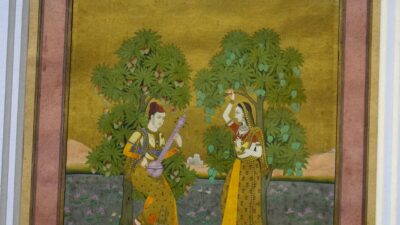
शास्त्र विंग · राग-पट्टिका · Raag Plate
आस मनजरि
Aasa Manjari
एक शांत Carnatic राग · A Peace Carnatic Raag
भावशांतिपूर्ण · ध्यानपूर्ण · प्रशांत · शांत
ऊर्जाधीमी
समय और भाव
Time Theory & Moodसमय-सिद्धांत · Time Theory
संध्या काल
परंपरागत रूप से संध्या काल (4:00 PM - 7:00 PM) में गाया जाता है।
Traditionally performed during evening/twilight hours (4:00 PM - 7:00 PM), when day transitions to night.
भाव और गति · Mood & Tempo
शांत · Peace/Tranquility
आंतरिक शांति, सुकून और आध्यात्मिक वैराग्य का रस। शांति, ध्यान और अध्यात्म को जगाता है।
ऊर्जा · Energyधीमी
स्तर · Leveladvanced — राग Aasa Manjari के लिए कर्नाटक संगीत सिद्धांत की मजबूत नींव आवश्यक है।
पट्टिका-लेख
The Monographपरिचय Introduction
राग Aasa Manjari कर्नाटक शास्त्रीय संगीत परंपरा का एक राग है। इसका प्रमुख रस शांत (Peace/Tranquility) है। यह परंपरागत रूप से संध्या काल (4:00 PM - 7:00 PM) में गाया जाता है। गाया जाता है।
अंग्रेज़ी में पढ़ें · Read in English
Raag Aasa Manjari is a complete scale with all 7 notes in both ascent and descent raga in the Carnatic classical music tradition.. With its Sampurna-Sampurna jati structure, this raag creates a distinctive tonal landscape. The predominant rasa is Peace/Tranquility (शांत), making it suitable for compositions that evoke peaceful, meditative emotions. It is traditionally performed during evening hours, and its melodic contour offers rich possibilities for alapana, kalpanaswaram, and creative improvisation.
सांस्कृतिक महत्व Cultural Significance
भारतीय शास्त्रीय संगीत की समृद्ध परंपरा के अंग के रूप में, राग Aasa Manjari Carnatic परंपरा को परिभाषित करने वाले स्वर संरचना और भावनात्मक अभिव्यक्ति के बीच गहरे संबंध का प्रतिनिधित्व करता है।
अंग्रेज़ी में पढ़ें · Read in English
As part of the rich tapestry of Indian classical music, Raag Aasa Manjari represents the deep connection between melodic structure and emotional expression that defines the Carnatic tradition.
ऐतिहासिक महत्व Historical Significance
आसा-मञ्जरी (अर्थ: आशाओं का गुच्छ — 'आसा' = आशा, 'मञ्जरी' = फूलों का समूह या नई कोंपल) एक दुर्लभ कर्नाटक जन्य राग है। 'मञ्जरी' प्रत्यय कर्नाटक संगीत में कोमल, गेयात्मक भाव वाले रागों के नाम में आता है। परंतु 'आसा-मञ्जरी' के रूप में यह राग मुख्य कर्नाटक संगीत-शास्त्र के ग्रंथों में स्पष्ट रूप से प्रलेखित नहीं है। इसकी पितृ-मेलकर्ता और स्वर-संरचना की जानकारी के लिए विशेषज्ञ स्रोतों का अध्ययन आवश्यक है।
अंग्रेज़ी में पढ़ें · Read in English
Aasa-manjari (आसा-मञ्जरी, 'cluster of hopes' — 'aasa' meaning hope or desire, 'manjari' meaning a cluster of flowers or new shoots) is a rare Carnatic janya raag. The name is poetic and evocative, suggesting tender new growth and the anticipation of fulfillment. While 'Manjari' appears as a suffix in several Carnatic raag names (e.g., Sahana-manjari, Sru-manjari), indicating a delicate, lyrical quality, Aasa-manjari as a distinct raag is poorly documented in the standard Carnatic treatises. Its parent melakarta, precise swara structure, and performance tradition require verification from specialized Carnatic musicological sources. The raag is not listed in widely consulted standard references such as P. Sambamoorthy's encyclopedia.
शिक्षा
Teaching & LearningBegin with slow aalapana to internalize the raag's swaroopa (melodic form)
Practice the arohana and avarohana patterns with a tanpura drone
Listen to recordings by master performers to understand the raag's gamakas (ornamentations)
Work on kalpanaswaram (improvisation) within the raag's framework
Using incorrect gamakas that belong to a different raag
Not maintaining proper swar sthana (note placement)
Rushing through phrases without allowing the raag bhava to develop
प्रस्तुति
Performance- Description
- परंपरागत रूप से संध्या काल (4:00 PM - 7:00 PM) में गाया जाता है। Traditionally performed during evening/twilight hours (4:00 PM - 7:00 PM), when day transitions to night.
- Prahar Number
- 5
- Prahar Name
- संध्या काल Sandhya Kaal
- Time Start
- 16:00
- Time End
- 19:00
- Time Flexibility
- flexible
Time
और जानें
More to KnowIn Film Music
Aasa-manjari has no documented presence in Hindi film music. As a rare and poorly documented Carnatic janya raag, it has not entered the film music tradition of any regional cinema.
सीखने के लिए
For Learners- Difficulty Level
- advanced
अन्य विवरण
More Details- Indian_Music_Raga_Encyclopedia_v2.xlsx
References
नमूना-पट्टी
The Specimen Table| नाम | आस मनजरि · Aasa Manjari |
|---|---|
| थाट | — |
| जाति | संपूर्ण-संपूर्ण · Sampurna-Sampurna |
| समय | संध्या काल |
| ऊर्जा | धीमी |
| परिवार | Aasa Manjari |
| स्तर | advanced |
| लोकप्रियता | Obscure |
जुड़े हुए पन्ने
Connected Plates · The Graph Made Visibleअटलस में कोई पन्ना अकेला नहीं — इस राग से गीत, प्रस्तुतियाँ, कलाकार, ताल, घराने और मिलते-जुलते राग, सब यहाँ से खुलते हैं।
ताल-साथी · Taal Pairings
श्रवण-कक्ष · The Listening Room
सुनिए — आस मनजरि · Hear the Raag
Komal Nishad Manjari Asnare Nayaki Kanada Part 4/6
प्रश्नोत्तर
Questions & Answersराग Aasa Manjari किस संगीत पद्धति का राग है?
राग Aasa Manjari कर्नाटक (दक्षिण भारतीय) शास्त्रीय संगीत पद्धति का राग है।
अंग्रेज़ी में पढ़ें · Read in English
Which music system does Raga Aasa Manjari belong to? — Raga Aasa Manjari belongs to the Carnatic (South Indian) classical music system.
साझा कीजिए · Share this Plate