सिनेमा विंग · फ़िल्म-पट्टिका · Film Plate
मेघदूत
Meghdoot
शैलीCostume Drama · Mythological · Romance
भाषाhindi प्रकारकथा-चित्र (फ़ीचर)
गीत11 — नीचे पूरी संगीत-सूची
कथा-सार
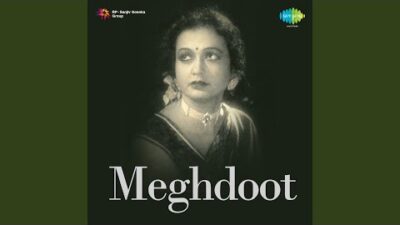
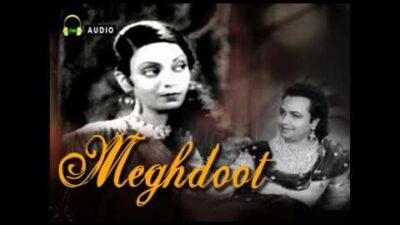
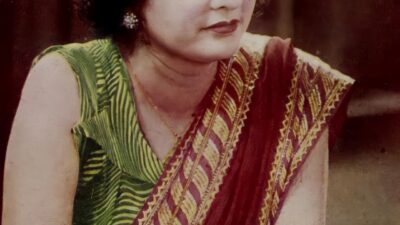
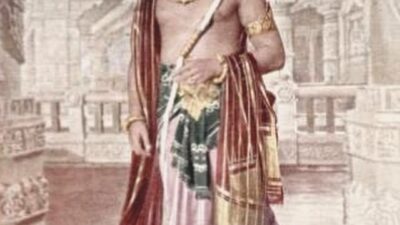
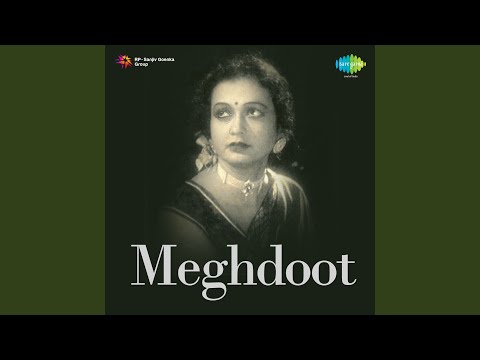
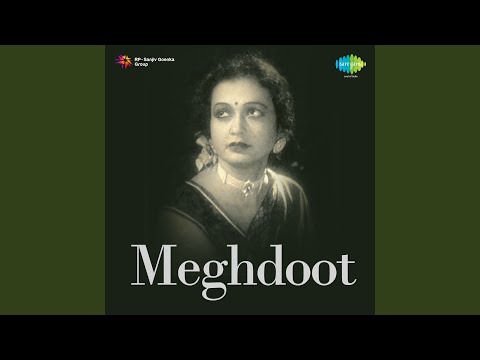
Synopsis'मेघदूत' कालिदास के संस्कृत खंडकाव्य 'मेघदूतम्' का देबकी बोस द्वारा किया गया रूपांतरण है — वही कथा जिसमें अलकापुरी से निर्वासित एक यक्ष मध्य भारत के पर्वतीय आश्रम में बैठा, उत्तर की ओर बहते वर्षा-मेघ को रोककर उससे अपनी विरहिणी प्रिया तक संदेश पहुँचाने की विनती करता है। बोस, जो पिछले एक दशक से न्यू थिएटर्स में बांग्ला भक्ति और साहित्यिक सामग्री को सवाक् पर्दे पर उतार रहे थे, ने इस एक ही विरह-कल्पना के चारों ओर फ़िल्म को एक कॉस्ट्यूम ड्रामा की तरह गढ़ा; मुख्य भूमिकाओं में शाहू मोडक और लीला देसाई थे तथा सहायक भूमिकाओं में कुसुम देशपांडे, वस्ती, हरि शिवदासानी, आग़ा, मधुकर गुप्ते, निंबालकर और बिमान बनर्जी। कीर्ति पिक्चर्स ने इसे अक्टूबर 1945 में प्रदर्शित किया। फ़िल्म का कोई प्रिंट प्रचलन में नहीं है और उस समय का व्यापारिक दस्तावेज़ीकरण भी क्षीण है, इसलिए बोस ने एक छोटे-से काव्य को पूरी लंबाई की कथा में कैसे विस्तार दिया — यह विश्वसनीय रूप से दर्ज नहीं है। जो पूरा बचा है वह है कमल दासगुप्ता का ग्यारह गीतों वाला संगीत, जो फ़िल्म के मूल भाव — विरह, अर्थात् दूरी से नापा गया प्रेम — को किसी भी बची हुई कथा-रूपरेखा से अधिक सम्पूर्णता से वहन करता है।
अंग्रेज़ी में पढ़ें · Read in English
Meghdoot is Debaki Bose's screen version of Kalidasa's Sanskrit lyric Meghadutam, the poem in which a yaksha banished from the celestial city of Alaka to a hill hermitage in central India stops a monsoon cloud drifting northward and asks it to carry a message of longing to the wife he has been separated from. Bose, who had spent the previous decade turning Bengali devotional and literary material into talkies at New Theatres, built the film as a costume drama around that single conceit of separation, casting Shahu Modak and Leela Desai in the leads with Kusum Deshpande, Wasti, Hari Shivdasani, Agha, Madhukar Gupte, Nimbalkar and Biman Banerjee in support. Kirti Pictures released it in Bombay in October 1945. No print is known to be in circulation and contemporary trade documentation of the production is thin, so exactly how Bose expanded a short courtly poem into a feature-length narrative is not reliably recorded. What has survived intact is Kamal Dasgupta's eleven-song score, which carries the film's central emotional argument — viraha, love measured by distance — more completely than any surviving plot summary does.
संगीत-सूची
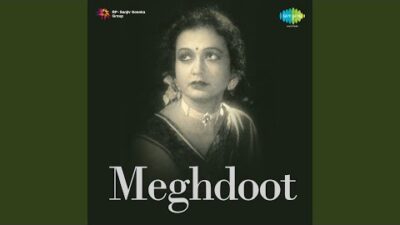
The Soundtrack'मेघदूत' के लिए ग्यारह गीत प्रलेखित हैं, सभी कमल दासगुप्ता के संगीतबद्ध किए हुए, जिनमें फ़ैयाज़ हाशमी, गौड़दास और पंडित नरोत्तम व्यास को गीतकार के रूप में गीत-दर-गीत नहीं, बल्कि सामूहिक रूप से श्रेय दिया गया है। केवल तीन गीतों के लिए गीतकार का व्यक्तिगत श्रेय बचा है, और वे तीनों फ़ैयाज़ हाशमी के नाम हैं। गायन-श्रेय भी उतने ही अधूरे हैं: जगमोहन सुरसागर तीन गीतों पर प्रलेखित हैं, जिनमें से दो युगल गीतों में कल्याणी दास उनके साथ हैं; शेष सात गीतों के गायक किसी भी उपलब्ध सूची में दर्ज नहीं हैं — इसलिए यहाँ वे श्रेय-सूचियाँ अनुमान से भरने के बजाय खाली छोड़ी गई हैं। शैली की दृष्टि से यह संगीत दासगुप्ता का कलकतिया सुगम-संगीत मुहावरा है — गीत और ग़ज़ल की धुन, जिसमें आवाज़ एक छोटी, अनहड़बड़ी संगत से कहीं आगे रहती है — न कि उस दौर की बंबइया लोक-और-वाद्यवृंद शैली। सरेगामा के दस-गीतों वाले डिजिटल पुनःप्रकाशन ने रिकॉर्ड को और उलझाया है: उसमें कई गीतों का श्रेय गायकों के बजाय पात्रों के नाम (यक्ष, प्रिया, मधुमुखी) को दिया गया है, और 'काहे नहीं आए' पूरी तरह छूट गया है।
अंग्रेज़ी में पढ़ें · Read in English
Eleven songs are documented for Meghdoot, all composed by Kamal Dasgupta, with Faiyyaz Hashmi, Gauddas and Pandit Narottam Vyas credited as the film's lyricists as a group rather than song by song. Song-level lyric attribution survives for only three numbers, all to Faiyyaz Hashmi. Playback credits are similarly incomplete: Jagmohan Sursagar is documented on three songs, Kalyani Das joining him on two of them, and the singers of the remaining seven are simply not recorded in any catalogue available to us — so those credit arrays are left empty here rather than filled with guesses. Stylistically the score is Dasgupta's Calcutta light-music idiom — geet and ghazal melody, the voice carried well forward of a small, unhurried accompaniment — rather than the folk-and-orchestra manner then dominant in Bombay. Saregama's ten-track digital reissue muddies the record further by crediting several tracks to character names (Yaksh, Priya, Madhumukhi) instead of singers, and by omitting 'Kaahe Nahin Aaye' entirely.
- ओ वर्षा के पहले बादल O Varsha Ke Pehle Baadal स्वर: Jagmohan Sursagar

- प्रेम की नैया को मिला है Prem Ki Naiya Ko Mila Hai स्वर: Jagmohan Sursagar, कल्याणी दास
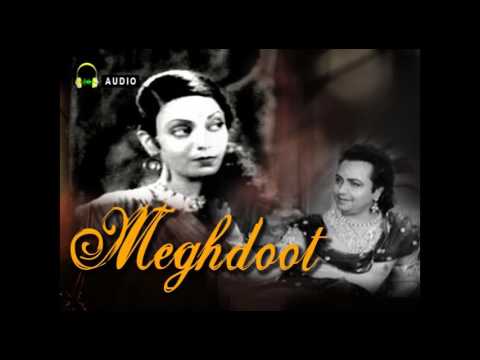
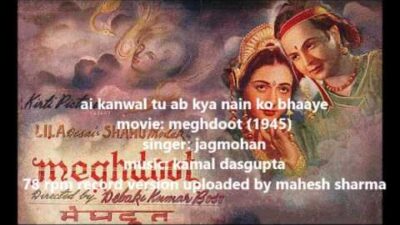
- ऐ कमल तू अब क्या नैन को भाए Ae Kamal Tu Ab Kya Nain Ko Bhaaye स्वर: Jagmohan Sursagar

- अँखियाँ धीरे धीरे बोले Ankhiyan Dheere Dheere Bole स्वर: Jagmohan Sursagar, कल्याणी दास

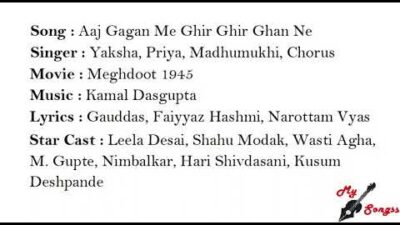
- आज गगन में घिर घिर बादल Aaj Gagan Mein Ghir Ghir Baadal
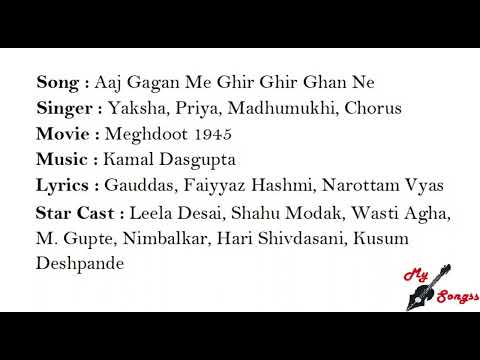
- बीत गईं दुख की रातें Beet Gayi Dukh Ki Raatein
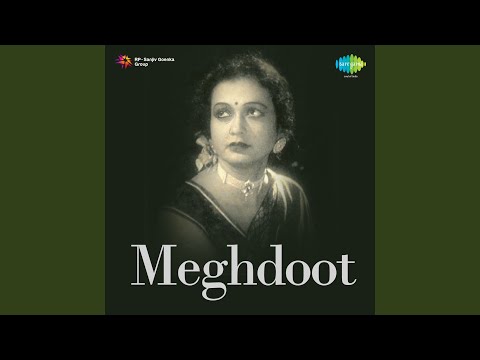
- जागो जागो प्रेम की राजदुलारी Jaago Jaago Prem Ki Rajdulari
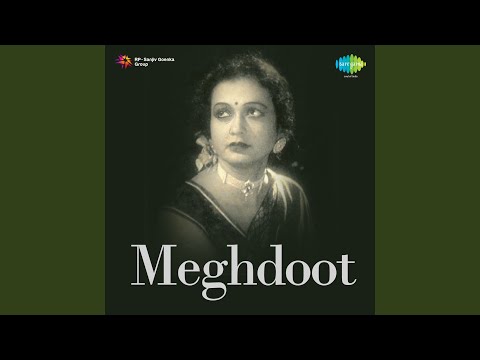
- काहे नहीं आए Kaahe Nahin Aaye
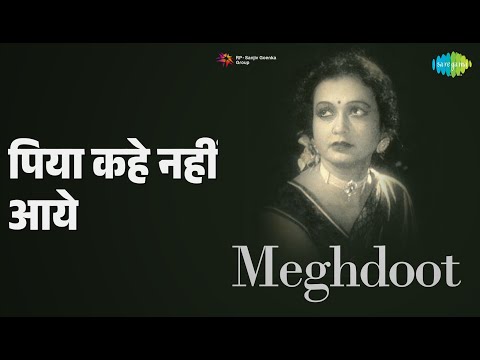
- प्रेम के गीले पनघट पे मन मेरा Prem Ke Gile Panghat Pe Man Mera
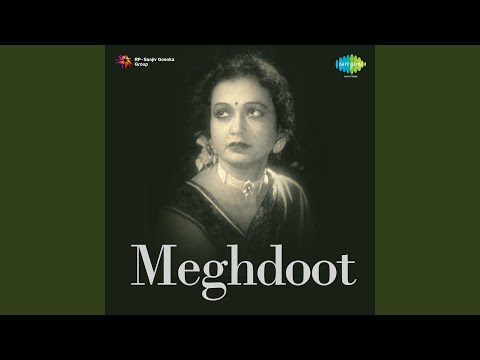
- प्रेम के पथ में अब हम दोनों को Prem Ke Path Mein Ab Hum Dono Ko
- तुम हार गईं आज मेरी जीत हुई Tum Haar Gayi Aaj Meri Jeet Huyi
पट्टिका-लेख
The Monographपर्दे के पीछे Behind the Scenes
1945 तक देबकी बोस उस न्यू थिएटर्स तंत्र को छोड़ चुके थे जिसने उन्हें बनाया था, और अपना बैनर 'देबकी प्रोडक्शंस' खड़ा कर चुके थे — किंतु 'मेघदूत' कीर्ति पिक्चर्स के लिए बनी, जो युद्ध-काल की छोटी बंबइया कंपनियों में से एक थी, और इसे प्रायः उनकी अपनी निर्मित फ़िल्मों के बजाय उनके बंबई-काल के कामों में गिना जाता है। इन्हीं वर्षों में कमल दासगुप्ता अपने व्यावसायिक शिखर पर थे — एचएमवी कलकत्ता के भीतर इतने सृजनशील कि हिंदी, बांग्ला और तमिल में, फ़िल्मी और ग़ैर-फ़िल्मी मिलाकर उनके नाम लगभग आठ हज़ार रचनाएँ मानी जाती हैं; 'मेघदूत' उन गिनी-चुनी बार में से एक थी जब किसी बंबइया निर्माण ने उन्हें उस स्टूडियो से बाहर खींचा। नायक शाहू मोडक उस समय एक असामान्य क़िस्म के सितारे थे — मराठी ईसाई परिवार से आए वह अभिनेता जो चौदह वर्ष की आयु से पर्दे पर कृष्ण की भूमिका निभाते आ रहे थे और जिन्होंने 'भरत मिलाप' (1942) में स्वयं दो गीत गाए थे — जबकि लीला देसाई हिंदी सिनेमा में न्यू थिएटर्स से आई थीं, जहाँ शास्त्रीय नृत्य की उनकी शिक्षा ही उनकी पर्दे-उपस्थिति का आधार बनी थी।
अंग्रेज़ी में पढ़ें · Read in English
By 1945 Debaki Bose had left the New Theatres system that made him and set up his own banner, Debaki Productions — but Meghdoot was made for Kirti Pictures, one of the smaller Bombay houses of the war years, and is usually listed among his Bombay-period assignments rather than his own productions. Kamal Dasgupta was at his commercial peak in the same years, so prolific inside HMV Calcutta that he is credited with something approaching eight thousand compositions across Hindi, Bengali and Tamil, film and non-film; Meghdoot was one of the few times a Bombay production drew him out of that studio. The male lead, Shahu Modak, was by then an unusual kind of star — a Marathi Christian actor who had been playing Krishna on screen since he was fourteen, and who sang two songs himself in Bharat Milap (1942) — while Leela Desai had come to Hindi cinema from New Theatres, where her training as a classical dancer had been the basis of her screen presence.
महत्व Significance
'मेघदूत' हिंदी सिनेमा द्वारा कालिदास पर किए गए उन गिने-चुने प्रयासों में से एक है, और यह उसी निर्देशक से आया जो इसके लिए सबसे उपयुक्त थे — देबकी बोस, जिनकी 'चंडीदास' (1932) ने भारतीय सवाक् सिनेमा में पार्श्व संगीत की शुरुआत की और जिनकी 'सीता' (1934) किसी अंतरराष्ट्रीय समारोह में दिखाई जाने वाली पहली भारतीय सवाक् फ़िल्म बनी और वेनिस में मानद डिप्लोमा जीता। यह कमल दासगुप्ता के उन विरल हिंदी फ़िल्मी कामों में से भी एक है — उन्होंने अपना अधिकांश करियर एचएमवी के कलकत्ता स्टूडियो में बिताया, जहाँ उन्होंने आधुनिक बांग्ला गान और हिंदी ग़ैर-फ़िल्मी गीत की नींव रखी — और इस संगीत का संयम 1945 की बंबइया फ़िल्मी मुख्यधारा से कहीं अधिक उसी रिकॉर्डिंग-स्टूडियो परंपरा का ऋणी है। फ़िल्म का सर्वाधिक स्मरणीय गीत जगमोहन सुरसागर का एकल 'ओ वर्षा के पहले बादल' है, जिसे उनके विकिपीडिया परिचय में कमल दासगुप्ता के लिए गाए उनके अनेक फ़िल्मी और ग़ैर-फ़िल्मी गीतों में सर्वाधिक उल्लेखनीय बताया गया है।
अंग्रेज़ी में पढ़ें · Read in English
Meghdoot is one of the very few attempts Hindi cinema has ever made on Kalidasa, and it came from the director best equipped to try: Debaki Bose, whose Chandidas (1932) introduced background music to the Indian talkie and whose Seeta (1934) became the first Indian sound film shown at an international festival, winning an honorary diploma at Venice. It is also one of Kamal Dasgupta's rare Hindi film assignments — he spent most of his career inside HMV's Calcutta studio, where he built the modern Bengali song and the Hindi non-film geet — and the score's poise owes far more to that recording-studio tradition than to the Bombay filmi mainstream of 1945. Its best-remembered number is Jagmohan Sursagar's solo 'O Varsha Ke Pehle Baadal', which his Wikipedia entry calls the most notable of the many film and non-film songs he sang for Kamal Dasgupta.
विरासत Legacy
फ़िल्म स्वयं दृष्टि से लगभग लुप्त हो चुकी है — न कोई प्रचलित प्रिंट, न पुनरुद्धार, न के बराबर आलोचनात्मक साहित्य — किंतु उसका संगीत उससे अधिक जीया। 'ओ वर्षा के पहले बादल' आज भी वही गीत है जिससे यह फ़िल्म याद की जाती है, और यही संयोजन आगे भी चला: माईस्वर की 'ज़मीन आसमान' (1946) सूची में कमल दासगुप्ता का संगीत और फ़ैयाज़ हाशमी के बोल अगले ही वर्ष फिर जगमोहन और कल्याणी दास के लिए दर्ज हैं। सरेगामा ने 2017 में इस संगीत को डिजिटल रूप में पुनःप्रकाशित किया, यही कारण है कि कालिदास पर बनी एक ऐसी फ़िल्म, जिसे कोई देख नहीं सकता, आज भी एक विचित्र ढंग से सुनी जा सकती है। जगमोहन सुरसागर को 1999 में पद्मश्री मिला; और कमल दासगुप्ता, जिनका निधन ढाका जाने के बाद 1974 में हुआ, इस बात का स्थायी उदाहरण हैं कि एक संगीतकार का श्रेय उसी के बनाए रिकॉर्डों से कितनी पूरी तरह मिटाया जा सकता है।
अंग्रेज़ी में पढ़ें · Read in English
The film itself has effectively vanished from view — no circulating print, no restoration, almost no critical literature — but its score has outlived it. 'O Varsha Ke Pehle Baadal' is still the number the film is remembered by, and the same combination kept working: MySwar's listing for Zamin Asman (1946) has Kamal Dasgupta composing and Faiyyaz Hashmi writing for Jagmohan and Kalyani Das again the following year. Saregama reissued the soundtrack digitally in 2017, which is why a Kalidasa adaptation nobody can watch is still, in an odd way, listenable. Jagmohan Sursagar received the Padma Shri in 1999; Kamal Dasgupta, who died in 1974 after moving to Dhaka, is a standing example of how completely a composer's credit could be erased from the records he made.
अन्य विवरण
More Details- https://www.hindigeetmala.net/movie/meghdoot.htm
- https://myswar.co/album/meghdoot-1945
- https://en.wikipedia.org/wiki/List_of_Hindi_films_of_1945
- https://atulsongaday.me/2013/03/21/o-varsha-ke-pehle-baadal/
- https://letterboxd.com/film/meghdoot/
- https://music.apple.com/us/album/meghdoot-original-motion-picture-soundtrack/1440302352
- https://en.wikipedia.org/wiki/Debaki_Bose
- https://en.wikipedia.org/wiki/Jagmohan_Sursagar
- https://en.wikipedia.org/wiki/Kamal_Dasgupta
- http://cinemacorridor.blogspot.com/2009/10/music-of-kamal-dasgupta.html
References
नमूना-पट्टी
The Specimen Table| शीर्षक | मेघदूत · Meghdoot |
|---|---|
| वर्ष · युग | 1945 — Pre Independence |
| प्रदर्शन | 1945-10-05 |
| निर्देशक | देबकी बोस · Debaki Bose |
| संगीत-निर्देशक | कमल दासगुप्ता · Kamal Dasgupta |
| गीतकार | फ़ैयाज़ हाशमी · Faiyyaz Hashmi · गौड़दास · Gauddas · नरोत्तम व्यास · Narottam Vyas |
| कलाकार-मंडली | शाहू मोडक · Shahu Modak · लीला देसाई · Leela Desai · कुसुम देशपांडे · Kusum Deshpande · वस्ती · Wasti · हरि शिवदासानी · Hari Shivdasani · आग़ा · Agha · मधुकर गुप्ते · Madhukar Gupte · निंबालकर · Nimbalkar · बिमान बनर्जी · Biman Banerjee |
| निर्माण-गृह | Kirti Pictures |
| शैली | Costume Drama · Mythological · Romance |
| भाषा | hindi |
| प्रकार | कथा-चित्र (फ़ीचर) |
| गीत | 11 गीत — ऊपर पूरी संगीत-सूची |
जुड़े हुए पन्ने
Connected Plates · The Graph Made Visibleअटलस में कोई पन्ना अकेला नहीं — 'मेघदूत' से उसके गीत, कलाकार, राग और युग, सब जुड़े हैं।
इस फ़िल्म के गीत · Songs of this Film
कलाकार · Cast & Crew
युग · The Era
साझा कीजिए · Share this Plate