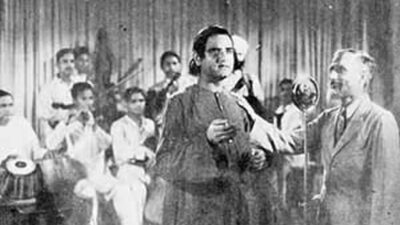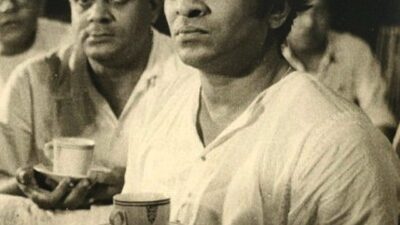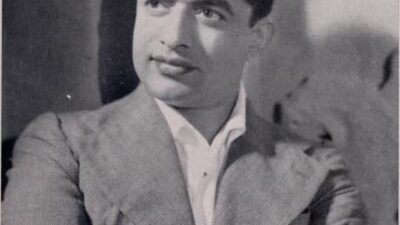
कलाकार विंग · कलाकार-पट्टिका · Artist Plate
वी. शांताराम
V. Shantaram
जन्म1901 — कोल्हापुर, महाराष्ट्र
निधन1990
जीवन-पट्टी
The Life Specimen| नाम | वी. शांताराम · V. Shantaram |
|---|---|
| जन्म | 1901 — कोल्हापुर, महाराष्ट्र · Kolhapur, Maharashtra |
| निधन | 1990 |
| भूमिकाएँ | निर्देशक · निर्माता · अभिनेता |
| सक्रिय वर्ष | 1920s–1980s |
| युग | Talkie Dawn |
| विधाएँ | फ़िल्मी · भक्ति · शास्त्रीय |
| भाषाएँ | Hindi · Marathi |
पट्टिका-लेख
The Monographजीवनी Biography
वी. शांताराम (शांताराम राजाराम वणकुद्रे; 18 नवम्बर 1901 – 30 अक्टूबर 1990) — भारतीय सिनेमा के उन महान स्तम्भों में से एक, जिन्होंने निर्देशक, निर्माता और अभिनेता तीनों रूपों में छह दशकों तक हिन्दी और मराठी फ़िल्मों को आकार दिया। कोल्हापुर के महाराष्ट्र फ़िल्म कम्पनी में दरबान और प्रोजेक्शनिस्ट से शुरुआत कर, बाबूराव पेंटर के शागिर्द बने। 1927 में 'नेताजी पालकर' से निर्देशन का आगाज़ किया। 1929 में विष्णुपंत दामले, के॰ आर॰ धायबर, एस॰ फ़तेलाल और एस॰ बी॰ कुलकर्णी के साथ मिलकर प्रभात फ़िल्म कम्पनी की स्थापना की, जो भारतीय सिनेमा की सबसे प्रतिष्ठित निर्माण-संस्था बनी। प्रभात की पहली बोलती फ़िल्म 'अयोध्या का राजा' (1932) और भारत की पहली रंगीन फ़िल्म 'सैरन्ध्री' (1933) उनकी देन है। 1942 में प्रभात छोड़कर मुंबई में राजकमल कलामंदिर की नींव रखी, जो देश का सबसे आधुनिक स्टूडियो बना। 'दुनिया न माने' (1937), 'डॉ. कोटनीस की अमर कहानी' (1946), 'झनक झनक पायल बाजे' (1955), 'दो आँखें बारह हाथ' (1957) और 'नवरंग' (1959) जैसी फ़िल्में उनके सामाजिक, नाटकीय और दृश्य-काव्यात्मक दृष्टिकोण की मिसाल हैं। उन्होंने 55 से अधिक फ़िल्में निर्देशित, 92 से अधिक फ़िल्में निर्मित और 25 से अधिक फ़िल्मों में अभिनय किया।
प्रारंभिक जीवन Early Life
18 नवम्बर 1901 को कोल्हापुर में एक मराठी परिवार में जन्म। सिनेमा के शैशव-काल में बाबूराव पेंटर की महाराष्ट्र फ़िल्म कम्पनी में दरबान और प्रोजेक्शनिस्ट बने; पेंटर के मार्गदर्शन में अभिनय, संपादन और निर्देशन — हर हुनर ज़मीन से सीखा।
अंग्रेज़ी में पढ़ें · Read in English
Born 18 November 1901 in Kolhapur into a Marathi family. Drawn to cinema in its earliest years, he joined Baburao Painter's Maharashtra Film Company as a gatekeeper and projectionist, learning every craft — acting, editing, direction — from the ground up under Painter's mentorship.
करियर Career
25 वर्ष की आयु में 'नेताजी पालकर' (1927) से निर्देशन। 1929 में प्रभात फ़िल्म कम्पनी की सह-स्थापना; मराठी, हिन्दी और बहुभाषी संस्करणों में स्तम्भ-फ़िल्मों का निर्माण। 1942 में प्रभात छोड़कर मुंबई में राजकमल कलामंदिर की स्थापना। पौराणिक ('सैरन्ध्री', 1933), सामाजिक-सुधार ('दुनिया न माने', 1937; 'आदमी', 1939), युद्धकालीन जीवनी ('डॉ. कोटनीस की अमर कहानी', 1946), शास्त्रीय नृत्य-महाकाव्य ('झनक झनक पायल बाजे', 1955), मानवतावादी दृष्टान्त ('दो आँखें बारह हाथ', 1957) और वर्णमय संगीत-फ़िल्म ('नवरंग', 1959) — उनकी निर्देशकीय व्यापकता अद्वितीय थी। 1980 के दशक तक ('चुनौती', 1980) निर्देशन जारी रहा।
अंग्रेज़ी में पढ़ें · Read in English
Directed his first film Netaji Palkar (1927) at age 25. Co-founded Prabhat Film Company (1929), steering it to produce landmark films in Marathi, Hindi and multilingual versions. Left Prabhat in 1942 and founded Rajkamal Kalamandir in Mumbai. His directorial range moved from mythology (Sairandhri, 1933) through social reform (Duniya Na Mane, 1937; Aadmi, 1939) to wartime biography (Dr. Kotnis Ki Amar Kahani, 1946), classical dance epics (Jhanak Jhanak Payal Baaje, 1955), humanist fables (Do Aankhen Barah Haath, 1957) and chromatic musicals (Navrang, 1959). He continued directing into the 1980s, with Chunaoti (1980) and Pinjra (1972) among his later works.
विरासत Legacy
भारतीय सवाक् सिनेमा, पहली रंगीन फ़िल्म और सामाजिक चेतना की सिनेमाई परंपरा के प्रणेता। प्रभात फ़िल्म कम्पनी और राजकमल कलामंदिर उनकी दो संस्थागत विरासतें हैं। 'दो आँखें बारह हाथ' ने भारत को पहला गोल्डन ग्लोब (सैमुअल गोल्डविन अन्तर्राष्ट्रीय पुरस्कार, 1959) दिलाया; 'झनक झनक पायल बाजे' ने बर्लिन का सिल्वर बेयर (1958) जीता। 1985 का दादासाहब फाल्के पुरस्कार एक ऐसे जीवन का शिखर था जिसने भारतीय सिनेमा को रूपांतरित किया।
अंग्रेज़ी में पढ़ें · Read in English
Pioneer of the Indian talkie, the colour film and the socially conscious cinema. Prabhat Film Company and Rajkamal Kalamandir are his twin institutional legacies. Do Aankhen Barah Haath brought India its first Golden Globe (Samuel Goldwyn International Film Award, 1959); Jhanak Jhanak Payal Baaje won the Berlin Silver Bear (1958). Dadasaheb Phalke Award 1985 crowned a life that transformed Indian cinema.
गायन-शैली Musical Style
स्वयं संगीतकार नहीं, पर ध्वनि के दूरदर्शी संयोजक — वसंत देसाई, सी. रामचंद्र और लता मंगेशकर जैसे दिग्गजों के सहयोग से असाधारण शास्त्रीय गहराई और भावनात्मक शक्ति के संगीत रचे। उनकी फ़िल्मों ने कथक और लोक-नृत्य को नाटकीय संरचना का आधार बनाया।
अंग्रेज़ी में पढ़ें · Read in English
Not a composer himself, but a visionary curator of sound — he collaborated with the finest music directors (Vasant Desai, C. Ramchandra, Lata Mangeshkar as muse) to craft soundtracks of uncommon classical depth and emotional power. His films pioneered the use of classical raags and dance forms (Kathak, folk) as dramatic scaffolding.
सांस्कृतिक प्रभाव Cultural Impact
वी. शांताराम ने ऐसे दौर में भारतीय सिनेमा को सामाजिक चेतना से जोड़ा जब फ़िल्में अधिकतर पलायनवादी मनोरंजन थीं। 'दुनिया न माने' (1937) ने जबरन विवाह की प्रथा को चुनौती दी; 'दो आँखें बारह हाथ' (1957) ने कारावास-सुधार और मानवीय मुक्ति की वकालत की। किसी भी अन्य भारतीय फ़िल्मकार से पहले उन्होंने भारत को अन्तर्राष्ट्रीय महोत्सवों — कान (1952), बर्लिन (1958), गोल्डन ग्लोब (1959) — पर स्थापित किया। राजकमल कलामंदिर ने भारतीय स्टूडियो-शिल्प को विश्व-स्तर पर पहुँचाया।
अंग्रेज़ी में पढ़ें · Read in English
V. Shantaram institutionalised socially conscious cinema in India at a time when films were largely escapist entertainment. His Duniya Na Mane (1937) challenged the institution of forced marriage; Do Aankhen Barah Haath (1957) advocated prison reform and human redemption. He made India visible on the international festival circuit — Cannes (1952), Berlin (1958), Golden Globe (1959) — before any other Indian filmmaker. Rajkamal Kalamandir elevated Indian studio craft to a world standard.
तालीम, विधाएँ और भाषाएँ
Training · Genres · Languagesविधाएँ · Genres
भाषाएँ · Languages Sung
जीवन-रेखा
Career Highlights- 1927 'नेताजी पालकर' से निर्देशन की शुरुआत Directorial debut with Netaji Palkar
- 1929 दामले, धायबर, फ़तेलाल और कुलकर्णी के साथ प्रभात फ़िल्म कम्पनी की सह-स्थापना Co-founds Prabhat Film Company with Damle, Dhaiber, Fatelal and Kulkarni
- 1932 'अयोध्या का राजा' — प्रभात की पहली हिन्दी सवाक् फ़िल्म Ayodhya Ka Raja — Prabhat's first Hindi talkie
- 1933 'सैरन्ध्री' — भारत की पहली रंगीन फ़िल्म Sairandhri — India's first colour film
- 1937 'दुनिया न माने' — बालविवाह और महिला-अधिकारों पर मील का पत्थर Duniya Na Mane — landmark social reform film on forced marriage
- 1942 मुंबई में राजकमल कलामंदिर स्टूडियो की स्थापना Founds Rajkamal Kalamandir studio in Mumbai
- 1946 'डॉ. कोटनीस की अमर कहानी' — युद्धकालीन चीन में एक भारतीय चिकित्सक की अमर गाथा Dr. Kotnis Ki Amar Kahani — tribute to an Indian doctor in wartime China
- 1952 कान फ़िल्म महोत्सव में निर्देशन का 'वल्कन पुरस्कार' Vulcan Award — Technical Grand Prize for Direction at Cannes Film Festival
-
1955
'झनक झनक पायल बाजे' — शास्त्रीय नृत्य-फ़िल्म; बर्लिन सिल्वर बेयर (1958) और फ़िल्मफ़ेयर सर्वश्रेष्ठ निर्देशक (1957)
Jhanak Jhanak Payal Baaje — classical dance film; wins Berlin Silver Bear (1958) and Filmfare Best Director (1957)
-
1957
'दो आँखें बारह हाथ' — मानवतावादी पुनर्वास-कथा; भारत का पहला गोल्डन ग्लोब (1959)
Do Aankhen Barah Haath — humanist prison-rehabilitation fable; wins first Golden Globe for India (1959)
-
1959
'नवरंग' — नौ रसों का रंगमय संगीत; संध्या के नृत्य-दृश्यों के लिए कालजयी
Navrang — colour musical celebrating the nine rasas; becomes iconic for Sandhya's dance sequences
- 1985 दादासाहब फाल्के पुरस्कार — भारतीय सिनेमा का सर्वोच्च सम्मान Dadasaheb Phalke Award — Indian cinema's highest honour
पुरस्कार एवं सम्मान
Awards & Recognition- सम्मान दादासाहब फाल्के पुरस्कार (1985) — भारतीय सिनेमा का सर्वोच्च सम्मान Dadasaheb Phalke Award (1985)
- सम्मान पद्म विभूषण (1992, मरणोपरांत) Padma Vibhushan (1992, posthumous)
- सम्मान वल्कन पुरस्कार — निर्देशन के लिए ग्रैंड प्राइज़, कान फ़िल्म महोत्सव (1952) Vulcan Award — Technical Grand Prize for Direction, Cannes Film Festival (1952)
-
सम्मान
बर्लिन अन्तर्राष्ट्रीय फ़िल्म महोत्सव — रजत भालू विशेष पुरस्कार (1958), 'झनक झनक पायल बाजे'
Berlin International Film Festival Silver Bear, Special Prize (1958) — for Jhanak Jhanak Payal Baaje
-
सम्मान
गोल्डन ग्लोब — सैमुअल गोल्डविन अन्तर्राष्ट्रीय पुरस्कार (1959), 'दो आँखें बारह हाथ'
Golden Globe Samuel Goldwyn International Film Award (1959) — for Do Aankhen Barah Haath
- सम्मान फ़िल्मफ़ेयर सर्वश्रेष्ठ निर्देशक पुरस्कार (1957), 'झनक झनक पायल बाजे' Filmfare Award for Best Director (1957) — for Jhanak Jhanak Payal Baaje
- सम्मान राष्ट्रीय फ़िल्म पुरस्कार — राष्ट्रपति का स्वर्ण पदक, सर्वश्रेष्ठ हिन्दी फ़ीचर फ़िल्म (1957) National Film Award — President's Gold Medal, Best Hindi Feature Film (1957)
- सम्मान राष्ट्रीय फ़िल्म पुरस्कार — राष्ट्रपति का रजत पदक, सर्वश्रेष्ठ हिन्दी फ़ीचर फ़िल्म (1955) National Film Award — President's Silver Medal, Best Hindi Feature Film (1955)
अन्य विवरण
More Details- Birth Year
- 1901
- Death Year
- 1990
- Active Years
- 1920s–1980s
Early Life
18 नवम्बर 1901 को कोल्हापुर में एक मराठी परिवार में जन्म। सिनेमा के शैशव-काल में बाबूराव पेंटर की महाराष्ट्र फ़िल्म कम्पनी में दरबान और प्रोजेक्शनिस्ट बने; पेंटर के मार्गदर्शन में अभिनय, संपादन और निर्देशन — हर हुनर ज़मीन से सीखा।
Born 18 November 1901 in Kolhapur into a Marathi family. Drawn to cinema in its earliest years, he joined Baburao Painter's Maharashtra Film Company as a gatekeeper and projectionist, learning every craft — acting, editing, direction — from the ground up under Painter's mentorship.
Career
25 वर्ष की आयु में 'नेताजी पालकर' (1927) से निर्देशन। 1929 में प्रभात फ़िल्म कम्पनी की सह-स्थापना; मराठी, हिन्दी और बहुभाषी संस्करणों में स्तम्भ-फ़िल्मों का निर्माण। 1942 में प्रभात छोड़कर मुंबई में राजकमल कलामंदिर की स्थापना। पौराणिक ('सैरन्ध्री', 1933), सामाजिक-सुधार ('दुनिया न माने', 1937; 'आदमी', 1939), युद्धकालीन जीवनी ('डॉ. कोटनीस की अमर कहानी', 1946), शास्त्रीय नृत्य-महाकाव्य ('झनक झनक पायल बाजे', 1955), मानवतावादी दृष्टान्त ('दो आँखें बारह हाथ', 1957) और वर्णमय संगीत-फ़िल्म ('नवरंग', 1959) — उनकी निर्देशकीय व्यापकता अद्वितीय थी। 1980 के दशक तक ('चुनौती', 1980) निर्देशन जारी रहा।
Directed his first film Netaji Palkar (1927) at age 25. Co-founded Prabhat Film Company (1929), steering it to produce landmark films in Marathi, Hindi and multilingual versions. Left Prabhat in 1942 and founded Rajkamal Kalamandir in Mumbai. His directorial range moved from mythology (Sairandhri, 1933) through social reform (Duniya Na Mane, 1937; Aadmi, 1939) to wartime biography (Dr. Kotnis Ki Amar Kahani, 1946), classical dance epics (Jhanak Jhanak Payal Baaje, 1955), humanist fables (Do Aankhen Barah Haath, 1957) and chromatic musicals (Navrang, 1959). He continued directing into the 1980s, with Chunaoti (1980) and Pinjra (1972) among his later works.
Legacy
भारतीय सवाक् सिनेमा, पहली रंगीन फ़िल्म और सामाजिक चेतना की सिनेमाई परंपरा के प्रणेता। प्रभात फ़िल्म कम्पनी और राजकमल कलामंदिर उनकी दो संस्थागत विरासतें हैं। 'दो आँखें बारह हाथ' ने भारत को पहला गोल्डन ग्लोब (सैमुअल गोल्डविन अन्तर्राष्ट्रीय पुरस्कार, 1959) दिलाया; 'झनक झनक पायल बाजे' ने बर्लिन का सिल्वर बेयर (1958) जीता। 1985 का दादासाहब फाल्के पुरस्कार एक ऐसे जीवन का शिखर था जिसने भारतीय सिनेमा को रूपांतरित किया।
Pioneer of the Indian talkie, the colour film and the socially conscious cinema. Prabhat Film Company and Rajkamal Kalamandir are his twin institutional legacies. Do Aankhen Barah Haath brought India its first Golden Globe (Samuel Goldwyn International Film Award, 1959); Jhanak Jhanak Payal Baaje won the Berlin Silver Bear (1958). Dadasaheb Phalke Award 1985 crowned a life that transformed Indian cinema.
Musical Style
स्वयं संगीतकार नहीं, पर ध्वनि के दूरदर्शी संयोजक — वसंत देसाई, सी. रामचंद्र और लता मंगेशकर जैसे दिग्गजों के सहयोग से असाधारण शास्त्रीय गहराई और भावनात्मक शक्ति के संगीत रचे। उनकी फ़िल्मों ने कथक और लोक-नृत्य को नाटकीय संरचना का आधार बनाया।
Not a composer himself, but a visionary curator of sound — he collaborated with the finest music directors (Vasant Desai, C. Ramchandra, Lata Mangeshkar as muse) to craft soundtracks of uncommon classical depth and emotional power. His films pioneered the use of classical raags and dance forms (Kathak, folk) as dramatic scaffolding.
अभिलेख-सार
Discography Summary| रिकॉर्डिंग-काल | 1927–1980s · पहला सत्र 1932 |
|---|---|
| फ़िल्में व डिस्क | Ayodhya Ka Raja (1932) · Sairandhri (1933) · Duniya Na Mane (1937) · Dr. Kotnis Ki Amar Kahani (1946) · Jhanak Jhanak Payal Baaje (1955) · Do Aankhen Barah Haath (1957) · Navrang (1959) |
| प्रमुख भूमिका | निर्देशक · निर्माता |
| नित्य सहयोगी | Vasant Desai · Sandhya · Lata Mangeshkar |
| स्रोत | derived from HindiGeet song archive and public records |
साझा कीजिए · Share this Plate