कलाकार विंग · कलाकार-पट्टिका · Artist Plate
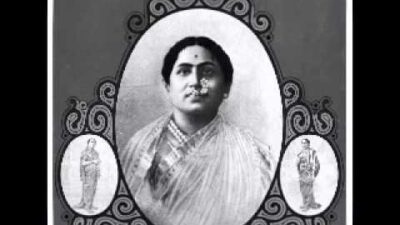
भास्करबुवा बखले
Bhaskarbuwa Bakhale · Bhaskar Raghunath Bakhale
देव गंधर्व
जन्म17 October 1869 — कठोर, बड़ौदा रियासत, ब्रिटिश भारत
निधन8 April 1922 — Pune, Bombay Presidency, British India
जीवन-पट्टी
The Life Specimen| नाम | भास्करबुवा बखले · Bhaskarbuwa Bakhale |
|---|---|
| जन्म नाम | भास्कर रघुनाथ बखले · Bhaskar Raghunath Bakhale |
| उपनाम | देव गंधर्व |
| जन्म | 17 October 1869 — कठोर, बड़ौदा रियासत, ब्रिटिश भारत · Kathor, Baroda State, British India |
| निधन | 8 April 1922 — Pune, Bombay Presidency, British India |
| भूमिकाएँ | गायक · रचनाकार · संगीतकार · Guru |
| सक्रिय वर्ष | 1880s–1922 |
| युग | gramophone-era |
| राष्ट्रीयता | Indian |
| विधाएँ | Khayal · ठुमरी · Natya Sangeet · भजन |
| भाषाएँ | Hindi · Marathi |
हस्ताक्षर-पंक्ति · The Signature
हस्ताक्षर-पंक्ति
देव गंधर्व
In EnglishThe 'Dev Gandharva' who mastered three gharanas — Gwalior, Agra and Jaipur — and then poured khayal into the Marathi theatre, creating the golden age of natya sangeet.
पट्टिका-लेख
The Monographजीवनी Biography
भास्करबुवा बखले (17 अक्टूबर 1869 – 8 अप्रैल 1922) हिंदुस्तानी संगीत के उन विरल विद्वानों में थे जिन्होंने एक नहीं, तीन घरानों की तालीम को आत्मसात किया — और फिर उस समूची पूँजी को मराठी रंगमंच पर लुटा दिया। बड़ौदा रियासत के कठोर गाँव में जन्मे भास्कर रघुनाथ बखले बचपन में किर्लोस्कर नाटक मंडळी से जुड़े, जहाँ बाल-कलाकार के रूप में उनकी आवाज़ ने ध्यान खींचा। फिर तालीम का लंबा तप शुरू हुआ: ग्वालियर के फ़ैज़ मोहम्मद ख़ाँ, आगरा के नत्थन ख़ाँ और जयपुर-अतरौली के उस्ताद अल्लादिया ख़ाँ — तीन परंपराओं का संगम एक कंठ में हुआ, और रसिकों ने उन्हें 'देव गंधर्व' कहा। 1911 में उन्होंने पुणे में भारत गायन समाज की स्थापना की — शास्त्रीय संगीत की शिक्षा को संस्थागत रूप देने के मराठी प्रयासों की अग्रिम पंक्ति का काम। पर इतिहास उन्हें सबसे अधिक गंधर्व नाटक मंडळी के संगीतकार के रूप में याद करता है: 'संगीत स्वयंवर' (1916) के लिए उनकी बाँधी बंदिशें — बाल गंधर्व के कंठ से — महाराष्ट्र के घर-घर पहुँचीं और नाट्यसंगीत का स्वर्ण युग बन गईं। बाल गंधर्व और मास्टर कृष्णराव जैसे शिष्य उनकी तालीम की जीती-जागती विरासत थे। 8 अप्रैल 1922 को पुणे में उनका देहांत हुआ। उनकी अपनी आवाज़ के रिकॉर्ड दुर्लभतम हैं — पर उनका संगीत आज भी हर उस मंच पर बजता है जहाँ 'स्वयंवर' का कोई पद गाया जाता है।
अंग्रेज़ी में पढ़ें · Read in English
Bhaskarbuwa Bakhale (17 October 1869 – 8 April 1922) was one of those rare Hindustani masters who absorbed the training of not one but three gharanas — and then spent the entire fortune on the Marathi stage. Born Bhaskar Raghunath Bakhale in the village of Kathor in Baroda State, he joined the Kirloskar Natak Mandali as a boy, where his voice drew notice as a child performer. Then began the long penance of taalim: Faiz Mohammed Khan of Gwalior, Nathan Khan of Agra, and Ustad Alladiya Khan of Jaipur-Atrauli — three traditions met in one throat, and connoisseurs called him 'Dev Gandharva', the celestial singer.
In 1911 he founded the Bharat Gayan Samaj in Pune, frontline work in the Marathi effort to institutionalise classical music education. But history remembers him most as the composer of the Gandharva Natak Mandali: his settings for Sangeet Swayamvar (1916), carried by Bal Gandharva's voice, reached every Maharashtrian household and became the golden age of natya sangeet. Disciples like Bal Gandharva and Master Krishnarao were the living legacy of his teaching.
He died in Pune on 8 April 1922. Records of his own voice are of the rarest; but his music still sounds wherever a pad from Swayamvar is sung.
प्रारंभिक जीवन Early Life
1869 में बड़ौदा रियासत के कठोर गाँव में जन्मे बखले बचपन में ही रंगमंच को सौंप दिए गए — किर्लोस्कर नाटक मंडळी के बाल-कलाकार — और शास्त्रीय तालीम ने उन्हें बाद में अपनाया। शिक्षा का यह उल्टा क्रम (पहले मंच, फिर घराना) ही उनके जीवन-कार्य की कुंजी है: उन्होंने मंच के गीत और महफ़िल के राग के बीच कभी दीवार देखी ही नहीं।
अंग्रेज़ी में पढ़ें · Read in English
Born in 1869 at Kathor in Baroda State, Bakhale was apprenticed young to the theatre — a boy performer with the Kirloskar Natak Mandali — before classical taalim claimed him. The unusual order of his education (stage first, gharana later) explains his life's work: he never saw a wall between the concert raag and the theatre song.
करियर Career
फ़ैज़ मोहम्मद ख़ाँ (ग्वालियर), नत्थन ख़ाँ (आगरा) और अल्लादिया ख़ाँ (जयपुर-अतरौली) की बरसों की तालीम के बाद बखले अपनी पीढ़ी के सबसे संपूर्ण ख़याल गायकों में उभरे — रसिकों के 'देव गंधर्व'। उन्होंने व्यापक रूप से सिखाया, भारत गायन समाज (पुणे, 1911) की स्थापना की, और गंधर्व नाटक मंडळी के संगीत-निर्देशक के रूप में 'संगीत स्वयंवर' (1916) तथा 'संगीत द्रौपदी' (1920) के पद बाँधे — नाट्यसंगीत के शिखर-मुहावरे की परिभाषा। 1922 में उनका असामयिक निधन एक पूरी पाठशाला के ढहने की तरह शोक के साथ याद किया गया।
अंग्रेज़ी में पढ़ें · Read in English
After years under Faiz Mohammed Khan (Gwalior), Nathan Khan (Agra) and Alladiya Khan (Jaipur-Atrauli), Bakhale emerged as one of the most complete khayal singers of his generation — 'Dev Gandharva' to the cognoscenti. He taught widely, founded the Bharat Gayan Samaj (Pune, 1911), and as music director of the Gandharva Natak Mandali set the pads of Sangeet Swayamvar (1916) and Sangeet Draupadi (1920), defining the natya sangeet idiom at its peak. His premature death in 1922 was mourned as the fall of a whole school.
विरासत Legacy
बखले की विरासत तिहरी है: तीन घरानों का वह संश्लेषण जो अपने दौर की सबसे संपूर्ण गायकी माना गया; भारत गायन समाज की संस्था-निर्माण दृष्टि; और सबसे बढ़कर 'स्वयंवर' का संगीत — यह प्रमाण कि रागदारी बिना पतला हुए लोकप्रिय हो सकती है। तब से हर नाट्यसंगीत गायक उनका ऋणी है, और बाल गंधर्व के तवों के रास्ते उनकी धुनों ने वही जन-कान गढ़ा जो आगे हिंदी फ़िल्म संगीत को विरासत में मिला।
अंग्रेज़ी में पढ़ें · Read in English
Bakhale's legacy is triple: a synthesis of three gharanas admired as the era's most complete vocalism; the institutionalising impulse of the Bharat Gayan Samaj; and above all the Swayamvar score — the proof that raagdari could be popular without being diluted. Every natya sangeet singer since stands in his debt, and through Bal Gandharva's discs his tunes trained the mass ear that Hindi film music would later inherit.
गायन-शैली Musical Style
उनके ख़याल में ग्वालियर का सुथरा अष्टांग व्याकरण, आगरा की लयकारी की धार और जयपुर की बारीक राग-कारीगरी साथ चलती थी। मंच के लिए वे जौहरी की तरह रचते थे: ऐसी बंदिश-चौखटें चुनना जिन्हें अभिनेता उठा सके, अलंकार को नाटकीय क्षण के नाप पर छाँटना, तीन मिनट के पद में राग का चेहरा पहचानने योग्य रखना। उनकी बंदिशें ही कारण हैं कि नाट्यसंगीत शास्त्रीय संगीत का सबसे सफल लोक-दूतावास है।
अंग्रेज़ी में पढ़ें · Read in English
His khayal carried Gwalior's clean ashtang grammar, Agra's rhythmic attack and Jaipur's intricate raag-craft. As a composer for the stage he worked like a jeweller: choosing bandish-frames that an actor could carry, trimming ornament to the dramatic moment, keeping the raag's face recognisable in a three-minute pad. His settings are why natya sangeet is classical music's most successful popular embassy.
तालीम, विधाएँ और भाषाएँ
Training · Genres · Languagesतालीम · Training
फ़ैज़ मोहम्मद ख़ाँ (1880s–1890s)
ग्वालियर घराने का ख़याल
Foundational khayal grammar.
नत्थन ख़ाँ (1890s)
आगरा घराना
Rhythmic vigour and bol-baant.
अल्लादिया ख़ाँ (1890s–1900s)
जयपुर-अतरौली घराना
Intricate raag-craft of the Jaipur school.
भाषाएँ · Languages Sung
जीवन-रेखा
Career Highlights- 1911 पुणे में भारत गायन समाज की स्थापना Founds the Bharat Gayan Samaj in Pune
-
1916
गंधर्व नाटक मंडळी के लिए 'संगीत स्वयंवर' का संगीत — नाट्यसंगीत का शिखर
Composes the score of Sangeet Swayamvar for the Gandharva Natak Mandali — the summit of natya sangeet
- 1920 खाडिलकर के 'संगीत द्रौपदी' का संगीत Sets Khadilkar's Sangeet Draupadi
- 1922 8 अप्रैल को 52 वर्ष की आयु में पुणे में निधन Dies in Pune on 8 April, aged 52
पुरस्कार एवं सम्मान
Awards & Recognition- सम्मान 'देव गंधर्व' — रसिकों की उपाधि 'Dev Gandharva' — honorific of the connoisseurs वह उपाधि जिससे मराठी संगीत-जगत उन्हें याद करता है
रोचक तथ्य
Margin Notesतीन घरानों — ग्वालियर, आगरा, जयपुर — की पूरी तालीम पाने वाले वे अपने दौर के संभवतः अकेले गायक थे।
अंग्रेज़ी में पढ़ें · Read in English
He was possibly the only singer of his era to receive full training in three gharanas — Gwalior, Agra and Jaipur.
उनकी अपनी आवाज़ की रिकॉर्डिंग दुर्लभतम हैं; उनकी अमरता शिष्यों के कंठ और 'स्वयंवर' की बंदिशों में है।
अंग्रेज़ी में पढ़ें · Read in English
Recordings of his own voice are of the rarest; his immortality lives in his disciples' throats and the Swayamvar settings.
अन्य विवरण
More Details- Birth Year
- 1869
- Death Year
- 1922
- Active Years
- 1880s–1922
- Bal Gandharva — prime disciple and the voice of his stage settings
- Master Krishnarao — disciple and later composer of the Gandharva Natak Mandali
- K.P. Khadilkar — playwright partner on Swayamvar and Draupadi
- Gandharva Natak Mandali — music director of its golden productions
Early Life
1869 में बड़ौदा रियासत के कठोर गाँव में जन्मे बखले बचपन में ही रंगमंच को सौंप दिए गए — किर्लोस्कर नाटक मंडळी के बाल-कलाकार — और शास्त्रीय तालीम ने उन्हें बाद में अपनाया। शिक्षा का यह उल्टा क्रम (पहले मंच, फिर घराना) ही उनके जीवन-कार्य की कुंजी है: उन्होंने मंच के गीत और महफ़िल के राग के बीच कभी दीवार देखी ही नहीं।
Born in 1869 at Kathor in Baroda State, Bakhale was apprenticed young to the theatre — a boy performer with the Kirloskar Natak Mandali — before classical taalim claimed him. The unusual order of his education (stage first, gharana later) explains his life's work: he never saw a wall between the concert raag and the theatre song.
Career
फ़ैज़ मोहम्मद ख़ाँ (ग्वालियर), नत्थन ख़ाँ (आगरा) और अल्लादिया ख़ाँ (जयपुर-अतरौली) की बरसों की तालीम के बाद बखले अपनी पीढ़ी के सबसे संपूर्ण ख़याल गायकों में उभरे — रसिकों के 'देव गंधर्व'। उन्होंने व्यापक रूप से सिखाया, भारत गायन समाज (पुणे, 1911) की स्थापना की, और गंधर्व नाटक मंडळी के संगीत-निर्देशक के रूप में 'संगीत स्वयंवर' (1916) तथा 'संगीत द्रौपदी' (1920) के पद बाँधे — नाट्यसंगीत के शिखर-मुहावरे की परिभाषा। 1922 में उनका असामयिक निधन एक पूरी पाठशाला के ढहने की तरह शोक के साथ याद किया गया।
After years under Faiz Mohammed Khan (Gwalior), Nathan Khan (Agra) and Alladiya Khan (Jaipur-Atrauli), Bakhale emerged as one of the most complete khayal singers of his generation — 'Dev Gandharva' to the cognoscenti. He taught widely, founded the Bharat Gayan Samaj (Pune, 1911), and as music director of the Gandharva Natak Mandali set the pads of Sangeet Swayamvar (1916) and Sangeet Draupadi (1920), defining the natya sangeet idiom at its peak. His premature death in 1922 was mourned as the fall of a whole school.
Legacy
बखले की विरासत तिहरी है: तीन घरानों का वह संश्लेषण जो अपने दौर की सबसे संपूर्ण गायकी माना गया; भारत गायन समाज की संस्था-निर्माण दृष्टि; और सबसे बढ़कर 'स्वयंवर' का संगीत — यह प्रमाण कि रागदारी बिना पतला हुए लोकप्रिय हो सकती है। तब से हर नाट्यसंगीत गायक उनका ऋणी है, और बाल गंधर्व के तवों के रास्ते उनकी धुनों ने वही जन-कान गढ़ा जो आगे हिंदी फ़िल्म संगीत को विरासत में मिला।
Bakhale's legacy is triple: a synthesis of three gharanas admired as the era's most complete vocalism; the institutionalising impulse of the Bharat Gayan Samaj; and above all the Swayamvar score — the proof that raagdari could be popular without being diluted. Every natya sangeet singer since stands in his debt, and through Bal Gandharva's discs his tunes trained the mass ear that Hindi film music would later inherit.
Musical Style
उनके ख़याल में ग्वालियर का सुथरा अष्टांग व्याकरण, आगरा की लयकारी की धार और जयपुर की बारीक राग-कारीगरी साथ चलती थी। मंच के लिए वे जौहरी की तरह रचते थे: ऐसी बंदिश-चौखटें चुनना जिन्हें अभिनेता उठा सके, अलंकार को नाटकीय क्षण के नाप पर छाँटना, तीन मिनट के पद में राग का चेहरा पहचानने योग्य रखना। उनकी बंदिशें ही कारण हैं कि नाट्यसंगीत शास्त्रीय संगीत का सबसे सफल लोक-दूतावास है।
His khayal carried Gwalior's clean ashtang grammar, Agra's rhythmic attack and Jaipur's intricate raag-craft. As a composer for the stage he worked like a jeweller: choosing bandish-frames that an actor could carry, trimming ornament to the dramatic moment, keeping the raag's face recognisable in a three-minute pad. His settings are why natya sangeet is classical music's most successful popular embassy.
Collaborations
अभिलेख-सार
Discography Summary| संग्रह में गीत | 5 — नीचे जुड़े हुए पन्नों में सूचीबद्ध |
|---|---|
| कुल ज्ञात रिकॉर्डिंग | 2 — 2 संग्रह में उपलब्ध |
| रिकॉर्डिंग-काल | 1916–1918 · पहला सत्र 1916 |
| प्रमुख भूमिका | संगीतकार |
| नित्य सहयोगी | K P Khadilkar · Bal Gandharva |
| हस्ताक्षर-गीत | Naath Ha Maza (Sangeet Swayamvar) · Swakul Tarak Suta (Sangeet Swayamvar) |
| स्रोत | derived from the HindiGeet song archive |
अभिलेख व संदर्भ
Archives & References| संदर्भ | Mohan Nadkarni — 'Bal Gandharva: The Nonpareil Thespian' (National Book Trust) · Histories of the Bharat Gayan Samaj, Pune |
|---|---|
| प्रसिद्ध सहयोग |
अंग्रेज़ी में पढ़ें · Read in English
|
जुड़े हुए पन्ने
Connected Plates · The Graph Made Visibleअटलस में कोई पन्ना अकेला नहीं — भास्करबुवा बखले से उनके गीत, फ़िल्में, घराना, समकालीन और युग, सब यहाँ से खुलते हैं।
हस्ताक्षर-गीत · Signature Songs
सहयोगी और समकालीन · Collaborators & Contemporaries
युग · The Era
साझा कीजिए · Share this Plate
यह पन्ना आगे बढ़ाइए
सवाल-जवाब
Questions & Answersभास्करबुवा बखले को 'देव गंधर्व' क्यों कहा जाता था?
तीन घरानों की तालीम से बनी उनकी संपूर्ण, अलौकिक मानी गई गायकी के लिए रसिकों ने उन्हें 'देव गंधर्व' — देवताओं का गायक — कहा।
What is Bhaskarbuwa Bakhale's connection to Bal Gandharva?
He was Bal Gandharva's guru and the music director of the Gandharva Natak Mandali, composing the settings of Sangeet Swayamvar (1916) that Bal Gandharva made immortal.