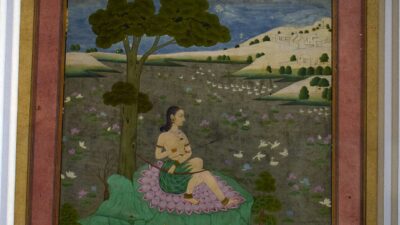
शास्त्र विंग · राग-पट्टिका · Raag Plate
भरमर कोकिल
Bhramara Kokila
एक शांत Carnatic राग · A Peace Carnatic Raag
भावशांतिपूर्ण · ध्यानपूर्ण · प्रशांत · शांत
ऊर्जाधीमी
समय और भाव
Time Theory & Moodसमय-सिद्धांत · Time Theory
संध्या काल
परंपरागत रूप से संध्या काल (4:00 PM - 7:00 PM) में गाया जाता है।
Traditionally performed during evening/twilight hours (4:00 PM - 7:00 PM), when day transitions to night.
भाव और गति · Mood & Tempo
शांत · Peace/Tranquility
आंतरिक शांति, सुकून और आध्यात्मिक वैराग्य का रस। शांति, ध्यान और अध्यात्म को जगाता है।
ऊर्जा · Energyधीमी
स्तर · Leveladvanced — राग Bhramara Kokila के लिए कर्नाटक संगीत सिद्धांत की मजबूत नींव आवश्यक है।
पट्टिका-लेख
The Monographपरिचय Introduction
राग Bhramara Kokila कर्नाटक शास्त्रीय संगीत परंपरा का एक राग है। इसका प्रमुख रस शांत (Peace/Tranquility) है। यह परंपरागत रूप से संध्या काल (4:00 PM - 7:00 PM) में गाया जाता है। गाया जाता है।
अंग्रेज़ी में पढ़ें · Read in English
Raag Bhramara Kokila is a complete scale with all 7 notes in both ascent and descent raga in the Carnatic classical music tradition.. With its Sampurna-Sampurna jati structure, this raag creates a distinctive tonal landscape. The predominant rasa is Peace/Tranquility (शांत), making it suitable for compositions that evoke peaceful, meditative emotions. It is traditionally performed during evening hours, and its melodic contour offers rich possibilities for alapana, kalpanaswaram, and creative improvisation.
सांस्कृतिक महत्व Cultural Significance
भारतीय शास्त्रीय संगीत की समृद्ध परंपरा के अंग के रूप में, राग Bhramara Kokila Carnatic परंपरा को परिभाषित करने वाले स्वर संरचना और भावनात्मक अभिव्यक्ति के बीच गहरे संबंध का प्रतिनिधित्व करता है।
अंग्रेज़ी में पढ़ें · Read in English
As part of the rich tapestry of Indian classical music, Raag Bhramara Kokila represents the deep connection between melodic structure and emotional expression that defines the Carnatic tradition.
ऐतिहासिक महत्व Historical Significance
भ्रमर कोकिला कर्नाटक संगीत की अत्यंत दुर्लभ जन्य रागों के 'भ्रमर' परिवार का एक सदस्य है जो 'भ्रमर' (भौंरा) और 'कोकिला' (संस्कृत: कोकिल = कोयल, अपनी मधुर आवाज़ के लिए प्रसिद्ध) को मिलाता है। 'भ्रमर' उपसर्ग (संस्कृत: भ्रमर = भौंरा, बड़ा काला मधुमक्खी) कर्नाटक राग-नामों के एक परिवार से संबंधित है जो भौंरे को संगीत-अन्वेषण के रूपक के रूप में प्रयोग करता है — जैसे भौंरा फूलों के बीच मँडराता हुआ रस ढूँढता है, ये राग विशेष स्वरों के बीच सौंदर्य-रस की तलाश में मँडराती हैं। भ्रमर का रूपक संस्कृत काव्य (विशेषतः कृष्ण-बाँसुरी प्रसंगों) और वैष्णव भक्ति साहित्य में प्रमुख है जहाँ भ्रमर भक्त का प्रतीक है। ये राग अत्यंत दुर्लभ हैं, मुख्यतः विशेष दक्षिण भारतीय राग-विश्वकोशों में प्रलेखित हैं, और इनकी जनक मेलकर्ता स्वर-साक्ष्य के अभाव में अज्ञात है। 'कोकिला' (कोयल) संस्कृत काव्य और भारतीय सौंदर्यशास्त्र में वसंत और विरह की आवाज़ का प्रतीक है। भ्रमर कोकिला में भौंरे की तलाश और कोयल की मधुर विरह-ध्वनि का मिलन एक राग में होता है।
अंग्रेज़ी में पढ़ें · Read in English
Bhramara Kokila is one of a family of extremely obscure Carnatic janya ragas that combine the 'Bhramara' (bumblebee) prefix with 'Kokila' (Sanskrit: kokila = the Indian cuckoo (koel), celebrated for its melodious call). The 'Bhramara' prefix (Sanskrit: bhramara = bumblebee, large black bee) belongs to a family of Carnatic raga names that use the bumblebee as a metaphor for musical seeking and hovering — just as a bee hovers between flowers seeking nectar, these ragas are conceived as melodic explorations that hover between specific notes seeking aesthetic rasa. The bhramara metaphor appears prominently in Sanskrit poetry (particularly in descriptions of Krishna playing the flute, whose music draws bees like flowers) and in Vaishnava bhakti literature where the bee symbolises the devotee in search of the divine. Bhramara ragas are extremely obscure, documented primarily in specialized South Indian raga-encyclopedias, and lack standardized arohana-avarohana in mainstream Carnatic musicological sources. The parent melakarta of all these ragas cannot be determined without scale data. The kokila (koel/Indian cuckoo) is among the most celebrated birds in Sanskrit poetry and classical Indian aesthetics, associated with the arrival of spring and the voice of longing. Bhramara Kokila evokes a musical encounter between the ever-seeking bee and the melodious cuckoo — a metaphor for two forms of musical longing meeting within a single raga. No concert or film recordings are documented.
शिक्षा
Teaching & LearningBegin with slow aalapana to internalize the raag's swaroopa (melodic form)
Practice the arohana and avarohana patterns with a tanpura drone
Listen to recordings by master performers to understand the raag's gamakas (ornamentations)
Work on kalpanaswaram (improvisation) within the raag's framework
Using incorrect gamakas that belong to a different raag
Not maintaining proper swar sthana (note placement)
Rushing through phrases without allowing the raag bhava to develop
प्रस्तुति
Performance- Description
- परंपरागत रूप से संध्या काल (4:00 PM - 7:00 PM) में गाया जाता है। Traditionally performed during evening/twilight hours (4:00 PM - 7:00 PM), when day transitions to night.
- Prahar Number
- 5
- Prahar Name
- संध्या काल Sandhya Kaal
- Time Start
- 16:00
- Time End
- 19:00
- Time Flexibility
- flexible
Time
और जानें
More to KnowIn Film Music
Extremely rare in Hindi film music. This obscure Carnatic janya raga has no documented presence in Bollywood, and its concert life even in South Indian classical music remains minimal. It exists primarily as a theoretical entry in specialized musicological treatises.
सीखने के लिए
For Learners- Difficulty Level
- advanced
अन्य विवरण
More Details- Indian_Music_Raga_Encyclopedia_v2.xlsx
- Carnatic Raga Encyclopedia (Bhramara family)
References
नमूना-पट्टी
The Specimen Table| नाम | भरमर कोकिल · Bhramara Kokila |
|---|---|
| थाट | — |
| जाति | संपूर्ण-संपूर्ण · Sampurna-Sampurna |
| समय | संध्या काल |
| ऊर्जा | धीमी |
| परिवार | Bhramara Kokila |
| स्तर | advanced |
| लोकप्रियता | Obscure |
जुड़े हुए पन्ने
Connected Plates · The Graph Made Visibleअटलस में कोई पन्ना अकेला नहीं — इस राग से गीत, प्रस्तुतियाँ, कलाकार, ताल, घराने और मिलते-जुलते राग, सब यहाँ से खुलते हैं।
ताल-साथी · Taal Pairings
श्रवण-कक्ष · The Listening Room
सुनिए — भरमर कोकिल · Hear the Raag
Ikshvakukula Thilaka - Lyrical | Dr. M. Balamuralikrishna | Jay Shree Ram | Carnatic Classical Music
प्रश्नोत्तर
Questions & Answersराग Bhramara Kokila किस संगीत पद्धति का राग है?
राग Bhramara Kokila कर्नाटक (दक्षिण भारतीय) शास्त्रीय संगीत पद्धति का राग है।
अंग्रेज़ी में पढ़ें · Read in English
Which music system does Raga Bhramara Kokila belong to? — Raga Bhramara Kokila belongs to the Carnatic (South Indian) classical music system.
साझा कीजिए · Share this Plate