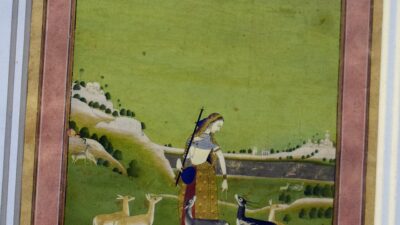
शास्त्र विंग · राग-पट्टिका · Raag Plate
बद्रि
Badri
एक शांत Carnatic राग · A Peace Carnatic Raag
भावशांतिपूर्ण · ध्यानपूर्ण · प्रशांत · शांत
ऊर्जाधीमी
स्वर-चित्र · The Swara Panel
आरोह — अवरोह · The Ascent and the Descent
पकड़ · पहचान वाक्यांश
स प म ग — ग म प नि स
Sa Pa Ma Ga — Ga Ma Pa Ni Sa
The arohana and avarohana for Raag Badri are not documented in available Carnatic treatises; this characteristic phrase is a provisional reconstruction based on its sampurna jati and its association with Badrinath's meditative ambience. Verification against a lakshana geet is required before treating this as authoritative.
वादी–संवादी टिप्पणी · Vadi–Samvadi note
Vadi — In the Carnatic tradition, Raag Badri emphasizes Pancham (Pa) as a key resting note.
Samvadi — Sa (Shadj) serves as the complementary note.
समय और भाव
Time Theory & Moodसमय-सिद्धांत · Time Theory
संध्या काल
परंपरागत रूप से संध्या काल (4:00 PM - 7:00 PM) में गाया जाता है।
Traditionally performed during evening/twilight hours (4:00 PM - 7:00 PM), when day transitions to night.
भाव और गति · Mood & Tempo
शांत · Peace/Tranquility
आंतरिक शांति, सुकून और आध्यात्मिक वैराग्य का रस। शांति, ध्यान और अध्यात्म को जगाता है।
ऊर्जा · Energyधीमी
स्तर · Leveladvanced — राग Badri के लिए कर्नाटक संगीत सिद्धांत की मजबूत नींव आवश्यक है।
पट्टिका-लेख
The Monographपरिचय Introduction
राग Badri कर्नाटक शास्त्रीय संगीत परंपरा का एक राग है। इसका प्रमुख रस शांत (Peace/Tranquility) है। यह परंपरागत रूप से संध्या काल (4:00 PM - 7:00 PM) में गाया जाता है। गाया जाता है।
अंग्रेज़ी में पढ़ें · Read in English
Raag Badri is a complete scale with all 7 notes in both ascent and descent raga in the Carnatic classical music tradition.. With its Sampurna-Sampurna jati structure, this raag creates a distinctive tonal landscape. The predominant rasa is Peace/Tranquility (शांत), making it suitable for compositions that evoke peaceful, meditative emotions. It is traditionally performed during evening hours, and its melodic contour offers rich possibilities for alapana, kalpanaswaram, and creative improvisation.
सांस्कृतिक महत्व Cultural Significance
भारतीय शास्त्रीय संगीत की समृद्ध परंपरा के अंग के रूप में, राग Badri Carnatic परंपरा को परिभाषित करने वाले स्वर संरचना और भावनात्मक अभिव्यक्ति के बीच गहरे संबंध का प्रतिनिधित्व करता है।
अंग्रेज़ी में पढ़ें · Read in English
As part of the rich tapestry of Indian classical music, Raag Badri represents the deep connection between melodic structure and emotional expression that defines the Carnatic tradition.
ऐतिहासिक महत्व Historical Significance
राग बद्रि का नामकरण उत्तराखंड के गढ़वाल क्षेत्र में स्थित भगवान विष्णु के पवित्र तीर्थ स्थल बद्रीनाथ (बद्रिकाश्रम) के नाम पर हुआ है। 'बद्री' शब्द संस्कृत में भारतीय बेर के वृक्ष को इंगित करता है, किंतु संगीत-साहित्य में यह नाम हिमालय की हिम-ढकी चोटियों, देवदारु वनों और वैष्णव स्तोत्र-पाठ के वातावरण का प्रतीक बन गया है। कर्नाटक संगीत परंपरा में यह एक जन्य राग है जो संपूर्ण-संपूर्ण जाति (आरोह और अवरोह दोनों में सात स्वर) में आता है। इसका शांत रस और संध्याकालीन गायन-वादन का समय इसे वैष्णव संध्यावंदन की परम्पराओं से जोड़ता है। दक्षिण भारत के तमिल और तेलुगु वैष्णव भजन-मंडलियों में बद्रीनाथ को समर्पित कुछ कृतियाँ संभवतः इसी राग के आधार पर रची गई हैं। प्रमुख लक्षण-ग्रंथों में इस राग का आरोह-अवरोह अभी तक पूर्णतः प्रमाणित नहीं हुआ है।
अंग्रेज़ी में पढ़ें · Read in English
Raag Badri takes its name from Badrinath (Badrikashrama), the Himalayan Vishnu shrine in the Garhwal region of Uttarakhand, one of the four dhams of Hindu pilgrimage. The name evokes snowy peaks, cedar forests (badri = Indian jujube, but here symbolically linked to the landscape), and the chanting of Vaishnavite stotra. As a Carnatic janya raag it belongs to the broad South Indian raga taxonomy rather than to the dharuvar (Dhrupad) or khayal tradition. Its sampurna-sampurna (7-note ascent and descent) classification places it among the structurally complete janyas, but its arohana and avarohana have not been definitively recorded in the principal lakshana texts that have been digitised. The raag's meditative shanta rasa and evening performance time are consistent with Vaishnavite sandhya-vandana contexts. Regional Tamil and Telugu Vaishnavite bhajan gatherings have kept alive small repertoires of compositions invoking Badrinath, and the raag may have developed within those devotional circuits rather than through the formal melakarta training lineage. Scholarly attention to Badri as a distinct raag (versus a descriptive title for a piece composed at Badrikashrama) remains limited.
शिक्षा
Teaching & LearningBegin with slow aalapana to internalize the raag's swaroopa (melodic form)
Practice the arohana and avarohana patterns with a tanpura drone
Listen to recordings by master performers to understand the raag's gamakas (ornamentations)
Work on kalpanaswaram (improvisation) within the raag's framework
Using incorrect gamakas that belong to a different raag
Not maintaining proper swar sthana (note placement)
Rushing through phrases without allowing the raag bhava to develop
प्रस्तुति
Performance- Description
- परंपरागत रूप से संध्या काल (4:00 PM - 7:00 PM) में गाया जाता है। Traditionally performed during evening/twilight hours (4:00 PM - 7:00 PM), when day transitions to night.
- Prahar Number
- 5
- Prahar Name
- संध्या काल Sandhya Kaal
- Time Start
- 16:00
- Time End
- 19:00
- Time Flexibility
- flexible
Time
और जानें
More to KnowIn Film Music
Raag Badri has no documented presence in Hindi film music. Its obscurity in the Carnatic janya catalog means it has not crossed over into the film-music compositional vocabulary, where composers typically drew from better-known Carnatic raags (Bhairavi, Bhupali, Hamsadhwani, Yaman Kalyan) or Hindustani raags familiar from the Bombay film-music tradition. If a film composer or music arranger ever wished to evoke Badrinath or Himalayan devotion, they would more commonly reach for Bhairav, Bhairavi, or Pahadi. Badri's concert life remains confined to rare Vaishnavite devotional settings in South India.
सीखने के लिए
For Learners- Difficulty Level
- advanced
अन्य विवरण
More Details- Indian_Music_Raga_Encyclopedia_v2.xlsx
References
नमूना-पट्टी
The Specimen Table| नाम | बद्रि · Badri |
|---|---|
| थाट | — |
| पकड़ | स प म ग — ग म प नि स |
| जाति | संपूर्ण-संपूर्ण · Sampurna-Sampurna |
| समय | संध्या काल |
| ऊर्जा | धीमी |
| परिवार | Badri |
| स्तर | advanced |
| लोकप्रियता | Obscure |
जुड़े हुए पन्ने
Connected Plates · The Graph Made Visibleअटलस में कोई पन्ना अकेला नहीं — इस राग से गीत, प्रस्तुतियाँ, कलाकार, ताल, घराने और मिलते-जुलते राग, सब यहाँ से खुलते हैं।
ताल-साथी · Taal Pairings
श्रवण-कक्ष · The Listening Room
सुनिए — बद्रि · Hear the Raag
Raga Hour Raga...Shubhapanthuvarali...Kshetra Badrikashram...
प्रश्नोत्तर
Questions & Answersराग Badri किस संगीत पद्धति का राग है?
राग Badri कर्नाटक (दक्षिण भारतीय) शास्त्रीय संगीत पद्धति का राग है।
अंग्रेज़ी में पढ़ें · Read in English
Which music system does Raga Badri belong to? — Raga Badri belongs to the Carnatic (South Indian) classical music system.
साझा कीजिए · Share this Plate