सिनेमा विंग · फ़िल्म-पट्टिका · Film Plate
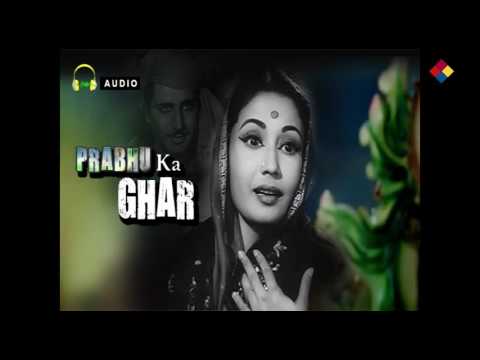
प्रभु का घर
Prabhu Ka Ghar
शैलीभक्ति · Drama · Social
भाषाhindi प्रकारकथा-चित्र (फ़ीचर)
गीत11 — नीचे पूरी संगीत-सूची
कथा-सार
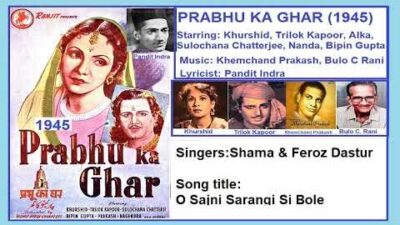
Synopsis'प्रभु का घर' 1945 में रणजीत मूवीटोन के बैनर तले बनी एक सामाजिक-धार्मिक फ़िल्म थी, जिसका निर्देशन वजाहत मिर्ज़ा ने किया — रणजीत के वही लेखक जिन्होंने ख़ुद गिनी-चुनी फ़िल्में ही निर्देशित कीं और जो आगे चलकर 'मदर इंडिया' (1957) के लेखक और 'मुग़ल-ए-आज़म' (1960) के संवाद-लेखक के रूप में कहीं अधिक प्रसिद्ध हुए। इसमें उस समय स्टूडियो की प्रमुख गायिका-नायिका ख़ुर्शीद त्रिलोक कपूर के सामने थीं, और शेष कलाकारों में सुलोचना चटर्जी, बिपिन गुप्ता, प्रकाश, शेख़ हसन, नागेंद्र और मुन्ने आग़ा थे। आज न तो फ़िल्म का कोई प्रिंट सुलभ अभिलेख में मिलता है और न ही उस समय की कोई कथा-रूपरेखा — इसलिए यह प्रविष्टि अनुमान से कहानी गढ़ने के बजाय वही दर्ज करती है जो वास्तव में बचा है: श्रेय-सूची और ग्यारह गीतों का पूरा संगीत। गीत स्वयं फ़िल्म की सामग्री की ओर स्पष्ट संकेत करते हैं: इनमें से चार सीधे कृष्ण को संबोधित हैं — बाँसुरी बजाते रहने की विनती से लेकर मधुबन के झूले पर राधा तक — और एक भगवद्गीता के सबसे अधिक उद्धृत आश्वासन का संस्कृत गायन है, कि साधुओं की रक्षा और धर्म की स्थापना के लिए ईश्वर युग-युग में जन्म लेते हैं। इस भक्ति-रीढ़ के चारों ओर सीधी-सादी ग्रामीण बोली के गृहस्थ गीत हैं: आधी रात में पत्नी को जगाता पति, जबकि वह पीसना, पानी भरना और बुहारना गिनाती जाती है; सहेली से सलाह माँगती युवती; और सारंगी-सी बोलती दुल्हन की आवाज़। जो चित्र उभरता है वह रणजीत के मध्य-1940 के दशक का विशिष्ट आकार है — एक गृहस्थ नाटक जिसके नीचे भक्ति का तर्क बहता है, और एक शीर्षक जो पते के बजाय उसी तर्क की तरह पढ़ा जाता है।
अंग्रेज़ी में पढ़ें · Read in English
Prabhu Ka Ghar — 'the Lord's house' — was a social-religious drama produced by Ranjit Movietone in 1945 and directed by Wajahat Mirza, the Ranjit staff writer who directed only a handful of pictures himself before becoming far better known as the writer of Mother India (1957) and the dialogue writer of Mughal-e-Azam (1960). It starred Khursheed, then the studio's principal singing heroine, opposite Trilok Kapoor, with Sulochana Chatterjee, Bipin Gupta, Prakash, Sheikh Hasan, Nagendra and Munne Agha filling out the cast. No print of the film and no contemporary plot summary is traceable in the accessible record today, so this entry sets down what does survive — the credits and the complete eleven-song soundtrack — rather than reconstructing a story from guesswork. The songs themselves point clearly at the film's material: four of them address Krishna directly, from the flute-player asked to keep playing to Radha on her swing in the groves of Madhuban, and one is a Sanskrit setting of the Bhagavad Gita's most quoted assurance — that the divine takes birth in age after age to protect the good and restore dharma. Around that devotional spine sit domestic numbers in plain village idiom: a husband waking his wife in the middle of the night while she counts off the grinding, the water-carrying and the sweeping still to be done; a young woman asking a friend for advice she has already half decided against; a bride's voice likened to a sarangi. What emerges is the characteristic Ranjit mid-1940s shape — a household drama with a devotional argument running under it, and a title that reads as that argument rather than as an address.
संगीत-सूची
The Soundtrackऑनलाइन बारह शीर्षक घूमते हैं, पर भरोसेमंद गिनती ग्यारह की है। हिंदीगीतमाला 'परदेसी ढोला काहे जगाई आधी रात' और 'काहे को जगाई सारी रात रे' — दोनों को एक ही गायक, संगीतकार और गीतकार के साथ सूचीबद्ध करती है; ये लगभग निश्चित रूप से मुकेश–मोहनतारा तलपड़े के एक ही युगल गीत के दो शीर्षक-रूप हैं, और 'हिंदी फ़िल्म गीत कोश', मायस्वर तथा 'अतुल्स सॉन्ग अ डे' — तीनों फ़िल्म में ग्यारह गीत बताते हैं। सभी के गीतकार पंडित इंद्र हैं — कुछ लेबलों पर 'पं. इंद्र चंद्र' के नाम से। ख़ुर्शीद पाँच गीत गाती हैं, सब कृष्ण-भक्ति और विरह के उन्हीं स्वरों में जिन्हें खेमचंद प्रकाश उनके लिए सबसे अच्छा रचते थे। शमा एक एकल और किराना घराने के गायक फ़ीरोज़ दस्तूर के साथ दो युगल गाती हैं — उस गायक के लिए फ़िल्मी संगीत में एक दुर्लभ उपस्थिति जिसका असल जीवन शास्त्रीय मंच था। मन्ना डे, जो तब प्रमुख पार्श्वगायक बनने से वर्षों दूर थे, दो भक्ति-गीत लेते हैं — जिनमें गीता का संस्कृत गायन भी है। मुकेश एक ही बार आते हैं, मोहनतारा तलपड़े के साथ आधी रात के युगल में। 'हिंदी फ़िल्म गीत कोश' ग्यारहों गीतों का संगीतकार-श्रेय अलग-अलग देता है: पाँच बुलो सी. रानी के — 'पिया मेरा केवड़े का फूल', 'मेरी सजनी सारंगी सी बोले' (दोनों को 'डाउन मेलडी लेन' भी उनके नाम बताता है), 'अलबेली सहेली बता दे', 'तुम नाथ हो फिर मैं अनाथ क्यों' और 'परदेसी ढोला' — और छह खेमचंद प्रकाश के: 'बंसी वाले श्याम बंसुरिया बजा जा', 'मधुबन में राधा झूले हिंडोले', 'नदी किनारे साँझ सकारे', 'मदमाते बालम मदमाते', 'परित्राणाय साधूनां' और 'भगवान भगवान दीजो जीवन दान'। मायस्वर भी प्रति गीत एक ही संगीतकार देता है और ग्यारह में से दस पर सहमत है; अंतर केवल 'परदेसी ढोला' पर, जिसे वह खेमचंद प्रकाश के नाम करता है। मायस्वर रिकॉर्ड के वे पूरे शीर्षक भी सुरक्षित रखता है जिन्हें दूसरे सूचीपत्र छोटा कर देते हैं: 'मदमाते बालम मदमाते (ओ रसिया)' और 'अवतार लिया जुग जुग (परित्राणाय साधूनां)'।
अंग्रेज़ी में पढ़ें · Read in English
Twelve titles circulate online, but the defensible count is eleven. hindigeetmala lists both 'Pardesi Dhola Kaahe Jagaai Aadhi Raat' and 'Kahe Ko Jagayi Saari Raat Re' with identical singers, composers and lyricist; these are almost certainly two title-forms of the same Mukesh–Mohantara Talpade duet, and the Hindi Film Geet Kosh, myswar's catalogue and Atul's Song A Day all give the film eleven songs. Pandit Indra — also credited on some labels as Pt. Indra Chandra — wrote every one of them. Khursheed carries five numbers, all in the Krishna-bhakti and viraha registers that Khemchand Prakash wrote best for her. Shama sings one solo and two duets with the Kirana gharana vocalist Feroze Dastoor, a rare film outing for a singer whose real life was the classical concert platform. Manna Dey, still years away from being a first-call playback voice, takes two devotional numbers including the Sanskrit Gita setting. Mukesh appears once, in the midnight duet with Mohantara Talpade. The Hindi Film Geet Kosh gives an individual composer for every one of the eleven: five to Bulo C. Rani — 'Piya mera kevade ka phool', 'Meri sajni sarangi si bole' (both also named as his in Down Melody Lane's account of his career), 'Albeli saheli bata de', 'Tum nath ho phir main anath kyon' and 'Pardesi dhola' — and six to Khemchand Prakash: 'Bansi wale Shyam bansuriya baja ja', 'Madhuban mein Radha jhoole hindole', 'Nadi kinare sanjh sakaare', 'Madmate balam madmate', 'Paritranaye sadhunan' and 'Bhagwan Bhagwan deejo jeevan daan'. myswar likewise gives one composer per song and agrees on ten of the eleven, differing only on 'Pardesi dhola', which it assigns to Khemchand Prakash. myswar also preserves fuller record titles that the other catalogues shorten: 'Madmaate Baalam Madmaate (O Rasiya)' and 'Avtaar Liya Jug Jug (Paritraanaay Sadhunan)'.
- नदी किनारे साँझ सकारे Nadi Kinare Sanjh Sakaare स्वर: Khursheed
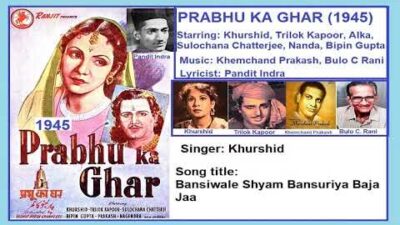
- बंसी वाले श्याम बंसुरिया बजा जा Bansi Wale Shyam Bansuriya Baja Ja स्वर: Khursheed
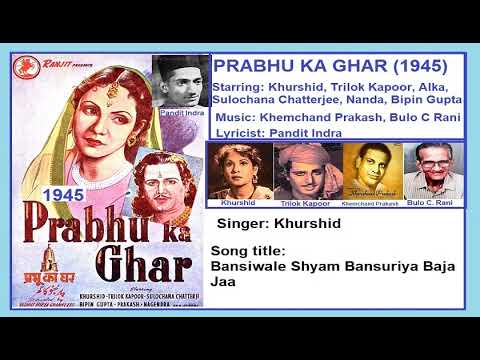
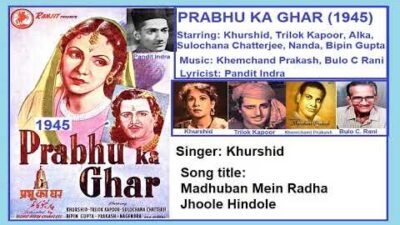
- मधुबन में राधा झूले हिंडोले Madhuban Mein Radha Jhoole Hindole स्वर: Khursheed
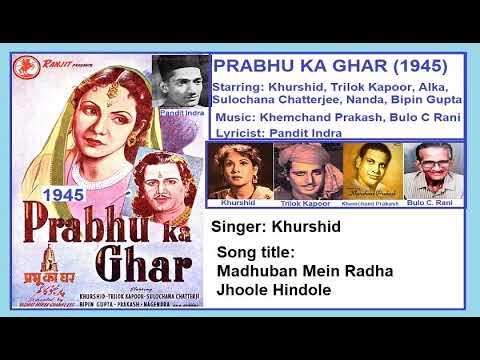
- मदमाते बालम मदमाते Madmate Balam Madmate स्वर: Khursheed
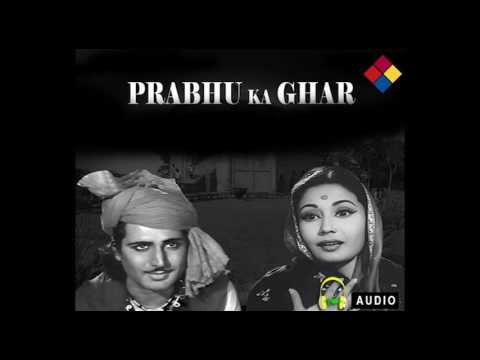
- परदेसी ढोला काहे जगाई आधी रात Pardesi Dhola Kaahe Jagaai Aadhi Raat स्वर: मोहनतारा तळपदे, Mukesh

- परित्राणाय साधूनां Paritranaye Sadhunan स्वर: Manna Dey
- अलबेली सहेली बता दे Albeli Saheli Bata De स्वर: शमा
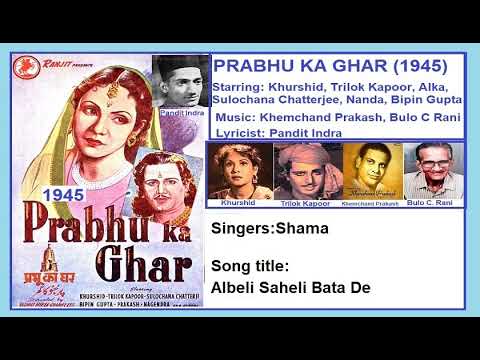
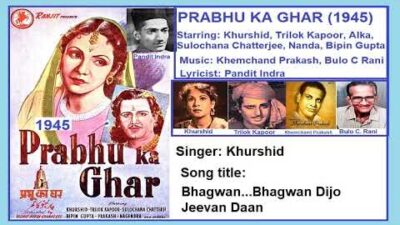
- भगवान भगवान दीजो जीवन दान Bhagwan Bhagwan Deejo Jeevan Daan स्वर: Khursheed
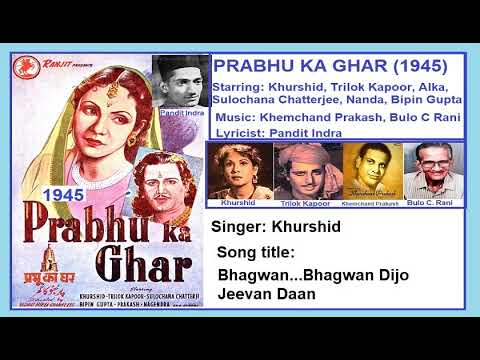
- मेरी सजनी सारंगी सी बोले Meri Sajni Sarangi Si Bole स्वर: शमा, Feroze Dastoor
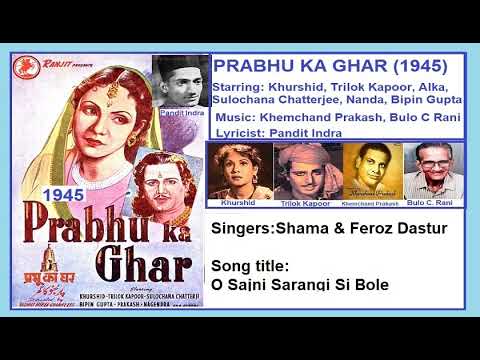
- पिया मेरा केवड़े का फूल Piya Mera Kevade Ka Phool स्वर: शमा, Feroze Dastoor
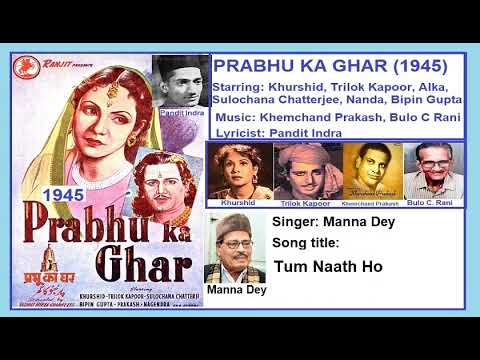
- तुम नाथ हो फिर मैं अनाथ क्यों Tum Nath Ho Phir Main Anath Kyon स्वर: Manna Dey
पट्टिका-लेख
The Monographपर्दे के पीछे Behind the Scenes
वजाहत मिर्ज़ा — वजाहत मिर्ज़ा चंगेज़ी — ने अपने पूरे जीवन में लगभग पाँच ही फ़िल्में निर्देशित कीं, जिनमें से एक यह है; उनकी स्थायी ख्याति कैमरे के पीछे नहीं, काग़ज़ पर बनी। रणजीत मूवीटोन उस समय बंबई का सबसे अधिक उत्पादन करने वाला स्टूडियो था, जिसने 1940 के दशक में लगभग पचास फ़िल्में दीं, और वह उस आर्थिक संकट की ओर बढ़ चुका था जिसने 1950 में उसे अपनी संपत्ति एक बीमा कंपनी के पास गिरवी रखने पर मजबूर किया। यहाँ दिखने वाला साझा संगीत-श्रेय उस स्टूडियो-व्यवस्था में सामान्य बात थी: घर का संगीतकार फ़िल्म सँभालता, उसका सहायक कुछ गीत अपने नाम से रचता, और टाइटल कार्ड पर दोनों के नाम आते। खेमचंद प्रकाश 1940 में रणजीत से जुड़े थे और उन्होंने स्टूडियो की लगभग बीस फ़िल्मों में संगीत दिया; बुलो सी. रानी आगे चलकर 1944 से 1954 के बीच रणजीत की क़रीब बीस फ़िल्मों में काम करने वाले थे — यानी दोनों के रणजीत-काल इसी फ़िल्म पर लगभग ठीक-ठीक एक-दूसरे को छूते हैं।
अंग्रेज़ी में पढ़ें · Read in English
Wajahat Mirza — Wajahat Mirza Changezi — directed only about five films in his whole career, of which this is one; his lasting reputation was built on the page rather than the floor. Ranjit Movietone was at this point the most prolific studio in Bombay, releasing some fifty pictures across the 1940s, and it was already moving toward the financial collapse that in 1950 forced it to mortgage its property to an insurance company. Shared music credits of the kind seen here were normal in that studio system: a house composer carried the picture, his assistant took a set of numbers under his own name, and the title card listed both. Khemchand Prakash had joined Ranjit in 1940 and composed for around twenty of its films; Bulo C. Rani would go on to work on roughly twenty Ranjit productions between 1944 and 1954, so the two men's Ranjit careers overlap almost exactly at this film.
महत्व Significance
इस फ़िल्म का सबसे अच्छी तरह प्रलेखित महत्व उसका संगीत-श्रेय है। 'प्रभु का घर' पर खेमचंद प्रकाश और बुलो सी. रानी का नाम साथ-साथ है, और यह फ़िल्म रणजीत मूवीटोन में इन दोनों के बीच की ठीक उसी संधि-रेखा पर खड़ी है। बुलो सी. रानी 1939 में स्टूडियो से जुड़े थे और 'तानसेन', 'चाँदनी', 'सुख दुख' (1942) तथा 'शहंशाह बाबर' (1944) में खेमचंद प्रकाश के सहायक रहे, फिर रणजीत की ही 'पगली दुनिया' (1944) से स्वतंत्र संगीतकार बने; यहाँ वे अपने पुराने उस्ताद के साथ-साथ अपने नाम से कई गीत रचते हैं — और यह खेमचंद प्रकाश का स्टूडियो में संभवतः अंतिम वर्ष था, जिसके बाद वे फ़िल्मिस्तान, 'ज़िद्दी' (1948) और 'महल' (1949) की ओर बढ़े। ख़ुर्शीद के लिए यह भारत में उनके अंतिम कामों में से एक है — 1948 में वे पाकिस्तान चली गईं — और खेमचंद प्रकाश–ख़ुर्शीद जोड़ी का वह आख़िरी दौर, जो 'तानसेन' (1943) में शिखर पर था। यह संगीत मुकेश को भी असामान्य रूप से आरंभिक अवस्था में पकड़ता है: युगल गीत 'परदेसी ढोला काहे जगाई आधी रात रे' उनके गायन-जीवन की मात्र चौदहवीं रिकॉर्डिंग और 1945 की उनकी अंतिम प्रस्तुति गिनी जाती है — उसी वर्ष की, जिस वर्ष 'पहली नज़र' के गीतों ने उनकी क़िस्मत बदल दी।
अंग्रेज़ी में पढ़ें · Read in English
The film's best-documented importance is a music credit. Khemchand Prakash and Bulo C. Rani are billed together on Prabhu Ka Ghar, and the picture sits exactly on the seam between them at Ranjit Movietone. Bulo C. Rani had joined the studio in 1939 and worked as Khemchand Prakash's assistant on Tansen, Chandni, Sukh Dukh (1942) and Shahenshah Babar (1944) before getting his independent break with Ranjit's Pagli Duniya (1944); here he composes several numbers under his own name alongside his former chief, in what appears to have been Khemchand Prakash's last year at the studio before he moved on to Filmistan and to Ziddi (1948) and Mahal (1949). For Khursheed the film is one of her last Indian assignments — she left for Pakistan in 1948 — and the closing stretch of the Khemchand Prakash–Khursheed partnership that had peaked with Tansen (1943). The soundtrack also catches Mukesh unusually early: the duet 'Pardesi dhola kaahe jagaai aadhi raat re' is counted as only the fourteenth recording of his singing career and the last of his 1945 output, made in the same year as the Pehli Nazar songs that changed his fortunes.
विरासत Legacy
'प्रभु का घर' का बहुत कम हिस्सा जनस्मृति में बचा है — सिवाय उसके गीतों के, और उनमें से एक बाक़ी सबसे आगे निकल गया: ख़ुर्शीद का 'मधुबन में राधा झूले हिंडोले', कृष्ण और झूले का वह गीत जो आज भी पुराने संगीत के रेडियो कार्यक्रमों और सारेगामा की सूची में मिलता है, और जिसे 'सॉन्ग्स ऑफ़ योर' के समीक्षक ने ठीक उसी तरह की ख़ुर्शीद-प्रस्तुति बताया जिसे वे सबसे अधिक मानते हैं — यह जोड़ते हुए कि यह उन्हें इंटरनेट पर नहीं, रेडियो पर सुनने को मिला। 'परदेसी ढोला काहे जगाई आधी रात रे' को मुकेश के संग्राहकों के बीच दूसरा जीवन मिला है — उनके स्टार बनने से पहले की गिनी-चुनी रिकॉर्डिंगों में से एक के रूप में, और वह नियमित रूप से उनके पुराने युगल गीतों में गिना जाता है। बुलो सी. रानी के दोनों शमा–फ़ीरोज़ दस्तूर गीत ही वे हैं जिनका नाम उनके आरंभिक स्वतंत्र काम के विवरणों में आता है। बाक़ी के लिए फ़िल्म एक सूची में दर्ज नाम भर है — 1945 की एक साधारण रणजीत रिलीज़, जिसका मूल्य अब दस्तावेज़ी है: यह उस क्षण को दर्ज करती है जब स्टूडियो का संगीत खेमचंद प्रकाश से उनके अपने सहायक के हाथ में गया।
अंग्रेज़ी में पढ़ें · Read in English
Very little of Prabhu Ka Ghar survives in public memory except its songs, and of those one has outlasted the rest: Khursheed's 'Madhuban mein Radha jhoole hindole', a Krishna-and-swing song that still turns up on vintage-music radio and in the Saregama catalogue, and which the critic behind Songs of Yore singled out as exactly the kind of Khursheed performance he most values — noting that he came upon it on the radio rather than online. 'Pardesi dhola kaahe jagaai aadhi raat re' has a second life among Mukesh collectors as one of the handful of recordings made before he became a star, and is regularly listed among his vintage duets. Bulo C. Rani's two Shama–Feroze Dastoor numbers are the songs named in accounts of his early independent work. For the rest, the film is a name in a catalogue — an ordinary Ranjit release of 1945 whose value now is documentary: it fixes the moment when the studio's music passed from Khemchand Prakash to his own assistant.
अन्य विवरण
More Details- https://www.hindigeetmala.net/movie/prabhu_ka_ghar.htm
- https://myswar.co/album/prabhu-ka-ghar-1945
- https://atulsongaday.me/2012/12/24/pardesi-dhola-kaahe-jagaai-aadhi-raat-re/
- https://www.songsofyore.com/best-songs-of-1945-and-the-winners-are/
- https://www.songsofyore.com/best-female-singer-1945/
- https://en.wikipedia.org/wiki/Khemchand_Prakash
- https://en.wikipedia.org/wiki/Khursheed_Bano
- https://en.wikipedia.org/wiki/Bulo_C._Rani
- https://www.cinemaazi.com/feature/bigger-than-sky-ranjit-studio
- http://www.downmelodylane.com/bulocrani.html
- https://en.wikipedia.org/wiki/List_of_Hindi_films_of_1945
- https://cinemaazi.com/feature/ghat-ghat-me-sangeet-samaaya-pandit-feroze-dastoor
- https://en.wikipedia.org/wiki/Manna_Dey
- https://en.wikipedia.org/wiki/Mukesh_(singer)
References
नमूना-पट्टी
The Specimen Table| शीर्षक | प्रभु का घर · Prabhu Ka Ghar |
|---|---|
| वर्ष · युग | 1945 — Pre Independence |
| निर्देशक | वजाहत मिर्ज़ा · Wajahat Mirza |
| संगीत-निर्देशक | खेमचंद प्रकाश · Khemchand Prakash · बुलो सी. रानी · Bulo C. Rani |
| गीतकार | पंडित इंद्र · Pandit Indra |
| कलाकार-मंडली | ख़ुर्शीद · Khursheed · त्रिलोक कपूर · Trilok Kapoor · सुलोचना चटर्जी · Sulochana Chatterjee · बिपिन गुप्ता · Bipin Gupta · प्रकाश · Prakash · शेख़ हसन · Sheikh Hasan · नागेंद्र · Nagendra · मुन्ने आग़ा · Munne Agha |
| निर्माण-गृह | Ranjit Movietone, Bombay |
| शैली | भक्ति · Drama · Social |
| भाषा | hindi |
| प्रकार | कथा-चित्र (फ़ीचर) |
| गीत | 11 गीत — ऊपर पूरी संगीत-सूची |
जुड़े हुए पन्ने
Connected Plates · The Graph Made Visibleअटलस में कोई पन्ना अकेला नहीं — 'प्रभु का घर' से उसके गीत, कलाकार, राग और युग, सब जुड़े हैं।
इस फ़िल्म के गीत · Songs of this Film
कलाकार · Cast & Crew
युग · The Era
साझा कीजिए · Share this Plate
यह पन्ना आगे बढ़ाइए
जुड़ी हुई दुनिया
Explore ConnectionsSoundtrack · गीत (11)
परदेसी ढोला काहे जगाई आधी रात
Pardesi Dhola Kaahe Jagaai Aadhi Raat
मोहनतारा तळपदे, Mukesh · Prabhu Ka Ghar