कहानियाँ विंग · कहानी · Recording History · 1910
एक दशक पूर्ण: शून्य से पाँच हज़ार तक—भारतीय रिकॉर्डिंग चमत्कार
A Decade Complete: From Zero to Five Thousand—The Indian Recording Miracle
कैसे भारत दस साल में कोई रिकॉर्डिंग न होने से 5,000+ दस्तावेज़ किए गए गीतों तक पहुंच गया।
प्रकाशित31 March 2026 पाठ१० मिनट का पाठ
आमुख
दहलीज़: 1901
The Threshold: 19011901 में, भारत को कभी रिकॉर्ड नहीं किया गया था। ग्रामोफोन यात्रा करने वाले मनोरंजनकारों और अमीर घरों की प्रदर्शनियों में एक जिज्ञासा के रूप में मौजूद था, लेकिन कोई भारतीय संगीत प्रदर्शन मोम में संरक्षित नहीं किया गया था। दुनिया की संगीत विरासत को सिलेंडर और डिस्क में खोदा जा रहा था—वियना से हल्के ऑपरेटा, लंदन से गीत, पूरे यूरोप से शास्त्रीय संगीत कार्यक्रम—लेकिन भारतीय संगीत मूक, अलेखित, क्षणस्थायी रहा। भारत जिसमें सदियों की अखंड संगीत परंपराएं, राग में एम्बेड किए गए दार्शनिक प्रणालियां और प्राचीन काल तक फैली प्रदर्शन वंशावली थीं, उस तकनीक के लिए अदृश्य था जिसने दुनिया की ध्वनि को संरक्षित करने का दावा किया था। यह मूक्ता अनिश्चित काल तक जारी रहती, लेकिन वाणिज्य, महत्वाकांक्षा और जिज्ञासा के अभिसरण के लिए। ग्रामोफोन कंपनी, यूरोपीय बाजारों से परे विस्तार की मांग करते हुए, भारत की विशाल आबादी और गहरी संगीत संस्कृति में एक अवसर को मान्यता दी। 1902 में, पहली रिकॉर्डिंग सत्र कलकत्ता में शुरू हुई।
अंग्रेज़ी में पढ़ें · Read in English
In 1901, India had never been recorded. The gramophone existed as a curiosity in the exhibitions of traveling entertainers and wealthy households, but no Indian musical performance had been preserved in wax. The world's musical heritage was being carved into cylinders and discs—light operettas from Vienna, ballads from London, classical concerts from across Europe—but Indian music remained voiceless, undocumented, ephemeral. The India that possessed centuries of unbroken musical traditions, philosophical systems embedded in ragas, and performance lineages stretching back to antiquity, was invisible to the technology that had claimed to preserve the world's sound. This silence would have continued indefinitely, but for a convergence of commerce, ambition, and curiosity. The Gramophone Company, seeking to expand beyond European markets, recognized an opportunity in India's vast population and deep musical culture. In 1902, the first recording sessions began in Calcutta.
तीव्रगुणी वर्ष: 1902-1910
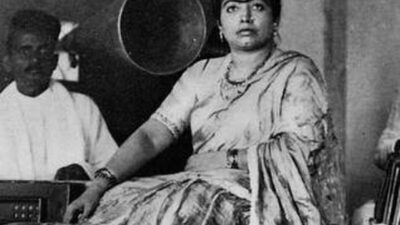
The Exponential Years: 1902-1910पहली रिकॉर्डिंग और 1910 के बीच नौ वर्षों में जो हुआ वह असाधारण था—संगीत का एक दस्तावेज़ जो अभूतपूर्व पैमाने और गति पर हुआ। 1902 तक, कंपनी प्रति वर्ष 50-100 गीत रिकॉर्ड कर रही थी। 1905 तक, वह आंकड़ा दोगुना हो गया था। 1908 तक, कई शहरों में स्टूडियो खोलने के साथ, गति तेज़ी से बढ़ गई। 1909 में अकेले, कंपनी अपनी सुविधाओं के पार 800 से अधिक गीत रिकॉर्ड कर रही थी। और 1910 तक, जब दशक के काम पर धूल बैठ गई, सूची 5,000 से अधिक दस्तावेज़ किए गए भारतीय गीतों पर थी। यह केवल एक व्यावसायिक उपलब्धि नहीं था। यह एक संग्रह बनाया गया था। एक दशक से कम समय में, ग्रामोफोन कंपनी ने जो कोई संग्रहालय, कोई विश्वविद्यालय, कोई विद्वान संस्था नहीं कर सकी—भारत की जीवंत संगीत परंपराओं को औद्योगिक पैमाने पर दस्तावेज़ किया। हर प्रमुख गायक—गौहर जान, अब्दुल करीम खान, जंकी बाई, ज़ोहरा बाई—के कई रिकॉर्डिंग थे। सैकड़ों कम-ज्ञात लेकिन समान रूप से महत्वपूर्ण संगीतकारों को स्थायित्व दिया गया था। क्षेत्रीय रूपों, शैलियों और नवाचारों को संरक्षित किया गया। ग्रामोफोन वह बन गया था जिसे रवीन्द्रनाथ टैगोर ने 1909 में मान्यता दी थी: अमरता का एक पोत।
अंग्रेज़ी में पढ़ें · Read in English
What happened in the nine years between the first recording and 1910 was extraordinary—a documentation of music that had occurred at unprecedented scale and velocity. By 1902, the company was recording 50-100 songs per year. By 1905, that figure had doubled. By 1908, with the opening of studios in multiple cities, the pace accelerated exponentially. In 1909 alone, the company recorded over 800 songs across its facilities. And by 1910, when the dust settled on the decade's work, the inventory stood at over 5,000 documented Indian songs. This was not merely a commercial achievement. It was an archive created. In less than a decade, the Gramophone Company had done what no museum, no university, no scholarly institution had done: documented India's living musical traditions on an industrial scale. Every major singer of the era—Gauhar Jaan, Abdul Karim Khan, Janki Bai, Zohra Bai—had multiple recordings. Hundreds of lesser-known but equally important musicians had been given permanence. Regional forms, styles, and innovations had been preserved. The gramophone had become what Rabindranath Tagore had recognized in 1909: a vessel of immortality.
वह संग्रह जो एक राष्ट्र बन गया
The Archive That Became a Nation1910 तक, कुछ उल्लेखनीय हुआ। पिछले दशक में बनी ग्रामोफोन रिकॉर्डिंग एक संग्रह से अधिक हो गई थीं—वह भारतीय राष्ट्र का एक प्रतिबिंब बन गईं। जब एक बंगाली बुद्धिजीवी जानना चाहता था कि भारत कैसा लगता है, तो वह भारतीय संगीतकारों द्वारा बनाए गए 5,000 रिकॉर्ड सुन सकता था। एक राष्ट्रीय पहचान राजनीतिक घोषणापत्र या लिखित संविधान के माध्यम से नहीं, बल्कि ध्वनि के माध्यम से बनाई जा रही थी। रिकॉर्डिंग केवल संगीत नहीं बल्कि संस्कृति, इतिहास और आकांक्षा को कैप्चर करते थे। वह अविश्वसनीय विविधता के साथ एक भारत दिखाते थे—सैकड़ों शैलियां, हज़ार क्षेत्रीय विविधताएं, गहरी शास्त्रीय परंपराएं लोकप्रिय नवाचार के साथ जीवंत थीं। तथ्य यह है कि यह संग्रह मौजूद था, कि भारतीय संगीत को वही माध्यम द्वारा दस्तावेज़ के योग्य माना गया था जो यूरोपीय मास्टरपीस को संरक्षित करता था, स्वयं सांस्कृतिक समानता का एक बयान था। भारतीय संगीतकारों को एक ही तकनीक, समान प्रारूप, पश्चिम के सबसे बड़े ऑर्केस्ट्रा के समान संरक्षण मानकों पर रिकॉर्ड करके, ग्रामोफोन यह दावा कर रहा था: भारतीय संगीत महत्वपूर्ण है। भारतीय संस्कृति गिनती है। भारत सभ्यता है। यह अकहा तर्क था जो 1910 तक 5,000 रिकॉर्डिंग ने बनाया। यह भारत की पहचान की किसी भी राजनीतिक भाषण की तुलना में अधिक शक्तिशाली पुष्टि थी।
अंग्रेज़ी में पढ़ें · Read in English
By 1910, something remarkable had happened. The gramophone recordings made in the previous decade had become more than an archive—they had become a reflection of the Indian nation itself. When a Bengali intellectual wanted to understand what India sounded like, he could listen to the 5,000 records made by Indian musicians. A national identity was being constructed not through political manifestos or written constitutions, but through sound. The recordings captured not just music, but culture, history, and aspiration. They showed an India of stunning diversity—hundreds of genres, a thousand regional variations, deep classical traditions living alongside popular innovation. The fact that this archive existed, that Indian music had been deemed worthy of documentation by the same medium that preserved European masterpieces, was itself a statement of cultural equivalence. By recording India's musicians on the same technology, in the same format, with the same preservation standards as the West's greatest orchestras, the gramophone was asserting: Indian music matters. Indian culture counts. India is civilization. This was the unspoken argument that 5,000 recordings made by 1910. It was a more powerful affirmation of India's identity than any political speech could have been.
संरक्षण की विरासत
The Legacy of Preservationएक सदी बाद, 1901 और 1910 के बीच के दशक में बनी रिकॉर्डिंग अमूल्य रहती हैं। संगीतविद उन्हें अध्ययन करते हैं यह समझने के लिए कि सौ साल पहले राग कैसे किए जाते थे। सूक्ष्म अलंकरण, राग की लचक, गायक और साथी के बीच संबंध—सभी इन रिकॉर्डिंग में दृश्यमान (या बल्कि, श्रव्य) हैं। जो रूप बीच के सदी में गायब हो गए या मान्यता से परे रूपांतरित हो गए, उन्हें अपनी मूल स्थिति में अध्ययन किया जा सकता है। कलाकार जो प्रतिष्ठा के लिए किंवदंती थे लेकिन जिन्हें कोई जीवंत व्यक्ति सुना नहीं था, अचानक उनकी आवाज़ के माध्यम से जाना जा सकता था। संगीतकारों के परिवार जो सदियों के लिए मौखिक परंपराओं को बनाए रखते थे लेकिन विलुप्ति का सामना करते थे, अपने पूर्वजों की दस्तावेज़ किए गए आवाज़ से जुड़ सकते थे। रिकॉर्डिंग के उस दशक में बनाया गया संग्रह, जो एक व्यावसायिक उद्यम और जिज्ञासा की तरह लग सकता था, समय के साथ कुछ अधिक गहन साबित हुआ: एक पूरी सभ्यता की संगीत चेतना के संरक्षण को एक विशेष समय में। वह दशक जो ग्रामोफोन को भारत में लाया था, उस राष्ट्र को एक उपहार दिया था जो बीसवीं सदी और उसके बाद गूंजेगा।
अंग्रेज़ी में पढ़ें · Read in English
A century later, the recordings made in the decade between 1901 and 1910 remain invaluable. Musicologists study them to understand how ragas were performed a hundred years ago. The subtle ornamentation, the flexibility of melody, the relationship between singer and accompanist—all visible (or rather, audible) in these recordings. Forms that had disappeared or transformed beyond recognition in the intervening century can be studied in their original state. Artists who were legendary by reputation but whom no living person had heard could suddenly be known through their voice. Families of musicians who had kept oral traditions for centuries but faced extinction could be connected to the documented voice of their ancestors. The archive created in that decade of recording, which seemed like a commercial venture and a curiosity, revealed itself over time to be something far more profound: the preservation of an entire civilization's musical consciousness at a specific moment in time. The decade that brought the gramophone to India had given that nation a gift that would echo through the twentieth century and beyond.
परिचय
IdentityEpithet
कैसे भारत दस साल में कोई रिकॉर्डिंग न होने से 5,000+ दस्तावेज़ किए गए गीतों तक पहुंच गया।
How India went from having no recordings to possessing 5,000+ documented songs in just ten years.
कहानी-नमूना
The Story Specimen| शीर्षक | एक दशक पूर्ण: शून्य से पाँच हज़ार तक—भारतीय रिकॉर्डिंग चमत्कार · A Decade Complete: From Zero to Five Thousand—The Indian Recording Miracle |
|---|---|
| श्रेणी | Recording History |
| प्रकार | Narrative |
| पाठ-समय | १० मिनट का पाठ |
| प्रकाशित | 31 March 2026 — admin |
| वर्ष | 1910 |
| टैग | decade milestone · growth · archive · documentation · milestone |
और कहानियाँ
More Stories from the Atlas
साझा कीजिए · Share this Plate