गीत विंग · गीत-पट्टिका · Song Plate
सुनियो ओ नंद के कुमार
Suniyo O Nand Ke Kumar
इस संगीत का सबसे महत्वाकांक्षी गीत — नंद के पुत्र को संबोधित भैरवी की ठुमरी, ख़ान मस्ताना की आवाज़ में, जिसे दशकों बाद संगीतशास्त्रियों ने अलग से रेखांकित किया।
भावभक्ति · आध्यात्मिक · Yearning
भाषाhindi गतिधीमी स्वरूपएकल पुरुष
श्रेय
The Creditsसूत्र-वाक्य · The Hook
सूत्र-वाक्य
इस संगीत का सबसे महत्वाकांक्षी गीत — नंद के पुत्र को संबोधित भैरवी की ठुमरी, ख़ान मस्ताना की आवाज़ में, जिसे दशकों बाद संगीतशास्त्रियों ने अलग से रेखांकित किया।
In EnglishThe score's most ambitious number — a Bhairavi thumri addressed to the son of Nanda, sung by Khan Mastana and singled out decades later by musicologists.
पट्टिका-लेख
The Monographपरिचय Overview
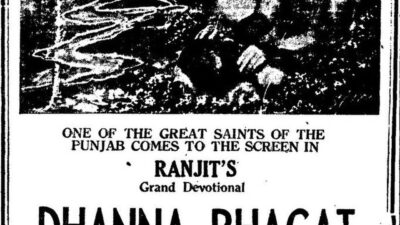
'धन्ना भगत' (1945) का वह अकेला गीत जिसकी संगीतशास्त्रीय पदचाप दर्ज है: 'जर्नल ऑफ़ द इंडियन म्यूज़िकोलॉजिकल सोसाइटी' लिखता है कि खेमचंद प्रकाश ने यहाँ भैरवी की ठुमरी बरती, जिसे ख़ान मस्ताना ने गाया। यह महफ़िल के एक रूप का सीधे फ़िल्मी साउंडट्रैक में प्रत्यारोपण है — संबोधन 'नंद के कुमार' को है, यानी कृष्ण को उनकी सबसे घरेलू और सबसे सुलभ पहचान में।
अंग्रेज़ी में पढ़ें · Read in English
The one song from Dhanna Bhagat (1945) that has a documented musicological footprint: the Journal of the Indian Musicological Society records that Khemchand Prakash used a bhairavi thumri here, sung by Khan Mastana. It is a straight transplant of a concert form into a film soundtrack — the address is to Nand ke Kumar, the son of Nanda, which is to say Krishna in his most domestic and most approachable identity.
संगीत The Music
भैरवी वह राग है जिस पर उत्तर भारतीय महफ़िलें परंपरागत रूप से समाप्त होती हैं, और 1940 के दशक तक यह भक्ति तथा विदाई-प्रसंगों के लिए फ़िल्म-संगीतकार का स्वाभाविक चुनाव बन चुका था — इसके कोमल ऋषभ, गांधार, धैवत और निषाद ऐसा स्वर-रंग बनाते हैं जिसे श्रोता तुरंत प्रार्थना के रूप में पढ़ लेते हैं। इसे सादे भजन के बजाय ठुमरी की तरह बाँधना गायक को उस बोल-बनाव की जगह देता है जिस पर यह रूप टिका है — छोटे पाठ को बार-बार पलटकर उसमें नई छाया खोजना। ख़ान मस्ताना की खुली, बिना तामझाम की गायकी इस बरताव को महफ़िली प्रस्तुति में बदलने से रोके रखती है, और फ़िल्मी दृश्य को इसी की ज़रूरत होती है।
अंग्रेज़ी में पढ़ें · Read in English
Bhairavi is the raag on which North Indian concerts traditionally close, and by the 1940s it had become the film composer's default for devotional and valedictory material — its flattened second, third, sixth and seventh producing a sound audiences read instantly as prayer. Setting it as thumri rather than as a plain bhajan gives the singer room for the bol-banao phrasing the form is built on, turning a short text over repeatedly to find new shading in it. Khan Mastana's open, unfussy delivery keeps the treatment from tipping into recital, which is what a film sequence needs.
काव्य The Poetry
'सुनियो' — ज़रा सुनो — ठुमरी और याचना-भजन दोनों की मानक शुरुआती चाल है, और यह ऐसे श्रोता को मानकर चलती है जो अनुपस्थित नहीं, बस अन्यमनस्क हो सकता है। कृष्ण को किसी वीर-विशेषण के बजाय नंद के पुत्र के रूप में पुकारना स्वर का जान-बूझकर नीचे लाना है: यह गीता के ईश्वर को नहीं, ग्वालों के घर के बालक को बुलाता है — और किसान-संत की कथा को यही कृष्ण चाहिए। पंडित इंद्र की ब्रज-रंगी हिंदी उसी पहचान के लिए सही बोली है, और वह फ़िल्म के धर्म-बोध को अंत तक गाँव के पैमाने पर बनाए रखती है।
अंग्रेज़ी में पढ़ें · Read in English
The vocative 'suniyo' — do listen — is the standard opening move of thumri and of the petitionary bhajan alike, and it assumes an audience that may be distracted rather than absent. Naming Krishna as Nanda's son rather than by a heroic epithet is a deliberate lowering of register: it invokes not the god of the Gita but the boy of the cowherd household, which is the Krishna a farmer-saint's story requires. Pandit Indra's Braj-inflected Hindi is the correct dialect for that identity, and it lets the film's theology stay village-scale throughout.
कहानी The Story
खेमचंद प्रकाश ने 1940 के दशक का पहला आधा रणजीत मूवीटोन में एक विस्तृत परास पर लिखते हुए बिताया — 'तानसेन' (1943) के शास्त्रीय तंत्र से लेकर इस संगीत की सादी भजन-बंदिशों तक — और 'धन्ना भगत', उस दौर के अंत के पास, दोनों से लेती है। चार साल बाद, एक दूसरे स्टूडियो में, वे 'महल' (1949) के लिए 'आएगा आनेवाला' लिखेंगे — वही गीत जिससे वे आज भी सबसे अधिक पहचाने जाते हैं; अगस्त 1950 में उनका निधन हुआ।
अंग्रेज़ी में पढ़ें · Read in English
Khemchand Prakash had spent the first half of the 1940s at Ranjit Movietone writing across a wide range — from the classical apparatus of Tansen (1943) to the plain bhajan settings of this score — and Dhanna Bhagat, near the end of that period, draws on both. Four years later, at another studio, he would write 'Aayega Aanewala' for Mahal (1949), the song he is still best known for; he died in August 1950.
विरासत The Legacy
फ़िल्म के दसों गीतों में यही एक है जिसका संगीत-स्वरूप किसी प्रकाशित स्रोत में केवल सूचीबद्ध नहीं, बल्कि वर्णित है — और वही उल्लेख, रिलीज़ के चार दशक बाद एक संगीतशास्त्रीय पत्रिका में, व्यावहारिक रूप से इसका पूरा उत्तरजीवन है। यह इस बात का छोटा-सा प्रमाण है कि 1940 के दशक के मध्य तक शास्त्रीय रूप कितनी सहजता से व्यावसायिक हिंदी फ़िल्म-संगीत में लिखे जा रहे थे।
अंग्रेज़ी में पढ़ें · Read in English
Of the film's ten songs this is the one whose musical character a published source describes rather than merely lists, and that citation — in a musicological journal, four decades after the release — is effectively its whole afterlife. It stands as a small piece of evidence for how routinely classical forms were still being written into commercial Hindi film scores in the mid-1940s.
वर्गीकरण
Classification- Tempo
- Slow
Genre
अन्य विवरण
More Details- https://en.wikipedia.org/wiki/Dhanna_Bhagat_(film)
- https://www.hindigeetmala.net/movie/dhanna_bhagat.htm
- https://en.wikipedia.org/wiki/List_of_Hindi_films_of_1945
- https://en.wikipedia.org/wiki/Dhanna
- https://www.cinemaazi.com/feature/bigger-than-sky-ranjit-studio
- https://en.wikipedia.org/wiki/Khemchand_Prakash
References
रोचक तथ्य
Margin Notes'जर्नल ऑफ़ द इंडियन म्यूज़िकोलॉजिकल सोसाइटी' (1988) दर्ज करता है कि खेमचंद प्रकाश ने इस गीत के लिए भैरवी की ठुमरी बरती, जिसे ख़ान मस्ताना ने गाया — फ़िल्म का यही एक गीत है जिसका संगीत-रूप किसी प्रकाशित स्रोत में केवल सूचीबद्ध नहीं, वर्णित है।
अंग्रेज़ी में पढ़ें · Read in English
The Journal of the Indian Musicological Society (1988) notes that Khemchand Prakash used a bhairavi thumri for this song, sung by Khan Mastana — the one number of the film whose musical form a published source describes rather than merely lists.
खेमचंद प्रकाश लगभग 1940 में रणजीत मूवीटोन से जुड़े और अगले पाँच वर्षों में इस बैनर की कई फ़िल्मों का संगीत रचा — जिनमें 'तानसेन' (1943) भी है; 'धन्ना भगत' उसी दौर के अंत के पास आई, 'महल' (1949) से चार साल पहले — वही संगीत जिसके लिए वे आज भी सबसे अधिक जाने जाते हैं।
अंग्रेज़ी में पढ़ें · Read in English
Khemchand Prakash was signed by Ranjit Movietone around 1940 and scored a long run of the banner's films over the next five years, Tansen (1943) among them; Dhanna Bhagat came near the end of that run, four years before Mahal (1949), the score he is still best known for.
शीर्षक के धन्ना जयपुर के पास चौरू गाँव के पंद्रहवीं सदी के जाट किसान हैं, जिन्हें रामानंद का शिष्य माना जाता है; उनके तीन पद आगे चलकर गुरु ग्रंथ साहिब में सम्मिलित हुए।
अंग्रेज़ी में पढ़ें · Read in English
The Dhanna of the title is a fifteenth-century Jat farmer from Chauru village near Jaipur, counted as a disciple of Ramananda; three of his hymns were later included in the Guru Granth Sahib.
नमूना-पट्टी
The Specimen Table| शीर्षक | सुनियो ओ नंद के कुमार · Suniyo O Nand Ke Kumar |
|---|---|
| फ़िल्म | धन्ना भगत · 1945 |
| वर्ष · युग | 1945 — Pre-Independence (1931–1947) |
| गायक | Khan Mastana |
| गीतकार | Pandit Indra |
| संगीतकार | Khemchand Prakash |
| स्वरूप | एकल पुरुष |
| गति | धीमी |
| भाषा | hindi |
| भाव | भक्ति · आध्यात्मिक · Yearning |
| लोकप्रियता | Known |
| बोल-स्थिति | केवल झलक |
जुड़े हुए पन्ने
Connected Plates · The Graph Made Visibleअटलस में कोई पन्ना अकेला नहीं — इस गीत से जुड़े गीत, कलाकार, फ़िल्म, राग-ताल-विधा, सब यहाँ से खुलते हैं।
मिलते-जुलते गीत · Related Songs
कलाकार · The Artists
फ़िल्म · The Film
साझा कीजिए · Share this Plate