गीत विंग · गीत-पट्टिका · Song Plate
अब मेरा रंग देखो रंगने वाले
Ab Mera Rang Dekho
मुकेश और लता की आवाज़ें साथ — राज कपूर के पूरे रोमांटिक संसार की आत्मा एक अनोखे युगल गीत में।
भावउत्सव · Joyful · चुलबुला · रोमांटिक
भाषाUrdu · Hindi गतिमध्यम स्वरूपयुगल
श्रेय
The Creditsबोल · The Lyrics
बोल — झलक · Lyrics Preview
तुमने रंग दिया रंगने वाले
Tumne rang diya rangne waale
कॉपीराइट के कारण केवल झलक — पूरे बोल आधिकारिक मंचों पर।
शब्दकोश
Word Meaningsसूत्र-वाक्य · The Hook
सूत्र-वाक्य
मुकेश और लता की आवाज़ें साथ — राज कपूर के पूरे रोमांटिक संसार की आत्मा एक अनोखे युगल गीत में।
In EnglishMukesh and Lata's voices together — the sound of Raj Kapoor's entire romantic universe distilled into one perfect duet.
पट्टिका-लेख
The Monographपरिचय Overview
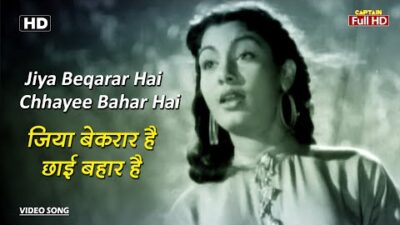
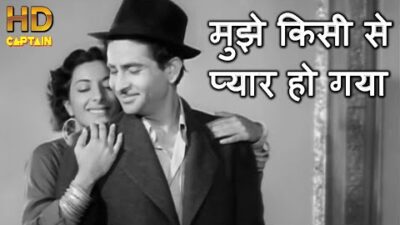
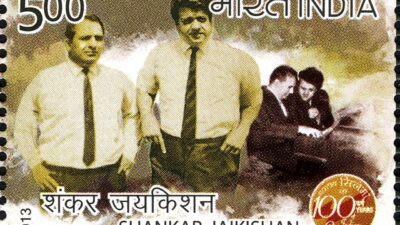
राज कपूर की 1950 की ऐतिहासिक फ़िल्म 'बरसात' — शंकर-जयकिशन का संगीत, शैलेन्द्र के बोल, मुकेश और लता मंगेशकर की आवाज़ — का यह युगल गीत उर्दू-हिंदी के एक सुंदर रूपक पर टिका है: प्रेम एक रंग है जो महबूब की दुनिया को स्थायी रूप से रंग देता है। राज कपूर और नरगिस पर फ़िल्माया यह गीत होली के भाव से मिलता-जुलता है — जहाँ रंग देना प्रेम और आनंद की अभिव्यक्ति है। मुकेश की कम्पित, भाव-भरी आवाज़ और लता की स्वच्छ सोप्रानो मिलकर वह ध्वनि बनाती हैं जो राज कपूर के रोमांटिक संसार की पहचान बन गई।
अंग्रेज़ी में पढ़ें · Read in English
One of the most joyful romantic duets from Raj Kapoor's landmark 1950 film Barsaat — composed by Shankar-Jaikishan with lyrics by Shailendra, sung by Mukesh and Lata Mangeshkar — 'Ab Mera Rang Dekho' is built on a beautiful Urdu-Hindi metaphor: love as a dye that permanently colours the beloved's world. Picturized on Raj Kapoor and Nargis in one of their most celebrated screen pairings, the song belongs to the same emotional universe as Holi — the festival where people colour each other as an expression of joy and love. Mukesh's characteristic voice, with its aching, tremulous quality, plays wonderfully against Lata Mangeshkar's clear soprano in a duet exchange that would become the defining sound of the Raj Kapoor romantic universe. Released on HMV as part of Barsaat's groundbreaking soundtrack, it remains one of the quintessential Golden Era romantic duets.
संगीत The Music
शंकर-जयकिशन ने इसे एक मध्यम-गति के ढाँचे में बाँधा जो दोनों आवाज़ों को आपस में खेलने की छूट देता है। वाद्य-विन्यास उनके बाद के करियर के बड़े ऑर्केस्ट्रेशन की तुलना में हल्का है। मुकेश और लता के बीच का गायकीय रसायन इस गीत की असली जान है: मुकेश की थोड़ी खुरदुरी, भाव-भरी आवाज़ लता की स्फटिक-सी स्पष्टता से मिलती है — और यह अंतर ही रोमांटिक तनाव बन जाता है।
अंग्रेज़ी में पढ़ें · Read in English
Shankar-Jaikishan composed 'Ab Mera Rang Dekho' in a medium-tempo rhythmic framework that allows the two voices to play off each other with a relaxed, conversational ease. The arrangement is characteristically lighter than the full romantic productions that would come in their later career — strings providing a shimmer, harmonium the foundation, accordion adding a Western gloss, tabla keeping a steady underpinning. The vocal chemistry between Mukesh and Lata Mangeshkar is the song's central achievement: Mukesh's slightly husky, emotionally charged quality plays against Lata's crystalline precision in a way that sounds both complementary and distinctly different — the difference itself becoming a kind of romantic tension.
काव्य The Poetry
शैलेन्द्र का बोल 'रंग' (रंग) के रूपक पर टिका है — प्रेम की वह परिवर्तनकारी शक्ति जो महबूब को हमेशा के लिए बदल देती है। 'रंग देना' एक ऐसा रूपक है जो उर्दू और हिंदी लोक-कविता दोनों में मिलता है — प्रेम एक ऐसा रंग है जो कभी नहीं उतरता। 'रंगने वाले' संबोधन आत्मीय और खेल-भरा है। शैलेन्द्र की खासियत: गहरे रूपक को बातचीत जैसी सरल भाषा में पिरोना।
अंग्रेज़ी में पढ़ें · Read in English
Shailendra's lyric turns on the Urdu-Hindi metaphor of 'rang' (colour) as the transforming power of love. 'Rang dena' (to colour someone) is to transform them — love as a dye that leaves the lover permanently changed. The address 'rangne waale' (O you who colour) is intimate and playful, a lover acknowledging the beloved's transforming power. Shailendra wraps this concept in an accessible, conversational Hindi that makes profound metaphor feel like natural speech — the quality that made him the most beloved lyricist of the Golden Era.
कहानी The Story
राज कपूर और नरगिस का पर्दे पर जोड़ स्वर्ण युग की महान रोमांटिक जोड़ियों में एक था — और परदे के पीछे एक प्रसिद्ध, अंततः दुखद वास्तविक प्रेम-कहानी भी थी। 'बरसात' (1950) ने इस जोड़ी को बॉलीवुड की प्रमुख रोमांटिक जोड़ी के रूप में स्थापित किया। 'अब मेरा रंग देखो' की खेल-भरी, मीठी शरारत उनकी उस पर्दे पर की आत्मीयता को पकड़ती है। मुकेश का राज कपूर से जुड़ाव — उनकी लगभग हर बड़ी फ़िल्म में प्लेबैक देना — 'बरसात' से शुरू हुआ।
अंग्रेज़ी में पढ़ें · Read in English
The Raj Kapoor–Nargis pairing was one of the great screen partnerships of the Golden Era, extending beyond their professional relationship into a celebrated (and ultimately tragic) real-life romance. Barsaat (1950) was the film that established this pairing as Bollywood's pre-eminent romantic couple, and 'Ab Mera Rang Dekho' was one of the songs most closely associated with that image. Raj Kapoor and Nargis's on-screen chemistry was so natural and convincing that audiences immediately believed in their love — and the playful, teasing quality of 'Ab Mera Rang Dekho' perfectly captured that easy intimacy. Mukesh's association with Raj Kapoor — providing playback for virtually all of Kapoor's major films — began with Barsaat and continued until Kapoor's death.
विरासत The Legacy
मुकेश-लता की जोड़ी हिंदी फ़िल्म संगीत में सबसे प्रसिद्ध जोड़ियों में से एक बनी — खासकर राज कपूर फ़िल्मों के रोमांटिक संसार से जुड़ी। 'अब मेरा रंग देखो' उस बात का एक शुरुआती उदाहरण है जो स्वर्ण युग के हिंदी फ़िल्म संगीत की पहचान बनने वाली थी: स्त्री-पुरुष युगल गीत जिनमें दोनों आवाज़ें बराबर हैं। 'रंग' का यह रूपक बाद की हिंदी फ़िल्म शायरी में बार-बार आया — शैलेन्द्र का संस्करण सबसे शुरुआती और सबसे सुंदर है।
अंग्रेज़ी में पढ़ें · Read in English
The Mukesh-Lata pairing became one of the most celebrated in Hindi film music, associated especially with the romantic universe of Raj Kapoor films. 'Ab Mera Rang Dekho' is one of the earliest examples of what would become a defining feature of Golden Era Hindi film music: male-female duets in which the two voices are equals, each contributing a distinct emotional colour to a whole greater than the sum of its parts. The 'rang' metaphor of the song — love as transforming dye — would recur throughout Hindi film poetry, Shailendra's version being one of the earliest and most elegant examples.
वर्गीकरण
Classification- Tempo
- Medium
Genre
अन्य विवरण
More Details- Wikipedia: Barsaat (1950 film) — https://en.wikipedia.org/wiki/Barsaat_(1950_film)
- Wikipedia: Mukesh (singer) — https://en.wikipedia.org/wiki/Mukesh_(singer)
- Wikipedia: Shankar-Jaikishan — https://en.wikipedia.org/wiki/Shankar-Jaikishan
- Songs of Yore: Best songs of 1950 — https://www.songsofyore.com/best-songs-of-1950/
- Raju Bharatan, A Journey Down Melody Lane (1994)
References
रोचक तथ्य
Margin Notesमुकेश 'बरसात' (1950) से राज कपूर की स्थायी पार्श्व-आवाज़ बन गए; यह साझेदारी दो दशकों तक हिंदी फ़िल्म संगीत की रूमानी ध्वनि को परिभाषित करती रही।
अंग्रेज़ी में पढ़ें · Read in English
Mukesh became the permanent playback voice for Raj Kapoor starting with Barsaat (1950), a partnership that defined Hindi film music's romantic sound for two decades.
'बरसात' में राज कपूर-नरगिस की परदे पर की रूमानी जोड़ी उनके वास्तविक जीवन के रिश्ते को प्रतिबिंबित करती थी — जिसने एक अतिरिक्त भावनात्मक आयाम जोड़ा, जिसे दर्शक सहज ही महसूस कर लेते थे।
अंग्रेज़ी में पढ़ें · Read in English
The Raj Kapoor–Nargis on-screen romance in Barsaat mirrored their real-life relationship — adding an additional emotional dimension that audiences intuitively sensed.
'अब मेरा रंग देखो' में शैलेंद्र का 'रंग' रूपक, हिंदी फ़िल्मी काव्य में प्रेम की परिवर्तनकारी शक्ति के प्रतीक के रूप में रंग के प्रयोग के सबसे आरंभिक और सुरुचिपूर्ण उदाहरणों में से एक है।
अंग्रेज़ी में पढ़ें · Read in English
Shailendra's 'rang' (colour) metaphor in 'Ab Mera Rang Dekho' is one of the earliest and most elegant uses of colour as a symbol for love's transforming power in Hindi film poetry.
शंकर-जयकिशन अपनी इस क्षमता के लिए जाने जाते थे कि वे ऐसे युगल गीत रचते थे जिनमें दोनों स्वरों को समान सांगीतिक महत्व दिया जाता था — 'अब मेरा रंग देखो' इस दृष्टिकोण का एक आरंभिक उदाहरण है।
अंग्रेज़ी में पढ़ें · Read in English
Shankar-Jaikishan were noted for their ability to compose duets in which both voices had equal melodic importance — 'Ab Mera Rang Dekho' is an early example of this approach.
आर.के. फ़िल्म्स का प्रसिद्ध लोगो, जिसमें राज कपूर वायलिन के साथ और नरगिस उनकी बाँहों में दिखाई देती हैं, 'बरसात' के एक दृश्य-चित्र (स्टिल) से लिया गया था।
अंग्रेज़ी में पढ़ें · Read in English
The famous RK Films logo showing Raj Kapoor with violin and Nargis in his arms was taken from a still from Barsaat.
नमूना-पट्टी
The Specimen Table| शीर्षक | अब मेरा रंग देखो रंगने वाले · Ab Mera Rang Dekho |
|---|---|
| वर्ष · युग | 1950 — Golden Era |
| गायक | Mukesh, Lata Mangeshkar |
| गीतकार | Shailendra |
| संगीतकार | Shankar-Jaikishan |
| स्वरूप | युगल |
| गति | मध्यम |
| अवधि | 3:12 |
| भाषा | Urdu · Hindi |
| वाद्य | violin · harmonium · tabla · accordion |
| भाव | उत्सव · Joyful · चुलबुला · रोमांटिक |
| लोकप्रियता | Very_popular |
| बोल-स्थिति | केवल झलक |
जुड़े हुए पन्ने
Connected Plates · The Graph Made Visibleअटलस में कोई पन्ना अकेला नहीं — इस गीत से जुड़े गीत, कलाकार, फ़िल्म, राग-ताल-विधा, सब यहाँ से खुलते हैं।
मिलते-जुलते गीत · Related Songs
कलाकार · The Artists
युग · The Era
साझा कीजिए · Share this Plate
यह पन्ना आगे बढ़ाइए
जब मुकेश राज कपूर के लिए गाते थे, तो हिंदी सिनेमा का दिल धड़कता सुनाई देता था।
When Mukesh sang for Raj Kapoor, you heard the heart of Hindi cinema beating.
— Film critic Khalid Mohammed on the Mukesh-Raj Kapoor partnership
सवाल-जवाब
Questions & Answers'बरसात' के 'अब मेरा रंग देखो' में पुरुष आवाज़ किसकी थी? · Who sang the male part in 'Ab Mera Rang Dekho' from Barsaat?
मुकेश ने पुरुष आवाज़ दी, राज कपूर के लिए प्लेबैक करते हुए। लता मंगेशकर ने नरगिस के लिए। 'बरसात' (1950) ने मुकेश को राज कपूर की स्थायी आवाज़ के रूप में स्थापित किया — एक साझेदारी जो दशकों बाद कपूर की मृत्यु तक जारी रही।
Mukesh sang the male part, providing playback for Raj Kapoor. Lata Mangeshkar sang the female part for Nargis. Barsaat (1950) established Mukesh as the permanent playback voice of Raj Kapoor — a partnership that would last until Kapoor's death decades later.