गीत विंग · संग्रह-पट्टिका · Collection Plate
The Quality Leap: 1908 Studio Sessions
संग्रह-कथा
The Curator's Note1908 marks a watershed moment in the technical history of Indian gramophone recording. The establishment of purpose-built recording studios in India enabled engineers to achieve unprecedented clarity and fidelity in capturing vocal and instrumental music. The shift from improvised recording spaces (hotel rooms, concert halls) to acoustically designed studios transformed the relationship between artist and technology.
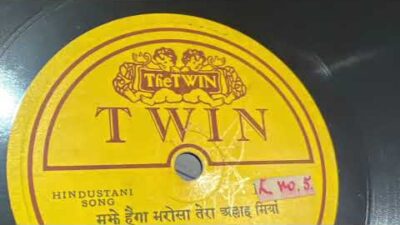
This collection showcases songs recorded in 1908 when studio technology was at its peak of early development. These recordings demonstrate noticeably improved sound clarity compared to just a few years earlier. The subtle details of vocal technique — vibrato, intonation precision, dynamic control — are captured with new vividness. The nuanced rhythmic work of accompanying instrumentalists can be heard with unprecedented clarity.
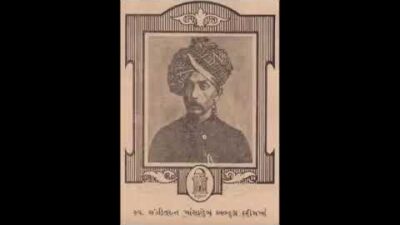
1908 was also the year when Gauhar Jaan crossed her 600th recording milestone, when Abdul Karim Khan’s approach to classical music was being documented comprehensively, and when specialized studios allowed musicians from across India to access professional recording. The songs in this collection represent the moment when the gramophone transitioned from a technical novelty to a genuine medium for serious artistic documentation.
इस संग्रह के गीत
Songs in this Collection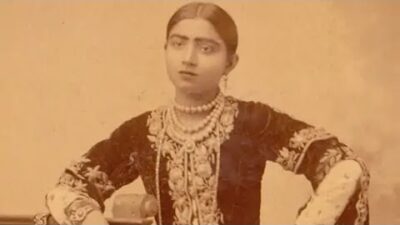


साझा कीजिए · Share this Plate
यह पन्ना आगे बढ़ाइए
अन्य विवरण
More Details- Recording technology advancement
- Studio infrastructure development
- Clarity and fidelity in sound capture
- Diverse vocal genres documented professionally
- Artist control and artistic expression
Subtitle
A curated collection of recordings from the year when dedicated studios transformed recording quality
Themes
Description
1908 भारतीय ग्रामोफोन रिकॉर्डिंग के तकनीकी इतिहास में एक महत्वपूर्ण क्षण को चिह्नित करता है। भारत में समर्पित रिकॉर्डिंग स्टूडियो की स्थापना ने इंजीनियरों को गायन और वाद्य संगीत को कैप्चर करने में अभूतपूर्व स्पष्टता और वफादारी प्राप्त करने में सक्षम बनाया। तात्कालिक रिकॉर्डिंग स्पेस (होटल कमरे, कॉन्सर्ट हॉल) से ध्वनिकी रूप से डिज़ाइन किए गए स्टूडियो तक का बदलाव कलाकार और प्रौद्योगिकी के बीच संबंध को बदल दिया।
1908 marks a watershed moment in the technical history of Indian gramophone recording. The establishment of purpose-built recording studios in India enabled engineers to achieve unprecedented clarity and fidelity in capturing vocal and instrumental music. The shift from improvised recording spaces (hotel rooms, concert halls) to acoustically designed studios transformed the relationship between artist and technology.
This collection showcases songs recorded in 1908 when studio technology was at its peak of early development. These recordings demonstrate noticeably improved sound clarity compared to just a few years earlier. The subtle details of vocal technique — vibrato, intonation precision, dynamic control — are captured with new vividness. The nuanced rhythmic work of accompanying instrumentalists can be heard with unprecedented clarity.
1908 was also the year when Gauhar Jaan crossed her 600th recording milestone, when Abdul Karim Khan's approach to classical music was being documented comprehensively, and when specialized studios allowed musicians from across India to access professional recording. The songs in this collection represent the moment when the gramophone transitioned from a technical novelty to a genuine medium for serious artistic documentation.
Curator Notes
1908 represents the moment when recording technology in India matured beyond the experimental stage. The songs in this collection were recorded in purpose-built studios that gave engineers full acoustic control. You can hear the difference in sound quality: vocal nuance is clearer, instrumental accompaniment is more defined, dynamic control is more apparent. These were not merely entertainment recordings but documents of artistic excellence created in optimized acoustic environments.
This collection also celebrates the diversity of musical forms being professionally recorded by 1908. From Gauhar Jaan's thumri and bhajan to Abdul Karim Khan's khayal, from Zohra Bai's tappa to Saila Bai's kajri, the 1908 recordings document the breadth of Indian vocal music. Each form is captured with the technical quality that the dedicated studio environment enabled.