सिनेमा विंग · फ़िल्म-पट्टिका · Film Plate
तदबीर
Tadbir
शैलीDrama · Romance · Social
भाषाhindi प्रकारकथा-चित्र (फ़ीचर)
गीत12 — नीचे पूरी संगीत-सूची
कथा-सार
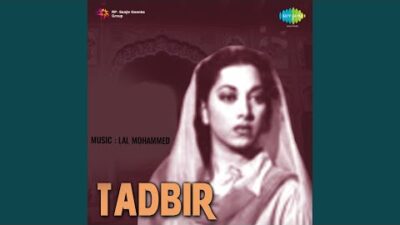
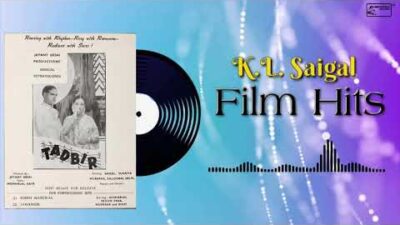
Synopsis'तदबीर' जयंत देसाई द्वारा अपने ही बंबई बैनर के लिए निर्मित और निर्देशित एक सामाजिक प्रेम-नाटक है। कहानी अनुभवी गुजराती पटकथाकार मोहनलाल जी. दवे की है और पटकथा-संवाद मुंशी सागर हुसैन के। कुंदन लाल सहगल कन्हैयालाल की भूमिका में हैं और किशोरी सुरैया सगुना की, जिससे वह प्रेम करता है; मुबारक ज्वालाप्रसाद बने हैं — सांसारिक सत्ता का वह चेहरा जो इन दोनों के सामने खड़ा है। शीर्षक 'तदबीर' उर्दू का वह शब्द है जिसका अर्थ है युक्ति, उपाय, वह सचेत प्रयास जो मनुष्य अपना जीवन गढ़ने के लिए करता है — और यह जान-बूझकर 'तक़दीर' का प्रतिपक्ष है, वही जोड़ी जो उर्दू शायरी और 1940 के दशक के हिंदी सिनेमा में बार-बार लौटती है। फ़िल्म के बचे हुए गीत-शीर्षक इसी बहस का नक़्शा हैं: कहीं नायक स्वयं को क़िस्मत का मारा कहता है, कहीं आज़ाद पंछी, कहीं ईश्वर से कहता है कि चाहे मिटा दे चाहे बचा ले — और अंत में फ़िल्म के इकलौते उत्सवी युगल-गीत में मिलन का दिन आ जाता है। दृश्य-दर-दृश्य कथानक उपलब्ध अभिलेखों में सुरक्षित नहीं है; इसलिए यहाँ केवल वही दर्ज है जो श्रेय-नामावली, पात्र-नाम और प्रमाणित गीत-सूची वास्तव में सिद्ध करते हैं।
अंग्रेज़ी में पढ़ें · Read in English
Tadbir is a social romantic drama produced and directed by Jayant Desai for his own Bombay banner, from a story by the veteran Gujarati scenarist Mohanlal G. Dave with screenplay and dialogue by Munshi Sagar Hussain. K.L. Saigal plays Kanhaiyalal and the teenaged Suraiya plays Saguna, the woman he loves, with Mubarak as Jwalaprasad, the figure of worldly authority set against them. The title is the Urdu word for contrivance, stratagem, the deliberate effort a person makes to shape their own life — and it is deliberately the counterweight to taqdeer, destiny, the pairing that runs through so much Urdu verse and so much 1940s Hindi cinema. The film's surviving song titles map that argument directly: Kanhaiyalal calls himself a man struck by fate in one number and a free bird in another, tells God to destroy him or save him as He pleases in a third, and reaches the day of union in the film's one openly celebratory duet. A scene-by-scene plot has not survived in the accessible record — the film has no preserved synopsis in the standard reference works — so what is set down here is only what the credits, the character names and the documented soundtrack actually establish.
संगीत-सूची
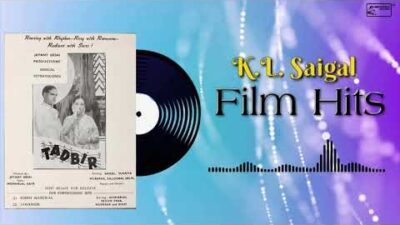
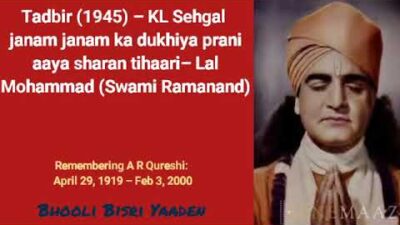
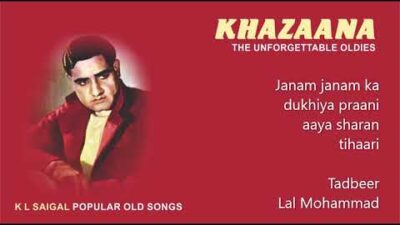
The Soundtrackएचएफ़जीके-आधारित सूचियों में 'तदबीर' के बारह रिकॉर्ड-पक्ष दर्ज हैं — सभी की धुन लाल मोहम्मद की और सभी के बोल एक ही गीतकार स्वामी रामानंद सरस्वती के। उस दौर में जब एक फ़िल्म के गीत प्रायः दो-तीन शायरों में बँटते थे, यह असामान्य व्यवस्था थी। सहगल के हिस्से छह एकल और सुरैया के साथ दो युगल हैं; सुरैया के अपने तीन एकल; और एक गीत नसीम अख़्तर का। 'जनम जनम का दुखिया प्राणी' दो बार सूचीबद्ध है — पहला और दूसरा भाग — जो 78-आरपीएम तवे पर एक ही रिकॉर्ड के दो पहलू हैं। गीत-समूह का झुकाव प्रेम से अधिक दार्शनिक और भक्ति-संबोधन की ओर है: बारह में से पाँच शीर्षक या तो ईश्वर से बात करते हैं या क़िस्मत के बारे में — जो एक संन्यासी-नाम से लिखने वाले गीतकार और तदबीर-तक़दीर की बहस पर टिकी फ़िल्म, दोनों के अनुरूप है।
अंग्रेज़ी में पढ़ें · Read in English
Twelve record sides are documented for Tadbir in the HFGK-derived listings, all composed by Lal Mohammad and all written by a single lyricist, Swami Ramanand Saraswati — an unusual arrangement in an era when a film's songs were routinely split between two or three poets. Saigal takes six solos plus two duets with Suraiya; Suraiya takes three solos of her own; and Naseem Akhtar sings one number. One title, 'Janam Janam Ka Dukhiya Praani', is listed twice, as a first and second part, which on a 78-rpm disc means the two faces of a single record. The song-set is weighted heavily towards philosophical and devotional address rather than romance: five of the twelve titles speak either to God or about fate, which is consistent with a lyricist who wrote under an ascetic's name and with a film built around the tadbir–taqdeer argument.
- हसरतें ख़ामोश हैं Hasratein Khamosh Hain स्वर: K.L. Saigal
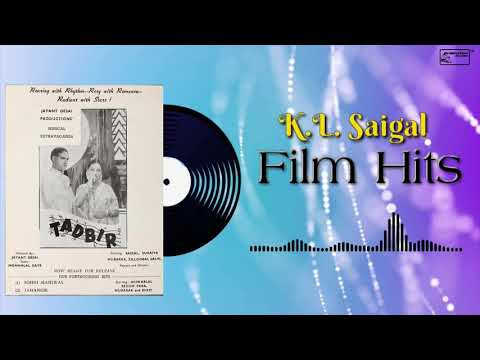
- मैं किस्मत का मारा भगवान Main Kismat Ka Mara Bhagwan स्वर: K.L. Saigal
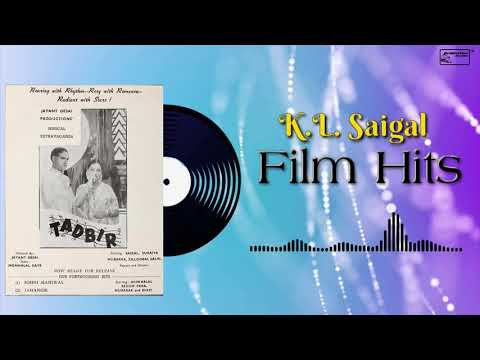
- मैं पंछी आज़ाद Main Panchhi Azad स्वर: K.L. Saigal
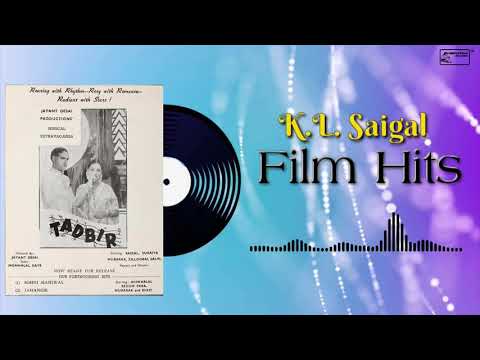
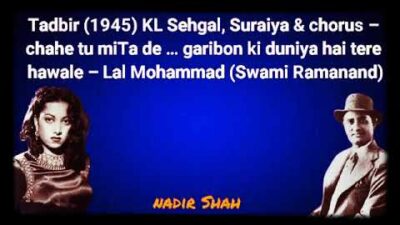
- चाहे तू मिटा दे चाहे तू बचा दे Chahe Tu Mita De Chahe Tu Bacha De स्वर: K.L. Saigal
- जनम जनम का दुखिया प्राणी Janam Janam Ka Dukhiya Praani स्वर: K.L. Saigal
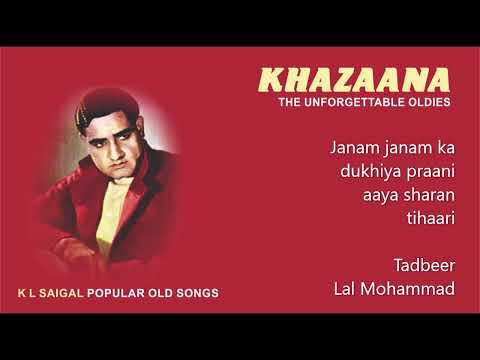
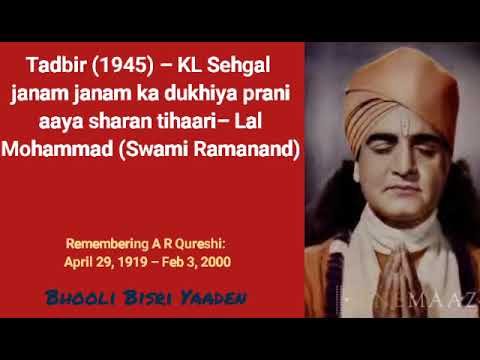
- जनम जनम का दुखिया प्राणी (भाग 2) Janam Janam Ka Dukhiya Praani (Part II) स्वर: K.L. Saigal
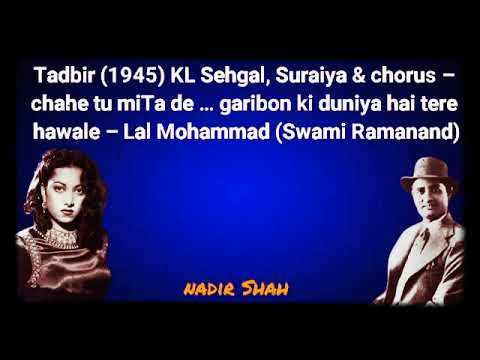
- ग़रीबों की दुनिया है तेरे हवाले Garibon Ki Duniya Hai Tere Hawale स्वर: Suraiya, K.L. Saigal
- जाग ओ सोने वाले Jaag O Sone Wale स्वर: Suraiya
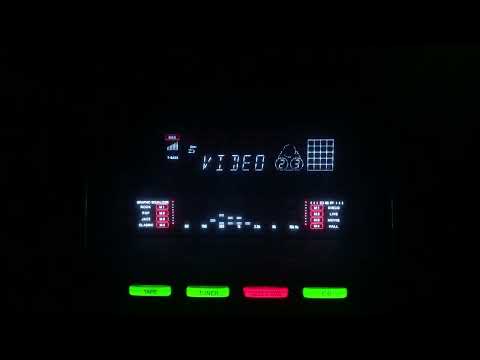
- रानी खोल दे अपने द्वार मिलन का दिन आ गया Rani Khol De Apne Dwar Milan Ka Din Aa Gaya स्वर: K.L. Saigal, Suraiya
- बाँके नैना से Banke Naina Se स्वर: Naseem Akhtar
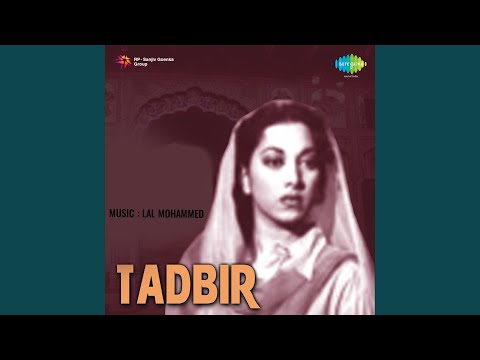
- तुमने न सुना जिसको Tumne Na Suna Jisko स्वर: Suraiya
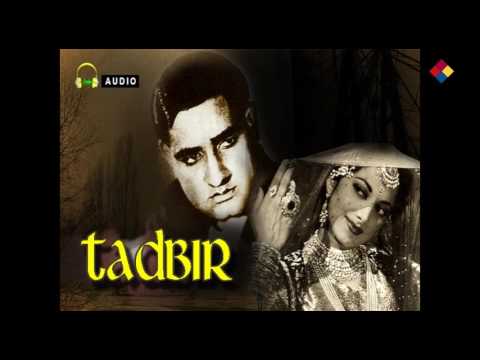
- उड़ने वाले पंछी Udne Wale Panchhi स्वर: Suraiya
पट्टिका-लेख
The Monographपर्दे के पीछे Behind the Scenes
जयंत देसाई ने निर्देशन के साथ-साथ निर्माण भी किया; कहानी मोहनलाल जी. दवे की थी, छायांकन द्रोणाचार्य का, संपादन एन.वी. मोरजकर का, और फ़िल्म की अवधि 121 मिनट। सुरैया का चयन इस फ़िल्म से जुड़ा सबसे अच्छी तरह प्रमाणित प्रसंग है: वे देसाई की 'सम्राट चंद्रगुप्त' में काम कर ही रही थीं, जब रिहर्सल में उनका गाना सुनकर सहगल ने निर्देशक से कहा कि इन्हें अपने सामने नायिका के रूप में लीजिए। सहगल स्वयं 1945 तक काफ़ी टूट चुके थे — उनके जीवनी-लेखक स्पष्ट लिखते हैं कि इन अंतिम वर्षों में शराब पर निर्भरता उनके काम और स्वास्थ्य दोनों को प्रभावित करने लगी थी — और 'तदबीर' उस संकरी खिड़की में आती है जब यह गिरावट रिकॉर्डिंग तक नहीं पहुँची थी।
अंग्रेज़ी में पढ़ें · Read in English
Jayant Desai produced as well as directed, working from Mohanlal G. Dave's story; Dronacharya photographed the film and N.V. Morajkar cut it, at a running time of 121 minutes. The casting of Suraiya is the best-documented production anecdote attached to the film: she was already at work on Desai's Samrat Chandragupt when Saigal, hearing her rehearse a song, told the director to cast her opposite him. Saigal himself was by 1945 a heavily compromised figure — his biographers are explicit that his dependence on alcohol had begun to affect his work and his health in these final years — and Tadbir belongs to the narrow window in which that decline had not yet reached the recordings.
महत्व Significance
'तदबीर' 1945 की पाँचवीं सबसे अधिक कमाई करने वाली भारतीय फ़िल्म थी, पर इस आँकड़े से परे इसका महत्व दो कारणों से है। पहला — यही वह फ़िल्म है जिसने पहली बार सुरैया को कुंदन लाल सहगल के सामने खड़ा किया। जयंत देसाई की ही एक दूसरी फ़िल्म 'सम्राट चंद्रगुप्त' की रिहर्सल में सहगल ने सुरैया की आवाज़ सुनी और देसाई से व्यक्तिगत रूप से सिफ़ारिश की कि 'तदबीर' में नायिका वही हों। तब वे पंद्रह-सोलह की थीं, और सगुना की भूमिका ने उन्हें बाल-कलाकार और पार्श्व-गायिका से उस वर्ष की पाँच सबसे अधिक कमाई करने वाली फ़िल्मों में से एक की नायिका बना दिया। दूसरा — यह सहगल के कैरियर की आख़िरी व्यावसायिक सफलताओं में से एक है; इसके बाद 'शाहजहाँ' (1946) और 'परवाना' (1947), और जनवरी 1947 में उनका निधन। तीसरी बात यह कि संगीतकार लाल मोहम्मद की यही सबसे याद रखी गई रचना है — वे वरना मानक इतिहास-ग्रंथों में लगभग अनुपस्थित हैं।
अंग्रेज़ी में पढ़ें · Read in English
Tadbir was the fifth-highest-grossing Indian film of 1945, and it matters for two reasons beyond that ranking. First, it is the film that put Suraiya opposite K.L. Saigal for the first time: Saigal heard her sing at a rehearsal for another Jayant Desai production, Samrat Chandragupt, and personally recommended her to Desai for the female lead in Tadbir. She was fifteen going on sixteen, and the part of Saguna moved her from child performer and background singer to leading lady in one of the year's five biggest earners. Second, it is one of the last commercially successful films of Saigal's career — he made Shahjehan in 1946 and Parwana in 1947, and died in January 1947 — so the Tadbir recordings sit near the end of the most influential singing career in early Indian sound cinema. It is also, by some distance, the best-remembered score of its composer Lal Mohammad, a figure who otherwise left almost no trace in the standard histories.
विरासत Legacy
'तदबीर' आज मुख्यतः फ़िल्म के रूप में नहीं, रिकॉर्ड के रूप में जीवित है: प्रिंट सामान्य प्रचलन में नहीं हैं, और जो सुना और पुनःप्रकाशित होता है वे सहगल के गाए पक्ष हैं। इसका स्थायी परिणाम सुरैया थीं। सहगल के साथ यह जोड़ी 'उमर ख़ैयाम' (1946) और 'परवाना' (1947) तक चली — आख़िरी फ़िल्म उनके निधन के एक महीने बाद रिलीज़ हुई — और उस सिलसिले के अंत तक सुरैया 1940 के दशक के उत्तरार्ध की गायिका-सितारा बन चुकी थीं। सहगल के लिए 'तदबीर' उस कैरियर की समापन-कड़ी का हिस्सा है जिसने 1935 की 'देवदास' से यह तय किया था कि हिंदी फ़िल्म का गीत कैसे गाया जाता है; और संगीतकार लाल मोहम्मद के लिए यह वही एकमात्र रचना है जिसके नाम से वे आज भी पहचाने जाते हैं।
अंग्रेज़ी में पढ़ें · Read in English
Tadbir survives today mainly as a record rather than as a film: prints are not in general circulation, and what is heard and reissued are the Saigal sides. Its lasting consequence was Suraiya. The pairing with Saigal continued into Omar Khaiyyam (1946) and Parwana (1947) — the last released a month after his death — and by the end of that run she was the singing star of the late 1940s. For Saigal, Tadbir is part of the closing sequence of a career that had defined how a Hindi film song could be sung since Devdas in 1935, and for the composer Lal Mohammad it remains the one score by which he is still named.
अन्य विवरण
More Details- https://en.wikipedia.org/wiki/Tadbir
- https://www.hindigeetmala.net/movie/tadbir.htm
- https://en.wikipedia.org/wiki/Suraiya
- https://en.wikipedia.org/wiki/K._L._Saigal
- https://en.wikipedia.org/wiki/List_of_Hindi_films_of_1945
- https://www.cinemaazi.com/film/tadbir
- https://commons.wikimedia.org/wiki/File:Suraiya_in_Tadbir.jpg
- https://myswar.co/album/tadbir-1945
- https://web.archive.org/web/20131016215819/http://www.boxofficeindia.com/showProd.php?itemCat=150&catName=MTk0NQ==
References
नमूना-पट्टी
The Specimen Table| शीर्षक | तदबीर · Tadbir |
|---|---|
| वर्ष · युग | 1945 — Pre Independence |
| निर्देशक | जयंत देसाई · Jayant Desai |
| संगीत-निर्देशक | लाल मोहम्मद · Lal Mohammad |
| गीतकार | स्वामी रामानंद सरस्वती · Swami Ramanand Saraswati |
| कलाकार-मंडली | कुंदन लाल सहगल · K.L. Saigal · सुरैया · Suraiya · मुबारक · Mubarak · जिल्लो · Jilloo · रेहाना · Rehana · रेवाशंकर मारवाड़ी · Rewashankar Marwadi · शशिराज · Shashiraj · राजा रानी · Raja Rani · अमीना · Ameena · शालिनी · Shalini |
| निर्माण-गृह | Jayant Desai Productions, Bombay |
| शैली | Drama · Romance · Social |
| भाषा | hindi |
| प्रकार | कथा-चित्र (फ़ीचर) |
| गीत | 12 गीत — ऊपर पूरी संगीत-सूची |
जुड़े हुए पन्ने
Connected Plates · The Graph Made Visibleअटलस में कोई पन्ना अकेला नहीं — 'तदबीर' से उसके गीत, कलाकार, राग और युग, सब जुड़े हैं।
इस फ़िल्म के गीत · Songs of this Film
कलाकार · Cast & Crew
युग · The Era
साझा कीजिए · Share this Plate