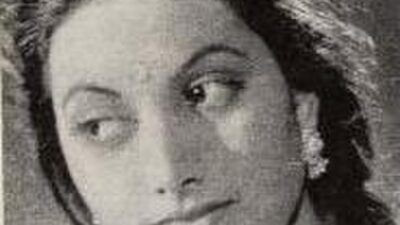
गीत विंग · गीत-पट्टिका · Song Plate
उड़ने वाले पंछी
Udne Wale Panchhi
सुरैया का पंछी-गीत सहगल के गीत का उत्तर है: वे स्वयं को आज़ाद घोषित करते हैं, वे उससे बात करती हैं जो पहले ही उड़ान में है।
भावउदास · पुरानी यादें · दार्शनिक
भाषाhindi गतिमध्यम स्वरूपएकल महिला
श्रेय
The Creditsसूत्र-वाक्य · The Hook
सूत्र-वाक्य
सुरैया का पंछी-गीत सहगल के गीत का उत्तर है: वे स्वयं को आज़ाद घोषित करते हैं, वे उससे बात करती हैं जो पहले ही उड़ान में है।
In EnglishSuraiya's bird song answers Saigal's: he declares himself free, she addresses the one already in flight.
पट्टिका-लेख
The Monographपरिचय Overview
'तदबीर' (1945) से सुरैया का एक एकल; संगीत लाल मोहम्मद, बोल स्वामी रामानंद सरस्वती। यह फ़िल्म का दूसरा पंछी-गीत है — दूसरा कुंदन लाल सहगल के पास है, 'मैं पंछी आज़ाद' — और जब पूरी रचना एक ही कवि की लिखी हो, तो यह जोड़ी आकस्मिक होने की संभावना कम है। सहगल का शीर्षक गायक के बारे में दावा करता है; यह उस पंछी को संबोधित है जो पहले ही उड़ रहा है — वह आकृति जिसके पास वह है जो वक्ता के पास नहीं।
अंग्रेज़ी में पढ़ें · Read in English
A Suraiya solo from Tadbir (1945), music by Lal Mohammad, words by Swami Ramanand Saraswati. It is the second bird song in the film — K.L. Saigal has the other, 'Main Panchhi Azad' — and the pairing is unlikely to be accidental in a score written entirely by one poet. Where the Saigal title makes a claim about the singer, this one is an address to a bird already flying: the figure who has what the speaker does not.
संगीत The Music
पंछी को संबोधन उत्तर भारत के स्त्री-गीतों की सबसे पुरानी बनावटों में से एक है — संदेश ले जाता पंछी, उड़ जाता पंछी, वह पंछी जिसकी आज़ादी से ईर्ष्या होती है — और अपने साथ एक लोक-लय लाता है। लाल मोहम्मद ने उसी मुहावरे में लिखा या नहीं, यह किसी बचे हुए प्रलेख से पुष्ट नहीं किया जा सकता; देखे गए किसी स्रोत में इस रिकॉर्डिंग की संगति का वर्णन नहीं है।
अंग्रेज़ी में पढ़ें · Read in English
The bird-address is one of the oldest shapes in North Indian women's song — the messenger bird, the departing bird, the bird envied for its freedom — and it carries a folk cadence with it. Whether Lal Mohammad wrote to that idiom cannot be confirmed from any surviving documentation; the recording's arrangement is not described in any source consulted.
काव्य The Poetry
उड़ते पंछी को संबोधित करना उस चीज़ से बात करना है जो उत्तर नहीं दे सकती और रुकेगी नहीं — और परंपरा इसका उपयोग ठीक उन्हीं दो कामों के लिए करती है जो एक स्थिर, प्रतीक्षा करती वक्ता को चाहिए: वहाँ संदेश भेजना जहाँ वह स्वयं नहीं जा सकती, और उस आज़ादी को नाम देना जो उसके पास नहीं है। सहगल के 'मैं पंछी आज़ाद' के बग़ल में पढ़िए — जहाँ नायक सीधे कहता है कि पंछी वही है — तो दोनों शीर्षक एक ही बिंब पर फ़िल्म की स्थितियाँ विपरीत दिशाओं से रखते हैं। यहाँ कोई भी पंक्ति उद्धृत नहीं है; कवि की तिथियाँ अज्ञात हैं।
अंग्रेज़ी में पढ़ें · Read in English
Addressing a bird in flight is a way of speaking to something that cannot answer and will not stay, and the tradition uses it for exactly the two purposes that a static, waiting speaker needs: to send a message somewhere she cannot go, and to name a freedom she does not have. Read next to Saigal's 'Main Panchhi Azad' — where the male lead simply asserts that he is the bird — the two titles set out the film's positions on the same image from opposite sides. Neither lyric is quoted here; the poet's dates are unknown.
कहानी The Story
कोई दृश्य-सूचना नहीं बची। यह उस फ़िल्म में सुरैया के तीन एकलों में से एक है जिसने पंद्रह वर्ष की उम्र में उन्हें किसी भी पिछली फ़िल्म से अधिक एकल-सामग्री दी।
अंग्रेज़ी में पढ़ें · Read in English
No scene information survives. The song is one of three Suraiya solos in a film that gave her, at fifteen, more solo material than she had previously had in any production.
विरासत The Legacy
आज बहुत कम प्रचलित; इसका महत्व मुख्यतः संरचनात्मक है — फ़िल्म की इकलौती सोची-समझी मिलती-जुलती शीर्षक-जोड़ी का आधा हिस्सा।
अंग्रेज़ी में पढ़ें · Read in English
Little circulated today; its interest is mainly structural, as half of the film's only deliberate pair of matching titles.
वर्गीकरण
Classification- Tempo
- Medium
Genre
अन्य विवरण
More Details- https://www.hindigeetmala.net/movie/tadbir.htm
- https://en.wikipedia.org/wiki/Tadbir
- https://en.wikipedia.org/wiki/List_of_Hindi_films_of_1945
- https://en.wikipedia.org/wiki/Suraiya
References
रोचक तथ्य
Margin Notes'तदबीर' में एक ही गीतकार के दो पंछी-गीत हैं, हर नायक के लिए एक: सहगल का 'मैं पंछी आज़ाद' और सुरैया का 'उड़ने वाले पंछी'।
अंग्रेज़ी में पढ़ें · Read in English
Tadbir has two bird songs by the same lyricist, one for each lead: Saigal's 'Main Panchhi Azad' and Suraiya's 'Udne Wale Panchhi'.
नमूना-पट्टी
The Specimen Table| शीर्षक | उड़ने वाले पंछी · Udne Wale Panchhi |
|---|---|
| फ़िल्म | तदबीर · 1945 |
| वर्ष · युग | 1945 — Pre-Independence (1931-1947) |
| गायक | Suraiya |
| गीतकार | Swami Ramanand Saraswati |
| संगीतकार | लाल मोहम्मद |
| स्वरूप | एकल महिला |
| गति | मध्यम |
| भाषा | hindi |
| भाव | उदास · पुरानी यादें · दार्शनिक |
| लोकप्रियता | Obscure |
| बोल-स्थिति | केवल झलक |
जुड़े हुए पन्ने
Connected Plates · The Graph Made Visibleअटलस में कोई पन्ना अकेला नहीं — इस गीत से जुड़े गीत, कलाकार, फ़िल्म, राग-ताल-विधा, सब यहाँ से खुलते हैं।
मिलते-जुलते गीत · Related Songs
कलाकार · The Artists
फ़िल्म · The Film
साझा कीजिए · Share this Plate