सिनेमा विंग · फ़िल्म-पट्टिका · Film Plate
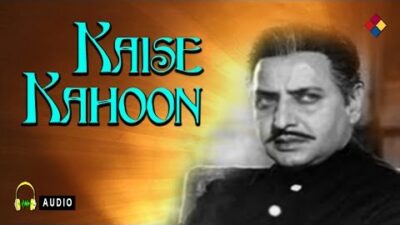
कैसे कहूँ
Kaise Kahoon
शैलीDrama · Romance · Social
भाषाhindi प्रकारकथा-चित्र (फ़ीचर)
गीत11 — नीचे पूरी संगीत-सूची
कथा-सार
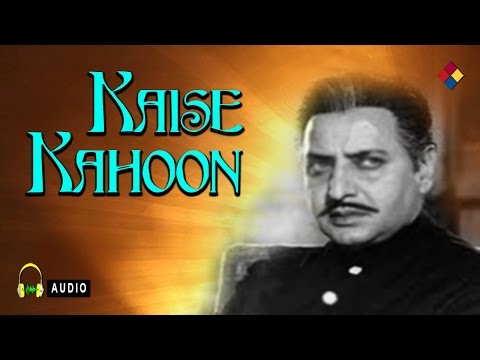
Synopsis'कैसे कहूँ' दलसुख एम. पंचोली के लाहौर स्टूडियो में बनी — पंचोली आर्ट पिक्चर्स के आख़िरी भरे-पूरे वर्षों में — और इसके निर्देशक मोती बी. गिडवानी थे। विकिपीडिया की 1945 की हिंदी फ़िल्मों की सूची इसे सामाजिक ड्रामा बताती है (pakmag.net का शैली-ख़ाना ख़ाली है); रिलीज़ 16 नवंबर 1945 को हुई — 'अतुल्स सॉन्ग अ डे' के अनुसार बंबई के इम्पीरियल सिनेमा में, और pakmag.net के अनुसार लाहौर के पैलेस सिनेमा में। मुख्य भूमिकाओं में रागिनी और नजम-उल-हसन थे, तथा गजानन जागीरदार, बेबी अख़्तर, प्राण, दुर्गा मोटा, अजमल, जी. एन. बट्ट और बेगम परवीन सहायक भूमिकाओं में। 'अतुल्स सॉन्ग अ डे' कहानी का श्रेय ख़ुद दलसुख पंचोली को देता है, जबकि pakmag.net लेखक के रूप में डॉ. ए. एच. रायपुरी का नाम देता है। इस कैटलॉग की पहुँच वाले किसी भी स्रोत में फ़िल्म का कथासार सुरक्षित नहीं है, और यहाँ उसे गढ़ा नहीं गया: जो दर्ज है वह निर्माण, कलाकार और ग्यारह गीतों की सूची है — वही यहाँ लिखा गया है।
अंग्रेज़ी में पढ़ें · Read in English
Kaise Kahoon was made at Dalsukh M. Pancholi's studio in Lahore in the last full working years of Pancholi Art Pictures, and directed by Moti B. Gidwani. Wikipedia's list of Hindi films of 1945 classifies it as a social drama (pakmag.net leaves its genre field blank); it was released on 16 November 1945, with Atul's Song A Day giving a Bombay opening at Imperial Cinema and pakmag.net a Lahore release at Palace Cinema. Ragini and Najam-ul-Hasan played the leads, with Gajanan Jagirdar, Baby Akhtar, Pran, Durga Mota, Ajmal, G. N. Butt and Begum Parveen in support. Atul's Song A Day credits the story to Dalsukh Pancholi himself, while pakmag.net names Dr. A. H. Roypuri as the writer. No plot summary of the picture survives in any source this catalogue could reach, and none is invented here: what is documented is the production, the cast and the eleven-song register, and that is what is recorded.
संगीत-सूची
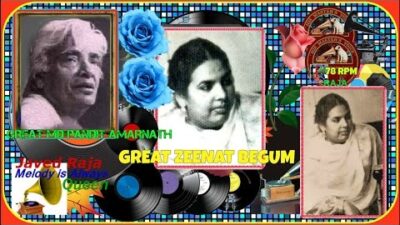
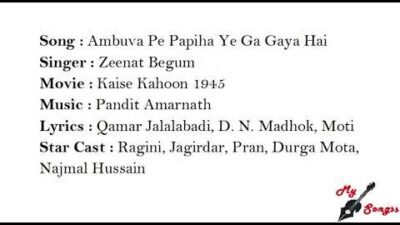
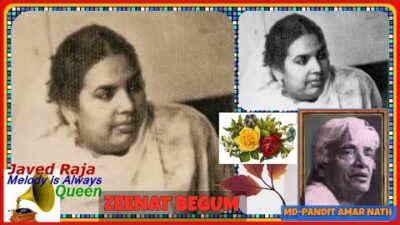
The Soundtrackपंडित अमरनाथ — जालंधर के अमरनाथ बतीश, जो उसी नाम के बाद के संगीतकार से अलग व्यक्ति हैं — ने फ़िल्म के लिए ग्यारह गीत रचे, और उनमें से अधिकांश ज़ीनत बेगम ने गाए: 'अम्बुवा पे पपीहा ये गा गया है', 'टूटे हुए दो दिल दरबार में आए', 'मन से चिंता की घटा दूर हो जा', 'सिपहिया बाबू आजा' और 'दुखिया दिल का एक तराना' इनमें शामिल हैं। शमशाद बेगम — जिन्हें ग़ुलाम हैदर ने खोजा था, पर जो यहाँ अमरनाथ के लिए गाती हैं — 'आओ हम आज चलें' में उनका साथ देती हैं और एस. डी. बतीश के सामने कोरस-समर्थित नोक-झोंक युगल 'गोरी गागर की गंगा उधार दिए जा' का स्त्री-पक्ष सँभालती हैं; बतीश 'दामन न छोड़ देना' में ज़ीनत बेगम के साथ भी हैं। एल्बम में चार गीतकार हैं — सबसे अधिक श्रेय मोती बी.ए. के नाम, फिर डी. एन. माधोक, क़मर जलालाबादी और शर्मा। उस दौर की सूचियाँ कुछ श्रेयों पर आपस में मेल नहीं खातीं, और एचएफजीके-आधारित उपलब्ध सूचियाँ तीन गीतों के गायक की पहचान दर्ज नहीं करतीं; यह कैटलॉग उन जगहों को अनुमान से भरने के बजाय ख़ाली छोड़ता है।
अंग्रेज़ी में पढ़ें · Read in English
Pandit Amarnath — Amarnath Batish of Jalandhar, a different man from the later composer of the same first name — wrote eleven songs for the picture, and Zeenat Begum sings the larger share of them: 'Ambuva Pe Papiha Ye Ga Gaya Hai', 'Tute Huye Do Dil Darbar Me Aaye', 'Mann Se Chinta Kee Ghata Dur Ho Ja', 'Sipahiya Babu Aaja' and 'Dukhiya Dil Ka Ek Tarana' among them. Shamshad Begum — discovered by Ghulam Haider, but singing for Amarnath here — joins her on 'Aao Hum Aaj Chale' and takes the female half of the chorus-backed banter duet 'Gori Gagar Ki Ganga Udhar Diye Ja' opposite S. D. Batish, who also partners Zeenat Begum on 'Daman Na Chod Dena'. Four lyricists share the album — Moti B.A. with the largest number of credits, then D. N. Madhok, Qamar Jalalabadi and Sharma. Period listings differ on some attributions, and the accessible HFGK-derived listings leave the singer unidentified for three of the songs; this catalogue leaves those fields empty rather than filling them with a guess.
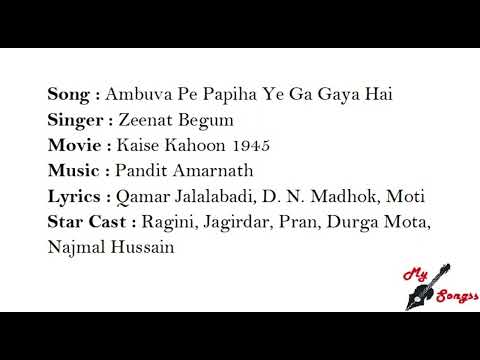
- अम्बुवा पे पपीहा ये गा गया है Ambuva Pe Papiha Ye Ga Gaya Hai स्वर: Zeenat Begum
- गोरी गागर की गंगा उधार दिए जा Gori Gagar Ki Ganga Udhar Diye Ja स्वर: Shamshad Begum, एस. डी. बतीश
- कोई मन में मेरे बोले Koi Mann Me Mere Bole
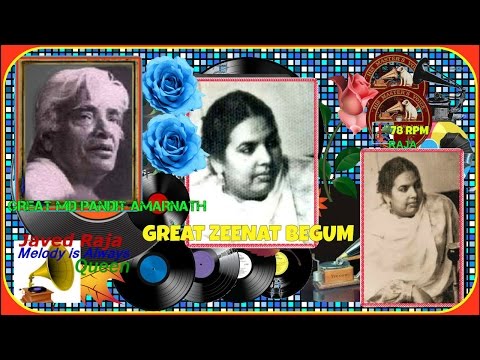
- टूटे हुए दो दिल दरबार में आए Tute Huye Do Dil Darbar Me Aaye स्वर: Zeenat Begum
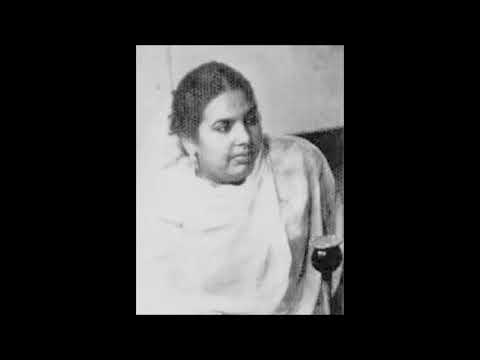
- आओ हम आज चलें Aao Hum Aaj Chale स्वर: Shamshad Begum, Zeenat Begum
- दामन न छोड़ देना Daman Na Chod Dena स्वर: Zeenat Begum, एस. डी. बतीश
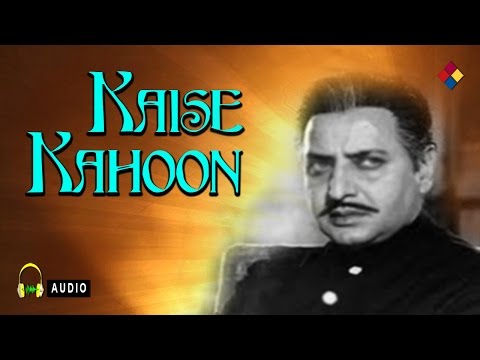
- गीत बनो मेरे तुम Geet Bano Mere Tum
- मन से चिंता की घटा दूर हो जा Mann Se Chinta Kee Ghata Dur Ho Ja स्वर: Zeenat Begum
- सिपहिया बाबू आजा Sipahiya Babu Aaja स्वर: Zeenat Begum
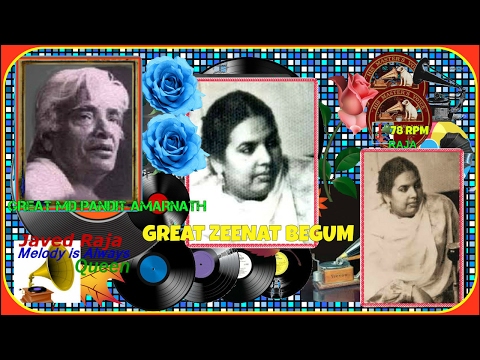
- आओ हम आज चलें (संस्करण 2) Aao Hum Aaj Chale (Version 2)
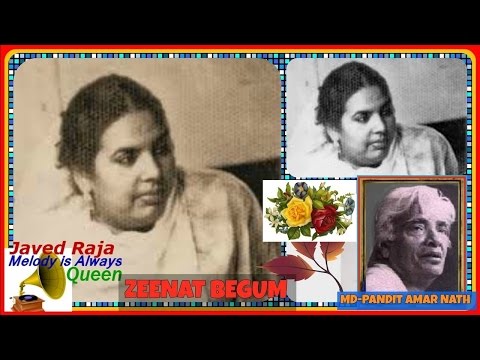
- दुखिया दिल का एक तराना Dukhiya Dil Ka Ek Tarana स्वर: Zeenat Begum
पट्टिका-लेख
The Monographपर्दे के पीछे Behind the Scenes
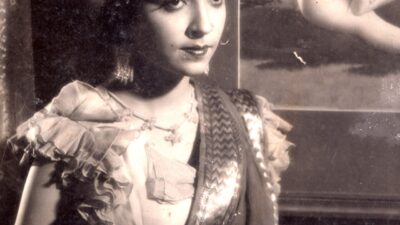
'कैसे कहूँ' के निर्देशक मोती बी. गिडवानी थे, जिन्हें 'अतुल्स सॉन्ग अ डे' विदेश-प्रशिक्षित बताता है और अपने पूरे करियर में सत्रह फ़िल्मों का श्रेय देता है। उनकी नायिका रागिनी — जन्म से शमशाद बेगम, 22 अक्टूबर 1924 को गुजरांवाला में जन्मीं, और उसी नाम की गायिका से अलग — लाहौर की सबसे बड़ी सितारों में थीं; विकिपीडिया दर्ज करता है कि अगले ही साल 'शाहजहाँ' (1946) के लिए उन्हें एक लाख रुपये मिले, 'जिसने उन्हें उस समय की सबसे अधिक पारिश्रमिक पाने वाली अभिनेत्री बना दिया'। वहाँ उनकी फ़िल्म-सूची में यह फ़िल्म 'कैसे कहूँ' (1945) के रूप में दर्ज है। संगीतकार पंडित अमरनाथ का जन्म 1912 में जालंधर में हुआ था और वे उस समय लाहौर में पंचोली के लिए और बंबई के निर्माताओं के लिए एक साथ काम कर रहे थे; 'कैसे कहूँ' उसी वर्ष की उनकी कई फ़िल्मों में से एक है। फ़िल्म की शूटिंग के बारे में इस कैटलॉग की पहुँच वाले किसी स्रोत में इससे अधिक कुछ दर्ज नहीं है।
अंग्रेज़ी में पढ़ें · Read in English
Kaise Kahoon was directed by Moti B. Gidwani, described by Atul's Song A Day as foreign-trained and credited there with seventeen films across his career. His leading lady Ragini — born Shamshad Begum in Gujranwala on 22 October 1924 and no relation to the singer of the same name — was one of the biggest draws in Lahore, and Wikipedia records that a year later Shahjehan (1946) brought her a fee of one lakh rupees, 'making her the highest-paid actress of that time'. Her filmography there lists this film as 'Kaisay Kahun' (1945). The composer, Pandit Amarnath, was born in Jalandhar in 1912 and was working for Pancholi in Lahore and for Bombay producers at the same time; Kaise Kahoon is one of several scores he delivered that year. Nothing further about the shooting of the picture is documented in any source this catalogue could reach.
महत्व Significance
इस फ़िल्म का महत्व उसकी कहानी से कम और इस बात से ज़्यादा है कि वह कहाँ और कब खड़ी है। 1945 में लाहौर बंबई और कलकत्ता के साथ हिंदी फ़िल्म-निर्माण का तीसरा केंद्र था, और पंचोली आर्ट पिक्चर्स — वही कंपनी जिसने उद्योग को 'ख़ज़ांची' (1941), 'ख़ानदान' (1942), 'ज़मींदार' (1942) और 'दासी' (1944) दी थीं — विभाजन के समय लाहौर का सबसे बड़ा फ़िल्म स्टूडियो था। 'कैसे कहूँ' उस उद्योग का पूरी ताक़त पर काम करते हुए का दस्तावेज़ है, विभाजन द्वारा उसे मिटा दिए जाने से मुश्किल से दो साल पहले। यह पंडित अमरनाथ की 1945 की उन कई फ़िल्मों में से एक है जो उनके सबसे व्यस्त दौर की हैं — एक ऐसा करियर जो 1947 में पैंतीस वर्ष की आयु में उनकी मृत्यु के साथ ख़त्म हो गया। और यह उस छोटी-सी खिड़की में आती है जब ज़ीनत बेगम — जिन्हें ख़ुद अमरनाथ ने खोजा था — लगभग पूरी फ़िल्म का संगीत अकेले अपनी आवाज़ पर उठा रही थीं।
अंग्रेज़ी में पढ़ें · Read in English
The film matters less for its plot than for where and when it stands. In 1945 Lahore was still the third pole of Hindi film production alongside Bombay and Calcutta, and Pancholi Art Pictures — the house that had given the industry Khazanchi (1941), Khandan (1942), Zamindar (1942) and Daasi (1944) — was, in Wikipedia's description, the largest film studio in Lahore at the time of Partition. Kaise Kahoon is a record of that industry working at full strength barely two years before Partition erased it. It is also one of a cluster of Hindi scores Pandit Amarnath delivered in 1945, the busiest stretch of a career that ended with his death at thirty-five in 1947, and it falls inside the short window in which Zeenat Begum — a singer Amarnath himself had discovered — was carrying nearly a whole film's music on her own voice.
विरासत Legacy
रिलीज़ के चार साल के भीतर 'कैसे कहूँ' बनाने वाले लोग बिखर गए। पंडित अमरनाथ का 1947 में पैंतीस वर्ष की आयु में निधन हो गया। विभाजन के कारण दलसुख एम. पंचोली को 1947 में बंबई जाना पड़ा, और विकिपीडिया के अनुसार उनका लाहौर स्टूडियो लगभग दो वर्ष और चलता रहा। रागिनी विभाजन के बाद पाकिस्तान चली गईं, और ज़ीनत बेगम भी वहीं जाकर रेडियो पाकिस्तान के लाहौर स्टेशन से जुड़ीं, जहाँ वे 1950 के दशक के अंत तक काम करती रहीं। फ़िल्म आज आम तौर पर उपलब्ध नहीं है और मुख्यतः अपने 78-आरपीएम रिकॉर्डों तथा उस दौर की सूचियों के ज़रिए बची है — यही वजह है कि उन सूचियों में इस संगीत के शीर्ष पर रखे गए दो गीत, 'गोरी गागर की गंगा उधार दिए जा' और 'अम्बुवा पे पपीहा ये गा गया है', फ़िल्म के किसी दृश्य से अधिक उसकी स्मृति ढोते हैं।
अंग्रेज़ी में पढ़ें · Read in English
Within four years of its release the people who made Kaise Kahoon were scattered. Pandit Amarnath died in 1947 at the age of thirty-five. Dalsukh M. Pancholi was forced to move to Bombay in 1947 by Partition, his Lahore studio continuing, by Wikipedia's account, for about two more years. Ragini moved to Pakistan after Partition, and Zeenat Begum migrated there too and joined the Lahore station of Radio Pakistan, where she worked into the late 1950s. The film itself is not in general circulation today and survives mainly through its 78-rpm records and period listings — which is why the two titles that period and later listings put at the head of the score, 'Gori Gagar Ki Ganga Udhar Diye Ja' and 'Ambuva Pe Papiha Ye Ga Gaya Hai', carry more of its memory than any scene does.
अन्य विवरण
More Details- https://www.hindigeetmala.net/movie/kaise_kahoon_1945.htm
- https://atulsongaday.me/2025/07/12/daaman-na-chhod-denaa/
- https://atulsongaday.me/2020/11/18/gori-gaagar-ki-ganga-udhhaar-diye-jaa/
- https://pakmag.net/film/predetails.php?pid=2637
- https://en.wikipedia.org/wiki/Ragni_(actress)
- https://www.millenniumpost.in/sunday-post/beyond-bygone/a-musician-of-eminence-pandit-amarnath-396239
- https://bombaymann2.blogspot.com/2020/08/film-kaise-kahoon1945.html
- https://en.wikipedia.org/wiki/List_of_Hindi_films_of_1945
- https://atulsongaday.me/category/movies/kaise-kahoon/
- https://en.wikipedia.org/wiki/Shiv_Dayal_Batish
- https://en.wikipedia.org/wiki/Zeenat_Begum
- https://en.wikipedia.org/wiki/Shamshad_Begum
- https://en.wikipedia.org/wiki/Dalsukh_M._Pancholi
References
नमूना-पट्टी
The Specimen Table| शीर्षक | कैसे कहूँ · Kaise Kahoon |
|---|---|
| वर्ष · युग | 1945 — Pre Independence |
| प्रदर्शन | 1945-11-16 |
| निर्देशक | मोती बी. गिडवानी · Moti B. Gidwani |
| संगीत-निर्देशक | पंडित अमरनाथ · Pandit Amarnath |
| गीतकार | मोती बी.ए. · Moti B.A. · डी. एन. माधोक · D. N. Madhok · क़मर जलालाबादी · Qamar Jalalabadi · शर्मा · Sharma |
| कलाकार-मंडली | रागिनी · Ragini · नजम-उल-हसन · Najam-ul-Hasan · गजानन जागीरदार · Gajanan Jagirdar · बेबी अख़्तर · Baby Akhtar · अजमल · Ajmal · दुर्गा मोटा · Durga Mota · जी. एन. बट्ट · G. N. Butt · प्राण · Pran · बेगम परवीन · Begum Parveen |
| निर्माता | Dalsukh M. Pancholi |
| निर्माण-गृह | Pancholi Art Pictures, Lahore |
| शैली | Drama · Romance · Social |
| भाषा | hindi |
| प्रकार | कथा-चित्र (फ़ीचर) |
| गीत | 11 गीत — ऊपर पूरी संगीत-सूची |
जुड़े हुए पन्ने
Connected Plates · The Graph Made Visibleअटलस में कोई पन्ना अकेला नहीं — 'कैसे कहूँ' से उसके गीत, कलाकार, राग और युग, सब जुड़े हैं।
इस फ़िल्म के गीत · Songs of this Film
कलाकार · Cast & Crew
युग · The Era
साझा कीजिए · Share this Plate
यह पन्ना आगे बढ़ाइए
जुड़ी हुई दुनिया
Explore ConnectionsSoundtrack · गीत (11)
गोरी गागर की गंगा उधार दिए जा
Gori Gagar Ki Ganga Udhar Diye Ja
Shamshad Begum, एस. डी. बतीश · Kaise Kahoon