गीत विंग · गीत-पट्टिका · Song Plate
अम्बुवा पे पपीहा ये गा गया है
Ambuva Pe Papiha Ye Ga Gaya Hai
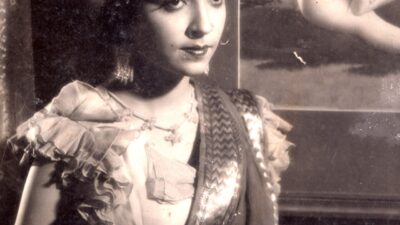
अम्बुवा की डाल से पपीहे की पुकार का उत्तर देती ज़ीनत बेगम — सावन का वह संकेत जिसका इस काव्य-परंपरा में अर्थ सदा यही होता है कि प्रिय पास नहीं है।
भावउदास · पुरानी यादें · रोमांटिक
भाषाhindi गतिमध्यम स्वरूपएकल महिला
श्रेय
The Creditsसूत्र-वाक्य · The Hook
सूत्र-वाक्य
अम्बुवा की डाल से पपीहे की पुकार का उत्तर देती ज़ीनत बेगम — सावन का वह संकेत जिसका इस काव्य-परंपरा में अर्थ सदा यही होता है कि प्रिय पास नहीं है।
In EnglishZeenat Begum answers the papiha calling from the mango grove — the monsoon signal that, in this poetry, always means the beloved is somewhere else.
पट्टिका-लेख
The Monographपरिचय Overview
'कैसे कहूँ' के संगीत की चर्चा जब भी होती है, जिन दो गीतों का नाम आज भी लिया जाता है, उनमें से एक यही है। 'अम्बुवा पे पपीहा ये गा गया है' ज़ीनत बेगम का एकल है, संगीत पंडित अमरनाथ का और बोल डी. एन. माधोक के। शीर्षक ही गीत को सावन में रख देता है — आम की डाल से पुकारता पपीहा — और इस तरह उत्तर भारतीय गीत की सबसे पुरानी ऋतु-शब्दावली के भीतर। यह 1945 में लाहौर की पंचोली आर्ट पिक्चर्स की फ़िल्म के लिए रिकॉर्ड हुआ, और आज फ़िल्म के बजाय अपने 78-आरपीएम रिकॉर्ड के सहारे बचा हुआ है।
अंग्रेज़ी में पढ़ें · Read in English
One of the two titles that period and later listings put at the head of the Kaise Kahoon score, 'Ambuva Pe Papiha Ye Ga Gaya Hai' is a Zeenat Begum solo composed by Pandit Amarnath to a lyric by D. N. Madhok. The title puts the song in the monsoon — the papiha calling from the mango tree — and therefore inside the oldest seasonal vocabulary of north Indian song. It was cut in 1945 for Pancholi Art Pictures' Lahore production, and it survives through its 78-rpm record rather than through the film, which is not in general circulation today.
संगीत The Music
पंडित अमरनाथ — जालंधर के अमरनाथ बतीश, जो आगे चलकर बंबई में एचएमवी ऑर्केस्ट्रा के निदेशक बने — हिंदी फ़िल्म संगीत की तथाकथित 'पंजाब शैली' के प्रमुख प्रतिनिधियों में थे, और यहाँ जिस आवाज़ के लिए वे रच रहे हैं वह उन्हीं की खोज है: ज़ीनत बेगम को उन्होंने 1930 के दशक के अंत में बचपन में ही खोजा था, उनके शुरुआती रिकॉर्ड बनाए थे, और 'दासी' (1944) में उन्हें करियर बनाने वाला 'रातें न रहीं वो भी न रहे' दे चुके थे। इस तरह का ऋतु-गीत उसी हल्के उप-शास्त्रीय क्षेत्र में बैठता है जिसमें वे संगीतकार सबसे सहज थे — फ़िल्मी गीत और उस कजरी-ठुमरी के बीच का स्तर जिससे वह अपनी बिंब-सामग्री उधार लेता है। रिकॉर्ड इतना दुर्लभ है कि उसके वाद्य-विन्यास का ब्योरा बिना अनुमान के नहीं दिया जा सकता, इसलिए यहाँ नहीं दिया गया।
अंग्रेज़ी में पढ़ें · Read in English
Pandit Amarnath — born in Jalandhar in 1912 — was a leading exponent of what came to be called the Punjab school of Hindi film music, and the voice he is writing for here is his own discovery: he had found Zeenat Begum as a child around 1937. Millennium Post calls Daasi (1944) Amarnath's most successful film and 'Raaten Na Rahin Woh Bhi Na Rahen' its chartbuster, though no source reachable here names that record's singer. A seasonal lyric of this kind sits in the light semi-classical territory those composers worked in most comfortably — the register between the film song proper and the kajri and thumri from which it borrows its imagery. The recording itself is scarce enough that no detailed account of its scoring can be given here without guessing, so none is offered.
काव्य The Poetry
पपीहा — वह पक्षी जिसे अंग्रेज़ 'ब्रेनफ़ीवर बर्ड' कहते थे — इस परंपरा में सजावट नहीं, एक निश्चित व्याकरण है। वर्षा के आरंभ में आम के बाग़ से आती उसकी पुकार को परंपरा 'पी कहाँ' पढ़ती है — मेरा प्रिय कहाँ है। इससे वह पक्षी स्त्री के अपने विरह की आवाज़ बन जाता है, जो वह कहता है जो वह अभी तक नहीं कह पाई। डी. एन. माधोक — 1940 के दशक के सबसे विपुल हिंदी गीतकार और शुद्ध हिंदी तथा उर्दू, दोनों में समान रूप से सहज — उसी पुकार के आ जाने को पूरे गीत का प्रसंग बना देते हैं: ऋतु बदल गई, पक्षी ने वही कहा जो वह सदा कहता है, और शेष श्रोता को स्वयं भरना है। यहाँ गीत की कोई पंक्ति उद्धृत नहीं की गई है।
अंग्रेज़ी में पढ़ें · Read in English
The papiha — the hawk-cuckoo, the bird the English called the brainfever bird — is not decoration in this tradition but fixed grammar. Its cry, heard from the mango grove as the rains break, is conventionally read as 'pi kahan': where is my beloved. That makes the bird the voice of the woman's own separation, saying aloud what she has not yet said. D. N. Madhok, one of the most prolific Hindi lyricists of the 1940s and a writer equally at ease in chaste Hindi and in Urdu, makes the arrival of that call the entire occasion of the song — the season has turned, the bird has said what it always says, and the listener is left to supply the rest. No lyric text is reproduced here.
कहानी The Story
'कैसे कहूँ' लाहौर में दलसुख एम. पंचोली के स्टूडियो में बनी, निर्देशन मोती बी. गिडवानी का और कहानी का श्रेय ख़ुद पंचोली को, और 16 नवंबर 1945 को रिलीज़ हुई — बंबई में इंपीरियल सिनेमा में। फ़िल्म का कोई कथासार किसी उपलब्ध स्रोत में सुरक्षित नहीं है, इसलिए यहाँ कोई नहीं दिया गया। ग्यारह गीतों के इस संगीत का बड़ा हिस्सा ज़ीनत बेगम उठाती हैं; यह उनके सबसे अधिक उल्लिखित एकलों में है।
अंग्रेज़ी में पढ़ें · Read in English
Kaise Kahoon was made at Dalsukh M. Pancholi's studio in Lahore, directed by Moti B. Gidwani from a story credited to Pancholi himself, and released on 16 November 1945 with a Bombay premiere at Imperial Cinema. No plot summary of the picture survives in any accessible source, so none is given here. Zeenat Begum carries the larger share of the eleven-song score; this is among the solos most often listed as hers.
विरासत The Legacy
फ़िल्म व्यावहारिक रूप से चलन से बाहर हो चुकी है, इसलिए जो स्मृति बची है वह रिकॉर्ड ही ढोता है। 'कैसे कहूँ' के जिन दो गीतों को आज भी इस संगीत के लोकप्रिय गीत कहा जाता है, यह उनमें से एक है, और यह लाहौर के फ़िल्म-उद्योग के आख़िरी पूरे वर्ष का है: दो साल के भीतर पंडित अमरनाथ पैंतीस की उम्र में नहीं रहेंगे, और ज़ीनत बेगम लाहौर के रेडियो पाकिस्तान में होंगी, जहाँ वे 1950 के दशक के अंत तक गाती रहीं।
अंग्रेज़ी में पढ़ें · Read in English
The film has effectively vanished from circulation, so the record carries whatever memory survives. This song is one of the two that period and later listings put at the head of the score, and it belongs to the last complete year of Lahore's film industry: within two years Pandit Amarnath would be dead at thirty-five, and Zeenat Begum would be at Radio Pakistan in Lahore, where she went on singing into the late 1950s.
वर्गीकरण
Classification- Tempo
- Medium
Genre
अन्य विवरण
More Details- https://www.hindigeetmala.net/movie/kaise_kahoon_1945.htm
- https://atulsongaday.me/category/movies/kaise-kahoon/
- https://bombaymann2.blogspot.com/2020/08/film-kaise-kahoon1945.html
- https://en.wikipedia.org/wiki/Zeenat_Begum
- https://www.millenniumpost.in/sunday-post/beyond-bygone/a-musician-of-eminence-pandit-amarnath-396239
- https://en.wikipedia.org/wiki/List_of_Hindi_films_of_1945
References
रोचक तथ्य
Margin Notesपंडित अमरनाथ ने ज़ीनत बेगम को लगभग 1937 में खोजा, जब वे बच्ची थीं; उनका दर्ज फ़िल्मी करियर 1942 में उनकी पहली फ़िल्म से शुरू होता है।
अंग्रेज़ी में पढ़ें · Read in English
Pandit Amarnath discovered Zeenat Begum around 1937, when she was a child; her documented film career began with her screen debut in 1942.
जिस दौर में 'रत्तन' (1944) के लिए लिखे उनके गीत देश में सबसे अधिक बिकने वाले हिंदी फ़िल्मी गीत थे, उसी दौर में डी. एन. माधोक ने लाहौर की इस फ़िल्म के लिए भी लिखा — इससे पता चलता है कि 1947 से पहले लेखक बंबई और लाहौर के उद्योगों के बीच कितनी सहजता से आते-जाते थे।
अंग्रेज़ी में पढ़ें · Read in English
D. N. Madhok wrote for this Lahore production in the same period in which his lyrics for Rattan (1944) were the best-selling Hindi film songs in the country — an indication of how freely writers moved between the Bombay and Lahore industries before 1947.
नमूना-पट्टी
The Specimen Table| शीर्षक | अम्बुवा पे पपीहा ये गा गया है · Ambuva Pe Papiha Ye Ga Gaya Hai |
|---|---|
| फ़िल्म | कैसे कहूँ · 1945 |
| वर्ष · युग | 1945 |
| गायक | Zeenat Begum |
| गीतकार | D. N. Madhok |
| संगीतकार | Pandit Amarnath |
| स्वरूप | एकल महिला |
| गति | मध्यम |
| भाषा | hindi |
| भाव | उदास · पुरानी यादें · रोमांटिक |
| लोकप्रियता | Known |
| बोल-स्थिति | केवल झलक |
जुड़े हुए पन्ने
Connected Plates · The Graph Made Visibleअटलस में कोई पन्ना अकेला नहीं — इस गीत से जुड़े गीत, कलाकार, फ़िल्म, राग-ताल-विधा, सब यहाँ से खुलते हैं।
मिलते-जुलते गीत · Related Songs
कलाकार · The Artists
फ़िल्म · The Film
साझा कीजिए · Share this Plate