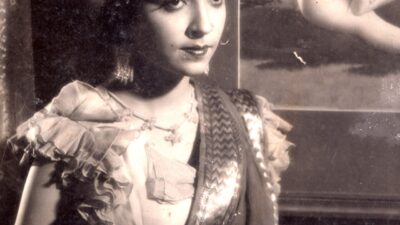
गीत विंग · गीत-पट्टिका · Song Plate
सिपहिया बाबू आजा
Sipahiya Babu Aaja
वर्दी वाले को दी गई लोक-रंगी पुकार, ज़ीनत बेगम की आवाज़ में — और फ़िल्म का इकलौता गीत जिसका गीतकार कहीं दर्ज नहीं है।
भावचुलबुला · रोमांटिक
भाषाhindi गतिमध्यम स्वरूपएकल महिला
श्रेय
The Creditsसूत्र-वाक्य · The Hook
सूत्र-वाक्य
वर्दी वाले को दी गई लोक-रंगी पुकार, ज़ीनत बेगम की आवाज़ में — और फ़िल्म का इकलौता गीत जिसका गीतकार कहीं दर्ज नहीं है।
In EnglishA folk-inflected call to a man in uniform, sung by Zeenat Begum — and the one song of the film for which no lyricist is on record.
पट्टिका-लेख
The Monographपरिचय Overview
'सिपहिया बाबू आजा' 'कैसे कहूँ' (1945) में ज़ीनत बेगम का एकल है, संगीत पंडित अमरनाथ का। साउंडट्रैक का यही अकेला गीत है जिसके लिए बची हुई सूचियों में गीतकार का कोई श्रेय नहीं है — हिंदीगीतमाला गायिका और संगीतकार दर्ज करके रुक जाती है — इसलिए इस प्रविष्टि में गीतकार की सूची जान-बूझकर ख़ाली रखी गई है। शीर्षक का बोली-रूप इसे एल्बम का लोक-स्वर वाला गीत बताता है।
अंग्रेज़ी में पढ़ें · Read in English
'Sipahiya Babu Aaja' is a Zeenat Begum solo from Kaise Kahoon (1945) with music by Pandit Amarnath. It is the only song on the soundtrack for which the surviving registers carry no lyricist credit at all — hindigeetmala lists the singer and the composer and nothing further — so the lyricist array in this entry is deliberately empty. The title's dialect form marks it as the folk-voiced number of the album.
संगीत The Music
पंडित अमरनाथ की पूँजी हिंदी फ़िल्म संगीत की पंजाब शैली थी — वही मुहावरा जिसे पंचोली आर्ट पिक्चर्स 'ख़ज़ांची' (1941) से बेच रही थी, लोक-ताल पर टिका और इतनी सरल धुन-रेखा के साथ कि एक बार सुनकर पकड़ी जा सके। बोली में रखा गया शीर्षक, पूर्वी हिंदी के लोक-स्तरों वाले '-इया' अंत के साथ, ठीक उसी तरह का गीत है जिसके लिए यह मुहावरा बना था, और ज़ीनत बेगम 1930 के दशक के अंत के अपने शुरुआती पंजाबी रिकॉर्डों से ही लोक-सामग्री गाती आ रही थीं। रिकॉर्ड स्वयं चलन में नहीं है, इसलिए उसके वाद्य-विन्यास के बारे में यहाँ कुछ नहीं कहा गया।
अंग्रेज़ी में पढ़ें · Read in English
Pandit Amarnath's stock in trade was the Punjab school of Hindi film music — the idiom Pancholi Art Pictures had been selling since Khazanchi (1941), built on folk rhythm and a melody line simple enough to be picked up on one hearing. A song titled in dialect, with the '-iya' ending that belongs to the eastern Hindi folk registers, is the kind of number that idiom exists for, and Zeenat Begum, discovered by Amarnath as a child around 1937, had been singing for him since before her 1942 film debut. The record itself is not in circulation, so nothing is asserted here about its scoring.
काव्य The Poetry
'सिपाही' के दो पाठ संभव हैं और स्रोत इनका निपटारा नहीं करते: यह सैनिक के लिए आम शब्द है, और उतना ही आम शब्द सिपाही यानी पुलिस के आदमी के लिए भी। साथ में 'बाबू' जुड़ते ही संबोधन एक साथ आदरपूर्ण और थोड़ा छेड़ता हुआ हो जाता है — जैसे गाँव की ज़बान वाला गीत किसी सरकारी नौकरी वाले को संबोधित करता है। यदि सैनिक वाला पाठ सही है तो गीत 1945 के एक विशेष क्षण पर आ टिकता है — भारतीय सैनिक बर्मा के अभियान से लौट रहे थे, जब यह फ़िल्म बन रही थी। यह पाठ सुझाव भर है, स्थापित तथ्य नहीं, और यहाँ एक सम्भावना के रूप में ही रखा गया है। यह पाठ संकेतक है, सिद्ध नहीं, और यहाँ एक संभावना के रूप में रखा गया है, तथ्य के रूप में नहीं। यहाँ गीत की कोई पंक्ति उद्धृत नहीं की गई है।
अंग्रेज़ी में पढ़ें · Read in English
'Sipahi' can be read two ways and the sources do not settle it: it is the ordinary word for a soldier, and it is equally the ordinary word for a constable. Adding 'babu' turns the address respectful and slightly teasing at once, the way a village-voiced song addresses a man with an official job. If the soldier reading is right, the song lands in a specific 1945 moment — Indian troops were coming home from the Burma campaign as this picture was being made. That reading is suggestive rather than established, and it is offered here as a possibility, not a fact. No lyric text is reproduced here.
कहानी The Story
'कैसे कहूँ' 16 नवंबर 1945 को लगी — द्वितीय विश्वयुद्ध की समाप्ति के तीन महीने बाद और विभाजन से इक्कीस महीने पहले — लाहौर के एक ऐसे स्टूडियो में बनकर जिसके पास दो साल से भी कम बचा था। 'अतुल्स सॉन्ग अ डे' इसकी कहानी का श्रेय दलसुख पंचोली को देता है और pakmag.net डॉ. ए. एच. रायपुरी को, पर उस कहानी का कोई सारांश किसी उपलब्ध स्रोत में सुरक्षित नहीं है; फ़िल्म के गीतों का फ़िल्मांकन अनुपलब्ध है।
अंग्रेज़ी में पढ़ें · Read in English
Kaise Kahoon opened on 16 November 1945, three months after the end of the Second World War and twenty-one months before Partition, at a studio in Lahore that had less than two years left to run. Atul's Song A Day credits its story to Dalsukh Pancholi and pakmag.net to Dr. A. H. Roypuri, but no summary of that story survives in any accessible source; the picturisation of the film's numbers is likewise undocumented.
विरासत The Legacy
इस गीत का नाम 1945 की सूचियों में फ़िल्म के अपेक्षाकृत जाने-पहचाने शीर्षकों में आता है, पर विभाजन-पूर्व हिंदी फ़िल्म-संगीत को सहेजने वाले संग्राहक-अभिलेखों में इसकी कोई रिकॉर्डिंग सामने नहीं आई, और इससे कोई गीतकार कभी जोड़ा नहीं गया। यह इस बात का अच्छा उदाहरण है कि लाहौर के उत्पादन का दस्तावेज़ कितना अधूरा है: गायिका का नाम, संगीतकार का नाम, याद रह गया शीर्षक — और वहाँ ख़ालीपन जहाँ लेखक होना चाहिए।
अंग्रेज़ी में पढ़ें · Read in English
The song is listed among the film's titles by hindigeetmala, but no recording of it has surfaced in the collector archives that preserve pre-Partition Hindi film music, and no lyricist has ever been attached to it. It is a good example of how incomplete the record for Lahore's output is: a named singer, a named composer, a remembered title, and a blank where the writer should be.
वर्गीकरण
Classification- Tempo
- Medium
Genre
अन्य विवरण
More Details- https://www.hindigeetmala.net/movie/kaise_kahoon_1945.htm
- https://bombaymann2.blogspot.com/2020/08/film-kaise-kahoon1945.html
- https://en.wikipedia.org/wiki/Zeenat_Begum
- https://en.wikipedia.org/wiki/List_of_Hindi_films_of_1945
References
रोचक तथ्य
Margin Notes'कैसे कहूँ' के ग्यारह गीतों में यही अकेला है जिसका किसी भी उपलब्ध सूची में गीतकार-श्रेय नहीं है; बाक़ी दस मोती बी.ए., डी. एन. माधोक, क़मर जलालाबादी और शर्मा के बीच बँटे हैं।
अंग्रेज़ी में पढ़ें · Read in English
This is the only one of the eleven Kaise Kahoon songs with no lyricist credit in any accessible listing; the other ten are divided between Moti B.A., D. N. Madhok, Qamar Jalalabadi and Sharma.
नमूना-पट्टी
The Specimen Table| शीर्षक | सिपहिया बाबू आजा · Sipahiya Babu Aaja |
|---|---|
| फ़िल्म | कैसे कहूँ · 1945 |
| वर्ष · युग | 1945 |
| गायक | Zeenat Begum |
| संगीतकार | Pandit Amarnath |
| स्वरूप | एकल महिला |
| गति | मध्यम |
| भाषा | hindi |
| भाव | चुलबुला · रोमांटिक |
| लोकप्रियता | Obscure |
| बोल-स्थिति | केवल झलक |
जुड़े हुए पन्ने
Connected Plates · The Graph Made Visibleअटलस में कोई पन्ना अकेला नहीं — इस गीत से जुड़े गीत, कलाकार, फ़िल्म, राग-ताल-विधा, सब यहाँ से खुलते हैं।
मिलते-जुलते गीत · Related Songs
कलाकार · The Artists
फ़िल्म · The Film
साझा कीजिए · Share this Plate