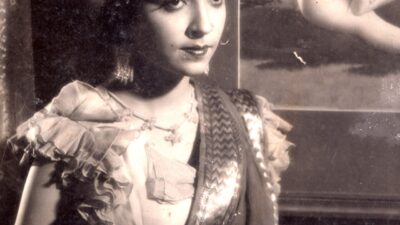
गीत विंग · गीत-पट्टिका · Song Plate
आओ हम आज चलें
Aao Hum Aaj Chale
इस संगीत का इकलौता गीत जो पंडित अमरनाथ की दोनों खोजों — शमशाद बेगम और ज़ीनत बेगम — को एक साथ लाता है।
भावउत्सव · प्रेरणादायक · चुलबुला
भाषाhindi गतिमध्यम स्वरूपमहिला युगल
श्रेय
The Creditsसूत्र-वाक्य · The Hook
सूत्र-वाक्य
इस संगीत का इकलौता गीत जो पंडित अमरनाथ की दोनों खोजों — शमशाद बेगम और ज़ीनत बेगम — को एक साथ लाता है।
In EnglishThe one number that puts the score's two female voices — Shamshad Begum and Zeenat Begum — in the same frame.
पट्टिका-लेख
The Monographपरिचय Overview
'आओ हम आज चलें' 'कैसे कहूँ' के संगीत का स्त्री-युगल है, जिसे शमशाद बेगम और ज़ीनत बेगम ने पंडित अमरनाथ के संगीत और मोती बी.ए. के बोलों पर गाया। एल्बम में यही अकेला गीत है जो दोनों गायिकाओं को साथ लाता है, और ध्यान देने योग्य बात यह है कि दोनों की शुरुआत उसी व्यक्ति की देन थी जो इसका संगीत रच रहा है। इसी शीर्षक का एक दूसरा संस्करण भी फ़िल्म की गीत-सूची में दर्ज है, जिसका श्रेय किसी और गीतकार को दिया गया है।
अंग्रेज़ी में पढ़ें · Read in English
'Aao Hum Aaj Chale' is the female duet of the Kaise Kahoon score, sung by Shamshad Begum and Zeenat Begum to Pandit Amarnath's music and a lyric by Moti B.A. It is the only track on the album that pairs the two women — Zeenat Begum, whom Amarnath had discovered around 1937, and Shamshad Begum, whom Ghulam Haider had discovered a decade earlier and who by 1945 was singing for composers across Lahore and Bombay. A second version of the same title also appears in the film's song register, credited to a different lyricist.
संगीत The Music
रिकॉर्ड की दिलचस्पी दोनों आवाज़ों के अंतर में है, और अमरनाथ दोनों को किसी और से बेहतर जानते थे। शमशाद बेगम की आवाज़ वह भरी हुई, दूर तक जाती, लोक में जड़ी हुई वाद्य है जिसे 'ख़ज़ांची' (1941) ने लाहौर के फ़िल्म-संगीत की पहचान बना दिया था; ज़ीनत बेगम की आवाज़ हल्की और अधिक शास्त्रीय-प्रशिक्षित है — वही आवाज़ जिसके लिए वे 1930 के दशक के अंत की उनकी बचपन की रिकॉर्डिंग से लिखते आ रहे थे। 'आओ चलें' जैसा बोल — निकल पड़ने का न्योता — दोनों को घुलने के बजाय एक-दूसरे को उत्तर देने का अवसर देता है, और इस आकार का युगल 1940 के दशक के संगीतकार का दो विपरीत स्वर-रंगों को एक ही 78-आरपीएम पहलू पर दिखाने का मानक तरीक़ा था।
अंग्रेज़ी में पढ़ें · Read in English
The interest of the record is in the contrast between the two voices, both of which Amarnath had worked with before. Shamshad Begum's is the robust, carrying, folk-rooted instrument that Khazanchi (1941) had made the signature sound of Lahore's film music; Zeenat Begum's is lighter and more classically schooled; Amarnath had discovered her around 1937, when she was still a child. A 'let us go' lyric — a call to set out — invites the two to answer each other rather than blend, and a duet of that shape is the standard way a 1940s composer showed off two contrasting timbres on a single 78-rpm side.
काव्य The Poetry
'आओ हम आज चलें' — बिना गंतव्य बताए दिया गया न्योता, और गंतव्य का न बताया जाना ही उसका मर्म है: इस तरह के फ़िल्मी गीतों में जाना उस जगह से अधिक महत्व रखता है जहाँ जाना है, और पंक्ति को दृश्य के अनुसार सैर, पलायन, या किसी नए मोड़ की ओर बढ़ना — कुछ भी पढ़ा जा सकता है। तात्कालिकता 'आज' से आती है; वही उस दिन को पिछले दिनों से अलग करता है। मोती बी.ए., जिन्होंने इस साउंडट्रैक के सबसे अधिक गीत लिखे, अन्यथा लगभग पूरी तरह अनुपलब्ध हैं। यहाँ गीत की कोई पंक्ति उद्धृत नहीं की गई है।
अंग्रेज़ी में पढ़ें · Read in English
'Aao hum aaj chale' — come, let us go today — is an invitation without a stated destination, and the withholding is the point: in film songs of this kind the going matters more than the place, and the line can be read as an outing, an elopement, or a turn towards something new, depending on the scene. The 'aaj' (today) is what gives it urgency; it marks the day as different from the days before it. Moti B.A., who wrote more of this soundtrack than any other lyricist, is otherwise almost entirely undocumented. No lyric text is reproduced here.
कहानी The Story
'कैसे कहूँ' लाहौर की पंचोली आर्ट पिक्चर्स में बनी, निर्देशन मोती बी. गिडवानी का, रिलीज़ 16 नवंबर 1945। नायिका रागिनी — जन्म से शमशाद बेगम, 1924 में गुजरांवाला में जन्मी, और उसी नाम की गायिका से उनका कोई संबंध नहीं — लाहौर के सबसे बड़े नामों में थीं; बेबी अख़्तर सहायक कलाकारों में दर्ज हैं। इस शीर्षक का कोई भी गीत फ़िल्म में किस जगह आता है, यह किसी स्रोत में दर्ज नहीं है।
अंग्रेज़ी में पढ़ें · Read in English
Kaise Kahoon was made at Pancholi Art Pictures, Lahore, directed by Moti B. Gidwani, and released on 16 November 1945. The heroine Ragini — born Shamshad Begum in Gujranwala in 1924, and no relation to the singer of the same name — was one of Lahore's biggest draws; Baby Akhtar is listed in the supporting cast. No source records what part either song of this title plays in the film.
विरासत The Legacy
इस रिकॉर्ड की दोनों गायिकाओं का भविष्य विपरीत निकला। शमशाद बेगम विभाजन के बाद भारत में ही रहीं और 1950 के दशक की प्रमुख पार्श्व-आवाज़ों में से एक बनीं, और 1980 के दशक तक रिकॉर्डिंग करती रहीं; ज़ीनत बेगम लाहौर और रेडियो पाकिस्तान चली गईं, जहाँ उन्होंने 1950 के दशक के अंत तक ग़ज़लें और नज़्में गाईं और 'क्वीन ऑफ़ यस्टरइयर' कहलाईं। यह युगल उन गिने-चुने रिकॉर्डों में है जहाँ दोनों की आवाज़ें साथ सुनाई देती हैं — और वह आख़िरी पूरा वर्ष था जब ऐसी जोड़ी बनना सामान्य बात थी।
अंग्रेज़ी में पढ़ें · Read in English
The two singers on this record had opposite futures. Shamshad Begum stayed in India after Partition and became one of the dominant playback voices of the 1950s, still recording into the 1980s; Zeenat Begum went to Lahore and to Radio Pakistan, where she sang ghazals and nazms into the late 1950s and was known there as the Queen of Yesteryear. This duet is one of the small number of records on which their voices are heard together, made in the last full year in which such a pairing was ordinary.
वर्गीकरण
Classification- Tempo
- Medium
Genre
अन्य विवरण
More Details- https://www.hindigeetmala.net/movie/kaise_kahoon_1945.htm
- https://bombaymann2.blogspot.com/2020/08/film-kaise-kahoon1945.html
- https://en.wikipedia.org/wiki/Shamshad_Begum
- https://en.wikipedia.org/wiki/Zeenat_Begum
- https://en.wikipedia.org/wiki/List_of_Hindi_films_of_1945
References
रोचक तथ्य
Margin Notesज़ीनत बेगम को पंडित अमरनाथ ने लगभग 1937 में खोजा था; इस युगल की दूसरी आवाज़ शमशाद बेगम को 1931 में जेनोफ़ोन के एक ऑडिशन में ग़ुलाम हैदर ने खोजा था, और 1945 तक वे कई अन्य संगीतकारों के साथ-साथ अमरनाथ के लिए भी गा चुकी थीं।
अंग्रेज़ी में पढ़ें · Read in English
Zeenat Begum was discovered by Pandit Amarnath around 1937; Shamshad Begum, the other voice on this duet, was discovered by Ghulam Haider at a Jenophone audition in 1931 and had sung for Amarnath among many other composers by 1945.
फ़िल्म की नायिका का नाम रागिनी था, पर जन्म से वे 1924 में गुजरांवाला में जन्मी शमशाद बेगम थीं — इस गीत की गायिका के समान नाम, जो उस दौर की सूचियों में बार-बार भ्रम का कारण बना।
अंग्रेज़ी में पढ़ें · Read in English
The film's leading lady was billed as Ragini but had been born Shamshad Begum in Gujranwala in 1924 — the same name as the singer on this track, and a frequent source of confusion in period listings.
'कैसे कहूँ' की गीत-सूची में 'आओ हम आज चलें' के दो अलग संस्करण दर्ज हैं — एक पर मोती बी.ए. का श्रेय और दूसरे पर डी. एन. माधोक का।
अंग्रेज़ी में पढ़ें · Read in English
The Kaise Kahoon song register lists two separate versions of 'Aao Hum Aaj Chale', with Moti B.A. credited on one and D. N. Madhok on the other.
नमूना-पट्टी
The Specimen Table| शीर्षक | आओ हम आज चलें · Aao Hum Aaj Chale |
|---|---|
| फ़िल्म | कैसे कहूँ · 1945 |
| वर्ष · युग | 1945 |
| गायक | Shamshad Begum, Zeenat Begum |
| गीतकार | मोती बी.ए. |
| संगीतकार | Pandit Amarnath |
| स्वरूप | महिला युगल |
| गति | मध्यम |
| भाषा | hindi |
| भाव | उत्सव · प्रेरणादायक · चुलबुला |
| लोकप्रियता | Obscure |
| बोल-स्थिति | केवल झलक |
जुड़े हुए पन्ने
Connected Plates · The Graph Made Visibleअटलस में कोई पन्ना अकेला नहीं — इस गीत से जुड़े गीत, कलाकार, फ़िल्म, राग-ताल-विधा, सब यहाँ से खुलते हैं।
मिलते-जुलते गीत · Related Songs
कलाकार · The Artists
फ़िल्म · The Film
साझा कीजिए · Share this Plate