गीत विंग · गीत-पट्टिका · Song Plate
उठ मेरी प्यारी बेटी
Uth Meri Pyari Beti
उठ मेरी प्यारी बेटी — पड़ोसी का जगाने और वात्सल्य का एक कोमल गीत।
भावपुरानी यादें · शांत
भाषाhindi गतिधीमी स्वरूपएकल महिला
श्रेय
The Creditsसूत्र-वाक्य · The Hook
सूत्र-वाक्य
उठ मेरी प्यारी बेटी — पड़ोसी का जगाने और वात्सल्य का एक कोमल गीत।
In EnglishRise, my dear daughter — a tender song of waking and parental affection from Padosi.
पट्टिका-लेख
The Monographपरिचय Overview
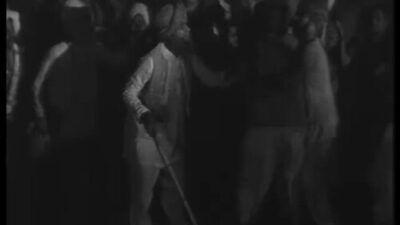
'उठ मेरी प्यारी बेटी' वी. शांताराम की 'पड़ोसी' (1941) का एक गीत है, संगीत मास्टर कृष्णाराव का और बोल पंडित सुदर्शन के। एक प्यारी बेटी को संबोधित कोमल जगाने का गीत ('उठ मोरी प्यारी बेटी, राजदुलारी बेटी'), यह प्रभात के मधुर, सारंगी-रंजित मुहावरे में फ़िल्म की घरेलू गर्माहट धारण करता है। देखे गए स्रोतों में इसका गायक श्रेय दर्ज नहीं है।
अंग्रेज़ी में पढ़ें · Read in English
'Uth Meri Pyari Beti' is a song from V. Shantaram's Padosi (1941), with music by Master Krishnarao and lyrics by Pandit Sudarshan. A tender waking-song addressed to a beloved daughter ('uth meri pyari beti, rajdulari beti'), it carries the film's domestic warmth in Prabhat's gentle, sarangi-tinged idiom. Its singer credit is not documented in the sources consulted.
काव्य The Poetry
जगाने का गीत — सोए हुए प्रिय को संबोधित, उठने की विनती करता — भारतीय परंपरा में सबसे अंतरंग काव्य-रूपों में से एक है, जो भक्ति (प्रभाती) और घरेलू — दोनों स्वरों में मिलता है। पंडित सुदर्शन की रचना घरेलू प्रभाती की परंपरा से जुड़ती है: पुत्री को कोमल आज्ञावाचक 'उठ' के साथ — 'प्यारी' (प्रिय), 'राजदुलारी' (घर की दुलारी) — संबोधित करना उठने की क्रिया को प्रेम की क्रिया में बदल देता है। 'राजदुलारी' का शाब्दिक अर्थ है 'जो राजा को प्रिय है' — एक अतिशयोक्तिपूर्ण प्रशंसा जो बच्चे को घरेलू परिवेश में राजसी अनुभव कराती है। मास्टर कृष्णाराव का संगीत-स्वर — सारंगी और हारमोनियम के साथ — प्रभात के घरेलू गीतों की विशिष्ट कोमल, गोलाकार गुणवत्ता देता। पड़ोसी के संदर्भ में — सांप्रदायिक सद्भाव की फ़िल्म — यह माता-पुत्री प्रेम-गीत उस व्यापक पड़ोसी-प्रेम का आदर्श बनता है जिसे फ़िल्म शोक से याद करती है।
अंग्रेज़ी में पढ़ें · Read in English
The waking song — a song addressed to someone beloved as they sleep, urging them to rise — is one of the most intimate lyric forms in the Indian tradition, appearing in both devotional (the prabhatiya, or dawn-bhajan) and domestic registers. Pandit Sudarshan's lyric for 'Uth Meri Pyari Beti' draws on the domestic prabhatiya: the gentle imperative 'uth' (rise) addressed to a daughter with terms of endearment — 'pyari' (dear), 'rajdulari' (darling of the house) — makes the act of waking into an act of love. The diminutives and honorifics pile up in the service of affection: 'rajdulari' literally means 'one who is dear to the king', a hyperbolic compliment that makes the child feel like royalty within the domestic sphere. Master Krishnarao's musical setting, with sarangi and harmonium, would have given the song the gentle, rounded quality characteristic of Prabhat's domestically-set numbers. The song's context within a film about communal harmony adds resonance: the love between parent and child, performed here, is the model for the broader love between neighbours that the film mourns.
कहानी The Story
पड़ोसी (1941) वी. शांताराम निर्देशित और पूना की प्रभात फ़िल्म कंपनी द्वारा निर्मित थी — पहले अपना स्टूडियो राजकमल कलामंदिर स्थापित करने से पहले शांताराम की प्रभात के लिए आख़िरी फ़िल्म। यह हिंदी-मराठी द्विभाषी फ़िल्म दो पड़ोसियों — मिर्ज़ा (गजानन जागीरदार, एक हिंदू मुस्लिम की भूमिका में) और ठाकुर (मज़हर ख़ान, एक मुस्लिम हिंदू की भूमिका में) — की कहानी थी, जिनकी जीवन भर की दोस्ती एक शहरी ठेकेदार द्वारा सांप्रदायिक विभाजन की नीति से नष्ट कर दी जाती है। मास्टर कृष्णाराव ने संगीत रचा; पंडित सुदर्शन ने हिंदी गीत और संवाद लिखे। गायकों में कृष्णाराव, अनीस ख़ातून, बलवंत सिंह, बलकराम, गोपाल और मुलिया थे। 'उठ मेरी प्यारी बेटी' — अनीस ख़ातून और बलवंत सिंह द्वारा गाया — एक प्रिय पुत्री (बेटी) को संबोधित कोमल जगाने का गीत है। इसका पूरा शीर्षक 'उठ मोरी प्यारी बेटी राजदुलारी बेटी' चलता है — पुत्री घर की सबसे प्रिय मणि है।
अंग्रेज़ी में पढ़ें · Read in English
Padosi (1941) was directed by V. Shantaram, produced by Prabhat Film Company of Poona, and was the last film Shantaram made for Prabhat before founding his own studio Rajkamal Kalamandir. The film — a bilingual in Hindi and Marathi — told the story of two neighbours, Mirza (Gajanan Jagirdar, a Hindu playing a Muslim) and Thakur (Mazhar Khan, a Muslim playing a Hindu), whose lifelong friendship is destroyed by a city contractor using communal divide-and-rule tactics. Master Krishnarao scored the film; Pandit Sudarshan wrote the Hindi lyrics and dialogues. The singer roster included Krishnarao, Anees Khatoon, Balwant Singh, Balakram, Gopal, and Mulia. 'Uth Meri Pyari Beti' — sung by Anees Khatoon and Balwant Singh — is a tender waking song addressed to a beloved daughter (beti). Its full title runs 'Uth Mori Pyari Beti Rajdulari Beti', casting the daughter as the household's most cherished gem. This domestic warmth sits in the film's larger context of communal affection: Padosi is fundamentally a film about the fragility of bonds of neighbourly love.
विरासत The Legacy
पड़ोसी (1941) को वी. शांताराम की प्रमुख उपलब्धियों में और हिंदी सिनेमा के सांप्रदायिक सद्भाव पर सबसे प्रारंभिक व शक्तिशाली वक्तव्यों में याद किया जाता है। IMDb पर इसकी रेटिंग 8.1 है। राजकमल कलामंदिर से पहले प्रभात के लिए शांताराम की अंतिम फ़िल्म के रूप में यह एक ऐतिहासिक धुरी-बिंदु है। 'उठ मेरी प्यारी बेटी' फ़िल्म के डिजिटाइज़ संग्रह के भीतर अभिलेखीय प्लेटफ़ॉर्म पर उपलब्ध है।
अंग्रेज़ी में पढ़ें · Read in English
Padosi (1941) is remembered as one of V. Shantaram's major achievements and one of Hindi cinema's earliest and most powerful statements about communal harmony. The film holds an IMDb rating of 8.1. As Prabhat's last film by Shantaram before Rajkamal Kalamandir, it marks a historical hinge point. 'Uth Meri Pyari Beti' has circulated within the film's digitised catalogue on archival platforms, accessible to researchers of Prabhat Film Company output and fans of pre-Partition Hindi cinema's domestic song tradition.
वर्गीकरण
Classification- Tempo
- Slow
Genre
अन्य विवरण
More Details- https://en.wikipedia.org/wiki/Padosi
- https://www.hindigeetmala.net/song/uth_meri_pyari_beti.htm
- https://www.imdb.com/title/tt0331308/
- https://www.facebook.com/IFHOFFICIAL/videos/uth-meri-pyari-beti-padosi-1941-anees-khatoon-mazhar-khan-/252832536192459/
References
रोचक तथ्य
Margin Notesपड़ोसी (1941) वी. शांताराम की प्रभात फ़िल्म कंपनी के लिए बनाई गई अंतिम फ़िल्म थी; इसके बाद उन्होंने राजकमल कलामंदिर की स्थापना की, जहाँ उन्होंने डॉ. कोटनिस की अमर कहानी (1946) सहित कई ऐतिहासिक फ़िल्मों का निर्देशन जारी रखा।
अंग्रेज़ी में पढ़ें · Read in English
Padosi (1941) was V. Shantaram's last film for Prabhat Film Company; he then founded Rajkamal Kalamandir, where he continued directing landmark films including Dr. Kotnis Ki Amar Kahani (1946).
फ़िल्म में एक मुस्लिम अभिनेता (मज़हर ख़ान) को हिंदू नायक ठाकुर की भूमिका में और एक हिंदू अभिनेता (गजानन जागीरदार) को मुस्लिम मिर्ज़ा की भूमिका में लिया गया था — शांताराम का यह जानबूझकर किया गया कास्टिंग चयन फ़िल्म द्वारा प्रचारित सांप्रदायिक एकता को साकार करता था।
अंग्रेज़ी में पढ़ें · Read in English
The film cast a Muslim actor (Mazhar Khan) as the Hindu protagonist Thakur, and a Hindu actor (Gajanan Jagirdar) as the Muslim Mirza — a deliberate casting choice by Shantaram to embody the communal unity the film preached.
अनीस ख़ातून, जिन्होंने बलवंत सिंह के साथ 'उठ मेरी प्यारी बेटी' गाया, पड़ोसी की समूह-कलाकार टोली की प्रमुख अभिनेत्री-गायिकाओं में से थीं, जिसमें सुमित्रा, लाजवंती, गोपाल और बालक राम भी शामिल थे।
अंग्रेज़ी में पढ़ें · Read in English
Anees Khatoon, who sang 'Uth Meri Pyari Beti' with Balwant Singh, was among the principal actress-singers of Padosi's ensemble cast, which also included Sumitra, Lajwanti, Gopal, and Balak Ram.
मास्टर कृष्णराव ने पड़ोसी में एक विस्तृत नृत्य वाला दस मिनट लंबा प्रसिद्ध गीत-दृश्य रचा — जो सिनेमाई गीत-निर्माण में एक ऐसी महत्त्वाकांक्षा थी जो 1941 के हिंदी सिनेमा के लिए असाधारण थी।
अंग्रेज़ी में पढ़ें · Read in English
Master Krishnarao scored a celebrated ten-minute song sequence featuring an extended dance in Padosi — an ambition in cinematic song construction that was exceptional for 1941 Hindi cinema.
नमूना-पट्टी
The Specimen Table| शीर्षक | उठ मेरी प्यारी बेटी · Uth Meri Pyari Beti |
|---|---|
| फ़िल्म | पड़ोसी · 1941 |
| वर्ष · युग | 1941 |
| गायक | Anees Khatoon, Balwant Singh |
| गीतकार | Pandit Sudarshan |
| संगीतकार | Master Krishnarao |
| स्वरूप | एकल महिला |
| गति | धीमी |
| भाषा | hindi |
| भाव | पुरानी यादें · शांत |
| लोकप्रियता | Known |
| बोल-स्थिति | केवल झलक |
जुड़े हुए पन्ने
Connected Plates · The Graph Made Visibleअटलस में कोई पन्ना अकेला नहीं — इस गीत से जुड़े गीत, कलाकार, फ़िल्म, राग-ताल-विधा, सब यहाँ से खुलते हैं।
मिलते-जुलते गीत · Related Songs
कलाकार · The Artists
फ़िल्म · The Film
साझा कीजिए · Share this Plate