शास्त्र विंग · वाद्य-पट्टिका · Instrument Plate
ड्रम मशीन
Drum Machine
अन्य नामरिदम मशीन · बीट मशीन / ताल-मशीन · Rhythm machine / Beat box · Roland TR-808 (सबसे प्रसिद्ध आर्किटाइप)
परिचय
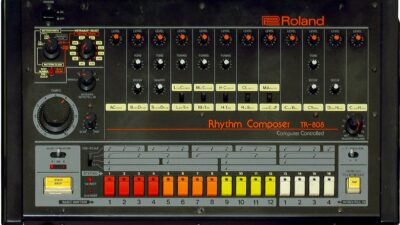
Overviewड्रम मशीन वह विद्युत-वाद्य है जिसने संगीत की ताल को जीवित ढोलवादक के हाथ से निकालकर एक प्रोग्रामयोग्य यंत्र में बसा दिया। रोलैंड TR-808 इसका अमर चेहरा है — बाज़ार में असफल, पर हिप-हॉप से लेकर बॉलीवुड तक की धड़कन। भारत के लिए इसका महत्व दुगना है: चरणजीत सिंह ने 1982 में इसी मशीन पर रागों को डिस्को बीट दी, और बप्पी लाहिड़ी ने इसी धड़कन पर पूरा 'डिस्को डांसर' रच दिया।
अंग्रेज़ी में पढ़ें · Read in English
The drum machine is the electronic instrument that took music's rhythm out of a living drummer's hands and placed it inside a programmable device. The Roland TR-808 is its immortal face — a market failure, yet the heartbeat of everything from hip-hop to Bollywood. Its importance for India is twofold: Charanjit Singh gave ragas a disco beat on this very machine in 1982, and Bappi Lahiri built the whole of 'Disco Dancer' on the same pulse.
वर्गीकरण
ClassificationNatya Shastra Category
अवनद्ध (Avanaddha — इलेक्ट्रॉनिक अनुकरण / electronic emulation)
ड्रम मशीन नाट्यशास्त्र की पारंपरिक चतुर्विध वर्गीकरण (तत, सुषिर, अवनद्ध, घन) का अंग नहीं है — यह एक आधुनिक इलेक्ट्रॉनिक वाद्य है। किंतु ध्वनि-भूमिका की दृष्टि से यह 'अवनद्ध' (चर्म-मढ़े ताल-वाद्य जैसे तबला, ढोलक, मृदंग) वर्ग का डिजिटल पुनर्सृजन करता है — बिना किसी झिल्ली या चमड़े के, केवल विद्युत-परिपथ अथवा नमूना-ध्वनि से ताल उत्पन्न करता है।
The drum machine is not part of the Natya Shastra's traditional four-fold classification (Tata, Sushira, Avanaddha, Ghana) — it is a modern electronic instrument. In sonic function, however, it electronically recreates the 'Avanaddha' (membrane/percussion) category such as tabla, dholak and mridang — producing rhythm without any skin or membrane, purely through electronic circuitry or sampled sound.
Western Category
Electronic percussion instrument (electrophone)
Western Family
Drum machine family — analog rhythm synthesizers (Roland TR-808, TR-909) and sample-based machines (LinnDrum, Oberheim DMX, E-mu SP-1200, Akai MPC)
Sub Classification
बनावट
PhysicalDescription Hindi
ड्रम मशीन एक इलेक्ट्रॉनिक वाद्य यंत्र है जो ताल-वाद्यों (बास ड्रम, स्नेयर, हाई-हैट, टॉम, ताली, काउबेल आदि) की ध्वनियाँ स्वयं उत्पन्न करता है और उन्हें एक अंतर्निर्मित स्टेप-सीक्वेंसर पर प्रोग्राम करके दोहराता है। रोलैंड TR-808 जैसे क्लासिक मॉडल में ध्वनियाँ पूर्णतः एनालॉग परिपथों से बनती हैं (नमूना नहीं), जबकि लिन-ड्रम व MPC जैसे मॉडल असली ढोल की रिकॉर्ड की हुई नमूना-ध्वनि बजाते हैं। इसमें कोई तार, झिल्ली या फूँक नहीं होती — केवल बटन, घुंडियाँ और आउटपुट सॉकेट।
Description English
A drum machine is an electronic instrument that itself generates percussion sounds (bass drum, snare, hi-hat, toms, handclap, cowbell, etc.) and repeats them via a built-in step sequencer. In classic models like the Roland TR-808 the sounds are produced entirely by analog circuitry (not samples), whereas models like the LinnDrum and MPC play back recorded samples of real drums. It has no strings, membrane or breath — only buttons, knobs and output sockets.
Body
Flat rectangular tabletop console with sloped control panel and a row of step buttons
चपटा आयताकार टेबल-टॉप कंसोल, झुके हुए नियंत्रण-पटल और स्टेप-बटनों की एक पंक्ति के साथ
Steel/aluminium chassis with plastic and rubber controls (TR-808: metal enclosure, colour-coded buttons)
स्टील/एल्युमिनियम का ढाँचा, प्लास्टिक व रबर के नियंत्रण (TR-808 में धातु का खोल और रंग-कोडित बटन)
TR-808 approx. 51 cm (W) x 30 cm (D) x 10 cm (H)
TR-808 approx. 5 kg
None — sound is generated electronically and heard only via amplifier/speakers or headphones (no acoustic resonating body)
Voices
11-16 distinct voices (TR-808: 16 sounds)
Individual percussion voices, each shaped by its own analog circuit or sample
पृथक ताल-ध्वनियाँ, प्रत्येक की अपनी एनालॉग परिपथ या नमूना-ध्वनि
TR-808 uses fully analog synthesis (transistors and filters) — voices can be tuned, and their decay stretched, in ways impossible for a real acoustic drum. Sample-based machines instead trigger short digital recordings.
Sequencer
स्टेप-सीक्वेंसर / ताल-क्रमक
Step sequencer
16-step programmable pattern grid. On the TR-808 the player lights up individual steps ('TR-REC' mode) to place each drum hit within a bar; patterns are chained into songs. Tempo, swing and accent are adjustable.
16-चरणों का प्रोग्रामयोग्य पैटर्न-ग्रिड। TR-808 में वादक अलग-अलग स्टेप जलाकर ('TR-REC' मोड) एक ताल के भीतर प्रत्येक प्रहार की स्थिति तय करता है; फिर पैटर्न जोड़कर पूरा गीत बनता है। गति (tempo), झूल (swing) और आघात (accent) समायोज्य होते हैं।
Controls
घुंडियाँ व नियंत्रण
Knobs & controls
Per-voice knobs for level, tuning, tone, snappy/decay; a master tempo dial; an accent control; and instrument-select rotary. The bass-drum 'decay' knob is what creates the 808's famous long, booming sub-bass note.
प्रत्येक ध्वनि के लिए स्तर (level), ट्यूनिंग, टोन और डिके/स्नैप की घुंडियाँ; मुख्य गति-डायल; आघात-नियंत्रण; और वाद्य-चयन रोटरी। बास-ड्रम की 'डिके' घुंडी ही 808 के प्रसिद्ध लंबे, गूँजते सब-बास स्वर को जन्म देती है।
Connectivity
आउटपुट व जुड़ाव
Outputs & connectivity
Individual output jacks per voice plus a mix output; DIN-sync / trigger outputs to lock tempo with other machines (e.g., the TB-303 bassline synth). Later machines added MIDI (from the mid-1980s).
प्रत्येक ध्वनि के लिए अलग आउटपुट सॉकेट तथा एक मिश्रित (mix) आउटपुट; DIN-sync / ट्रिगर आउटपुट, जिससे अन्य मशीनों (जैसे TB-303 बास-सिंथ) के साथ गति समकालिक होती है। बाद के मॉडलों में MIDI जुड़ा (1980 के दशक के मध्य से)।
Power
विद्युत
Power
Mains AC powered; a small battery preserves programmed patterns in memory when switched off (on some units).
Frets
ड्रम मशीन में तार, फ्रेट या झिल्ली नहीं होती — यह विशुद्ध विद्युत-वाद्य है, जिसमें प्रहार के स्थान पर बटन दबाकर ताल 'लिखी' जाती है।
A drum machine has no strings, frets or membrane — it is a purely electronic instrument in which rhythm is 'written' by pressing buttons rather than striking a surface.
ध्वनि-चरित्र
SoundTonal Character Hindi
ड्रम मशीन की ध्वनि तीक्ष्ण, यंत्रवत और अचूक-लयबद्ध होती है। TR-808 का बास ड्रम एक गहरा, गूँजता 'बूम' देता है जो छाती में महसूस होता है; इसकी काउबेल, ताली और हाई-हैट अत्यंत पहचानी-सी 'रेट्रो' ध्वनियाँ हैं। असली ढोल की तुलना में यह अधिक साफ़, दोहरावदार और अमानवीय-सटीक लगती है — यही इसका आकर्षण और सीमा दोनों है।
Tonal Character English
The drum machine's sound is crisp, mechanical and metronomically precise. The TR-808's bass drum gives a deep, booming sub-bass 'boom' felt in the chest; its cowbell, handclap and hi-hats are instantly recognisable 'retro' sounds. Compared to a real drum it feels cleaner, more repetitive and inhumanly exact — which is both its charm and its limitation.
Timbre
Synthetic, punchy; the 808 is warm and boomy, the 909 harder and more metallic, sample machines more naturalistic
Range
Programmable from very slow to very fast tempos (roughly 40-300 BPM); bass-drum pitch tunable across a wide sub-bass to low-mid range
Dynamic Range
Controlled electronically via level and accent per step; consistent and repeatable rather than expressively human
Techniques
सुनने का मार्गदर्शन
The Listening Guideड्रम मशीन को समझना हो तो पहले चरणजीत सिंह का 'राग भैरव' (1982) सुनिए — नीचे चलते स्थिर, गूँजते 808 बीट को पकड़िए और ऊपर तैरती राग-धुन से उसका मेल देखिए। फिर मशीन की नंगी ध्वनियाँ अलग से सुनिए — बास का 'बूम', काउबेल, ताली, हाई-हैट। अंत में बप्पी लाहिड़ी का कोई डिस्को गीत बजाइए और उसी मशीनी धड़कन को पहचानिए जो आज हर फ़िल्मी और पंजाबी पॉप गीत की रीढ़ है।
अंग्रेज़ी में पढ़ें · Read in English
To understand the drum machine, first listen to Charanjit Singh's 'Raga Bhairav' (1982) — notice how a steady, booming 808 beat runs underneath while the raga melody floats above. Then hear the machine's bare, naked sounds in Doctor Mix's '808 in Action' video — the bass 'boom', cowbell, handclap. Finally, play any Bappi Lahiri disco song and recognise that same mechanical pulse.
परिचय
Identity- Year Of Origin
- 1959
अन्य विवरण
More DetailsTimbre
Synthetic, punchy; the 808 is warm and boomy, the 909 harder and more metallic, sample machines more naturalistic
रोचक तथ्य
Margin Notesअसफलता से अमरत्व तक — रोलैंड TR-808 (1980) बिक्री में इतनी असफल रही कि 1983 में उसका उत्पादन बंद हो गया — लगभग 12,000 इकाइयाँ ही बनीं। किंतु सस्ती दूसरी-हाथ इकाइयों को नए हिप-हॉप व इलेक्ट्रो कलाकारों ने अपनाया, और इसका बास ड्रम पॉप संगीत की सबसे पहचानी ध्वनियों में से एक बन गया।
The Roland TR-808 (1980) sold so poorly that production ended in 1983 — only about 12,000 units were ever made. But cheap second-hand units were embraced by new hip-hop and electro artists, and its bass drum became one of the most recognisable sounds in popular music.
बॉम्बे का भविष्यदर्शी — चरणजीत सिंह किशोर कुमार, लक्ष्मीकांत-प्यारेलाल और आर. डी. बर्मन के साथ बजाने वाले एक सत्र-संगीतकार थे। 1982 में उन्होंने HMV स्टूडियो, बंबई में TR-808 पर 'सिंथेसाइज़िंग: टेन रागाज़ टु अ डिस्को बीट' रिकॉर्ड की। 2010 में इसके पुनः-जारी होने पर विश्व-संगीत-पत्रकारिता ने उन्हें 'एसिड-हाउस का जनक' तक कहा।
Charanjit Singh was a session musician who played alongside Kishore Kumar, Laxmikant-Pyarelal and R. D. Burman. In 1982 he recorded 'Synthesizing: Ten Ragas to a Disco Beat' on a TR-808 at HMV Studios, Bombay. On its 2010 reissue, world music journalism went so far as to call him a 'father of acid house'.
एनालॉग बनाम नमूना — ड्रम मशीनें दो प्रकार की होती हैं। TR-808 व TR-909 जैसी 'एनालॉग' मशीनें ध्वनि को परिपथों से गढ़ती हैं — इसलिए वे असली ढोल जैसी नहीं, बल्कि विशिष्ट 'इलेक्ट्रॉनिक' लगती हैं। लिन-ड्रम व Akai MPC जैसी 'नमूना-आधारित' मशीनें असली ढोल की रिकॉर्डिंग बजाती हैं — इसलिए वे अधिक प्राकृतिक लगती हैं।
Drum machines come in two kinds. 'Analog' machines like the TR-808 and TR-909 sculpt sound from circuits — so they sound distinctly 'electronic' rather than like a real drum. 'Sample-based' machines like the LinnDrum and Akai MPC play back recordings of real drums — so they sound more natural.
मंच पर ऑक्टापैड — भारतीय लाइव व वेडिंग संगीत में रोलैंड का इलेक्ट्रॉनिक पैड 'ऑक्टापैड' अत्यंत लोकप्रिय है। इसे ड्रम मशीन/मॉड्यूल से जोड़कर एक ही वादक ढोल, ढोलक, तबला, नगाड़ा और यहाँ तक कि ताली की ध्वनियाँ लाइव बजा सकता है — जिससे बड़े ताल-वृंद की आवश्यकता कम हो गई।
In Indian live and wedding music, Roland's electronic pad the 'Octapad' is hugely popular. Connected to a drum machine/module, a single player can perform dhol, dholak, tabla, nagara and even handclap sounds live — reducing the need for a large percussion ensemble.
सवाल-जवाब
Questions & Answersड्रम मशीन क्या है?
ड्रम मशीन एक इलेक्ट्रॉनिक वाद्य यंत्र है जो ताल-वाद्यों (बास ड्रम, स्नेयर, हाई-हैट आदि) की ध्वनियाँ स्वयं उत्पन्न करता है और उन्हें एक स्टेप-सीक्वेंसर पर प्रोग्राम कर के दोहराता है — बिना किसी जीवित ढोलवादक के।
रोलैंड TR-808 इतनी प्रसिद्ध क्यों है?
TR-808 (1980) आरंभ में असफल रही और 1983 में बंद हो गई, पर इसका गहरा, गूँजता बास ड्रम और सस्ता होना इसे हिप-हॉप, इलेक्ट्रो, पॉप व भारतीय डिस्को का आधार बना गया। इसकी ध्वनियाँ आज संगीत की सबसे पहचानी आवाज़ों में हैं।
ड्रम मशीन का भारतीय संगीत से क्या संबंध है?
1982 में मुंबई के चरणजीत सिंह ने TR-808 पर दस शास्त्रीय राग डिस्को बीट में बजाए ('टेन रागाज़ टु अ डिस्को बीट'), और बप्पी लाहिड़ी ने 'डिस्को डांसर' जैसी फ़िल्मों में ड्रम-मशीन बीट पर बॉलीवुड डिस्को रचा। आज लगभग हर फ़िल्मी व पंजाबी पॉप गीत में इसका उपयोग होता है।
ड्रम मशीन और असली ढोल में क्या अंतर है?
असली ढोल-तबला जीवंत, अभिव्यंजक और मानवीय होते हैं, हर प्रहार थोड़ा भिन्न। ड्रम मशीन सटीक, दोहरावदार और अटल है — इसकी ध्वनियाँ या तो एनालॉग परिपथों से (TR-808) या रिकॉर्ड किए गए नमूनों से (लिन-ड्रम, MPC) बनती हैं।
क्या ड्रम मशीन एक भारतीय वाद्य है?
नहीं — ड्रम मशीन का जन्म पश्चिम में हुआ (वर्लिट्ज़र साइड-मैन, अमेरिका, 1959) और इसका सबसे प्रसिद्ध रूप जापान की रोलैंड TR-808 (1980) है। किंतु भारतीय संगीतकारों ने इसे 1980 के दशक से अपनाकर डिस्को, बॉलीवुड और पंजाबी पॉप की पहचान गढ़ी।
नमूना-पट्टी
The Specimen Table| नाम | ड्रम मशीन · Drum Machine |
|---|---|
| अन्य नाम | रिदम मशीन · बीट मशीन / ताल-मशीन · Rhythm machine / Beat box · Roland TR-808 (सबसे प्रसिद्ध आर्किटाइप) |
| उद्गम | 1959 |
| प्रकार | वाद्य · Instruments |
जुड़े हुए पन्ने
Connected Plates · The Graph Made Visibleअटलस में कोई पन्ना अकेला नहीं — इस वाद्य से जुड़े गीत, कलाकार, शास्त्र और कहानियाँ, सब यहाँ से खुलते हैं।
जुड़े गीत · Songs
इस वाद्य के गीत
Songs of this Instruments







साझा कीजिए · Share this Plate